
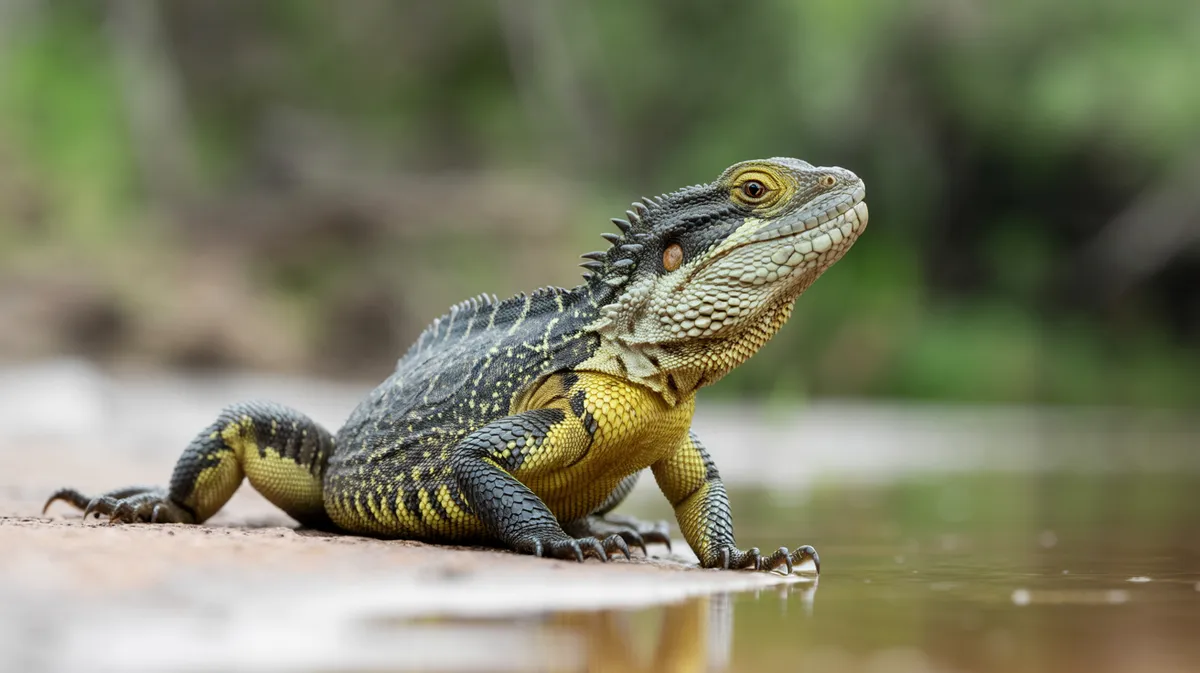
About the Australian Water Dragon
The Australian Water Dragon is a large, semi-aquatic lizard native to eastern Australia. Recognizable by its long tail, crested head, and prominent spines along its back, this reptile is well-adapted to life near rivers and streams. They are skilled swimmers, able to remain submerged for up to 90 minutes to evade predators. Australian Water Dragons are diurnal and spend much of their time basking on rocks, darting into the water when threatened. Their coloration provides excellent camouflage among the riverbanks and forested habitats they frequent.
Fascinating facts
Natural Swimmers
Australian Water Dragons are adept swimmers and use their laterally-compressed tails to navigate quickly through water.
Basking Behavior
They are often seen basking in sunlight on rocks or logs near water, regulating their body temperature as ectotherms.
Colorful Appearance
Males develop bright red coloration on their chest and belly during the breeding season to attract females and deter rivals.
Detailed description
The Australian Water Dragon (Intellagama lesueurii) is a robust, semi-aquatic lizard reaching up to 1 meter in total length, with males typically larger than females. Its body is laterally compressed, aiding in swimming, and is adorned with a prominent nuchal and dorsal crest formed by spiny scales. Coloration varies between subspecies and individuals but generally includes olive to grayish-green tones with black banding and a pale ventral surface; males often display brighter red or orange coloration on the chest and throat during the breeding season. The long, muscular tail, comprising about two-thirds of the total length, is used for propulsion in water and as a defensive whip. Limbs are strong and well-clawed, facilitating both climbing and rapid terrestrial movement. The head is angular with a pronounced jawline and a row of pointed scales along the cheeks. Australian Water Dragons are diurnal, basking for thermoregulation and retreating to water or dense vegetation when threatened. They possess excellent vision and acute sensitivity to vibrations, which helps detect predators and prey. Their semi-aquatic lifestyle is supported by the ability to remain submerged for extended periods, utilizing a slowed metabolic rate and cutaneous respiration to a limited degree. Sexual dimorphism is evident, with males exhibiting larger heads, more developed crests, and brighter breeding colors.
Did you know?
Australian Water Dragons can stay underwater for up to 90 minutes at a time, using this ability to avoid predators or extreme temperatures.
Research & sources
Wikipedia summary
The Australian water dragon, which includes the eastern water dragon and the Gippsland water dragon subspecies, is a semi aquatic agamid species native to eastern Australia from Victoria northwards to Queensland. There may be a small introduced population on the south-east coast of South Australia. The Gippsland water dragon is generally the more southern of the two subspecies and the more cold adapted and heat sensitive. Visually distinguishing the Gippsland water dragon from the Eastern water dragon is relatively easy, as long as their skin is reasonably clean and not stained from the water, as identification of the two subspecies depends largely on observable differences in colours and patterns.
Behaviour & social structure
Australian Water Dragons are primarily solitary but may be observed basking communally in suitable habitats, particularly during cooler months. Territorial males defend prime basking and nesting sites, displaying dominance through head-bobbing, arm-waving, and tail-flicking. They are opportunistic omnivores, feeding on insects, small vertebrates (such as frogs and small fish), aquatic invertebrates, fruits, flowers, and occasionally carrion. Foraging occurs both on land and in shallow water, where they may ambush prey or actively search among leaf litter and debris. Daily routines are dictated by temperature, with peak activity in the morning and late afternoon. When threatened, they escape by diving into water, where they can remain submerged for up to 90 minutes, or by rapidly climbing trees. Juveniles are more secretive and arboreal, reducing predation risk. Social hierarchies are established among males, with dominant individuals securing better access to resources and mates.
Reproduction & life cycle
Breeding occurs in spring and early summer (typically September to January), triggered by rising temperatures and increased daylight. Males establish territories and engage in courtship displays, including head-bobbing, coloration enhancement, and physical posturing. Copulation is brief, after which females excavate nests in sandy or soft soil, often in sunny, well-drained locations near water. Clutch size ranges from 6 to 18 eggs, depending on female size and condition. Incubation lasts 60–100 days, with temperature influencing sex determination (temperature-dependent sex determination, TSD). Hatchlings are independent from birth, receiving no parental care, and exhibit rapid growth in their first year. Multiple clutches per season are possible in favorable conditions. Sexual maturity is reached at 2–3 years of age.
Adaptations & survival
Australian Water Dragons have evolved a suite of adaptations for their riparian lifestyle. Their laterally compressed tails and strong limbs enhance swimming ability, while long claws facilitate climbing and digging. The ability to remain submerged for extended periods provides an effective anti-predator strategy. Their cryptic coloration and patterning offer camouflage among rocks and vegetation. Behavioral thermoregulation, such as basking and seeking shade, allows them to maintain optimal body temperature. Temperature-dependent sex determination ensures adaptive sex ratios in response to environmental conditions. Their omnivorous diet and flexible foraging strategies enable survival in variable habitats, including urban parks and gardens.
Cultural significance
Australian Water Dragons are familiar figures in eastern Australian culture, frequently encountered in urban parks, botanical gardens, and riverside settings. They are often featured in local wildlife education and ecotourism, serving as ambassadors for riparian ecosystem conservation. In Aboriginal lore, lizards including water dragons are sometimes associated with creation stories and totemic significance, though specific myths about Intellagama lesueurii are less documented. Their striking appearance and charismatic behavior have made them popular subjects in photography and natural history media.
Recent research
Recent research has focused on the species' thermal ecology, urban adaptation, and reproductive biology, including studies on temperature-dependent sex determination and its implications under climate change scenarios. Genetic analyses have clarified the taxonomy and evolutionary relationships within the genus Intellagama and related agamids. Behavioral studies have documented complex social interactions, including dominance hierarchies and communication via visual signals. Urban ecology research has highlighted the species' resilience and adaptability, with some populations exhibiting altered behavior and diet in response to human presence. Ongoing studies are investigating the impact of environmental contaminants and habitat fragmentation on health and reproductive success.
Videos
Habitat
Riparian zones along rivers, creeks, and lakes in forests and woodlands
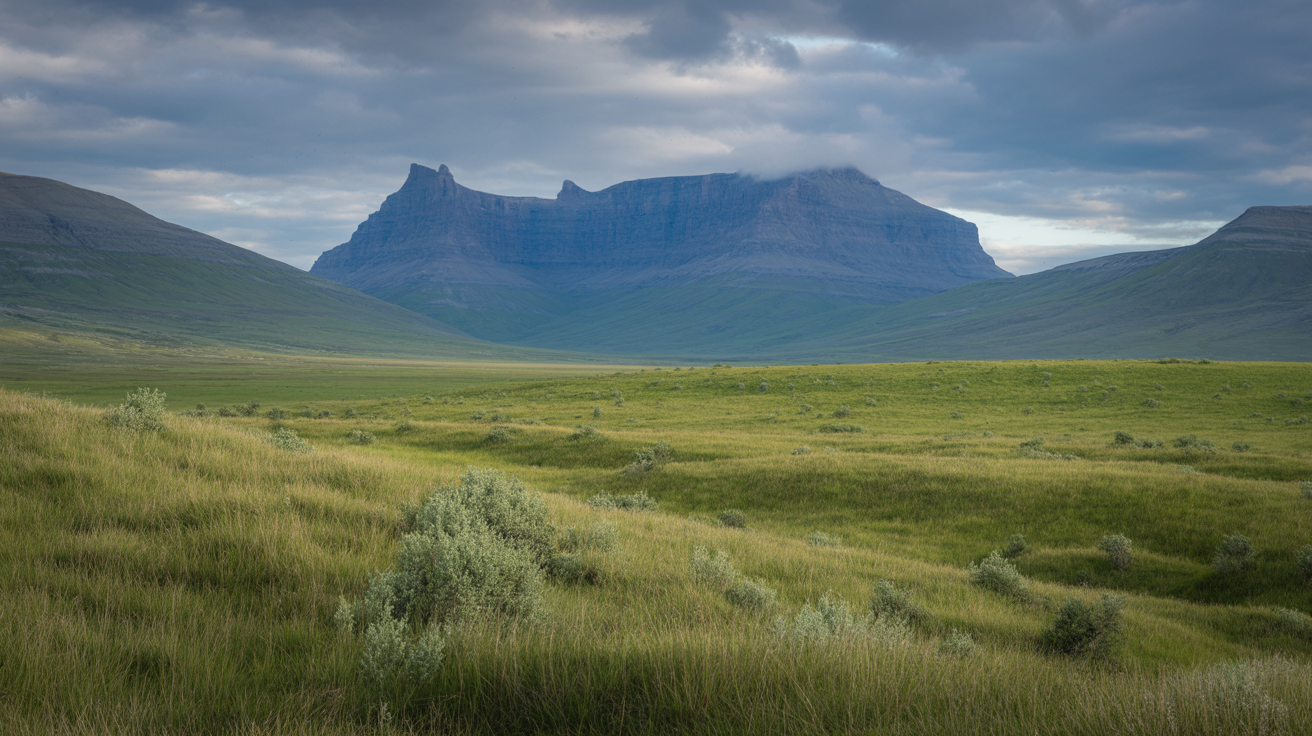 Various Continental Regions
Grassland
Open areas dominated by grasses rather than trees, supporting numerous herbivores and their predators.
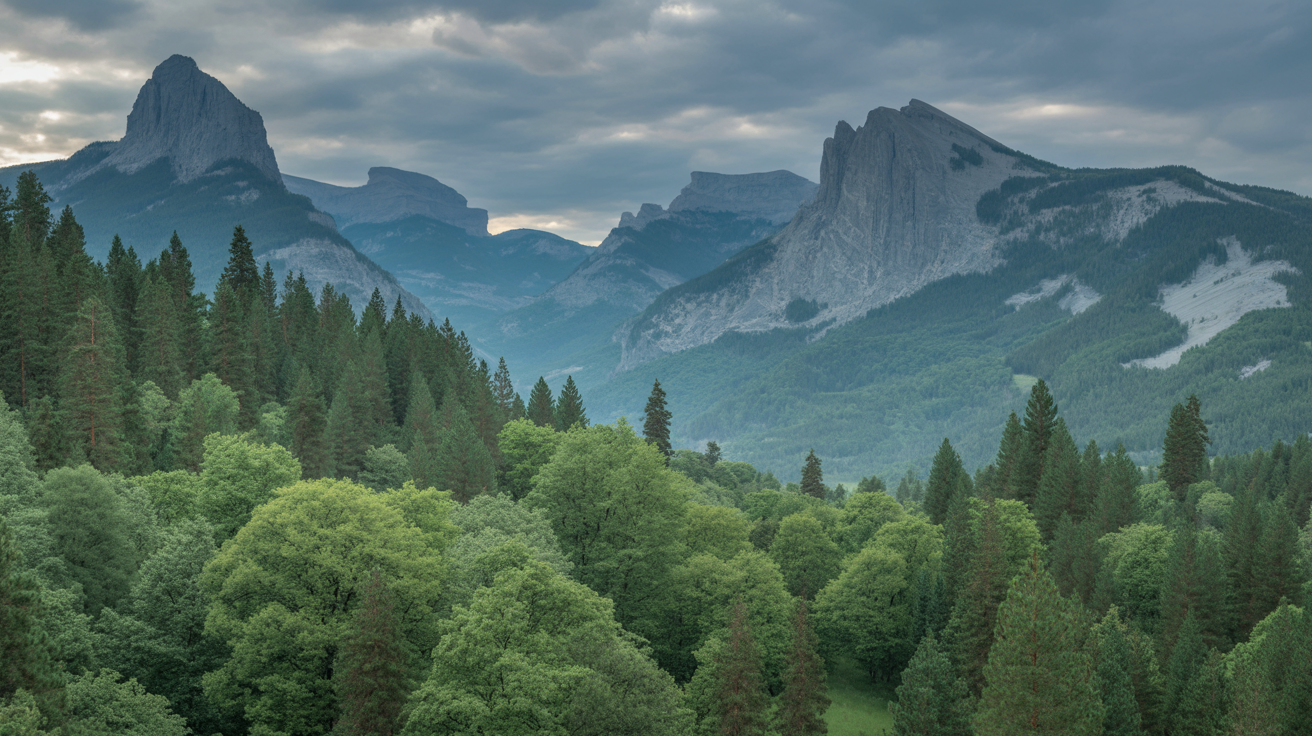 Global
Forest
Wooded areas with significant tree cover and diverse plant and animal communities.
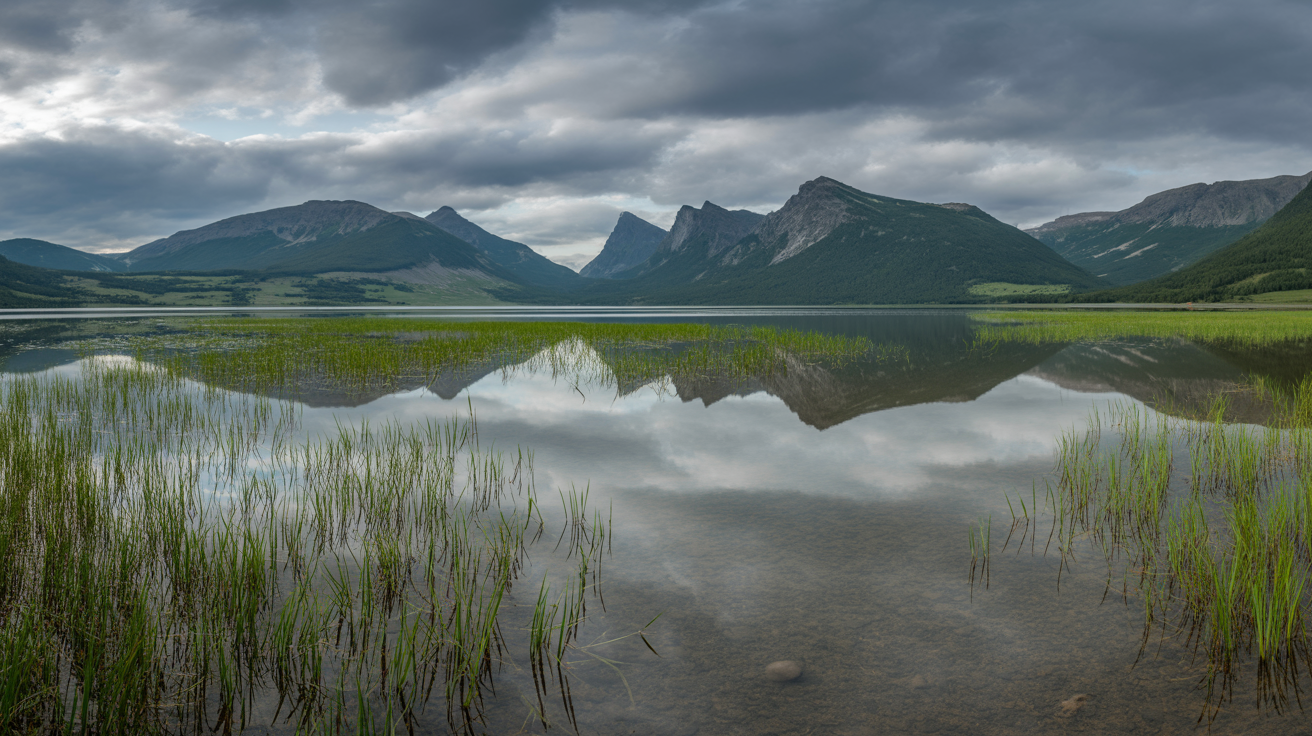 Global
Freshwater
Lakes, rivers, and wetlands with diverse aquatic ecosystems.
Conservation
The Australian Water Dragon is currently classified as Least Concern on the IUCN Red List.
Threats & challenges
Currently assessed as Least Concern by the IUCN, Australian Water Dragons face localized threats from habitat loss due to urbanization, water pollution, and predation by introduced species such as cats and foxes. Road mortality and human disturbance, particularly in urban environments, can impact populations. Climate change poses a potential threat by altering riparian habitats and affecting nesting success via temperature-dependent sex determination. Despite these challenges, the species demonstrates adaptability to modified landscapes, often thriving in suburban parks and waterways. Ongoing monitoring is necessary to detect population trends and emerging threats.
Taxonomy
Scientific name
Intellagama lesueurii
- Kingdom
- Animalia
- Phylum
- Chordata
- Class
- Reptilia
- Order
- Squamata
- Family
- Agamidae
- Genus
- Intellagama
- Species
- lesueurii
Community notes
Share your observations about the Australian Water Dragon.
No community notes yet. Be the first!
Discover more wildlife
More fascinating animals from the encyclopedia.