
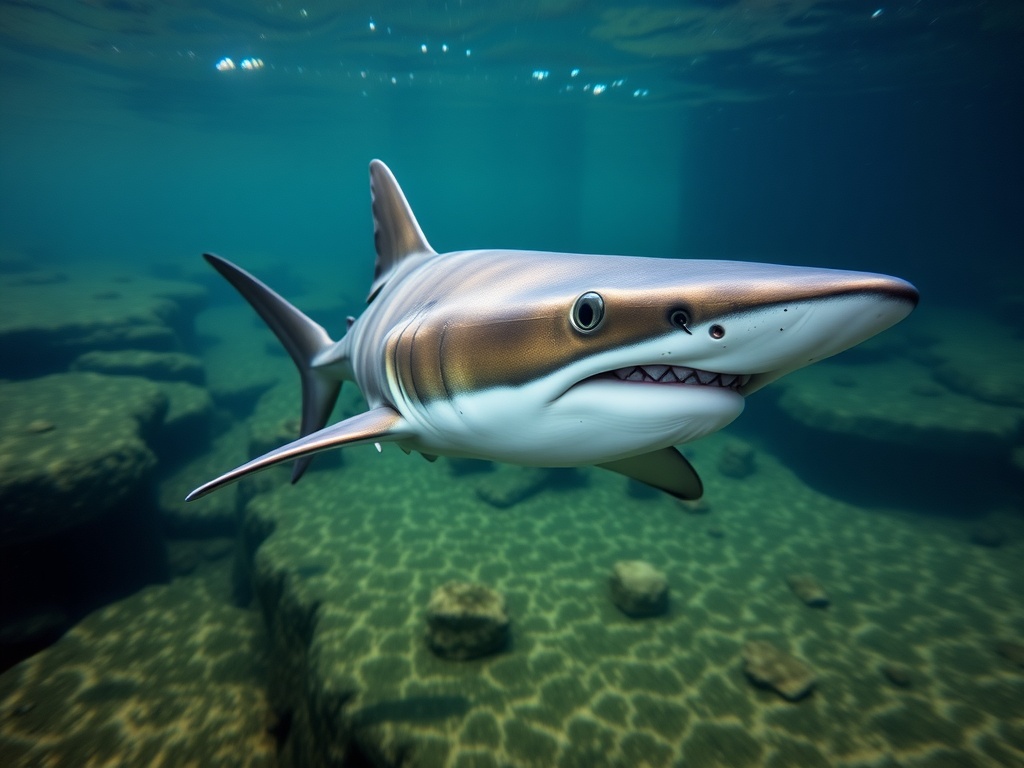
About the Bala shark
The Bala shark, also known as the tricolor shark or silver shark, is a striking freshwater fish native to Southeast Asia. With its torpedo-shaped body, large eyes, and distinctive black-edged fins, it is often mistaken for a true shark, though it belongs to the minnow family. Bala sharks are active, social swimmers that can grow quite large, making them a popular but challenging choice for home aquariums. In the wild, they inhabit fast-flowing rivers and lakes, but their populations have declined due to overfishing and habitat loss.
Fascinating facts
Excellent Swimmers
Bala sharks are known for their fast, agile swimming and require ample space to move, making them unsuitable for small tanks.
Schooling Nature
These fish are naturally social and prefer to live in schools of five or more for optimal health and reduced stress.
Wild Population Decline
Habitat destruction and overcollection for the aquarium trade have caused significant declines in wild Bala shark populations.
Detailed description
The Bala shark (Balantiocheilos melanopterus) is a large, torpedo-shaped freshwater fish distinguished by its metallic silver body and striking black margins on its dorsal, caudal, anal, and pelvic fins. Adults can reach lengths of up to 35 cm (14 inches), though most specimens in captivity grow to around 25–30 cm (10–12 inches). The species has large, reflective eyes adapted for detecting movement in the water column, aiding both in predator avoidance and prey detection. Its streamlined body and deeply forked tail are specialized for fast, agile swimming in open water environments. Bala sharks are schooling fish, typically found in groups of five or more, which provides both social interaction and protection from predators. In the wild, they are known to inhabit midwater zones of large, clear rivers and lakes, often migrating seasonally in response to water levels and food availability. Their omnivorous diet includes small crustaceans, insects, plant matter, and detritus. Bala sharks are long-lived, with lifespans exceeding 10 years in optimal conditions. Despite their popularity in the aquarium trade, their large adult size and need for ample swimming space make them challenging to keep in home aquaria.
Did you know?
Bala sharks can reach up to 35 cm (about 14 inches) in length, making them much larger than most aquarium owners expect.
Research & sources
Wikipedia summary
The bala shark, also known as the tricolor shark, tricolor sharkminnow, silver shark, or shark minnow, is a fish of the family Cyprinidae, and is one of the two species in the genus Balantiocheilos. This species is not a true shark, but is commonly so called because of its torpedo-shaped body and large fins.
Behaviour & social structure
Bala sharks are diurnal and highly active, spending much of the day swimming in open water. They exhibit strong schooling behavior, with individuals synchronizing their movements and maintaining close proximity to conspecifics. This social structure reduces stress and enhances survival, as solitary individuals are more prone to anxiety and erratic behavior. In the wild, Bala sharks forage throughout the water column, using their keen eyesight to locate food items such as aquatic insects, zooplankton, and plant debris. They are opportunistic feeders, often consuming whatever is seasonally abundant. In captivity, they may display jumping behavior, especially when startled or in undersized tanks. Bala sharks communicate through body language, such as fin displays and rapid directional changes, to maintain group cohesion and establish social hierarchies.
Reproduction & life cycle
Reproductive biology in the wild is not fully documented, but Bala sharks are believed to be seasonal spawners, with breeding activity triggered by changes in water temperature and flow during the rainy season. They are oviparous, with females releasing hundreds to thousands of adhesive eggs into open water or among submerged vegetation. There is no parental care; eggs and larvae are left to develop independently. Incubation is rapid, with hatching occurring within 24–48 hours depending on temperature. Sexual maturity is typically reached at 3–4 years of age. Successful captive breeding is rare and usually requires large, specialized facilities that can mimic natural environmental cues, such as photoperiod, water chemistry, and flow.
Adaptations & survival
Bala sharks possess several adaptations for life in fast-flowing, open water habitats. Their streamlined, laterally compressed bodies and powerful, forked tails enable sustained, rapid swimming and agile maneuvering to evade predators and capture prey. Large eyes provide acute vision in clear water, while a well-developed lateral line system detects vibrations and changes in water pressure. Their omnivorous digestive system allows them to exploit a wide range of food sources, enhancing their ecological flexibility. Schooling behavior is a key anti-predator adaptation, reducing individual risk and facilitating coordinated movement during migration or foraging.
Cultural significance
While the Bala shark does not have significant traditional or mythological roles in Southeast Asian cultures, it has become well-known globally as a popular aquarium fish due to its attractive appearance and peaceful temperament. Its common name 'shark' and distinctive fin shape have contributed to its appeal, though this has also led to misconceptions about its care requirements. In some regions, it is occasionally consumed as food, but this is not widespread.
Recent research
Recent research has focused on the conservation genetics of Bala shark populations, revealing low genetic diversity in both wild and captive stocks, which raises concerns for long-term viability. Studies on captive breeding have explored hormonal induction and environmental manipulation to improve spawning success, with mixed results. Ongoing field surveys aim to clarify the species' current distribution and population status, while ecological studies are investigating its role in riverine food webs and responses to habitat modification. The species is also used as a model for studying the impacts of the aquarium trade on wild fish populations.
Videos
Habitat
Freshwater rivers and lakes


Conservation
The Bala shark is currently classified as Endangered on the IUCN Red List.
Threats & challenges
The Bala shark is classified as Vulnerable by the IUCN due to dramatic population declines across its native range in the Mekong and Chao Phraya river basins of Southeast Asia. Major threats include overfishing for the aquarium trade, habitat loss from dam construction, river channelization, pollution, and deforestation. Wild populations have become extremely rare, with some reports suggesting local extirpations. Additionally, the species' migratory behavior makes it particularly sensitive to barriers and changes in river hydrology. Conservation efforts are hampered by limited data on wild populations and breeding biology, and most individuals in the aquarium trade are now captive-bred.
Taxonomy
Scientific name
Balantiocheilos melanopterus
- Kingdom
- Animalia
- Phylum
- Chordata
- Class
- Actinopterygii
- Order
- Cypriniformes
- Family
- Cyprinidae
- Genus
- Balantiocheilos
- Species
- melanopterus
Community notes
Share your observations about the Bala shark.
No community notes yet. Be the first!
Discover more wildlife
More fascinating animals from the encyclopedia.