
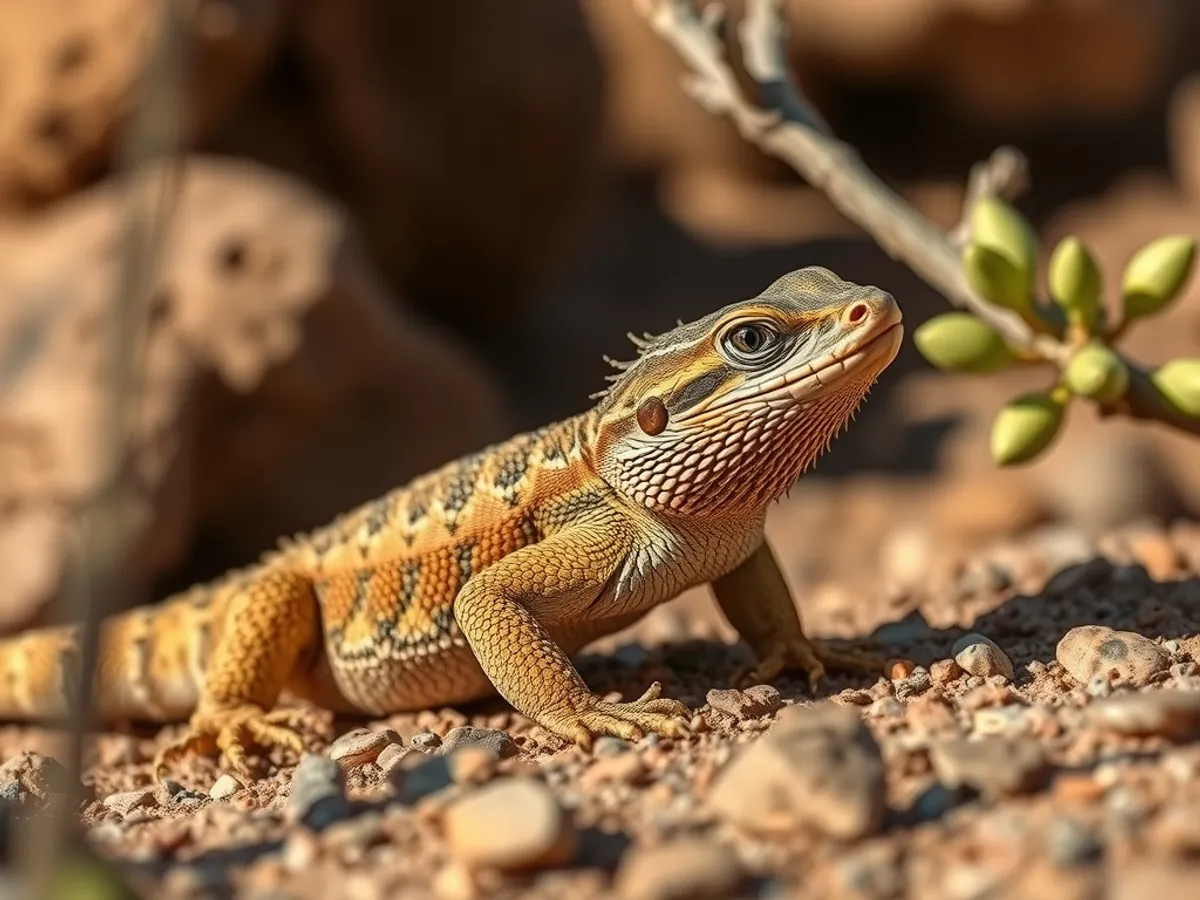
About the Bearded Dragon
The "beard" is a throat pouch stiffened by the hyoid apparatus; a dragon flares it and turns it jet black as a threat, and the colour change is a genuine physiological display, not a mood ring. Its opposite is arm-waving: a dragon raises one forelimb and rotates it slowly in a circle, which is a submission and appeasement signal, most often given by a small animal to a larger one. Two pieces of research have made this cheap Australian pet lizard scientifically important out of all proportion to its size. First, incubation temperature can override its chromosomes: genetically male ZZ embryos incubated hot develop into fully functional, egg-laying females, and this sex reversal has been documented in wild populations — the first vertebrate for which that was shown. Sex-reversed females lay more eggs than normal ones. Second, sleep recordings in 2016 found that bearded dragons cycle between two distinct brain states resembling REM and slow-wave sleep, which pushed the origin of sleep stages back from mammals and birds to the common ancestor of all amniotes.
Fascinating facts
Throat Display
When threatened or excited, Bearded Dragons puff out and darken their throat, creating the appearance of a 'beard.'
Basking Behavior
Bearded Dragons regulate their body temperature by basking in the sun, often flattening their bodies to absorb more heat.
Omnivorous Diet
Their diet includes leaves, flowers, fruits, insects, and occasionally small vertebrates, allowing them to adapt to various environments.
Detailed description
The Central Bearded Dragon (Pogona vitticeps) is a robust, medium-sized agamid lizard, typically reaching a total length of 40–60 cm (16–24 in), with males generally larger than females. Its body is dorsoventrally flattened, aiding in thermoregulation and camouflage among rocks and branches. The most distinctive feature is the expandable 'beard'—a set of spiny scales under the throat that can turn jet black and flare outward during displays of dominance, courtship, or stress. The coloration of P. vitticeps varies from pale tan to reddish-brown or yellow, often matching the substrate of its arid habitat. Limbs are strong and equipped with sharp claws for climbing and digging. The tail is thick and tapers gradually, serving as a fat reserve. Bearded dragons possess a parietal eye (a photosensitive organ on top of the head) that helps detect changes in light and shadow, aiding in predator avoidance. Their vision is acute, and they rely on both visual and chemical cues for communication and hunting. These lizards are primarily terrestrial but are adept climbers, often found basking on rocks or low branches. P. vitticeps is known for its docile temperament, both in the wild and in captivity, and exhibits a range of complex social behaviors, including arm-waving, head-bobbing, and color changes. Lifespan in the wild is estimated at 5–8 years, though captive individuals may live up to 12–14 years under optimal care.
Did you know?
Bearded Dragons can run on their hind legs when startled, allowing them to move quickly while evading predators.
Research & sources
Wikipedia summary
Pogona is a genus of reptiles containing eight lizard species, which are often known by the common name bearded dragons or informally beardies. The name "bearded dragon" refers to the underside of the throat of the lizard, which can turn black and become inflated for a number of reasons, most often as a result of stress, if they feel threatened, or are trying to entice a mate. They are a semiarboreal species, spending significant amounts of time on branches, in bushes, and near human habitation. Pogona species bask on rocks and exposed branches in the mornings and afternoons and sleep at night, making them a diurnal species. Their diet consists primarily of vegetation and some insects. They are found throughout much of Australia and inhabit environments such as deserts and shrublands.
Behaviour & social structure
Bearded dragons are diurnal, emerging at sunrise to bask and raise their body temperature to optimal levels (typically 35–39°C / 95–102°F). Basking is followed by foraging for food, which includes insects, small vertebrates, flowers, fruits, and leaves. They employ a sit-and-wait hunting strategy for mobile prey, using rapid tongue projection to capture insects. Social interactions are highly visual: males display dominance through head-bobbing, beard flaring, and body inflation, while submissive individuals may wave a forelimb in a slow, circular motion. Territorial disputes are common among males, especially during the breeding season. Bearded dragons are generally solitary outside of mating, but may tolerate conspecifics in overlapping home ranges. At night, they seek shelter in burrows or under rocks to avoid nocturnal predators and temperature extremes. In colder months, they may enter brumation—a state of torpor similar to hibernation—reducing activity and metabolic rate.
Reproduction & life cycle
Pogona vitticeps is oviparous, with breeding typically triggered by increasing temperatures and photoperiod in spring and early summer (September–March in Australia). Courtship involves vigorous head-bobbing and chasing by males, who may bite the nape of the female during copulation. Females lay 1–3 clutches per season, each containing 11–30 eggs, depending on age and health. Eggs are deposited in shallow burrows dug in sandy soil, and incubation lasts 55–75 days at 28–32°C (82–90°F). There is no parental care after egg-laying; hatchlings are independent and must fend for themselves. Sexual maturity is reached at 8–18 months, with growth rates influenced by diet and environmental conditions.
Adaptations & survival
Bearded dragons are highly adapted to arid and semi-arid environments. Their flattened body maximizes surface area for basking and heat absorption, while the ability to change skin color aids in thermoregulation and camouflage. The beard display serves both as a deterrent to predators and as a social signal. Their omnivorous diet allows flexibility in resource-scarce habitats. Bearded dragons can absorb water from food and minimize water loss through efficient kidneys and uric acid excretion. They are capable climbers, using strong limbs and claws to access basking sites and escape threats. The parietal eye helps detect aerial predators and regulate circadian rhythms.
Cultural significance
Bearded dragons have become iconic in the global pet trade, valued for their manageable size, docile nature, and ease of care. In Australia, they are sometimes featured in Aboriginal folklore and are recognized as part of the country’s unique reptilian fauna. Their popularity as pets has led to extensive captive breeding programs and a wide range of color morphs. They are also used in educational settings to promote reptile conservation and awareness.
Recent research
Recent research has focused on the cognitive abilities of P. vitticeps, revealing advanced learning and problem-solving skills for a reptile. Studies have documented social learning, where individuals can imitate the actions of conspecifics to solve tasks. Genetic studies are ongoing to clarify the relationships among Pogona species and to identify genes responsible for color morphs. Research into their thermal biology and brumation patterns is providing insights into how reptiles may respond to climate change. Additionally, bearded dragons are used as model organisms in studies of reptilian endocrinology and reproductive physiology.
Videos
Habitat
Arid desert and dry woodland


Conservation
The Bearded Dragon is currently classified as Least Concern on the IUCN Red List.
Threats & challenges
Currently, P. vitticeps is classified as Least Concern by the IUCN, with stable populations across its native range. Major threats include habitat loss due to agriculture, urbanization, and mining. Road mortality and predation by introduced species (such as feral cats and foxes) also impact local populations. The international pet trade has led to over-collection in the past, but Australia now prohibits export of wild specimens. Climate change poses a potential long-term threat by altering habitat suitability and temperature regimes. Disease outbreaks, such as adenovirus infections in captive populations, are an emerging concern.
Taxonomy
Scientific name
Pogona vitticeps
- Kingdom
- Animalia
- Phylum
- Chordata
- Class
- Reptilia
- Order
- Squamata
- Family
- Agamidae
- Genus
- Pogona
- Species
- vitticeps
Where to see a bearded dragon
9 zoos and aquariums in 3 countries are recorded as keeping this species.
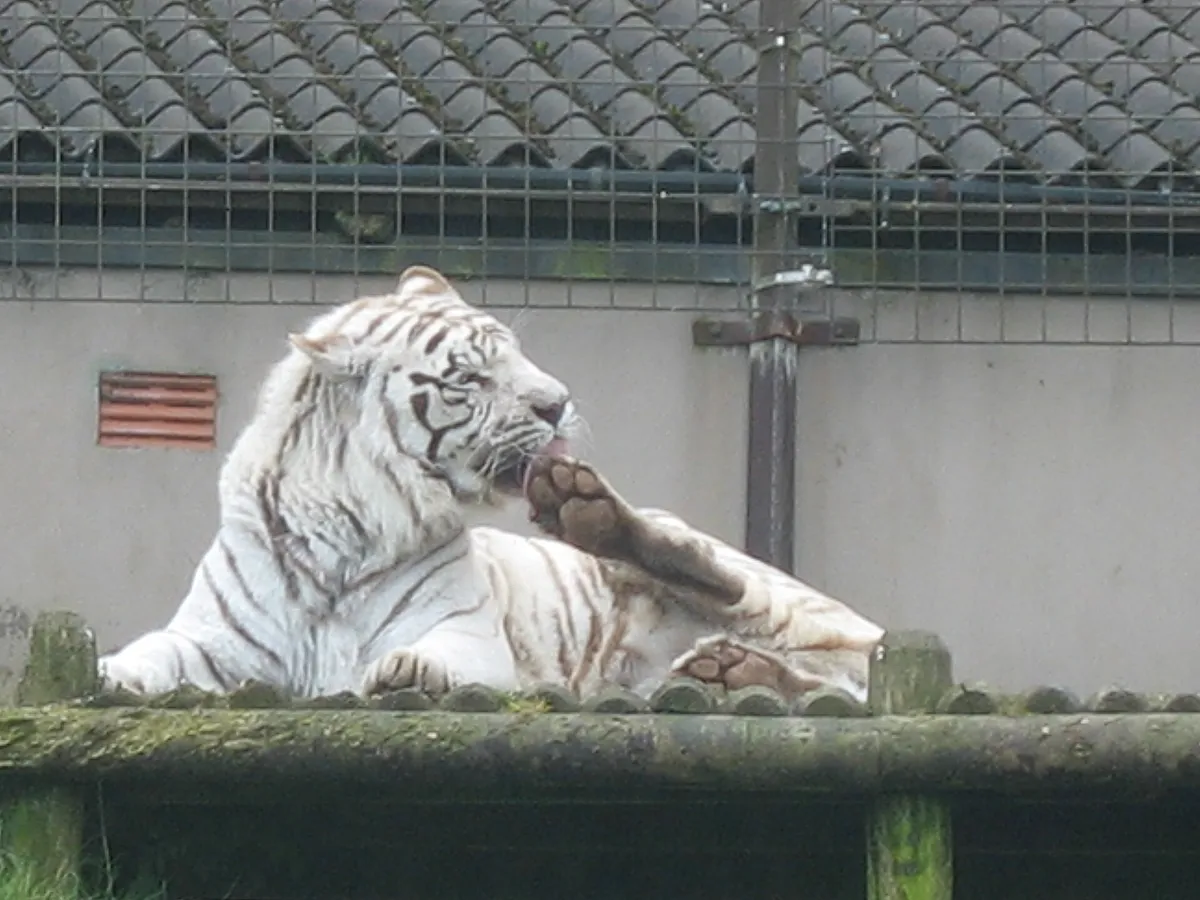 Belfast Zoo🇬🇧 Belfast, United Kingdom
 Dudley Zoo & Castle🇬🇧 Dudley, United Kingdom
 National Zoological Park🇺🇸 Washington, United States
 Brevard Zoo🇺🇸 Melbourne, United States
- 🦁The Maryland Zoo in Baltimore🇺🇸 Baltimore, United States
Community notes
Share your observations about the Bearded Dragon.
No community notes yet. Be the first!
Discover more wildlife
More fascinating animals from the encyclopedia.