
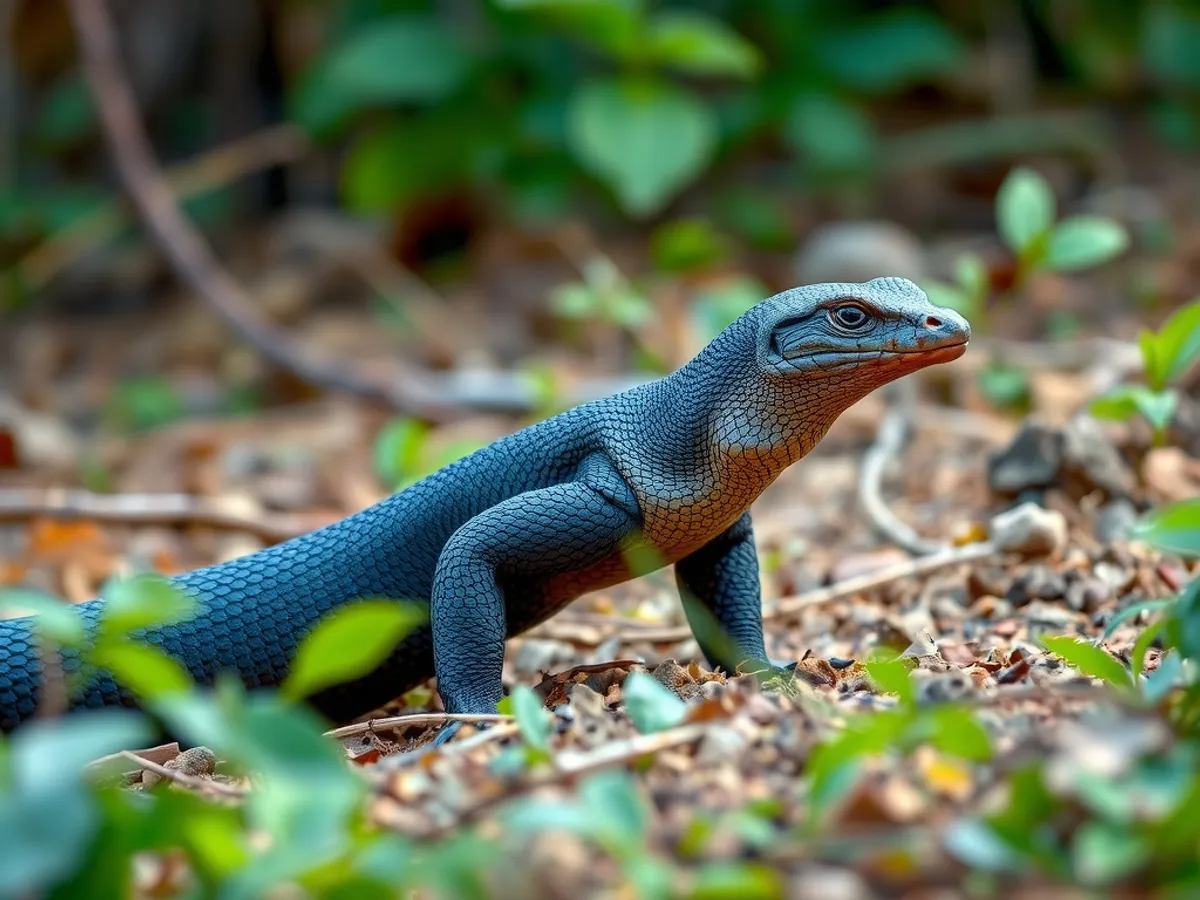
About the Black-Throated Monitor
The Black-Throated Monitor is one of Africa's largest lizards, renowned for its imposing size and distinctive blackish coloration around the throat. Native to Tanzania, this robust reptile can grow up to 7 feet in length, with powerful limbs and a muscular tail. Its tough, scaly skin and strong jaws make it a formidable predator, while its intelligence and curiosity are notable among monitor lizards. Primarily terrestrial, it is often found in savannas and woodlands, where it uses its keen sense of smell to locate food and burrows for shelter.
Fascinating facts
Largest African Monitor
The Black-Throated Monitor is among the largest monitor lizards in Africa, sometimes reaching lengths of up to 213 cm (7 feet).
Superior Sense of Smell
They use their long, forked tongues to pick up scent particles, much like snakes, helping them detect food and mates.
Powerful Predators
Their strong jaws and sharp teeth allow them to crush bones and penetrate tough exoskeletons of large insects and small mammals.
Detailed description
The Black-Throated Monitor (Varanus albigularis microstictus) is a robust, terrestrial lizard distinguished by its large size, typically reaching lengths of 1.5 to 2.1 meters (5–7 feet) and weighing up to 20 kilograms (44 lbs), though most individuals are somewhat smaller. Its coloration is generally gray to brown with lighter, often cream-colored spots and a distinctive dark, almost black, patch on the throat, which gives the subspecies its common name. The head is broad and wedge-shaped, equipped with powerful jaws and sharp, recurved teeth adapted for seizing and processing a wide variety of prey. The limbs are strong and equipped with large, curved claws used for digging and climbing, while the muscular tail, which can be nearly as long as the body, serves as both a counterbalance and a defensive weapon. The skin is covered in tough, keeled scales that provide protection from predators and environmental hazards. Black-Throated Monitors possess highly developed olfactory senses, utilizing a forked tongue and Jacobson’s organ to detect chemical cues in their environment. They are primarily diurnal, spending much of their day actively foraging or basking in the sun to regulate their body temperature. Despite their size and power, these monitors are generally solitary outside of the breeding season. Their intelligence is notable among reptiles, with individuals demonstrating problem-solving abilities and complex exploratory behaviors in both wild and captive settings.
Did you know?
Despite their fearsome appearance, Black-Throated Monitors can become quite docile and even recognize individual humans after frequent interaction.
Research & sources
Behaviour & social structure
Black-Throated Monitors are predominantly solitary and territorial, with individuals maintaining overlapping home ranges that they patrol regularly. They are primarily terrestrial but are capable climbers and swimmers, occasionally ascending trees or entering water bodies in pursuit of prey or to escape threats. Their daily activity centers around thermoregulation and foraging; they bask in the morning to raise their body temperature and then spend several hours actively searching for food. Their diet is opportunistic and includes small mammals, birds, eggs, reptiles, amphibians, insects, and carrion. They are known to use both ambush and active hunting strategies, relying on their acute sense of smell to locate hidden prey. When threatened, they may hiss, inflate their bodies, lash with their tails, or bite. Social interactions are limited, but during the breeding season, males may engage in ritualized combat, wrestling and grappling to establish dominance. In captivity, they have demonstrated the ability to recognize keepers and learn simple tasks, underscoring their cognitive complexity.
Reproduction & life cycle
Breeding in Black-Throated Monitors typically occurs during the rainy season, which in Tanzania is from November to April. Males may travel considerable distances to locate receptive females, engaging in combat with rivals when necessary. Courtship involves head bobbing, circling, and tactile stimulation. After mating, females lay clutches of 15–50 eggs in deep burrows or termite mounds, which provide stable temperature and humidity for incubation. The incubation period ranges from 6 to 9 months, depending on environmental conditions, with eggs hatching synchronously. Hatchlings are fully independent at birth, measuring about 30–40 cm (12–16 inches) in length and displaying brighter coloration than adults. There is no parental care post-oviposition, and juvenile mortality is high due to predation and environmental hazards. Sexual maturity is reached at approximately 3–4 years of age.
Adaptations & survival
The Black-Throated Monitor exhibits several adaptations for survival in the savanna and woodland habitats of East Africa. Its tough, keeled scales reduce water loss and offer protection from abrasive terrain and predators. The forked tongue and highly developed Jacobson’s organ allow for advanced chemosensory tracking of prey and conspecifics. Strong limbs and claws facilitate digging for food, constructing burrows, and accessing termite mounds for nesting. The muscular tail serves both as a defensive weapon and as a balance aid during rapid movement. Behavioral thermoregulation, such as basking and seeking shade or burrows, enables the monitor to maintain optimal body temperature in fluctuating climates. Its opportunistic diet and ability to consume carrion allow it to exploit a wide range of food resources, enhancing its ecological resilience.
Cultural significance
While not as prominent in African folklore as some other reptiles, monitor lizards, including Varanus albigularis, are sometimes featured in local myths and are occasionally regarded with superstition, often associated with omens or as guardians of secrets due to their elusive nature. In some communities, their meat and fat are used in traditional medicine, believed to have healing properties, though such uses are not widespread. The striking appearance and intelligence of the Black-Throated Monitor have also made it a subject of interest in the exotic pet trade and zoological collections worldwide.
Recent research
Recent research on Varanus albigularis microstictus has focused on its cognitive abilities, revealing advanced problem-solving skills and learning capacity compared to other reptiles. Studies have also examined its ecological role as a mesopredator, highlighting its impact on controlling populations of rodents and other small animals. Genetic analyses are ongoing to clarify the relationships among the various subspecies of V. albigularis, as morphological variation is significant across its range. Conservation studies are monitoring the effects of habitat alteration and the pet trade, with recommendations for sustainable management. Notably, research into their thermal ecology has provided insights into how these lizards cope with extreme temperature fluctuations in their environment.
Sources
Varanus albigularis: The IUCN Red List of Threatened Species 2021
IUCN SSC Monitor Lizard Specialist Group
conservationVaranus albigularis (White-throated Monitor) Species Account
Böhme, W. & Ziegler, T. (2009)
scientificVaranus albigularis: The IUCN Red List of Threatened Species 2021
IUCN SSC Monitor Lizard Specialist Group
conservationVideos
Habitat
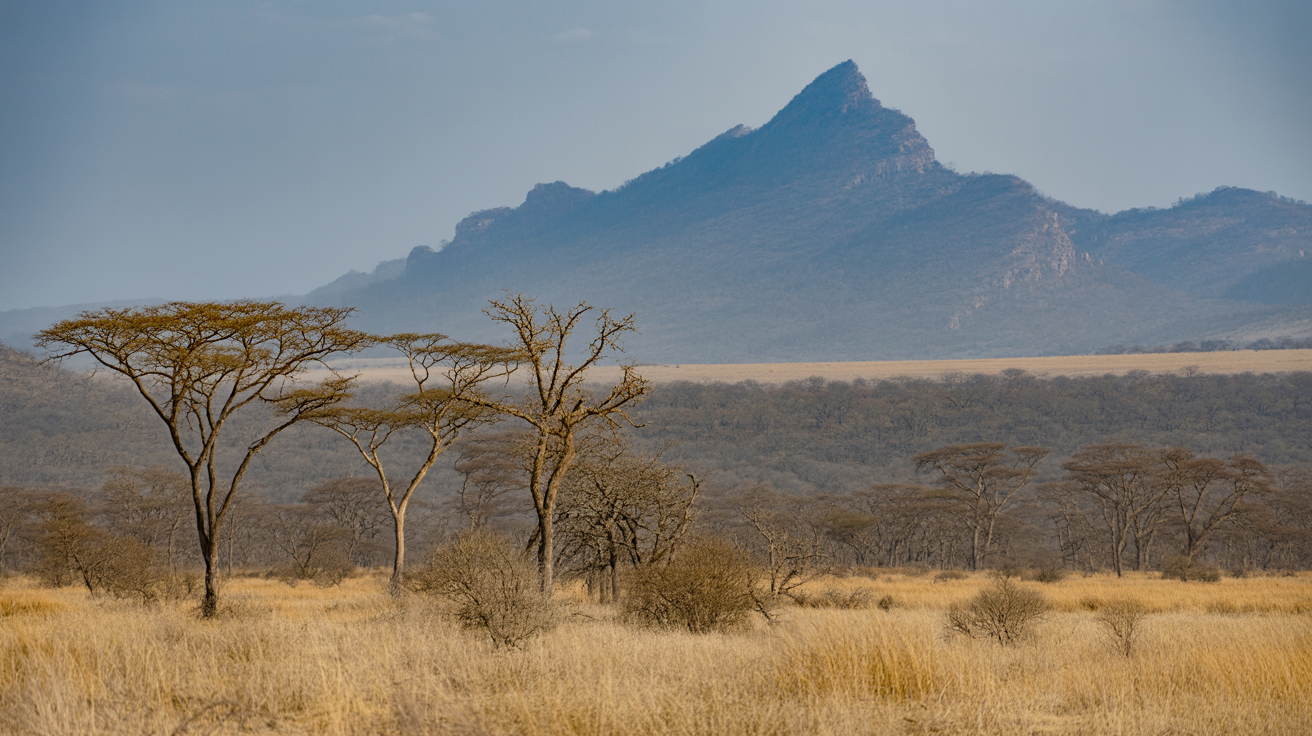
Savanna and woodland regions of Tanzania
 Africa
Savanna
Grasslands with scattered trees, characterized by seasonal rainfall and home to diverse grazing animals and predators.
 Various Continental Regions
Grassland
Open areas dominated by grasses rather than trees, supporting numerous herbivores and their predators.
 Global
Forest
Wooded areas with significant tree cover and diverse plant and animal communities.
Conservation
The Black-Throated Monitor is currently classified as Least Concern on the IUCN Red List.
Threats & challenges
Currently classified as Least Concern by the IUCN, the Black-Throated Monitor faces localized threats from habitat loss due to agricultural expansion, urbanization, and deforestation. In some areas, it is hunted for its skin, meat, and for the pet trade, though this is not considered a major threat to overall population stability at present. Road mortality and persecution by humans, who may view the lizard as a threat to livestock or poultry, also pose risks. Climate change and habitat fragmentation could present future challenges by altering prey availability and nesting sites. Despite these pressures, the species remains widespread and adaptable, with stable populations in protected areas.
Taxonomy
Scientific name
Varanus albigularis microstictus
- Kingdom
- Animalia
- Phylum
- Chordata
- Class
- Reptilia
- Order
- Squamata
- Family
- Varanidae
- Genus
- Varanus
- Species
- albigularis microstictus
Community notes
Share your observations about the Black-Throated Monitor.
No community notes yet. Be the first!
Discover more wildlife
More fascinating animals from the encyclopedia.