
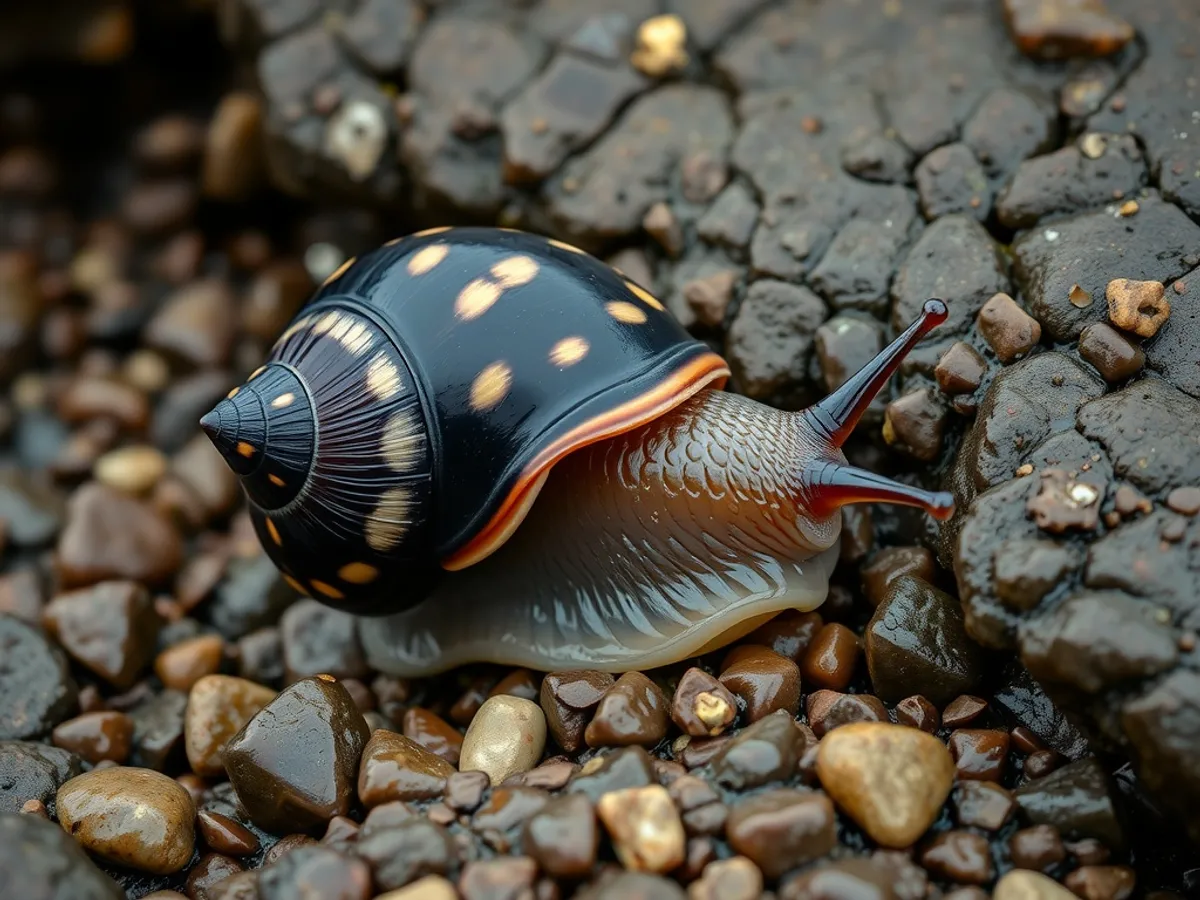
About the Black turban snail
The black turban snail is a medium-sized marine gastropod commonly found along the rocky intertidal shores of the Pacific coast of North America. Its smooth, rounded, turban-shaped shell is dark purple to black, often encrusted with algae or barnacles, and can grow up to 3 centimeters in diameter. This snail plays an important ecological role by grazing on algae, helping to maintain the balance of intertidal ecosystems. Black turban snails are known for their hardiness and ability to cling tightly to rocks, even in turbulent surf conditions.
Fascinating facts
Shell Shape
The black turban snail gets its name from its distinctive, rounded shell that resembles a turban.
Tidal Survival
This snail is well adapted to survive both submerged and exposed conditions in the intertidal zone.
Algae Eater
It uses a specialized tongue called a radula to scrape algae off rocks, helping control algal growth in its ecosystem.
Detailed description
The black turban snail (Tegula funebralis) is a medium-sized marine gastropod distinguished by its thick, globular, turban-shaped shell, which typically measures 20–35 mm in diameter and 15–30 mm in height. The shell is smooth, with a low spire and a deep umbilicus, and its coloration ranges from dark purple to nearly black, often appearing glossy when freshly cleaned but frequently encrusted with algae, barnacles, or limpets in the wild. The aperture is rounded and lined with a pale, iridescent nacre. The snail possesses a muscular foot and a strong, horny operculum that seals the shell entrance, providing protection from desiccation and predators. Its head bears two tentacles with eyes at their bases, and a radula adapted for scraping algae from hard substrates. Black turban snails are primarily herbivorous, feeding on microalgae, diatoms, and biofilm. They are most abundant in the mid to lower intertidal zones of rocky shores along the Pacific coast from British Columbia to Baja California. These snails are adapted to withstand strong wave action and significant fluctuations in temperature and salinity. Their populations can reach high densities, sometimes exceeding 800 individuals per square meter in optimal habitats. They play a critical ecological role as grazers, influencing algal community structure and contributing to nutrient cycling in intertidal ecosystems.
Did you know?
Despite their dark exterior, the inside of a black turban snail's shell is often a striking, shiny blue-green.
Research & sources
Wikipedia summary
Tegula funebralis, the black turban snail or black tegula, is a species of medium-sized marine sea snail in the family Tegulidae. This eastern Pacific Ocean species was previously known as Chlorostoma funebralis.
Behaviour & social structure
Black turban snails are predominantly nocturnal grazers, emerging during low tide or at night to feed on algal films, diatoms, and detritus covering rocks. During daylight or periods of desiccation risk, they seek shelter in crevices or cluster together in moist microhabitats to reduce water loss. Their movement is generally slow, but they can rapidly contract their foot and seal their shell with the operculum when threatened by predators such as sea stars, crabs, or birds. Social interactions are minimal, though high population densities can lead to competition for food and space. Black turban snails exhibit homing behavior, often returning to the same resting spot after foraging. They are known to respond to chemical cues from predators, increasing their attachment strength or moving away from danger. Feeding activity is strongly influenced by tidal cycles, with peak foraging occurring during low tides when the substrate is exposed.
Reproduction & life cycle
Tegula funebralis is dioecious, with separate male and female individuals. Reproduction typically occurs from late spring through summer, coinciding with warmer water temperatures. Fertilization is external: males release sperm and females release eggs into the water column, where fertilization occurs. Females can produce tens of thousands of eggs per spawning event. The fertilized eggs develop into free-swimming planktonic trochophore larvae, which later metamorphose into veliger larvae. The larval stage lasts from several days to a few weeks, depending on environmental conditions, before settling onto rocky substrates and undergoing metamorphosis into juvenile snails. There is no parental care; survival of larvae is subject to predation and environmental factors. Sexual maturity is typically reached at 1–2 years of age.
Adaptations & survival
The black turban snail exhibits several key adaptations for intertidal life. Its robust, rounded shell and low spire minimize the risk of dislodgement by waves and provide resistance to crushing predators. The operculum allows the snail to seal itself inside the shell, reducing water loss during low tide and offering protection from predation. The muscular foot produces strong adhesive mucus, enabling the snail to cling tightly to rock surfaces even in turbulent surf. Its radula is specialized for efficiently scraping microalgae and diatoms from hard substrates. Behavioral adaptations include seeking shelter during hot or dry conditions and responding to predator cues. The species also demonstrates physiological tolerance to wide ranges of temperature and salinity, allowing survival in the fluctuating intertidal environment.
Cultural significance
The black turban snail has been used as a traditional food source by Indigenous peoples of the Pacific Northwest, who collected the snails for consumption and sometimes used their shells for decorative or utilitarian purposes. In modern times, the species is occasionally used in educational settings and public aquaria to illustrate intertidal ecology and adaptation. Its abundance and ecological role make it a familiar species to tidepool enthusiasts and coastal communities, though it holds limited symbolic or mythological significance compared to other marine invertebrates.
Recent research
Recent research on Tegula funebralis has focused on its responses to environmental stressors such as ocean acidification, temperature fluctuations, and predation risk. Studies have demonstrated that increased CO2 levels can reduce shell strength and alter larval development, potentially impacting population dynamics. Behavioral ecology research has explored the snail's chemosensory abilities to detect predators and its role in structuring intertidal algal communities. Genetic studies have investigated population connectivity along the Pacific coast, revealing moderate gene flow and some regional differentiation. Ongoing monitoring of intertidal zones continues to use T. funebralis as a bioindicator for ecosystem health and climate change impacts.
Sources
Tegula funebralis (A. Adams, 1855): Black Turban Snail
World Register of Marine Species (WoRMS) (2024)
scientificEcology and Population Dynamics of the Black Turban Snail, Tegula funebralis
Menge, B.A. (1974)
scientificVideos
Habitat
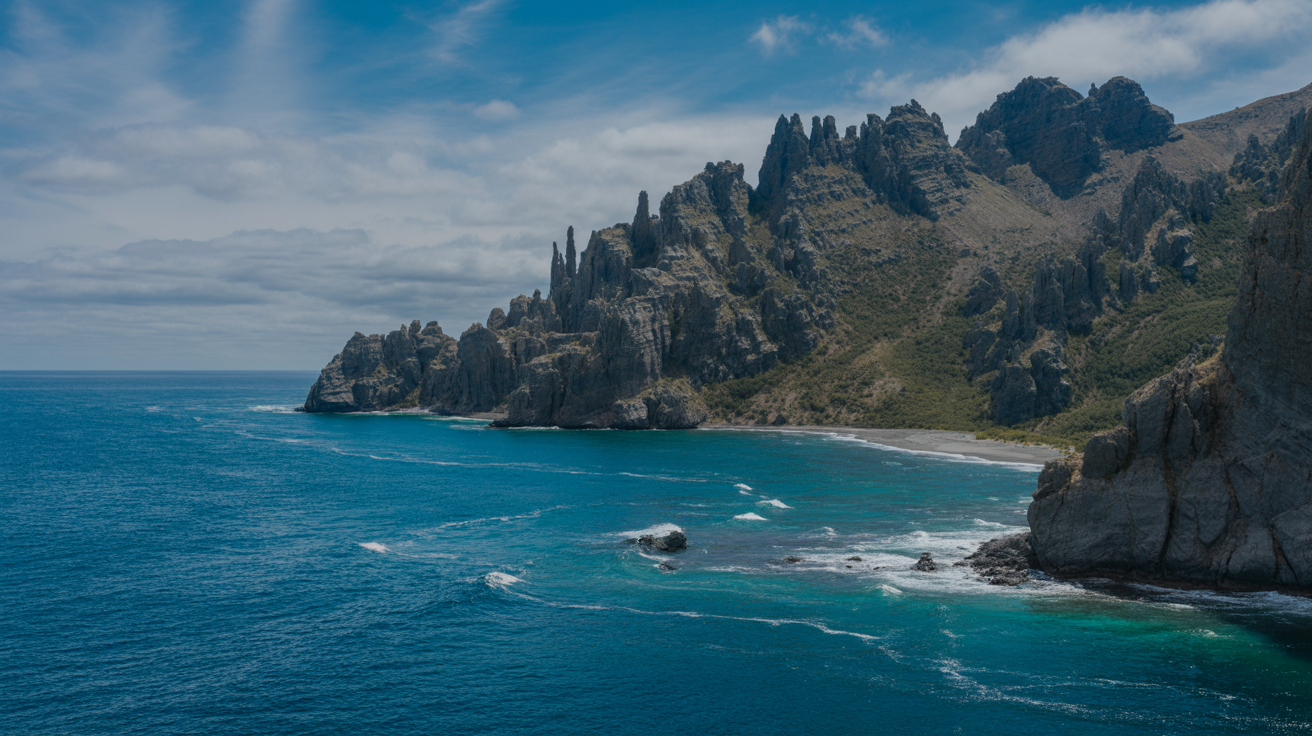
Rocky intertidal zones
Conservation
The Black turban snail is currently classified as Least Concern on the IUCN Red List.
Threats & challenges
Currently, Tegula funebralis is not considered threatened and is classified as Least Concern. However, local populations may be impacted by habitat loss due to coastal development, pollution, and trampling by humans in heavily visited intertidal areas. Ocean acidification poses a potential long-term threat, as reduced pH can impair shell formation and larval development. Overharvesting is not a significant issue, but collection for bait or educational purposes can affect local densities. Predation by sea stars (Pisaster ochraceus), crabs, and birds is a natural regulatory factor. Climate change and associated shifts in intertidal community structure may alter competitive dynamics and food availability.
Taxonomy
Scientific name
Chlorostoma funebralis
- Kingdom
- Animalia
- Phylum
- Mollusca
- Class
- Gastropoda
- Order
- Vetigastropoda
- Family
- Tegulidae
- Genus
- Chlorostoma
- Species
- funebralis
Community notes
Share your observations about the Black turban snail.
No community notes yet. Be the first!
Discover more wildlife
More fascinating animals from the encyclopedia.