
About the Blue Iguana
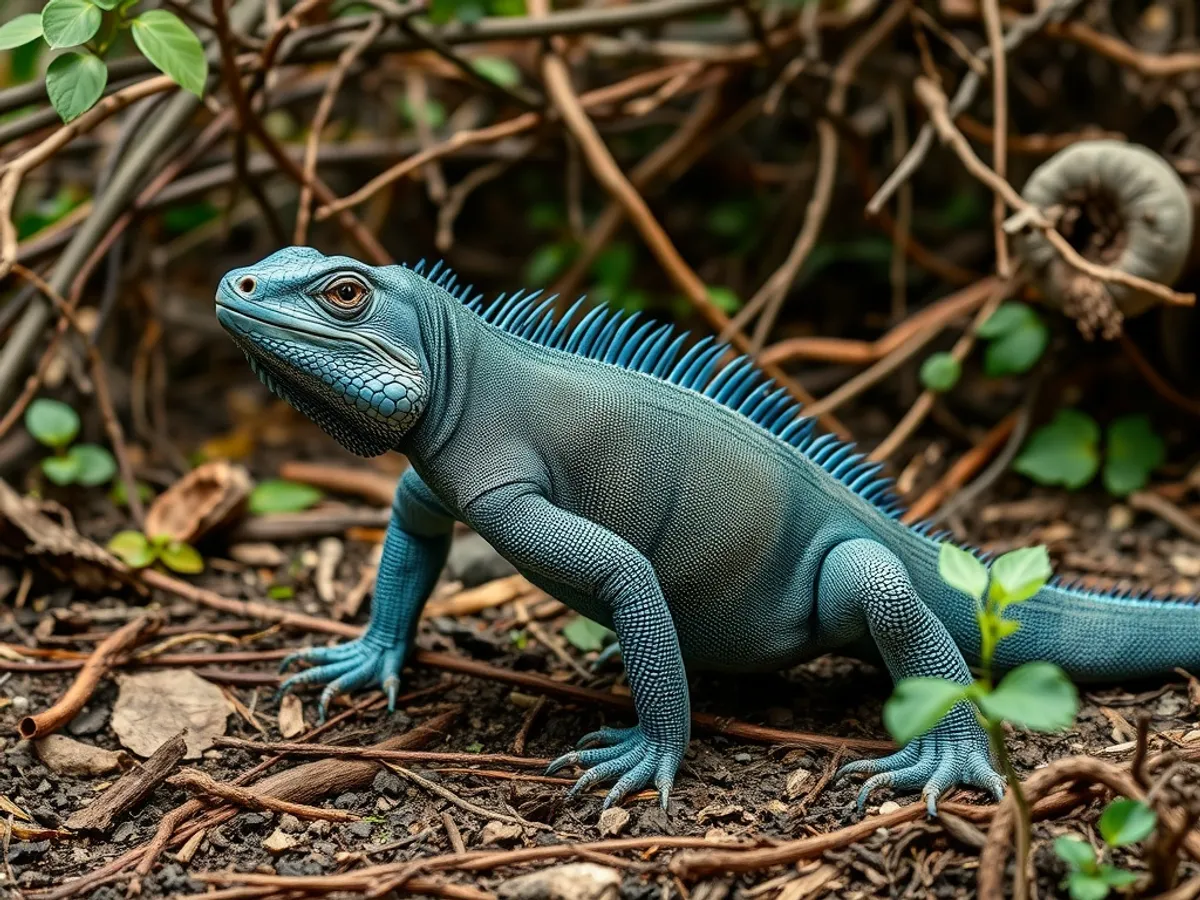
The Blue Iguana is a large, strikingly blue lizard native exclusively to Grand Cayman in the Caribbean. Recognized for its vivid blue color, especially during the breeding season, this iguana is among the largest native land animals on the island. It is primarily terrestrial, inhabiting dry forests, shrublands, and rocky areas with open clearings. The Blue Iguana is critically endangered due to habitat loss and predation by invasive species, but conservation efforts have helped increase its numbers in recent years. It is a herbivore, feeding mainly on leaves, flowers, and fruits.
Fascinating facts
Largest Native Land Animal
The Blue Iguana is the largest native terrestrial animal on Grand Cayman, reaching lengths of up to 1.5 meters (5 feet) including the tail.
Strict Herbivore
Unlike many iguanas, the Blue Iguana is strictly herbivorous, consuming a wide variety of leaves, flowers, and fruits, and rarely eating insects or animal matter.
Conservation Success
Intensive conservation programs have helped raise the wild population from fewer than 20 individuals in 2002 to several hundred today.
Detailed description
The Blue Iguana (Cyclura lewisi) is a robust, heavy-bodied lizard reaching lengths of up to 1.5 meters (5 feet) from snout to tail, with mature males typically larger than females. Adults can weigh between 9 and 14 kilograms (20–30 lbs), making them among the largest terrestrial reptiles in the Caribbean. Their most striking feature is their vivid blue coloration, which is most pronounced in males during the breeding season due to increased social signaling; females and juveniles tend to be more grayish or greenish-blue. The head is angular with pronounced subtympanic shields, and the body is covered in rough, granular scales with a prominent dorsal crest of spines. Blue Iguanas are primarily diurnal, basking in the sun to regulate body temperature and retreating to limestone crevices or burrows at night for shelter. They are solitary and territorial, with males defending overlapping territories that may encompass the ranges of several females. Their diet is strictly herbivorous, consisting of leaves, flowers, fruits, and occasionally fungi, and their powerful jaws are adapted for crushing tough plant material. Blue Iguanas play a crucial ecological role as seed dispersers, aiding in the regeneration of native flora. Lifespans in the wild are estimated at 25–40 years, with some individuals in managed care living over 65 years, making them one of the longest-lived lizard species.
Did you know?
At one point, fewer than 20 Blue Iguanas remained in the wild, making them one of the world's most endangered lizards.
Research & sources
Wikipedia summary
The blue iguana, also known commonly as the Grand Cayman ground iguana, the Grand Cayman blue iguana, and the Cayman Island rock iguana, is an endangered species of lizard in the family Iguanidae. The species is endemic to the island of Grand Cayman. It was previously considered to be a subspecies of the Cuban iguana, Cyclura nubila, but in a 2004 article Frederic J. Burton reclassified it as a separate species because, according to him, the genetic differences discovered four years earlier between the different C. nubila populations warranted this interpretation. The blue iguana is one of the longest-living species of lizard.
Behaviour & social structure
Blue Iguanas are primarily solitary, with individuals maintaining well-defined home ranges. Males are highly territorial, especially during the breeding season, and will engage in ritualized displays such as head-bobbing, dewlap extension, and tail-whipping to deter rivals. They are most active during the morning and late afternoon, spending midday hours basking or resting in the shade to avoid overheating. Feeding occurs throughout the day, with iguanas foraging for low-growing vegetation, fallen fruit, and flowers. Despite their size, they are agile climbers and may ascend low shrubs or rocks in search of food or basking sites. When threatened, Blue Iguanas may flee rapidly to their burrows or crevices, and can deliver powerful bites if cornered. Social interactions outside of the breeding season are minimal, with encounters between adults often resulting in avoidance or brief confrontations.
Reproduction & life cycle
Breeding occurs annually, typically from May to June, coinciding with the onset of the rainy season. Males court females through a series of visual displays and physical approaches, with receptive females allowing copulation after a period of pursuit. Females lay a single clutch of 5–21 eggs (average 10–15) in deep, self-dug nests in sandy or loose soil, usually in sun-exposed areas to ensure proper incubation temperatures. Incubation lasts approximately 65–90 days, depending on environmental conditions, and hatchlings emerge from August to September. There is no parental care after egg-laying; hatchlings are independent from birth and must avoid predation from birds, rats, and feral mammals. Sexual maturity is reached at 3–7 years, with growth rates influenced by food availability and environmental factors.
Adaptations & survival
Blue Iguanas exhibit several adaptations for survival in the dry, rocky habitats of Grand Cayman. Their blue coloration provides camouflage among the limestone rocks and dappled forest light, while also serving as a social signal during mating. The robust body and strong limbs enable efficient digging of burrows for shelter and nesting. Their herbivorous diet is supported by a large, complex digestive tract capable of fermenting tough plant fibers, and their jaws are adapted for crushing hard seeds and leaves. Behavioral thermoregulation, such as basking and seeking shade, allows them to maintain optimal body temperatures in a fluctuating environment. The species also exhibits seasonal reproductive timing, synchronizing egg-laying with periods of increased rainfall to maximize hatchling survival.
Cultural significance
The Blue Iguana is a national symbol of the Cayman Islands and features prominently in local conservation awareness campaigns. It is celebrated as an emblem of the islands' unique biodiversity and has become a flagship species for habitat protection and environmental education. The iguana's image appears on local currency and stamps, and its conservation success story is a source of pride for residents. There are no known traditional uses or significant roles in indigenous mythology, but its presence in ecotourism and educational programs has increased its cultural and economic importance.
Recent research
Recent genetic studies have confirmed the distinctiveness of Cyclura lewisi from other Cyclura species, supporting its status as a unique species rather than a subspecies of the Cuban iguana. Ongoing research focuses on population genetics, disease surveillance (notably susceptibility to adenovirus and fungal infections), and the ecological impacts of head-started iguanas on restored habitats. Satellite telemetry and mark-recapture studies have provided valuable data on home range size, dispersal, and habitat preferences. Conservation biologists are also investigating the effects of climate change on nesting success and hatchling survival, as well as the long-term viability of reintroduced populations. The Blue Iguana Recovery Programme, based at the Queen Elizabeth II Botanic Park, continues to be a model for endangered species recovery worldwide.
Videos
Habitat
Dry forest and shrubland

Conservation
The Blue Iguana is currently classified as Endangered on the IUCN Red List.
Threats & challenges
The Blue Iguana faces multiple threats, primarily habitat loss due to agricultural expansion, urban development, and invasive plant species that alter native vegetation. Predation by introduced mammals such as feral cats, dogs, and rats has historically caused high mortality, especially among eggs and juveniles. Road mortality and illegal collection for the pet trade have also contributed to population declines. By the early 2000s, the wild population was reduced to fewer than 25 individuals, placing the species at imminent risk of extinction. Intensive conservation efforts, including captive breeding, head-starting of juveniles, habitat restoration, and predator control, have led to a gradual recovery, with over 1,000 individuals now estimated in the wild. However, the species remains classified as Endangered, with ongoing challenges including genetic bottlenecks, disease risk, and continued habitat encroachment.
Taxonomy
Scientific name
Cyclura lewisi
- Kingdom
- Animalia
- Phylum
- Chordata
- Class
- Reptilia
- Order
- Squamata
- Family
- Iguanidae
- Genus
- Cyclura
- Species
- lewisi
Where to see a blue iguana
4 zoos and aquariums in 1 country are recorded as keeping this species.
 National Zoological Park🇺🇸 Washington, United States
 Shedd Aquarium🇺🇸 Chicago, United States
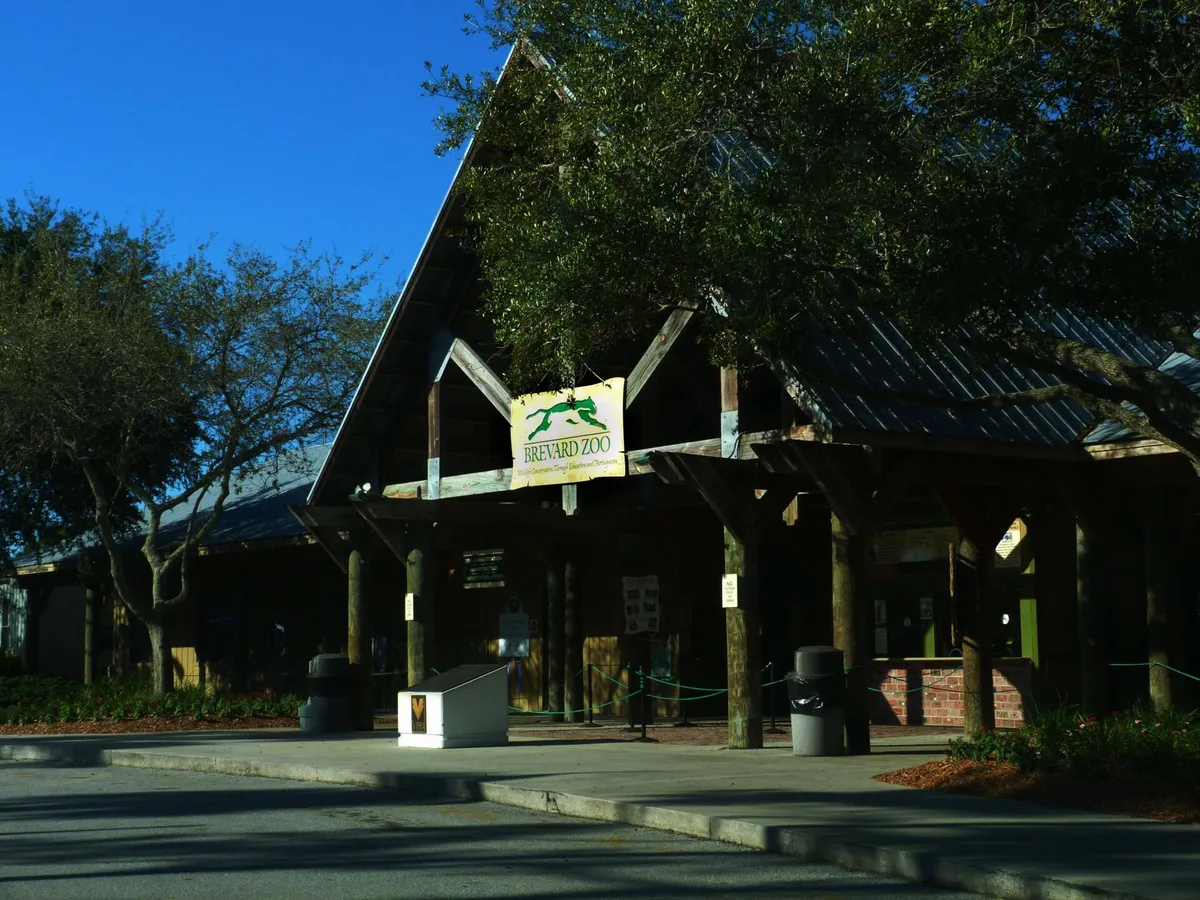 Brevard Zoo🇺🇸 Melbourne, United States
- 🦁Tulsa Zoo🇺🇸 Tulsa, United States
Community notes
Share your observations about the Blue Iguana.
No community notes yet. Be the first!
Discover more wildlife
More fascinating animals from the encyclopedia.