
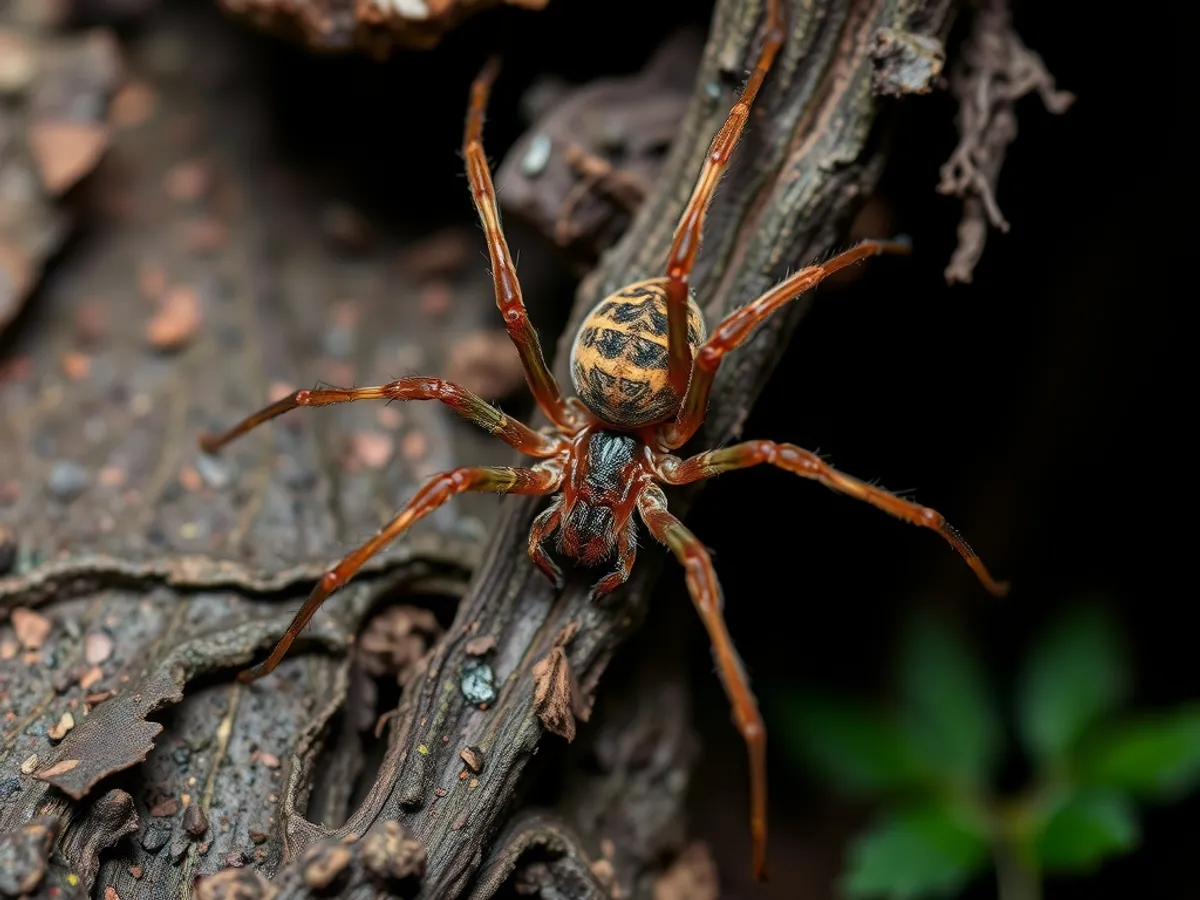
About the Brown Recluse Spider
The brown recluse is one of the most over-diagnosed animals in medicine. The reliable way to identify one is not the "violin" marking on the back, which is variable and is shared by many harmless spiders, but the eyes: a recluse has six eyes arranged in three widely separated pairs, where almost every other spider has eight. Its range is genuinely limited — essentially the central and south-central United States — yet "brown recluse bites" are diagnosed constantly in states where the spider does not live, and studies have found that a large share of those lesions turn out to be MRSA infections, other bacterial infections, fungal infections, or even skin cancers. It is also far less dangerous than the reputation implies. In a well-known case, a Kansas family collected over 2,000 brown recluses from their home in six months and nobody in the household was ever bitten. Genuine bites usually heal without incident; a minority produce a necrotic ulcer. It builds no capture web, only an irregular retreat, and hunts at night.
Fascinating facts
Violin Marking
The Brown Recluse Spider is easily identified by a distinctive violin-shaped marking on its cephalothorax.
Indoor Resident
They often inhabit human homes, hiding in dark, undisturbed places like attics, closets, and behind furniture.
Venomous Bite
While their bites can cause serious skin reactions, most are minor and heal without medical intervention.
Detailed description
The Brown Recluse Spider (Loxosceles reclusa) is a medium-sized arachnid, typically measuring 6–20 mm in body length, with a leg span up to 45 mm. Its most distinctive anatomical feature is a dark, violin-shaped marking on the dorsal side of the cephalothorax, though this can be faint or absent in some individuals. The species has six eyes arranged in pairs (dyads) in a semicircular pattern, unlike the eight eyes found in most spiders. The body coloration ranges from light tan to dark brown, and the legs are uniformly colored without banding or spines. Brown Recluses possess fine, short hairs but lack prominent setae. They are adapted for a cryptic lifestyle, favoring undisturbed environments such as woodpiles, sheds, and rarely-used indoor spaces. Their silk is used primarily to construct irregular, loose retreats rather than webs for prey capture. Nocturnal by nature, they emerge at night to hunt, relying on stealth and agility rather than web entrapment. The species is solitary, with individuals maintaining separate retreats except during mating. Brown Recluse spiders are long-lived for their size, with females capable of surviving up to 2–4 years in favorable conditions. Their venom contains a complex mixture of enzymes, notably sphingomyelinase D, which can cause necrotic lesions in humans, though most bites result in mild symptoms. Despite their notoriety, Brown Recluses are non-aggressive and rarely bite unless provoked.
Did you know?
Brown Recluse Spiders build irregular, sticky webs only for shelter, not for catching prey.
Research & sources
Wikipedia summary
The brown recluse is a recluse spider with necrotic venom. Similar to those of other recluse spiders, their bites sometimes require medical attention. The brown recluse is one of two spiders in North America with dangerous venom, the other being the black widow.
Behaviour & social structure
Brown Recluse Spiders are primarily nocturnal hunters, emerging from their retreats at night to actively forage for small arthropods such as cockroaches, crickets, and other insects. They exhibit sit-and-wait predatory behavior, often remaining motionless for extended periods before ambushing prey. Unlike web-building spiders, they do not use webs to ensnare prey but may use silk to immobilize captured insects. Social interactions are minimal; individuals are highly territorial and avoid conspecifics outside of mating. During the day, they remain hidden in silken retreats constructed in dark, undisturbed locations. When threatened, they prefer to flee rather than confront, and biting is a last resort. Brown Recluses are known for their ability to survive long periods without food or water, sometimes up to six months, by entering a state of reduced metabolic activity.
Reproduction & life cycle
Mating in Loxosceles reclusa typically occurs from late spring to early summer. Males locate females by following pheromone trails and engage in a cautious courtship to avoid being mistaken for prey. Copulation involves the transfer of sperm via specialized pedipalps. After mating, females lay eggs in silken sacs, each containing 40–50 eggs, and may produce up to five sacs per season. The incubation period ranges from 24 to 39 days, depending on temperature and humidity. Spiderlings emerge fully formed and disperse shortly after hatching, receiving no parental care. Sexual maturity is reached in about 10–12 months under optimal conditions. Females generally outlive males, which often die soon after mating.
Adaptations & survival
Brown Recluse Spiders exhibit several key adaptations for survival. Their cryptic coloration and reclusive behavior reduce predation risk and facilitate coexistence with humans. The six-eyed arrangement enhances their ability to detect movement in low-light environments. Their venom, containing cytotoxic enzymes, is highly effective for subduing prey and deterring predators. The ability to survive extended periods without food or water is an adaptation to unpredictable resource availability in their native habitats. Silk production is specialized for constructing retreats rather than prey capture, reflecting their active hunting strategy. Additionally, their metabolic flexibility allows them to thrive in both natural and anthropogenic environments.
Cultural significance
The Brown Recluse has a prominent place in North American popular culture, often cited in media and folklore as a dangerous household spider. Its reputation for causing severe necrotic wounds has led to widespread arachnophobia, though most bites are medically minor. There are no known traditional uses or symbolic roles in indigenous cultures. The species is sometimes referenced in cautionary tales and urban legends, contributing to its notoriety. Educational campaigns have sought to dispel myths and promote accurate identification, as many alleged 'recluse bites' are misattributed.
Recent research
Recent research has focused on the biochemical properties of Loxosceles venom, particularly the sphingomyelinase D enzyme responsible for dermonecrosis. Studies have advanced understanding of venom mechanisms, leading to improved clinical management of bites. Molecular phylogenetic analyses have clarified the evolutionary relationships within the Sicariidae family. Ongoing research explores the spider's adaptability to urban environments and the ecological role of recluse spiders in controlling pest populations. Advances in diagnostic tools have improved bite identification, reducing misdiagnosis and unnecessary treatments.
Videos
Habitat
Woodlands, human dwellings, and sheltered outdoor locations


Conservation
The Brown Recluse Spider is currently classified as Least Concern on the IUCN Red List.
Threats & challenges
Currently, Brown Recluse Spiders face few natural threats due to their secretive habits and potent venom. Predators include certain species of centipedes, scorpions, and larger spiders. Human impact is mixed; while habitat destruction can reduce local populations, the species' adaptability to human dwellings often offsets these effects. Pesticide use may pose localized risks, but overall population trends remain stable, and the species is not considered threatened. Misidentification and public fear have led to unnecessary eradication efforts in some areas, though actual envenomation cases are rare relative to the spider's abundance.
Taxonomy
Scientific name
Loxosceles reclusa
- Kingdom
- Animalia
- Phylum
- Arthropoda
- Class
- Arachnida
- Order
- Araneae
- Family
- Sicariidae
- Genus
- Loxosceles
- Species
- reclusa
Community notes
Share your observations about the Brown Recluse Spider.
No community notes yet. Be the first!
Discover more wildlife
More fascinating animals from the encyclopedia.