Arachnids
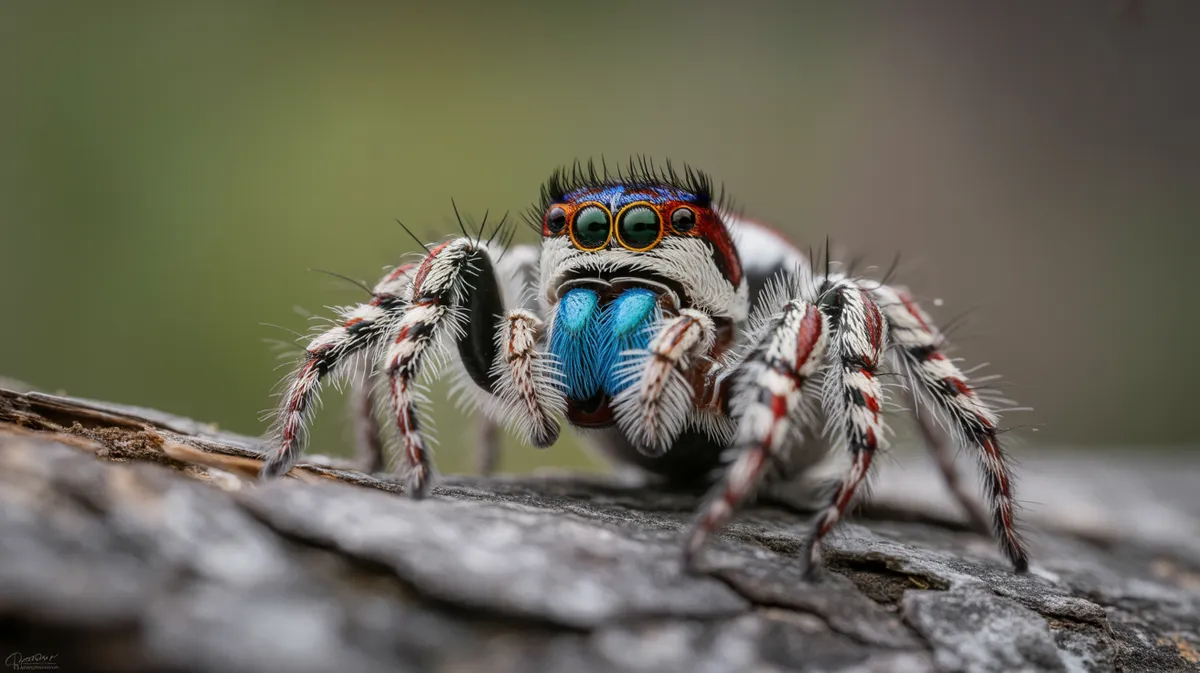
Invertebrates with eight legs, no antennae or wings, including spiders and scorpions.
27 species
Ant-mimicking Spider
Myrmarachne formicaria
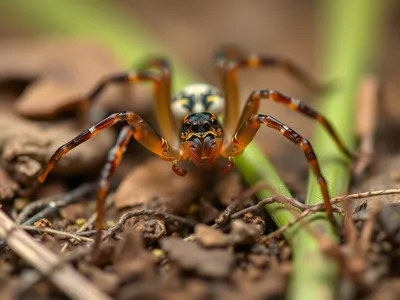
The ant-mimicking spider is a remarkable arachnid known for its striking resemblance to ants, both in appearance and behavior. This mimicry helps protect the spider from predators that typically avoid ants due to their aggressive nature and chemical defenses. Found in various regions across Europe and Asia, ant-mimicking spiders are agile hunters that rely on their speed and keen vision. They use their front pair of legs to imitate antennae, further enhancing their ant-like disguise.
Atlantic Horseshoe Crab
Limulus polyphemus
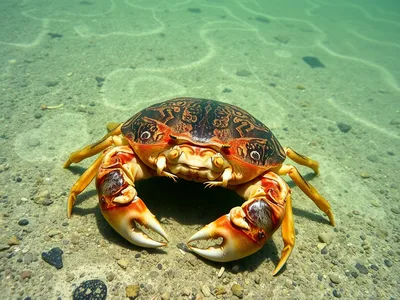
The horseshoe crab is not a crab. It is closer to spiders and scorpions than to anything crustacean, and its body plan has run essentially unchanged for something like four hundred and fifty million years — it was old before the dinosaurs. Its blood is blue, because it carries oxygen with copper rather than iron, and it contains cells of extraordinary usefulness: they clot violently in the presence of bacterial endotoxin, in quantities almost too small to measure. That reaction was turned into a test, and it is now the global standard for checking that vaccines, injectable drugs and implanted devices are free of contamination — which means that essentially every injection given to a human being has been screened using the blood of this animal. Hundreds of thousands are caught each year, bled, and returned to the sea, a practice that is now under pressure as synthetic alternatives are developed. It has ten eyes, and every spring it comes ashore in huge numbers to spawn, feeding the shorebirds that time their migration to arrive exactly then.
Australian Peacock Spider
Maratus volans
Peacock spiders are jumping spiders about 4 to 5 mm long — small enough to sit comfortably on a fingernail — that perform one of the most elaborate courtship displays of any animal. The male raises a flap on his abdomen like a fan and vibrates his legs and body while shuffling side to side, and he is not only being seen: he is also drumming, sending substrate-borne vibration songs through the leaf litter that the female detects through her legs. Colour and sound have to work together, and a male who gets it wrong is frequently eaten. The colour itself is a physics exhibit. The blues are structural, produced by three-dimensional nanoscale gratings rather than pigment, and the black regions are "super black": microscopic lens-and-brush structures on the scales trap light and reflect as little as half a percent of it, which makes the adjacent colours look far more saturated by contrast — the same trick used by birds of paradise. More than a hundred species are known, most described in the last fifteen years.
Brazilian Wandering Spider
Phoneutria fera
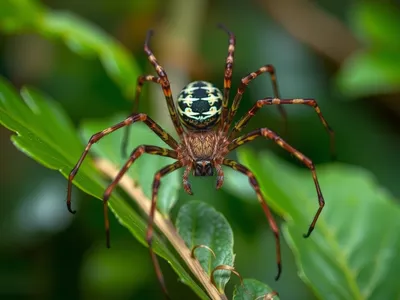
The name is the important part: it wanders. Phoneutria spiders do not build capture webs and do not sit in one place — they hunt across the forest floor at night, and by day they cram into any dark cavity they can find, which is how they end up in shoes, log piles, and banana shipments and get flown to European supermarkets. That habit, not any special aggression, is what produces the encounters. It is routinely billed as the world's most venomous spider, and its venom is genuinely serious: it contains a peptide toxin that causes prolonged, painful priapism, which is why it is being actively investigated as a lead compound for erectile dysfunction drugs. But the popular framing is misleading. Brazilian hospital data covering thousands of Phoneutria bites show that the great majority produce nothing worse than intense local pain, effective antivenom exists, and fewer than one percent of cases require it — deaths are exceptionally rare and mostly involve children. Threatened, it rears up, lifts its front legs vertically over its head, exposes red-hued fangs, and sways side to side.
Brown Recluse Spider
Loxosceles reclusa
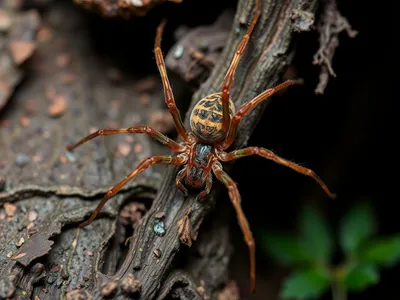
The brown recluse is one of the most over-diagnosed animals in medicine. The reliable way to identify one is not the "violin" marking on the back, which is variable and is shared by many harmless spiders, but the eyes: a recluse has six eyes arranged in three widely separated pairs, where almost every other spider has eight. Its range is genuinely limited — essentially the central and south-central United States — yet "brown recluse bites" are diagnosed constantly in states where the spider does not live, and studies have found that a large share of those lesions turn out to be MRSA infections, other bacterial infections, fungal infections, or even skin cancers. It is also far less dangerous than the reputation implies. In a well-known case, a Kansas family collected over 2,000 brown recluses from their home in six months and nobody in the household was ever bitten. Genuine bites usually heal without incident; a minority produce a necrotic ulcer. It builds no capture web, only an irregular retreat, and hunts at night.
Camel Spider
Galeodes arabs
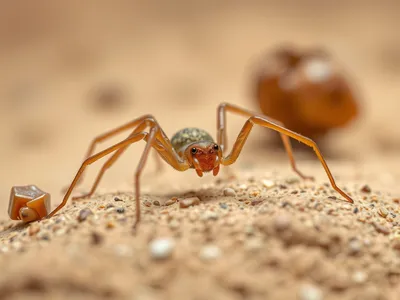
The camel spider is not a spider, not a scorpion, and — most importantly — it has no venom at all. It belongs to its own arachnid order, Solifugae, and almost everything popularly believed about it is false: it does not chase people, does not scream, is not the size of a dinner plate, and does not eat the stomachs of camels. What it does have is a spectacular pair of chelicerae, jaws that can be a third of the animal's body length, working like two pairs of pliers to shred prey — it kills by sheer mechanical destruction rather than chemistry. It is among the fastest arachnids, running at around 16 km/h, and the reason soldiers in the Gulf reported being "chased" is mundane and slightly sad: solifuges are intolerant of sun and run toward shade, and the largest patch of shade in an open desert is the shadow of the human standing there. On the underside of the last pair of legs it carries malleoli, fan-shaped racquet organs found in no other animal, almost certainly chemosensory.
Common scorpion
Euscorpius carpathicus
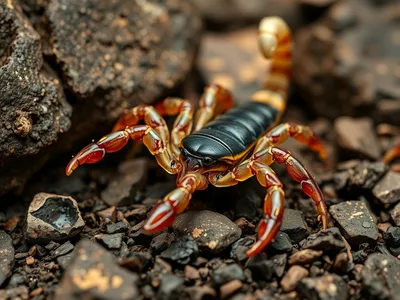
The common scorpion, known scientifically as Euscorpius carpathicus, is a small to medium-sized arachnid native to parts of Southern Europe. It is easily recognized by its segmented tail, which ends in a venomous stinger, and its robust pincers used for hunting and defense. These scorpions are primarily nocturnal, hiding under rocks, logs, or leaf litter during the day and emerging at night to hunt small invertebrates. While their sting can be painful to humans, it is generally not dangerous and is milder compared to other scorpion species.
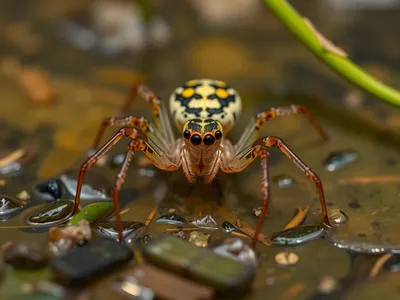
Diving Bell Spider
Argyroneta aquatica
The diving bell spider is the only spider in the world that lives its entire life underwater, and it does it without ever evolving a gill. Instead it builds one. It spins a dome of silk between submerged plants and then makes repeated trips to the surface, trapping air against the hairs of its abdomen and carrying it down as a silvery bubble, which it releases into the dome until the structure is inflated — a diving bell it can sit inside, eat inside, mate inside and raise young inside. The remarkable part is that the bell is not merely a tank of stored air. It functions as a physical gill: as the spider consumes oxygen, more diffuses in from the surrounding water across the bubble's surface, and carbon dioxide diffuses out, so the bell continually recharges itself. A spider can stay down for many hours, and in cold, oxygen-rich water it may need to surface only about once a day.
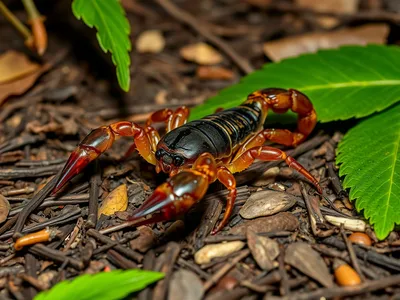
Emperor Scorpion
Pandinus imperator
Pandinus imperator of West African rainforest is among the largest scorpions alive, up to about 20 cm, and it is also one of the least dangerous. That is not a coincidence. Its enormous, crab-like pedipalps are strong enough to crush a beetle or a small vertebrate outright, so it has never needed potent venom, and across scorpions generally there is a broad trade-off — big claws, weak venom; slim claws, dangerous sting. Its sting is comparable to a bee's for most people. Like every scorpion, it glows an eerie blue-green under ultraviolet light, a fluorescence produced by compounds in the thin hyaline layer of the cuticle. The function is still unresolved; suggestions include the scorpion using its whole body as a light sensor to judge how much moonlight is falling on it, since scorpions avoid foraging under a bright moon. Emperor scorpions are viviparous, giving birth to live young that climb onto the mother's back as pale, soft-bodied scorplings and stay there until their first moult. They are also unusually social for a scorpion, tolerating relatives in a shared burrow, and they often live in and around termite mounds where the soil is workable and prey is plentiful.
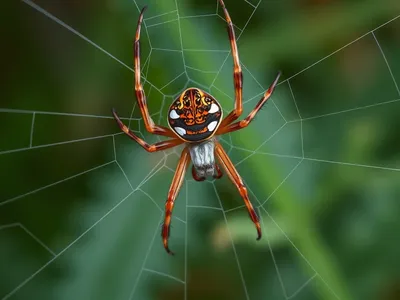
European garden spider
Araneus diadematus
Araneus diadematus is the orb-weaver with a cross of white spots on its abdomen, and it rebuilds its web with a frequency that would bankrupt most animals. The capture spiral is a costly protein, and a web loses its stickiness and its tension within a day or so, so the spider takes the old web down, eats it, and recycles the amino acids directly into new silk — the material is back in a fresh web within hours. The animal sits either at the hub or in a curled leaf retreat off to one side, holding a single taut signal thread that runs to the centre, so it feels the vibration of a strike without exposing itself. Prey is bitten and then swathed in bands of silk laid down by the hind legs as the spider rotates it, and digestion is external: enzymes liquefy the insect inside its own cuticle and the spider drinks it out. Males are much smaller than females and approach carefully along a mating thread, plucking it in a specific rhythm, and they are frequently eaten anyway. The spider produces at least half a dozen chemically distinct silks from different glands — dry structural radials, sticky spiral, wrapping silk, dragline, egg-sac silk — each optimised for a different job.
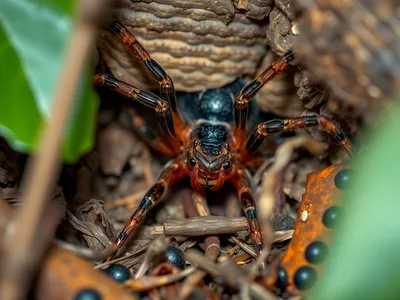
Funnel-Web Spider
Atrax robustus
Australia's funnel-webs, and above all the Sydney funnel-web, are among the very few spiders with venom that can reliably kill an adult human, and the reason is a biochemical accident. The key toxin, delta-hexatoxin, jams open the sodium channels in nerve cells, and it almost certainly evolved to kill insects — but it happens to fit the equivalent channels in primates. Most other mammals shrug it off: dogs, cats and rabbits are largely unaffected by a bite that could kill a child. There is a second oddity. In nearly every venomous spider the female is the dangerous one, but in funnel-webs the male's venom is around five times more potent, and every recorded human death has been caused by a male. Males are also the ones people meet, because in warm, humid weather they abandon their burrows and wander at ground level looking for females, blundering into swimming pools, laundries and shoes. The spider will not flee; it rears back on its hind legs, holds its fangs up, and can strike repeatedly and drive fangs through a fingernail or a soft shoe. An effective antivenom was introduced in 1981, and there has not been a confirmed death from a funnel-web bite since.
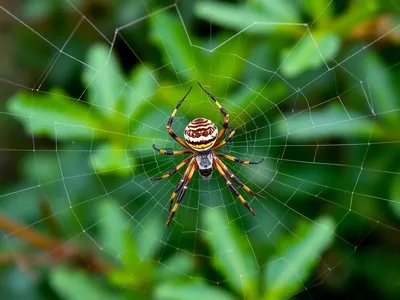
Garden orb-weaver
Eriophora transmarina
The Garden orb-weaver is a common spider found throughout Australia, recognized for its large, rounded abdomen and intricate circular webs. Females are typically larger than males and display a range of colors, from brown and grey to orange. These spiders are nocturnal, constructing their webs at dusk to catch flying insects and dismantling them at dawn. Despite their intimidating appearance, they are harmless to humans and play a vital role in controlling insect populations.
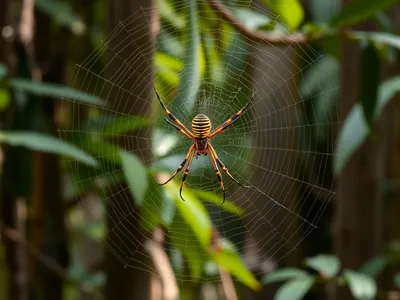
Giant golden orb-weaver
Nephila pilipes
The giant golden orb-weaver is a large and striking arachnid known for weaving expansive, golden-colored webs that can span several meters. Females are significantly larger than males, with bodies often reaching up to 6 cm in length, while males are much smaller and less conspicuous. This spider is commonly found in forests and woodlands across Southeast Asia, Australia, and parts of the western Pacific. Its impressive web structure is not only beautiful but also extremely strong, capable of catching large insects and even small birds in rare cases. The giant golden orb-weaver plays a crucial ecological role by controlling insect populations and serving as prey for birds and wasps.
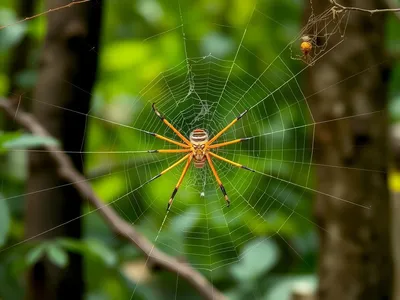
Giant golden silk orb-weaver
Trichonephila clavipes
The giant golden silk orb-weaver is a striking arachnid known for its impressive size and the golden hue of its silk. Females are notably larger than males, with long, spindly legs and a body that can measure up to 5 cm in length. These spiders spin large, intricate orb-shaped webs in forested and garden environments, where their golden silk helps lure and trap flying insects. They are primarily active during warm months and are seen throughout the Americas, from the southeastern United States to South America. Despite their intimidating appearance, they are not dangerous to humans and play a significant role in controlling insect populations.
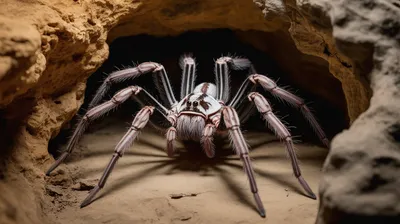
Giant huntsman spider
Heteropoda maxima
The giant huntsman spider is renowned for being the world's largest spider by leg span, which can reach up to 30 centimeters (12 inches). Discovered in Laos in 2001, this arachnid possesses long, crab-like legs and a pale, yellowish-brown body covered in dark spots. Adapted to cave habitats, the giant huntsman is agile and swift, using its speed to ambush prey rather than spinning webs. Its secretive nature and remote habitat make sightings extremely rare, contributing to the spider's mysterious reputation.
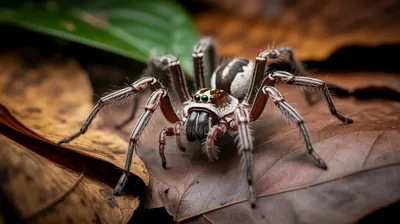
Goblin Spider
Oonopidae
Goblin spiders are tiny arachnids belonging to the family Oonopidae, commonly found in leaf litter and under stones in forests and other humid environments. Measuring only 1 to 3 millimeters in length, these spiders are often overlooked due to their minute size and cryptic habits. They are renowned for their unusual body shapes, six eyes (as opposed to the typical eight in most spiders), and sometimes translucent or brightly colored abdomens. Goblin spiders are effective hunters, preying on small insects and other tiny arthropods, and many species display unique behaviors such as building silk retreats rather than traditional webs.
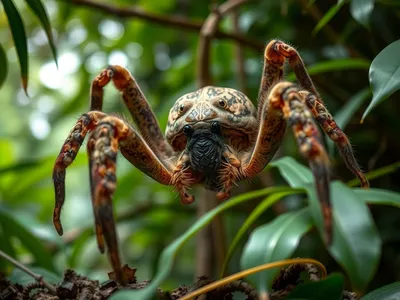
Goliath Birdeater
Theraphosa blondi
The goliath birdeater is the heaviest spider in the world, with a leg span that can cover a dinner plate, and the name is largely a slander: it very rarely eats birds. It was christened after an eighteenth-century engraving of a tarantula eating a hummingbird, and the label stuck, but its actual diet is earthworms, insects, frogs and the occasional small rodent, hunted from a burrow rather than a web. Its first defence is not the fangs. Like other New World tarantulas it carries urticating hairs on its abdomen, and it kicks them off in a cloud at an attacker's face, where they lodge in eyes and airways and cause miserable irritation. It also stridulates, rubbing bristles on its legs together to produce an audible hiss. Its fangs are genuinely large, but the venom is not medically significant to humans — the bite is more like a deep puncture wound than a poisoning. It hunts by vibration, not sight, and it is essentially blind to anything more than a shadow.
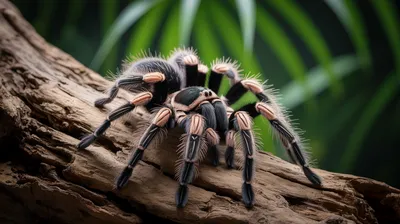
Pinktoe Tarantula
Avicularia avicularia
The Pinktoe Tarantula is a striking arboreal spider native to the rainforests of South America. Recognizable by its velvety black body and distinctive pinkish tips on its feet, this species is known for its agility and docile temperament. Unlike many terrestrial tarantulas, it spends most of its life in trees, constructing silken retreats among the foliage. Pinktoe Tarantulas are popular in the exotic pet trade due to their unique coloration and relatively gentle disposition.
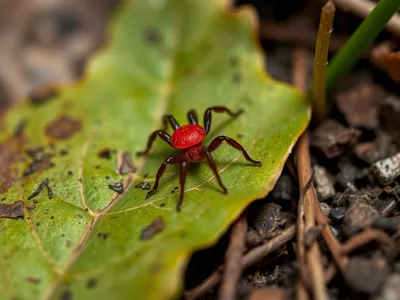
Red Velvet Mite
Trombidium holosericeum
The Red Velvet Mite is a strikingly bright red arachnid known for its soft, velvety appearance. These small invertebrates are often seen crawling on the ground after rain, especially in forests and grasslands. As larvae, they are parasitic on insects, while the adults are free-living predators that help control small arthropod populations. Their vivid coloration serves as a warning to predators due to their distasteful and toxic secretions.
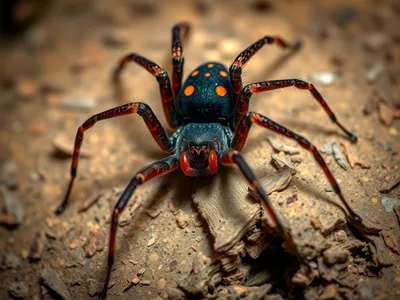
Redback Spider
Latrodectus hasselti
Latrodectus hasselti is Australia's black widow, and its males do something almost unique: during mating, the male somersaults his abdomen directly onto the female's fangs, presenting himself to be eaten while continuing to transfer sperm. This is not accident or predation on an unwilling partner — it is an active, evolved behaviour. The payoff, demonstrated by Maydianne Andrade, is that a male who is consumed copulates for roughly twice as long, transfers more sperm, and the female is far less likely to mate again, so the sacrificed male fathers more offspring. Males are tiny, about 3 to 4 mm, against a female of 10 mm plus, and they rarely survive long enough for a second mating anyway. The female's bite is medically significant: alpha-latrotoxin triggers massive neurotransmitter release, causing latrodectism — intense local pain spreading over hours, sweating, nausea and hypertension. It is very rarely fatal; an antivenom introduced in 1956 is credited with there being no confirmed death from a redback in Australia for decades, though a 2016 review controversially questioned whether the antivenom outperforms placebo. Redbacks thrive in human habitat — under outdoor furniture, in letterboxes and, in Australian folklore, under the toilet seat of an outhouse.
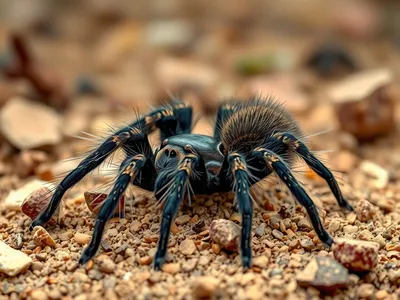
Rose Hair Tarantula
Grammostola rosea
The rose hair tarantula's first line of defence is not its fangs. Like most New World tarantulas it carries urticating hairs on its abdomen, and when threatened it turns its back on the danger and kicks them off in a cloud with its hind legs — barbed, irritating hairs that lodge in the eyes, nose and airways of a would-be predator and make the whole experience emphatically not worth repeating. Biting is a last resort, and its venom is medically insignificant to humans; the bald patch that appears on an older spider's abdomen is simply where it has flicked its hairs away. It spins silk, but never to catch anything — no tarantula builds a snare web. It lines a burrow instead and waits, detecting prey by vibration rather than sight, then closes the last distance in a rush. It grows by moulting, shedding its entire exoskeleton — including the lining of its lungs and stomach — and can regrow a lost leg over successive moults. Females are remarkably long-lived, often passing twenty years, while males usually die within months of reaching maturity.
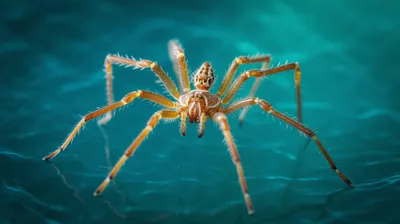
Sea Spider
Pycnogonum littorale
Sea spiders (class Pycnogonida) are marine arthropods that look like a bundle of legs with almost nothing in between, and that impression is close to the truth: the body is so slender that the gut and gonads have been pushed out into the legs. A female's eggs mature inside her thighs, and the branching gut runs down each limb, so a sea spider effectively digests its meal in its legs. Because the body is too small to house a proper heart-driven circulation, the gut itself does much of the work, and researchers found that waves of peristalsis in the gut, not the feeble heart, drive haemolymph around the animal. Sea spiders have no dedicated gills or lungs; oxygen simply diffuses through the cuticle, which is why they can be long-legged but never thick-bodied. Most feed by pressing a long proboscis against soft-bodied prey such as anemones, hydroids and sponges and sucking out their tissues. Males, not females, carry the eggs, cementing them into balls on a pair of specialised legs called ovigers and hauling them about until they hatch. In the cold, oxygen-rich waters of the Antarctic and the deep sea they undergo polar gigantism, reaching leg spans of 50 to 70 centimetres, a body plan impossible in warm water where diffusion alone could not supply the tissues.
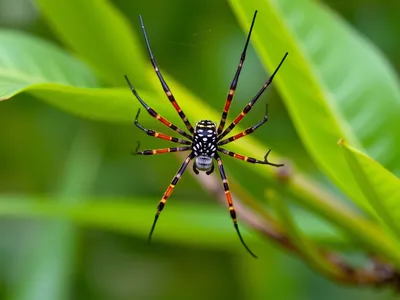
Spiny Orb-Weaver
Gasteracantha cancriformis
The Spiny Orb-Weaver is a small, brightly colored spider known for its distinctively spiny, crab-like body. Its hard, flattened abdomen is often adorned with six prominent spines and features striking colors such as white, yellow, or red with black markings. This species constructs classic circular orb webs to trap flying insects and is a common sight in gardens, forests, and shrublands across the Americas. Despite its fearsome appearance, the Spiny Orb-Weaver is harmless to humans and plays an important role in controlling insect populations.
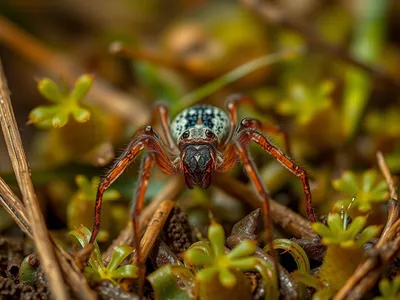
Sundew Spider
Hibana futilis
The Sundew Spider (Hibana futilis) is a small, agile hunting spider commonly found in North and Central America. It is named for its resemblance to the sticky-leaved sundew plant, as it often waits motionless for prey on vegetation. Unlike web-building spiders, the Sundew Spider actively hunts small insects, using its speed and keen eyesight to capture them. Its pale yellowish to tan coloration provides excellent camouflage among leaves and grasses.