
About the Brown-Throated Sloth
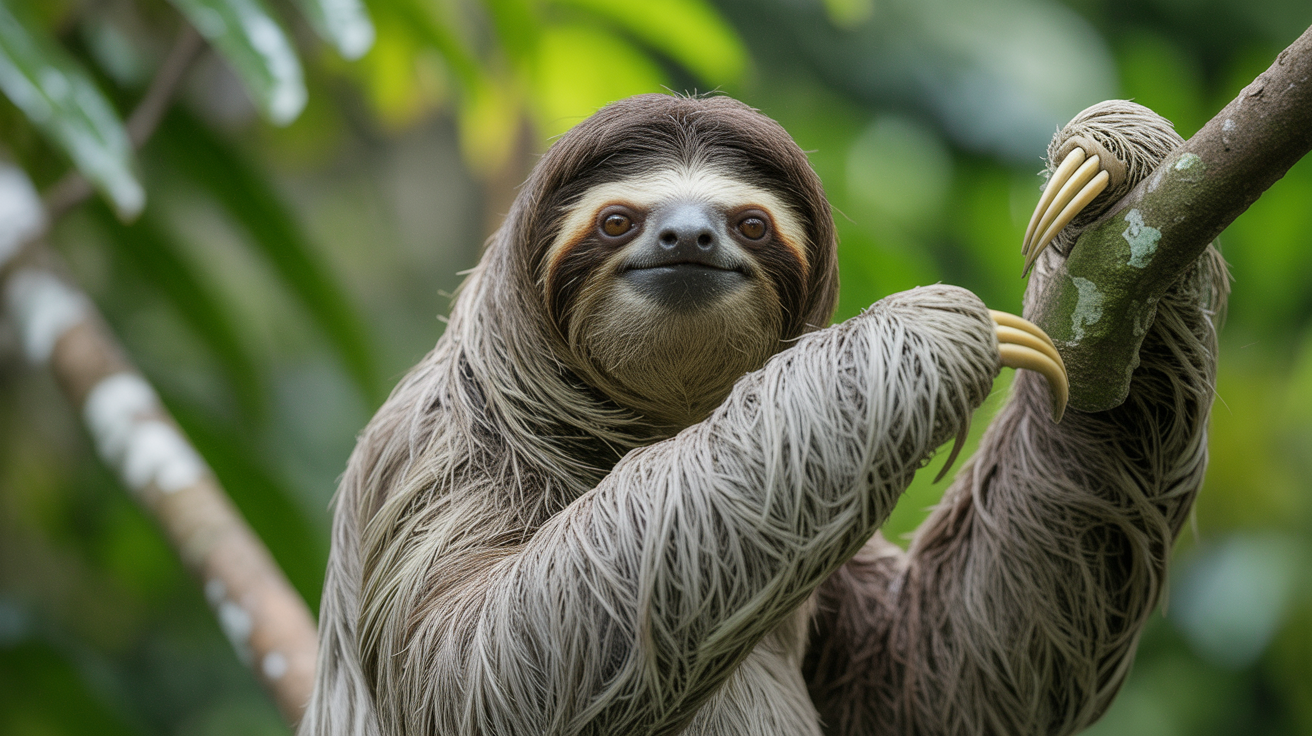
The Brown-Throated Sloth (Bradypus variegatus) is a slow-moving mammal native to the rainforests of Central and South America, ranging from Honduras to northern Argentina. This species is easily identified by its distinct brownish throat and face markings, which contrast with its predominantly greyish fur. Adult sloths typically measure between 42 to 80 centimeters in length and weigh around 2.3 to 6.5 kilograms. Their fur hosts a unique ecosystem, supporting algae and various insects, which provides camouflage against predators. Unlike their three-toed relatives, the two-toed sloths, Brown-Throated Sloths exhibit a more varied diet, primarily consuming leaves, shoots, and occasionally fruits from over 90 different tree species. Their metabolism is remarkably slow, an adaptation that conserves energy and allows them to thrive on a low-calorie diet. Typically, these sloths spend up to 15 hours a day sleeping, hanging upside down from tree branches using their powerful, curved claws.
Fascinating facts
Unique Diet
Brown-Throated Sloths feed almost exclusively on leaves, which are low in calories and require a specialized, slow digestive process.
Slow Movers
Their maximum speed is about 0.24 km/h (0.15 mph), making them one of the slowest-moving mammals on Earth.
Surprising Swimmers
Despite their slow movement on land, Brown-Throated Sloths are surprisingly strong swimmers, using their long arms to paddle efficiently.
Detailed description
The Brown-Throated Sloth (Bradypus variegatus) is a medium-sized arboreal mammal, typically measuring 42–80 cm in length and weighing between 2.3 and 6.3 kg. It is characterized by its coarse, grayish-brown fur, which often appears green due to symbiotic algae growing on its hair, providing camouflage in the rainforest canopy. The species is named for the distinctive brown coloration on its throat and face, which contrasts with its lighter underparts. Its limbs are long and equipped with three strong, curved claws, perfectly adapted for suspending from branches. The sloth’s head is rounded with a blunt snout, small external ears, and large, forward-facing eyes that give it a perpetually gentle expression. Internally, the Brown-Throated Sloth has a multi-chambered stomach, allowing it to digest tough, fibrous leaves through a slow, fermentation-based process. Its metabolic rate is among the lowest of any mammal, contributing to its slow movements and energy conservation. The species is solitary and primarily nocturnal, spending up to 20 hours per day resting or sleeping. Despite its sluggishness, the sloth is an adept swimmer and will occasionally descend to the forest floor to defecate, a behavior that remains a subject of scientific interest.
Did you know?
Algae often grow in the Brown-Throated Sloth’s fur, giving it a greenish tint that helps with camouflage in the treetops.
Research & sources
Behaviour & social structure
Brown-Throated Sloths are predominantly solitary, with individuals maintaining overlapping home ranges but rarely interacting outside of mating. They are strictly folivorous, feeding on leaves from a variety of tree species, including Cecropia, Ficus, and Terminalia, and occasionally supplementing their diet with fruits and flowers. Feeding occurs slowly and methodically, often during the night or at dawn and dusk. Sloths descend from the canopy about once a week to defecate, a risky behavior thought to aid in nutrient cycling and possibly communication via scent marking. Their movement is deliberate and slow, averaging 0.24 km/h in the trees, and they rarely travel more than 40 meters in a day. When threatened, sloths rely on camouflage and stillness, but they can defend themselves with powerful claws if cornered. Vocalizations are rare, but females emit high-pitched calls during estrus to attract males.
Reproduction & life cycle
Brown-Throated Sloths are polygynous, with males mating with multiple females within overlapping territories. Breeding can occur year-round, though some populations show peaks during the rainy season. After a gestation period of approximately six months, the female gives birth to a single offspring, which clings to her belly for the first five to six months of life. The young begin sampling solid food at about two months but continue nursing for up to four months. Maternal care is extensive, with the mother teaching the juvenile about food selection and movement through the canopy. Sexual maturity is reached at around three years for females and four to five years for males. There is no paternal care, and after weaning, juveniles establish their own territories.
Adaptations & survival
Brown-Throated Sloths possess several remarkable adaptations for arboreal life. Their long, hook-like claws and strong forelimbs enable them to hang effortlessly from branches for extended periods. The sloth’s slow metabolism reduces energy requirements and allows it to survive on a low-nutrient, high-fiber diet. Their fur hosts symbiotic algae and invertebrates, providing camouflage and potentially supplemental nutrients through grooming. The cervical vertebrae are unusually numerous (up to nine), granting them a wide range of head rotation (up to 270 degrees), which aids in predator detection. Their low body temperature (30–34°C) and ability to reduce metabolic rate during cool or wet conditions further conserve energy. Additionally, sloths are surprisingly good swimmers, using a breaststroke-like motion to cross rivers and flooded areas.
Cultural significance
Sloths have become cultural icons representing tranquility, patience, and a harmonious relationship with nature. In indigenous folklore, they are sometimes seen as symbols of laziness or wisdom, depending on the context. In recent years, sloths have gained popularity in ecotourism and conservation campaigns, often serving as flagship species for rainforest protection. While there is little evidence of traditional use for food or medicine, sloths occasionally appear in local myths and stories throughout their range.
Recent research
Recent research has focused on the sloth’s unique fur ecosystem, revealing a complex symbiosis with algae, fungi, and arthropods, some of which produce antimicrobial compounds. Studies using GPS tracking and accelerometers have provided new insights into their movement patterns, home range sizes, and responses to habitat fragmentation. Genetic analyses have clarified the taxonomy of Bradypus variegatus, revealing significant regional variation and potential cryptic species. Ongoing research is investigating the sloth’s gut microbiome and its role in digesting tough plant material, as well as the evolutionary origins of their slow metabolism and arboreal specialization.
Sources
The Natural History of Sloths (Xenarthra: Bradypodidae, Megalonychidae)
Paula C. P. de Castro & Adriano L. Peracchi (2020)
scientificBradypus variegatus: The IUCN Red List of Threatened Species 2014
IUCN SSC Anteater, Sloth and Armadillo Specialist Group
conservationVideos
Habitat
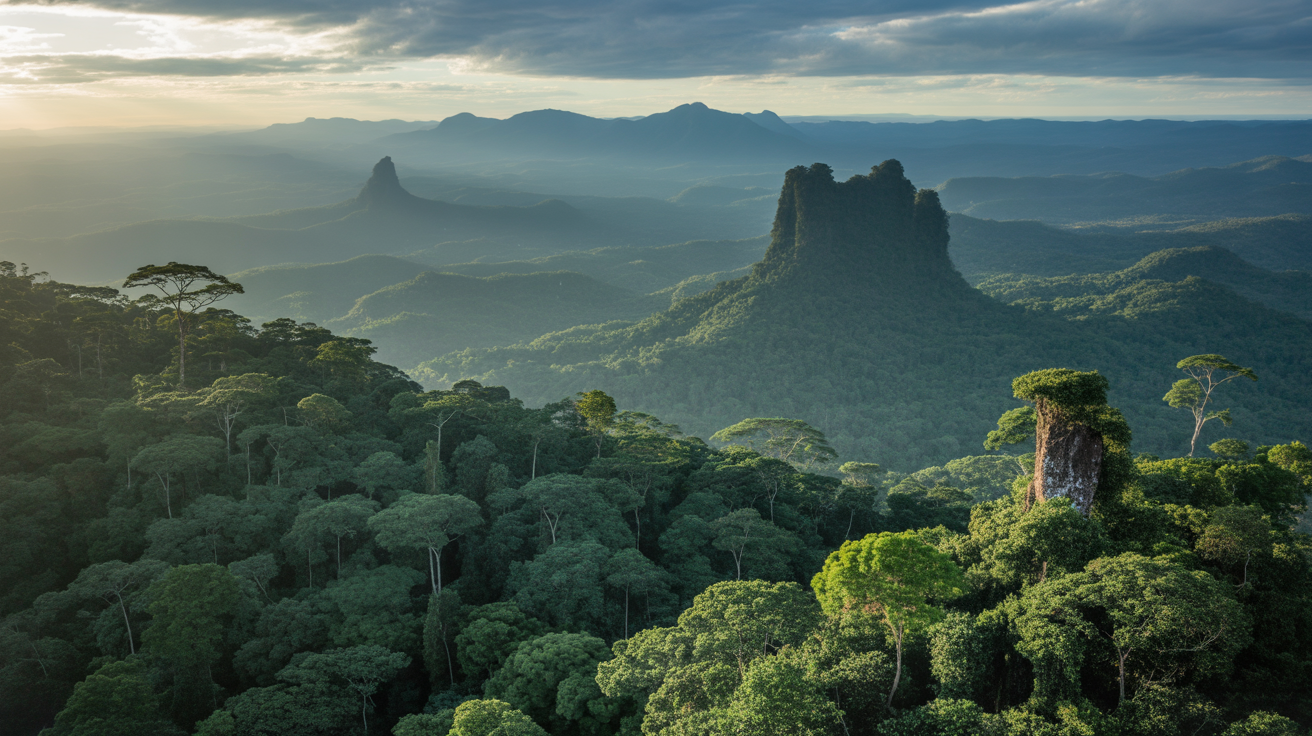
Tropical rainforest canopy

Conservation
The Brown-Throated Sloth is currently classified as Least Concern on the IUCN Red List.
Threats & challenges
Although currently classified as Least Concern by the IUCN, Brown-Throated Sloths face several threats. Deforestation and habitat fragmentation, particularly in Central and South America, reduce available canopy and isolate populations. Road construction and urban expansion increase mortality from vehicle collisions and dog attacks. Sloths are sometimes captured for the illegal pet trade or used in tourism, where handling and stress can be fatal. Climate change poses a long-term threat by altering forest composition and food availability. Despite these challenges, the species remains widespread and locally common, but ongoing habitat loss could lead to population declines in the future.
Taxonomy
Scientific name
Bradypus variegatus
- Kingdom
- Animalia
- Phylum
- Chordata
- Class
- Mammalia
- Order
- Pilosa
- Family
- Bradypodidae
- Genus
- Bradypus
- Species
- variegatus
Community notes
Share your observations about the Brown-Throated Sloth.
No community notes yet. Be the first!
Discover more wildlife
More fascinating animals from the encyclopedia.