
About the Christmas Island Red Crab
Christmas Island's red crabs are terrestrial: they breathe air, live in burrows in the rainforest floor, and would drown if held under water for long. But they cannot escape the sea, because their larvae must develop in it, so once a year the entire adult population — tens of millions of crabs — walks to the coast in a migration timed with startling precision. It goes with the wet season, and it is locked to the lunar cycle: the females release their eggs before dawn at the turn of the high tide during the last quarter moon, when the difference between high and low tide is smallest, so the eggs are least likely to be flung onto rocks. Each female may release 100,000 eggs. About a month later the sea gives them back as a red tide of 5 mm crablets that walk inland. Their real ecological role is on the forest floor: they are the island's main litter processors, and the introduced yellow crazy ant, which has killed something like 15 to 20 million crabs, has visibly changed the forest wherever the crabs disappeared.
Fascinating facts
Mass Migration
The annual migration of Christmas Island Red Crabs involves millions of individuals moving from the forest to the coast to breed, often covering several kilometers.
Ecosystem Engineers
By consuming leaf litter and seedlings, these crabs play a vital role in shaping the island’s rainforest ecosystem and supporting nutrient cycling.
Human Assistance
Crab crossings, tunnels, and bridges have been built on Christmas Island to protect migrating crabs from vehicles and enable safe passage.
Detailed description
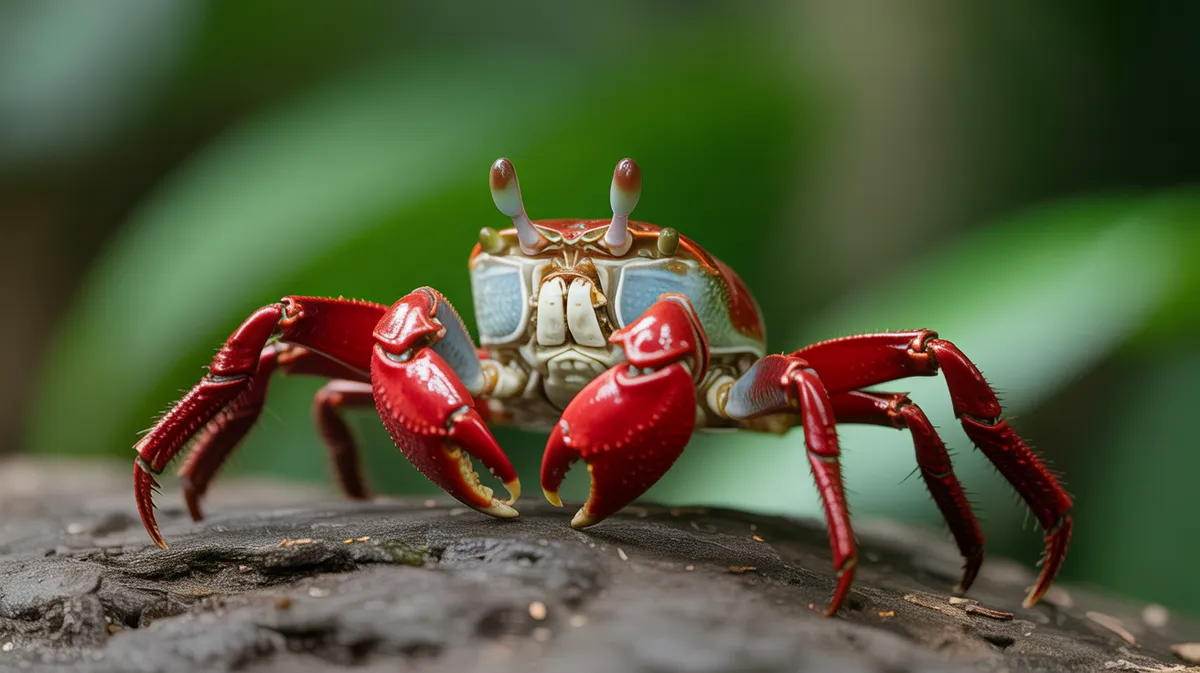
The Christmas Island red crab (Gecarcoidea natalis) is a large terrestrial crab, with adults typically measuring 9–12 cm (3.5–4.7 in) across the carapace and weighing up to 500 g. Their vivid red coloration, which can range from bright scarlet to deep crimson, serves as a warning to predators and is due to carotenoid pigments in their exoskeleton. The species has robust, powerful claws adapted for digging and manipulating food, and their legs are well-suited for both terrestrial locomotion and climbing obstacles. Red crabs are primarily solitary, occupying individual burrows in the moist rainforest floor, but they exhibit remarkable synchronization during their annual breeding migration. Their diet is omnivorous, consisting mainly of leaf litter, fruits, flowers, seedlings, and occasionally carrion or smaller invertebrates, making them key ecological engineers that influence forest composition and nutrient cycling. During the dry season, they retreat to their burrows to conserve moisture, sealing the entrance with leaves and soil. Their life cycle is closely tied to the island's monsoonal rains, which trigger their mass migration to the coast for spawning. Females carry eggs externally on their abdomens and release them into the sea, where larvae develop in the plankton before returning to land. The red crab's population dynamics and behaviors are tightly linked to the unique environment of Christmas Island, and their presence is vital for maintaining the island's ecological balance.
Did you know?
Although they are land crabs, Christmas Island Red Crabs must return to the ocean to breed, releasing their eggs directly into the sea.
Research & sources
Wikipedia summary
The Christmas Island red crab is a species of land crab that is endemic to Christmas Island and Cocos (Keeling) Islands in the Indian Ocean. Although restricted to a relatively small area, an estimated 43.7 million adult red crabs once lived on Christmas Island alone, but the accidental introduction of the yellow crazy ant is believed to have killed about 10–15 million of these in recent years. Christmas Island red crabs make an annual mass migration to the sea to lay their eggs in the ocean. Although its population is under great assault by the ants, as of 2020 the red crab had not been assessed by the International Union for Conservation of Nature (IUCN) and it was not listed on their Red List. The crab's annual mass migration to the sea for spawning is described as an "epic" event. Millions emerge at the same time, halting road traffic and covering the ground in a thick carpet of crabs.
Behaviour & social structure
Christmas Island red crabs are primarily diurnal, emerging from their burrows during the cooler, humid parts of the day to forage for food. They are highly sensitive to desiccation and avoid direct sunlight, often timing their activity to periods of high humidity or after rainfall. Their feeding behavior is opportunistic; they consume a wide variety of organic material, including fallen leaves, fruits, flowers, and the occasional animal carcass. Red crabs are generally solitary outside the breeding season, maintaining and defending their burrows against intruders. During the annual migration, however, they display a remarkable tolerance for crowding, forming dense aggregations as they move en masse toward the coast. They navigate using environmental cues such as humidity gradients, celestial navigation, and possibly geomagnetic orientation. The migration is highly synchronized, with millions of individuals moving simultaneously, often crossing roads and obstacles, which can result in significant mortality from vehicles.
Reproduction & life cycle
Breeding in Gecarcoidea natalis is triggered by the onset of the wet season, typically between October and December. Males migrate to the coast first, where they establish burrows and await the arrival of females. Mating occurs within these burrows, after which males return inland while females remain near the shore to brood their eggs. Each female can carry up to 100,000 eggs attached to her abdominal pleopods. The eggs are incubated for about two weeks, after which the females make a final dash to the waterline, timing their release to coincide with the receding high tide during the last quarter of the lunar cycle. The eggs hatch immediately upon contact with seawater, releasing planktonic larvae (zoeae) that drift in the ocean for 3–4 weeks. After undergoing several molts, the megalopa larvae return to land, where they metamorphose into juvenile crabs and begin their terrestrial life. There is no parental care beyond egg carrying; survival rates for larvae are low due to predation and environmental hazards.
Adaptations & survival
Christmas Island red crabs have evolved several adaptations for terrestrial life, including a highly efficient gill chamber that allows them to breathe air, and a waxy cuticle that reduces water loss. Their burrowing behavior provides protection from predators and desiccation, and their ability to seal burrow entrances helps maintain humidity during the dry season. The synchronization of their annual migration is an adaptation to maximize reproductive success and minimize predation on vulnerable larvae. Their bright coloration may serve as aposematic signaling to deter predators, and their strong, dexterous claws are used for both defense and manipulating a wide variety of food sources. Their navigation skills, possibly involving celestial and geomagnetic cues, are crucial for successful migration between forest and coast.
Cultural significance
The annual red crab migration is a defining natural spectacle for Christmas Island, drawing international attention and ecotourism. The event is celebrated locally, with road closures and community efforts to protect migrating crabs, such as the installation of crab bridges and tunnels. The red crab has become an unofficial symbol of the island, featured in local art, stamps, and promotional materials. While not traditionally used for food due to their unpalatable flesh, their ecological importance and dramatic migrations have inspired scientific documentaries and educational programs, reinforcing their status as a natural icon.
Recent research
Recent research has focused on the ecological impact of red crab population declines, particularly the cascading effects on forest regeneration and nutrient cycling. Studies have documented shifts in plant community composition and increased leaf litter accumulation in areas where crab numbers have fallen due to yellow crazy ant invasion. Ongoing research includes the development of biological control methods for yellow crazy ants, such as the introduction of the micro-wasp Tachardiaephagus somervillei, which targets ant-tending scale insects. Other studies investigate the sensory biology of red crabs, including their use of polarized light and geomagnetic cues for navigation. Genetic studies are also underway to assess population structure and resilience. The migration continues to be a model system for studying mass animal movements and the effects of invasive species on island ecosystems.
Sources
Ecological consequences of the decline of the red land crab Gecarcoidea natalis on Christmas Island, Indian Ocean
D. A. R. Morgan, S. R. Clarke, et al. (2016)
scientificVideos
Habitat
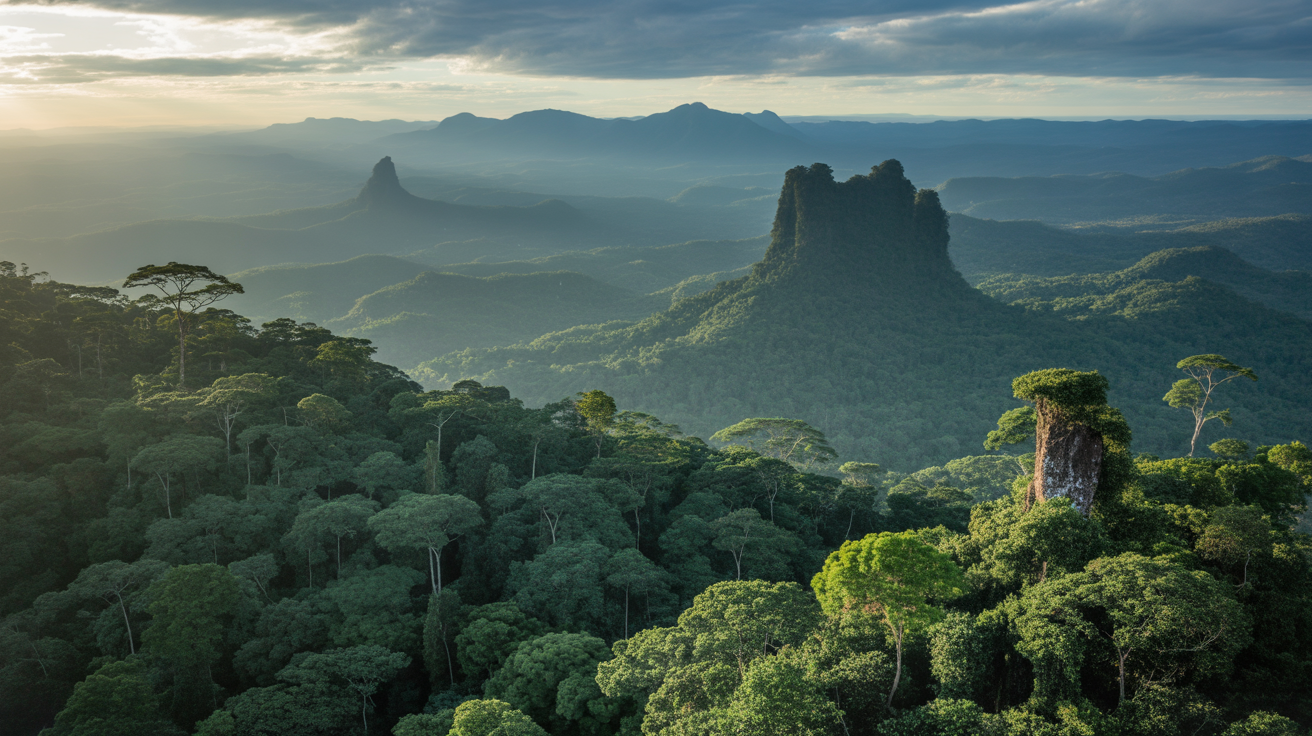
Tropical rainforest

Conservation
The Christmas Island Red Crab is currently classified as Least Concern on the IUCN Red List.
Threats & challenges
The most significant threat to Christmas Island red crabs is the invasive yellow crazy ant (Anoplolepis gracilipes), which forms supercolonies that can overwhelm and kill crabs through formic acid spraying and direct predation. Since their introduction in the late 20th century, yellow crazy ants have caused the death of an estimated 10–15 million red crabs, leading to localized population declines and ecosystem disruption. Other threats include habitat loss from human development, road mortality during migration, and climate change impacts on rainfall patterns and forest health. Despite these challenges, the overall population remains large, but ongoing ant control and habitat management are essential for long-term survival. As of 2024, the species remains unassessed by the IUCN Red List, but conservationists monitor population trends closely.
Taxonomy
Scientific name
Gecarcoidea natalis
- Kingdom
- Animalia
- Phylum
- Arthropoda
- Class
- Malacostraca
- Order
- Decapoda
- Family
- Gecarcinidae
- Genus
- Gecarcoidea
- Species
- natalis
Community notes
Share your observations about the Christmas Island Red Crab.
No community notes yet. Be the first!
Discover more wildlife
More fascinating animals from the encyclopedia.