
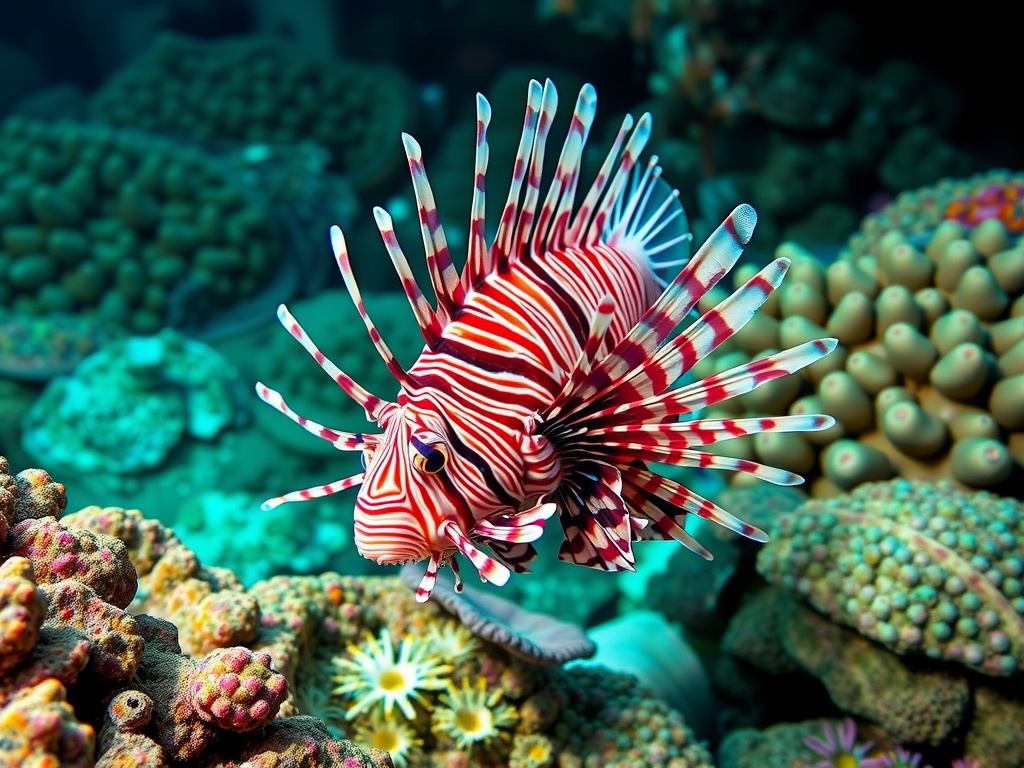
About the Common Lionfish
The common lionfish is a strikingly beautiful marine fish known for its bold bands of red, white, and brown, as well as its long, venomous fin rays that resemble a lion's mane. Native to the Indo-Pacific region, lionfish are now also invasive in the Atlantic Ocean and Caribbean Sea, where their populations have exploded. They are highly effective ambush predators, using their large, fan-like pectoral fins to corner prey such as small fish and invertebrates. The lionfish's venomous spines serve as a formidable defense against predators, making them a challenging species to control in invaded habitats.
Fascinating facts
Venomous Spines
Lionfish possess 18 venomous spines that can deliver a painful sting, deterring most predators and posing a hazard to humans.
Invasive Species
Originally from the Indo-Pacific, lionfish have become invasive in the Atlantic and Caribbean, where they threaten local ecosystems.
Voracious Predators
Lionfish can reduce populations of juvenile reef fish by up to 90% in invaded areas, severely impacting reef biodiversity.
Detailed description
The common lionfish (Pterois volitans) is a medium-sized marine fish, typically reaching lengths of 30–38 cm (12–15 in), with some individuals growing up to 47 cm (18.5 in). Its body is laterally compressed and adorned with bold vertical bands of red, white, and brown, providing effective camouflage among coral and rocky substrates. The most distinctive anatomical features are its elongated, fan-like pectoral fins and long, venomous dorsal, anal, and pelvic spines, which serve both as a deterrent to predators and as a tool for herding prey. Lionfish possess large, protruding eyes adapted for low-light hunting and a wide, upturned mouth suited for engulfing prey whole. They are primarily crepuscular, being most active at dawn and dusk, and are known for their slow, deliberate swimming style, which belies their ability to strike rapidly when hunting. While generally solitary, lionfish may aggregate in areas with abundant prey or during spawning events. Their venom contains a complex mix of proteins, including neurotoxins, which can cause severe pain and systemic effects in humans and potential predators. Lionfish are highly adaptable, tolerating a range of salinities and temperatures, which has contributed to their invasive success in non-native regions.
Did you know?
Lionfish are one of the fastest-growing marine invasive species in the Atlantic, causing significant declines in native fish populations due to their voracious appetites and lack of natural predators.
Research & sources
Wikipedia summary
Pterois miles, the devil firefish or common lionfish, is a species of ray-finned fish native to the western Indo-Pacific region. It is frequently confused with its close relative, the red lionfish. The scientific name is from Greek pteron, meaning "wing", and Latin miles, meaning "soldier".
Behaviour & social structure
Common lionfish are ambush predators, employing a stealthy approach to capture prey. They use their large, splayed pectoral fins to corner and trap small fish and crustaceans against the substrate or reef structure. Once prey is within range, the lionfish rapidly expands its jaws, creating a powerful suction that draws the prey into its mouth. Lionfish are opportunistic feeders, with diets consisting mainly of teleost fishes, shrimps, and crabs—studies in invaded habitats have recorded over 70 different prey species. They are primarily solitary but may be observed in loose aggregations, especially in areas with high prey density. Lionfish exhibit site fidelity, often returning to the same shelter or hunting ground. They are most active during twilight hours (crepuscular), resting in crevices or under ledges during the day. Social interactions are limited, though multiple individuals may gather during spawning periods.
Reproduction & life cycle
Lionfish are oviparous, with external fertilization. Spawning occurs year-round in tropical waters but may peak during warmer months. Females release two buoyant, gelatinous egg masses, each containing 2,000–15,000 eggs, which are fertilized externally by one or more males. Courtship involves a series of displays, including circling, fin spreading, and color changes. After spawning, there is no parental care; the eggs drift with currents and hatch within 36 hours. Larvae are planktonic for approximately 20–40 days, during which time they are highly vulnerable to predation. Sexual maturity is reached at about one year of age. High fecundity and frequent spawning contribute to the species' rapid population growth, particularly in invasive ranges.
Adaptations & survival
Pterois volitans exhibits several key adaptations for survival. Its venomous spines deter most predators, while its cryptic coloration and disruptive banding provide camouflage among corals and rocks. The large pectoral fins are used both for display and to herd prey, increasing hunting efficiency. Lionfish have a highly expandable stomach, allowing them to consume prey up to half their own body length. Their tolerance for a wide range of salinities (euryhaline) and temperatures (from 10°C to 35°C) enables them to colonize diverse habitats, including estuaries and deeper reef slopes. Their reproductive strategy—frequent spawning and high egg output—facilitates rapid population expansion. Additionally, lionfish exhibit resistance to many local parasites in invaded habitats, giving them a competitive advantage over native species.
Cultural significance
Lionfish have become prominent in public aquaria and the marine ornamental trade due to their striking appearance. In some cultures, lionfish are featured in folklore and art, symbolizing both beauty and danger. In the Caribbean and western Atlantic, public awareness campaigns have promoted lionfish as a food source to encourage removal and control of invasive populations. Their venomous spines are sometimes used in jewelry and crafts, though handling requires caution. Lionfish have also become a symbol of marine invasive species and the challenges of managing human-mediated ecological change.
Recent research
Recent research has focused on the ecological impacts of lionfish invasions, including their effects on native fish communities and coral reef health. Studies have documented rapid declines in native reef fish biomass following lionfish establishment. Ongoing research explores potential biological control methods, such as training native predators to consume lionfish or investigating parasites and diseases that could limit their populations. Genetic studies have revealed low diversity among invasive populations, suggesting a small founder population but rapid expansion. Research into lionfish venom has identified novel proteins with potential biomedical applications, including pain management and antimicrobial agents.
Videos
Habitat
Coral reefs and rocky crevices in tropical and subtropical marine waters

Conservation
The Common Lionfish is currently classified as Least Concern on the IUCN Red List.
Threats & challenges
In their native Indo-Pacific range, lionfish populations are regulated by natural predators and parasites. However, in the Atlantic and Caribbean, where they are invasive, few predators recognize or consume them, leading to unchecked population growth. This has resulted in significant ecological impacts, including declines in native reef fish populations and disruption of local food webs. Human threats in the native range include habitat degradation, overfishing (in some areas), and collection for the aquarium trade. Invasive populations face targeted removal efforts by divers and fisheries, but eradication is challenging due to their high reproductive rate and cryptic behavior. Globally, the species is listed as Least Concern by the IUCN, but ongoing monitoring is necessary, especially in invaded regions.
Taxonomy
Scientific name
Pterois volitans
- Kingdom
- Animalia
- Phylum
- Chordata
- Class
- Actinopterygii
- Order
- Scorpaeniformes
- Family
- Scorpaenidae
- Genus
- Pterois
- Species
- volitans
Where to see a common lionfish
4 zoos and aquariums in 1 country are recorded as keeping this species.
 Henry Doorly Zoo and Aquarium🇺🇸 Omaha, United States
 Denver Zoo🇺🇸 Denver, United States
 Memphis Zoo🇺🇸 Memphis, United States
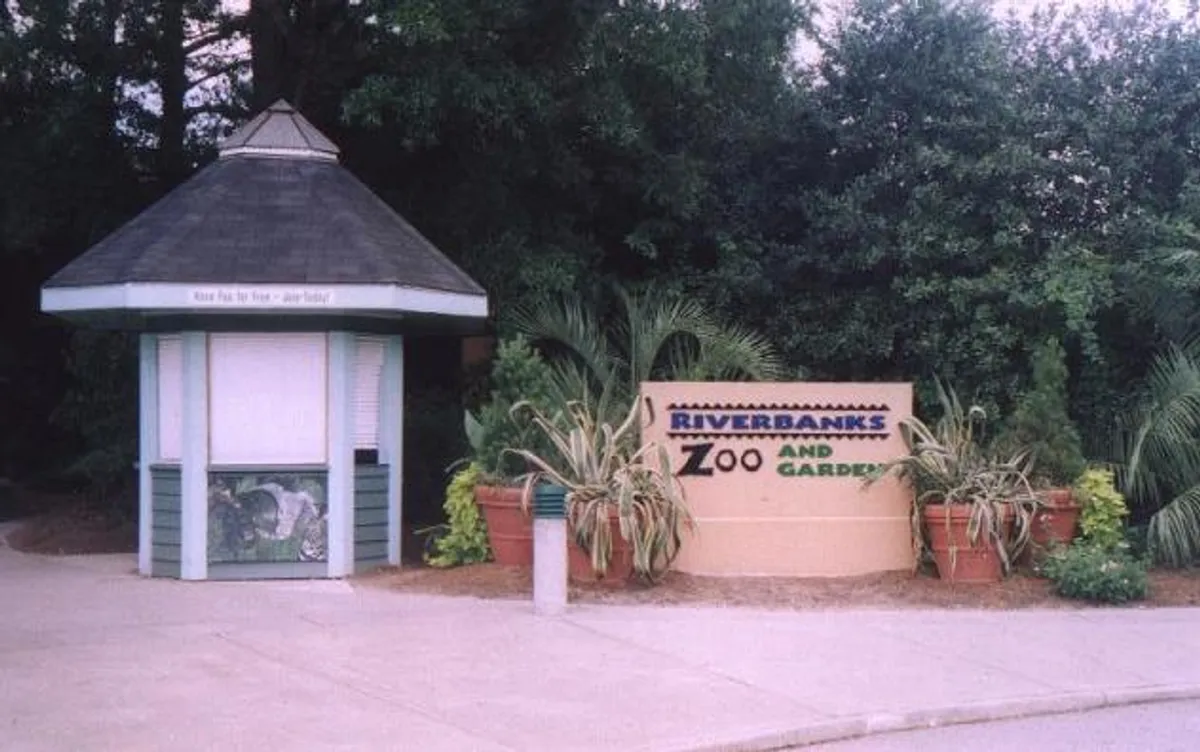 Riverbanks Zoo🇺🇸 Columbia, United States
Community notes
Share your observations about the Common Lionfish.
No community notes yet. Be the first!
Discover more wildlife
More fascinating animals from the encyclopedia.