
About the Common Rain Frog
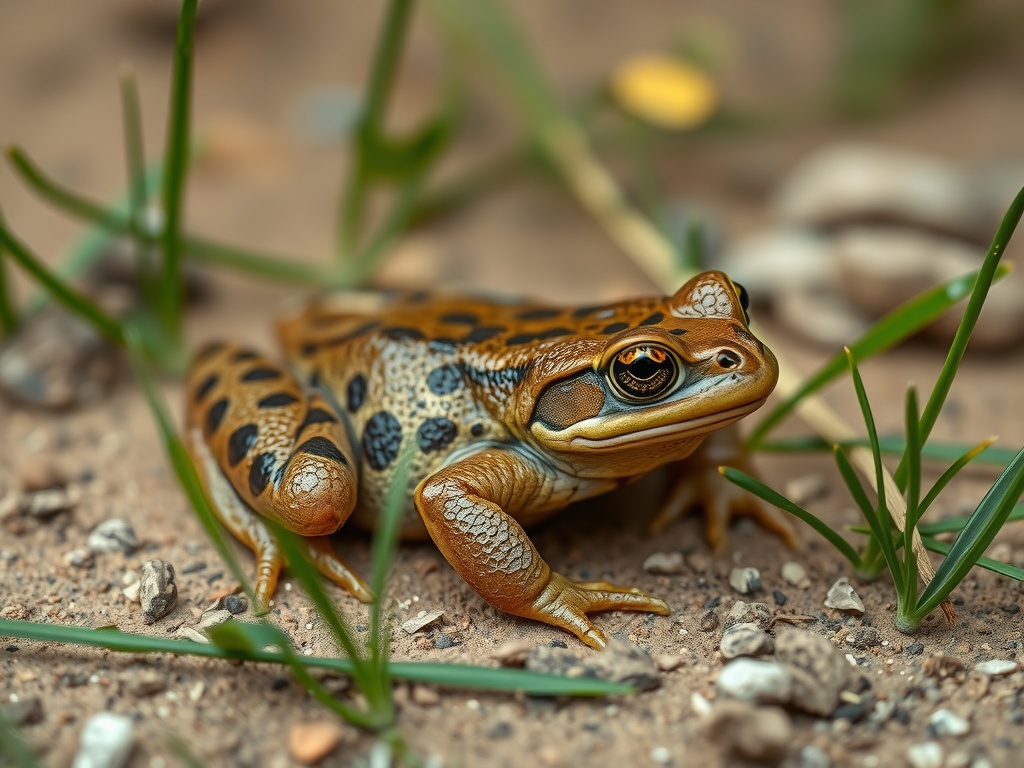
The Common Rain Frog is a small, burrowing amphibian native to southern Africa. It has a stout, round body with short limbs and is well-adapted to a subterranean lifestyle, spending much of its life underground to avoid dry conditions. This frog emerges mainly during heavy rains, when it becomes active to breed and feed. Its skin is usually brown or grayish, providing camouflage among leaf litter and sandy soils. The Common Rain Frog is known for its distinctive, squeaky vocalizations and its ability to inflate its body when threatened.
Fascinating facts
Burrowing Lifestyle
The Common Rain Frog is highly fossorial, spending the majority of its life in burrows beneath the soil.
Rain-Triggered Activity
This species emerges primarily during heavy rains, which trigger its breeding and foraging activities.
Insect Diet
The Common Rain Frog feeds mainly on ants, termites, and other small invertebrates found in the soil.
Detailed description
The Common Rain Frog (Breviceps adspersus), also known as the Bushveld Rain Frog, is a robust, terrestrial amphibian characterized by its globular body, short limbs, and blunt snout. Adult individuals typically measure 40–60 mm in snout-vent length, with females generally larger than males. The skin is granular and ranges in color from light brown to gray, often mottled with darker patches that provide effective camouflage against sandy or loamy soils. The limbs are notably short and strong, adapted for digging rather than jumping, and the toes lack webbing, further reflecting its fossorial lifestyle. The eyes are relatively small and positioned dorsally, aiding in vigilance while partially buried. This species spends the majority of its life underground in self-excavated burrows, emerging primarily during periods of heavy rainfall. When threatened, B. adspersus can inflate its body dramatically, making itself appear larger and more difficult for predators to swallow. Its vocalizations are distinctive, consisting of high-pitched, squeaky calls that are most often heard during the breeding season. The frog's overall morphology and behavior are highly specialized for a subterranean existence in arid and semi-arid environments.
Did you know?
The Common Rain Frog spends most of its life underground and may only surface for a few days each year to breed after heavy rain.
Research & sources
Wikipedia summary
Common rain frog may refer to:Breviceps acutirostris, also known as the strawberry rain frog, a frog in the family Brevicipitidae found in a small region at the southern tip of Africa Breviceps adspersus, also known as the bushveld rain frog, a frog in the family Brevicipitidae found throughout large areas of southeast Africa
Behaviour & social structure
Breviceps adspersus is predominantly nocturnal, emerging from its burrow after dusk, especially following significant rainfall. It is a solitary species outside of the breeding season, with individuals maintaining separate territories. Foraging occurs on the ground surface, where it hunts for ants, termites, beetles, and other small invertebrates using a sit-and-wait strategy. The frog relies on its cryptic coloration and motionless posture to avoid detection by predators. Social interactions are limited, but during the breeding season, males become more vocal and may compete for calling sites. Defensive behaviors include body inflation and emitting a loud, squeaky distress call when handled. Unlike many frogs, it does not leap but rather walks or shuffles due to its short limbs.
Reproduction & life cycle
Breeding in B. adspersus is closely tied to seasonal rains, typically occurring during the summer months (October to March in southern Africa). Males call from concealed positions near the surface to attract females. Amplexus is inguinal, with the male grasping the female around the waist. Females lay clutches of 20–50 large, yolk-rich eggs in a subterranean chamber excavated by both partners. Fertilization is external, and the eggs are deposited in a foam nest that helps retain moisture. Development is direct, with froglets hatching fully formed after an incubation period of 6–8 weeks, bypassing the free-swimming tadpole stage entirely. There is no further parental care after oviposition.
Adaptations & survival
The Common Rain Frog exhibits several notable adaptations for a fossorial and arid-adapted lifestyle. Its stout, muscular body and short, robust limbs are specialized for digging, allowing it to burrow quickly into loose soil to escape desiccation and temperature extremes. The skin is thick and glandular, reducing water loss and providing some protection against soil abrasion. The direct development of eggs eliminates the need for standing water, a crucial adaptation in its often dry habitat. Body inflation serves as both a defensive mechanism and a deterrent to predators. The species' cryptic coloration and nocturnal activity patterns further reduce predation risk.
Cultural significance
While not a major figure in folklore, the Common Rain Frog is occasionally referenced in local cultures for its unusual appearance and distinctive calls, which are sometimes associated with the arrival of rain. Its presence is generally regarded as a sign of healthy, undisturbed grassland ecosystems. In recent years, the species has gained popularity in social media and environmental education due to its charismatic, 'grumpy' appearance, helping to raise awareness about amphibian diversity and conservation.
Recent research
Recent research has focused on the reproductive biology and developmental adaptations of B. adspersus, particularly its direct development and foam-nesting behavior. Molecular studies have clarified its phylogenetic relationships within the Brevicipitidae family, revealing significant genetic divergence among populations across southern Africa. Ongoing ecological studies are examining the species' microhabitat preferences, responses to habitat fragmentation, and resilience to climate variability. Additionally, the biomechanical properties of its burrowing and body inflation behaviors have attracted interest for their evolutionary and functional significance.
Videos
Habitat
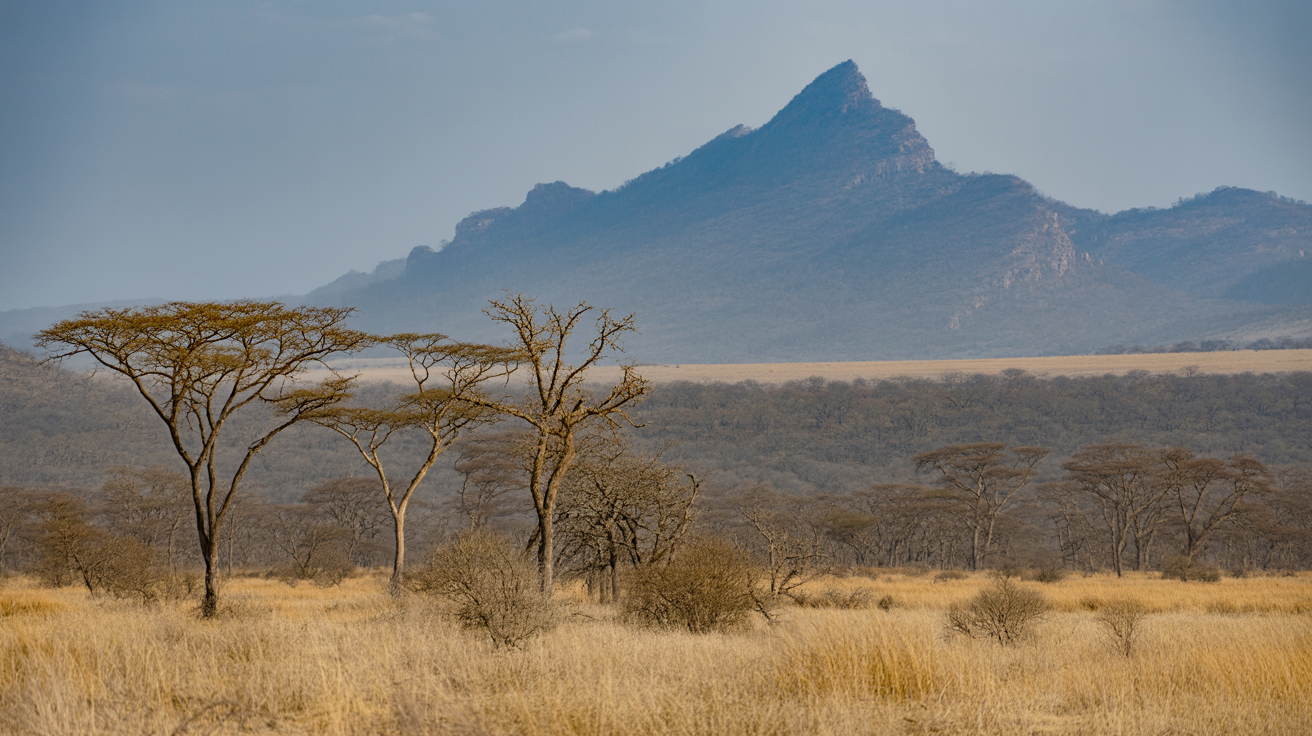
Sandy soil grasslands and savannas
 Africa
Savanna
Grasslands with scattered trees, characterized by seasonal rainfall and home to diverse grazing animals and predators.
 Various Continental Regions
Grassland
Open areas dominated by grasses rather than trees, supporting numerous herbivores and their predators.
 Global
Forest
Wooded areas with significant tree cover and diverse plant and animal communities.
Conservation
The Common Rain Frog is currently classified as Least Concern on the IUCN Red List.
Threats & challenges
Currently assessed as Least Concern by the IUCN, Breviceps adspersus maintains stable populations across much of its range. However, localized threats include habitat loss due to agricultural expansion, urbanization, and mining activities, which can degrade or fragment suitable sandy grassland and savanna habitats. Road mortality and pesticide use may also pose risks in some areas. Climate change, with its potential to alter rainfall patterns, could impact breeding success and population dynamics in the future. Despite these challenges, the species' wide distribution and adaptability have thus far buffered it from significant declines.
Taxonomy
Scientific name
Breviceps adspersus
- Kingdom
- Animalia
- Phylum
- Chordata
- Class
- Amphibia
- Order
- Anura
- Family
- Brevicipitidae
- Genus
- Breviceps
- Species
- adspersus
Community notes
Share your observations about the Common Rain Frog.
No community notes yet. Be the first!
Discover more wildlife
More fascinating animals from the encyclopedia.