
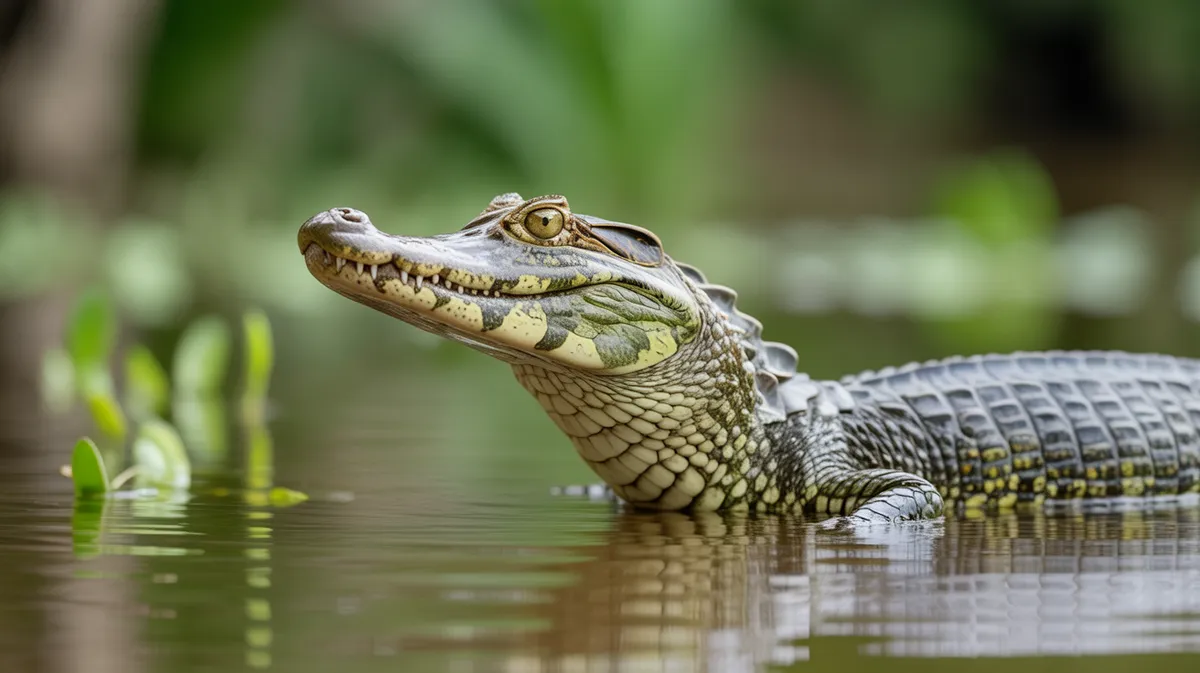
About the Cuvier's Dwarf Caiman
Cuvier's Dwarf Caiman is the smallest living species of crocodilian, native to freshwater habitats of northern and central South America. It is characterized by a broad, short snout and heavily armored body with tough, keeled scales for protection. This secretive reptile is mostly nocturnal and spends much of its time hidden in dense vegetation or submerged in slow-moving streams and flooded forests. Despite its small size, it is an adept predator, preying on a variety of aquatic and terrestrial animals.
Fascinating facts
Smallest Crocodilian
Cuvier's Dwarf Caiman is the smallest living member of the crocodilian family, rarely exceeding 1.4 meters (4.6 feet) in length.
Heavy Armor
Their skin is covered with exceptionally hard, bony plates called osteoderms, providing extra protection from predators.
Nocturnal Hunter
They are primarily active at night, hunting for fish, amphibians, crustaceans, and small mammals under the cover of darkness.
Detailed description
Cuvier's Dwarf Caiman (Paleosuchus palpebrosus) is the smallest extant crocodilian, with adult males typically reaching 1.2–1.5 meters in length and females rarely exceeding 1.2 meters; the maximum recorded length is about 1.6 meters. It is distinguished by a short, broad snout and a relatively high, wedge-shaped skull, which provides exceptional crushing power for consuming hard-shelled prey. The body is heavily armored, with pronounced osteoderms (bony scutes) covering the dorsal and ventral surfaces, offering protection against predators and conspecific aggression. The coloration is generally dark brown to black dorsally, with lighter flanks and a pale, sometimes yellowish, ventral side. Juveniles display more pronounced banding and lighter coloration, which fades with age. The species is primarily nocturnal and highly secretive, spending daylight hours concealed in dense vegetation or submerged in water. Unlike larger crocodilians, Cuvier's Dwarf Caiman is adapted to fast-flowing streams and can tolerate cooler water temperatures, often inhabiting upland forest streams and flooded forests. Its diet shifts ontogenetically: juveniles feed mainly on aquatic invertebrates, while adults consume a broader range of prey, including fish, amphibians, crustaceans, and small mammals. The species is solitary outside of the breeding season and exhibits strong territoriality, especially among males. Reproduction is seasonal, with females constructing mound nests from vegetation and soil, and both sexes may participate in nest defense and limited parental care.
Did you know?
Despite their fierce appearance, Cuvier's Dwarf Caimans are sometimes kept as exotic pets due to their manageable size and relatively shy nature.
Research & sources
Wikipedia summary
Cuvier's dwarf caiman is a small crocodilian in the alligator family from northern and central South America. It is found in Bolivia, Brazil, Colombia, Ecuador, French Guiana, Guyana, Paraguay, Peru, Suriname, Trinidad and Venezuela. It lives in riverine forests, flooded forests near lakes, and near fast-flowing rivers and streams. It can traverse dry land to reach temporary pools and tolerates colder water than other species of caimans. Other common names for this species include the musky caiman, the dwarf caiman, Cuvier's caiman, and the smooth-fronted caiman. It is sometimes kept in captivity as a pet and may be referred to as the wedge-head caiman by the pet trade community.
Behaviour & social structure
Cuvier's Dwarf Caiman is predominantly nocturnal, emerging at dusk to forage along riverbanks, shallow streams, and forest pools. It is an ambush predator, relying on stealth and rapid strikes to capture prey. Juveniles focus on aquatic insects, snails, and small crustaceans, while adults expand their diet to include fish, amphibians, and small vertebrates. The species is generally solitary, with individuals maintaining exclusive territories, particularly during the breeding season. Social interactions are limited, but vocalizations—such as grunts and hisses—are used in territorial disputes or to communicate distress. During the dry season, individuals may traverse considerable distances over land to locate suitable aquatic habitats. Basking behavior is rare compared to other crocodilians, likely due to their preference for shaded, forested environments. When threatened, they exhibit rapid escape responses, diving into water or seeking cover in dense vegetation.
Reproduction & life cycle
Breeding typically occurs at the onset of the rainy season, varying regionally but often between December and April. Courtship involves vocalizations and tactile displays, with males establishing and defending territories to attract females. Females construct mound nests from decaying vegetation and soil, usually close to water but above flood levels. Clutch size ranges from 10 to 25 eggs, with incubation lasting approximately 90 to 105 days, depending on ambient temperature and humidity. Females guard the nest during incubation, deterring predators such as snakes, mammals, and large birds. Upon hatching, the female may assist the young by opening the nest and transporting hatchlings to water. Parental care is limited but may include guarding the young for several weeks post-hatching. Sexual maturity is reached at around 8–10 years of age, with growth rates influenced by environmental conditions and food availability.
Adaptations & survival
Paleosuchus palpebrosus exhibits several unique adaptations. Its heavily ossified body armor provides defense against predators and conspecific aggression, while the wedge-shaped skull and robust jaw muscles enable it to crush hard-shelled prey such as snails and crustaceans. The species' tolerance for cooler water and ability to traverse terrestrial habitats allow it to exploit upland streams and isolated pools inaccessible to other crocodilians. Its cryptic coloration and secretive behavior reduce predation risk and aid in ambush hunting. The relatively small size and agility facilitate movement through dense forest undergrowth and shallow, fast-flowing streams. Additionally, the species exhibits physiological adaptations for surviving periods of low water, including reduced metabolic rates and the ability to aestivate in burrows or under debris during droughts.
Cultural significance
Cuvier's Dwarf Caiman holds limited cultural significance compared to larger crocodilian species. In some indigenous South American communities, it is occasionally featured in folklore or as a symbol of riverine wildlife, but it is not a major figure in local mythology. Its small size and cryptic nature mean it is less feared or revered than larger caimans or crocodiles. The species is sometimes kept as an exotic pet in the international pet trade, where it is known as the 'wedge-head caiman.' There are no widespread traditional uses for its skin or meat, largely due to the difficulty of processing its heavily armored hide.
Recent research
Recent phylogenetic analyses, such as the 2021 study by Rio and Mannion, have clarified the evolutionary relationships within Crocodylia, confirming the distinct lineage of Paleosuchus within Alligatoridae. Ongoing research focuses on the species' ecological role in upland forest streams, its physiological adaptations to cooler environments, and its resilience to habitat fragmentation. Studies using radio telemetry have provided new insights into home range size, movement patterns, and habitat preferences, revealing that individuals may use a mosaic of aquatic and terrestrial habitats throughout the year. Conservation genetics research is underway to assess population structure and gene flow across its range, which will inform future management strategies. There is also growing interest in the species' role as an indicator of freshwater ecosystem health in Amazonian and Guianan forests.
Sources
Phylogenetic analysis of a new morphological dataset elucidates the evolutionary history of Crocodylia and resolves the long-standing gharial problem
Jonathan P. Rio, Philip D. Mannion (2021)
scientificVideos
Habitat
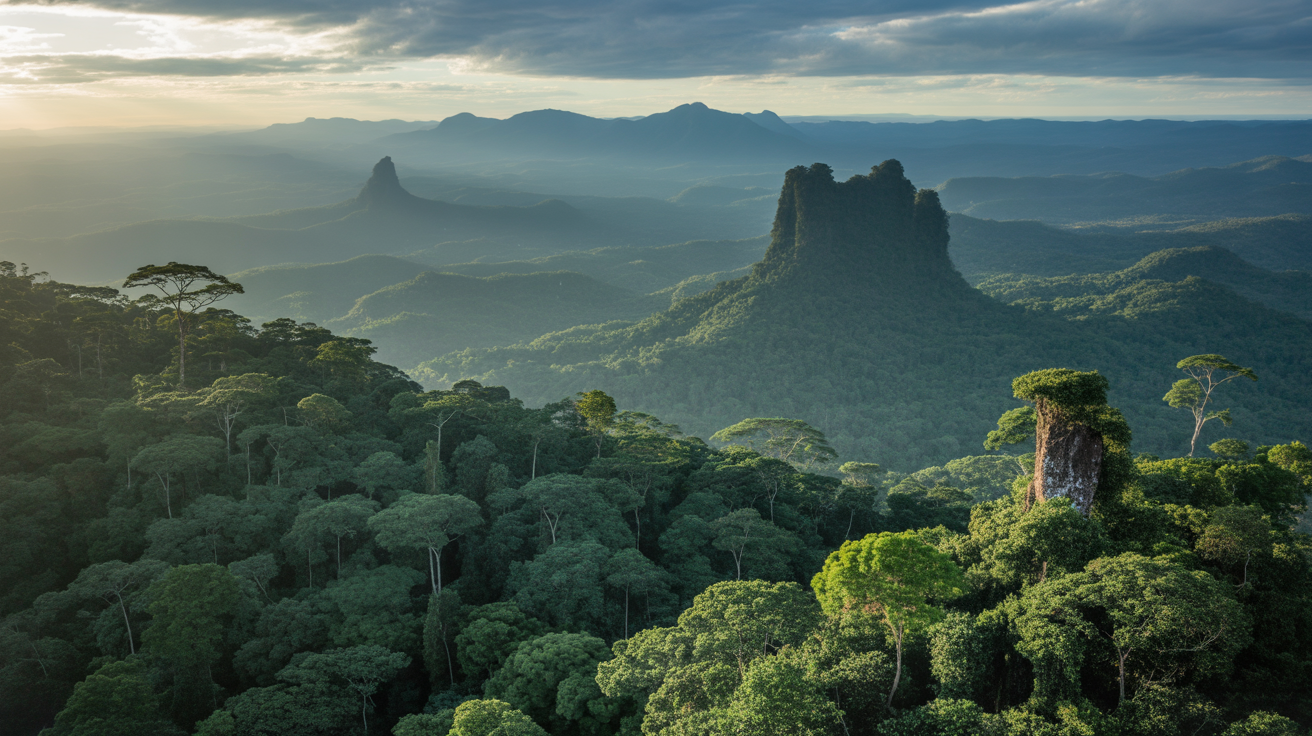
Freshwater rivers, streams, flooded forests, and swamps
 Tropical Regions
Rainforest
Dense, wet forests with the highest biodiversity on Earth, containing more than half of the world's plant and animal species.
 Global
Forest
Wooded areas with significant tree cover and diverse plant and animal communities.
 Global
Freshwater
Lakes, rivers, and wetlands with diverse aquatic ecosystems.
Conservation
The Cuvier's Dwarf Caiman is currently classified as Least Concern on the IUCN Red List.
Threats & challenges
Although currently classified as Least Concern by the IUCN, Cuvier's Dwarf Caiman faces localized threats from habitat loss due to deforestation, mining, and agricultural expansion. Pollution of waterways and the construction of dams can alter hydrological regimes, impacting breeding sites and prey availability. The species is occasionally targeted for the illegal pet trade, though less so than larger crocodilians due to its small size and secretive habits. In some regions, it is hunted for its skin or as bushmeat, but commercial exploitation is limited by its heavily armored hide, which is less valuable than that of other crocodilians. Climate change poses a potential long-term threat by altering rainfall patterns and increasing the frequency of droughts, which could affect nesting success and juvenile survival. Despite these challenges, the species remains widespread and relatively abundant in suitable habitats.
Taxonomy
Scientific name
Paleosuchus palpebrosus
- Kingdom
- Animalia
- Phylum
- Chordata
- Class
- Reptilia
- Order
- Crocodylia
- Family
- Alligatoridae
- Genus
- Paleosuchus
- Species
- palpebrosus
Where to see a cuvier's dwarf caiman
5 zoos and aquariums in 2 countries are recorded as keeping this species.
 Dallas World Aquarium🇺🇸 Dallas, United States
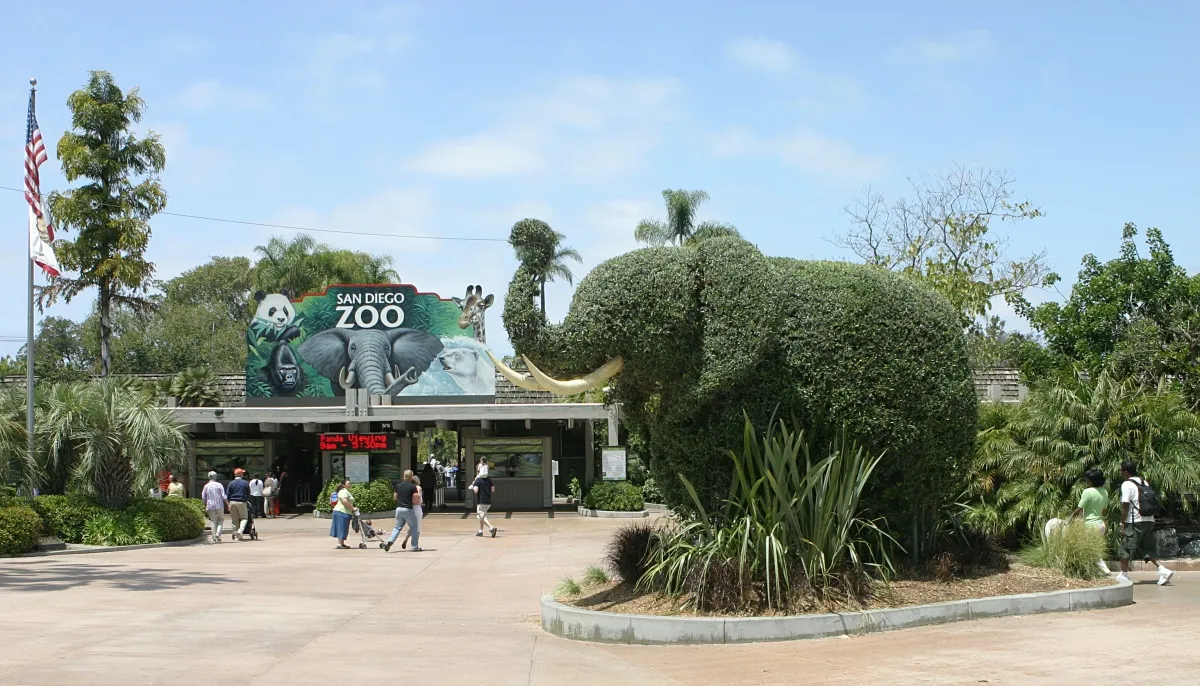 San Diego Zoo🇺🇸 San Diego, United States
 Tierpark und Fossilium Bochum🇩🇪 Bochum, Germany
- 🦁Topeka Zoo🇺🇸 Topeka, United States
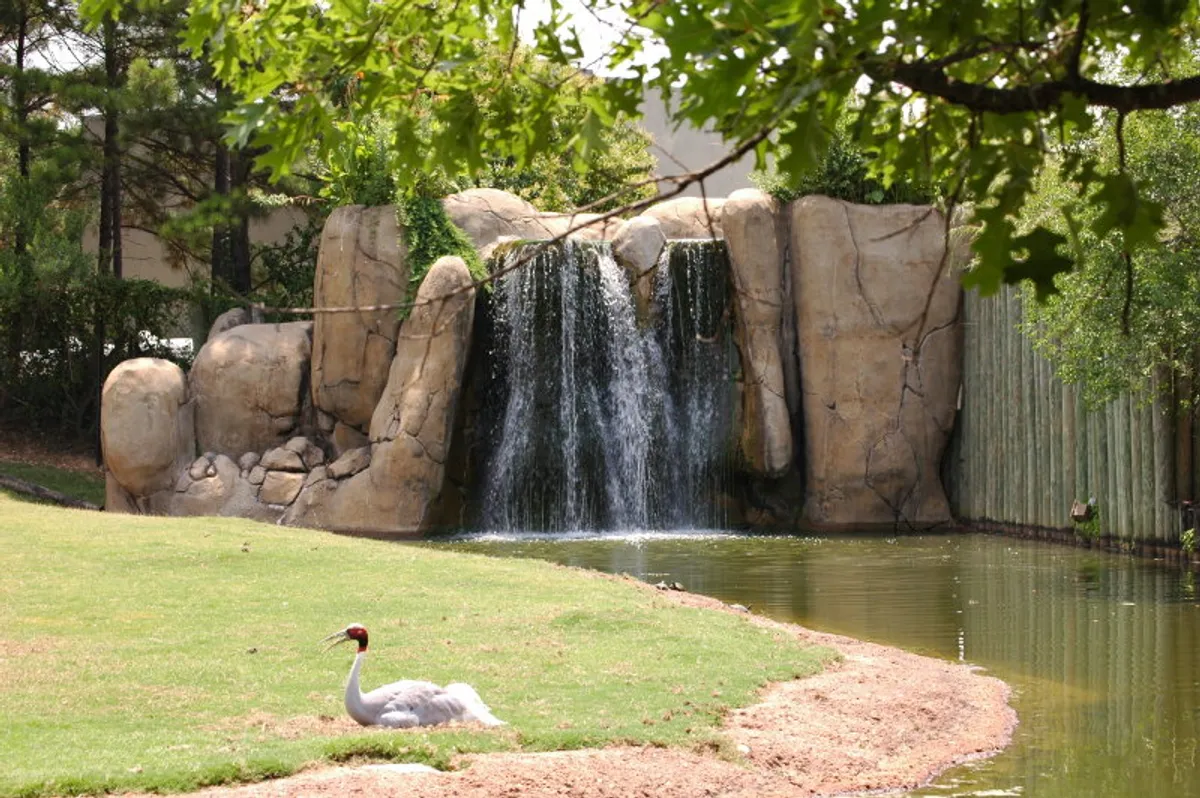 Montgomery Zoo🇺🇸 United States
Community notes
Share your observations about the Cuvier's Dwarf Caiman.
No community notes yet. Be the first!
Discover more wildlife
More fascinating animals from the encyclopedia.