
About the Desert Rain Frog
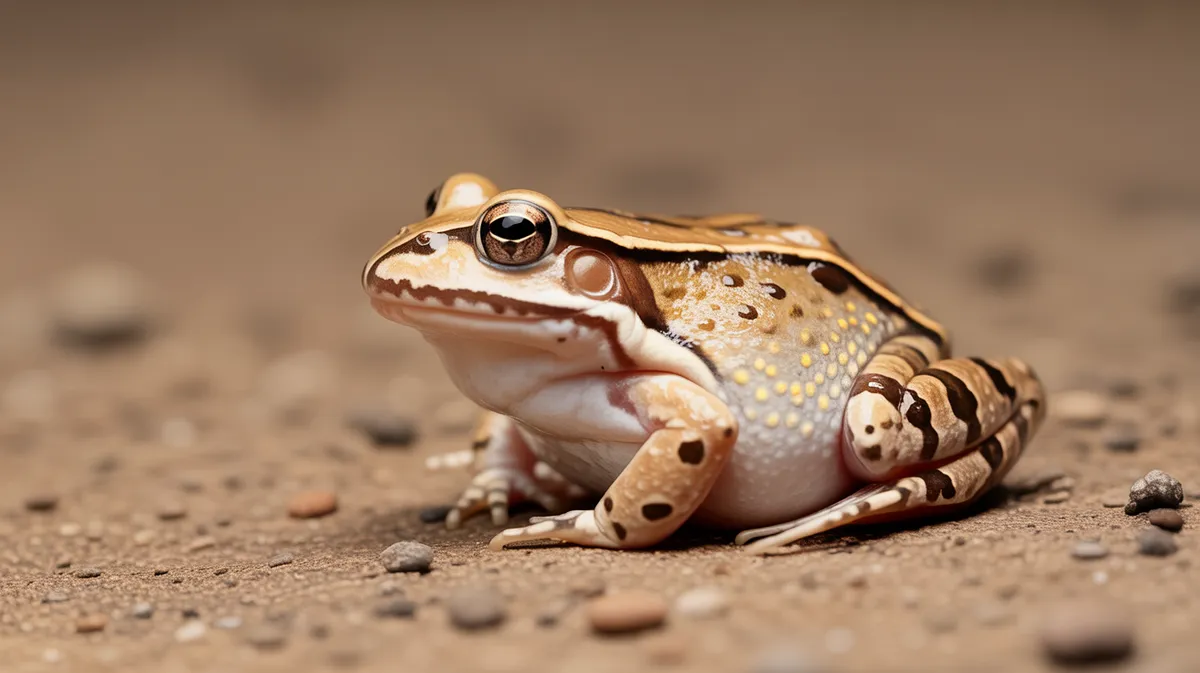
The Desert Rain Frog is a small, round-bodied amphibian known for its squeaky vocalizations and distinctive appearance. It inhabits the sandy coastal dunes of Namibia and South Africa, where it burrows to avoid the harsh desert sun. This nocturnal frog has a translucent belly and short limbs, making it well adapted for digging and a fossorial lifestyle. Despite living in arid conditions, it relies on fog and dew for moisture rather than rainfall. Its unique croak, which resembles a squeaky toy, has gained it worldwide attention.
Fascinating facts
Desert Dweller
The Desert Rain Frog is specially adapted to survive in the arid and sandy environments of the Namib Desert, one of the driest places on Earth.
Sand Burrower
Its short, stubby legs and strong, webbed feet make it an expert at burrowing backwards into the sand to escape predators and extreme temperatures.
Squeaky Voice
When disturbed, this frog emits a high-pitched squeak that sounds remarkably similar to a dog’s chew toy, a behavior used to deter threats.
Detailed description
The Desert Rain Frog (Breviceps macrops) is a small, robust amphibian, typically measuring 40–50 mm in length, with a rounded, squat body and short, stout limbs. Its skin is smooth and pale yellowish-brown to sandy in color, providing effective camouflage against the coastal dunes it inhabits. The ventral surface is notably translucent, sometimes revealing internal organs, a trait that may assist with thermoregulation. The frog’s eyes are large and protruding, positioned high on the head to aid in nocturnal foraging while remaining mostly buried. Adapted for a fossorial lifestyle, its limbs are equipped with spade-like, webbed toes that facilitate efficient digging in loose sand. Unlike many amphibians, B. macrops lacks a tympanic membrane (external eardrum), which is typical of the Brevicipitidae family. The species is primarily nocturnal, emerging at night to hunt and vocalize. Its vocalization, a high-pitched, squeaky call, is used for mate attraction and territorial defense. The Desert Rain Frog is solitary outside of the breeding season and is highly secretive, spending most of its life concealed beneath the sand to avoid desiccation and predation.
Did you know?
Unlike many frogs, the Desert Rain Frog does not need standing water to reproduce; its eggs develop entirely in moist sand, emerging as fully formed froglets.
Research & sources
Wikipedia summary
The desert rain frog, web-footed rain frog, or Boulenger's short-headed frog is a species of frog in the family Brevicipitidae. It is found in Namibia and South Africa. Its natural habitat is the narrow strip of sandy shores between the sea and the sand dunes. This area is characteristic of loose sand and continuous strong winds, with approximately 60mm of annual precipitation and no surface water. It is threatened with habitat loss by such factors as mining and tourism.
Behaviour & social structure
Desert Rain Frogs are strictly nocturnal, spending daylight hours buried 5–15 cm beneath the sand to maintain moisture and avoid extreme temperatures. At night, they emerge to forage, preying on small invertebrates such as beetles, termites, ants, and moth larvae. Their hunting strategy is sit-and-wait: they remain partially buried, ambushing prey that passes nearby. Social interactions are minimal outside of the breeding season, with individuals maintaining solitary territories. When threatened, they inflate their bodies and emit their characteristic squeaky distress call. They are not strong jumpers; instead, they rely on rapid burrowing and camouflage for escape. Their daily routine is closely tied to humidity levels, with increased surface activity during foggy or dewy nights.
Reproduction & life cycle
Breeding in Breviceps macrops is triggered by periods of increased humidity, typically following fog events rather than rainfall. Males call from shallow burrows to attract females, and amplexus (the mating embrace) occurs underground. Females lay clutches of 20–40 large, yolk-rich eggs in moist sand chambers. Unlike most frogs, there is no free-swimming tadpole stage; instead, direct development occurs, with fully formed froglets hatching after an incubation period of approximately 6–8 weeks. Parental care is minimal, but the female may remain near the clutch for a short period post-laying. Breeding seasonality is poorly defined due to the unpredictable nature of their arid habitat, but it is generally associated with periods of higher moisture.
Adaptations & survival
The Desert Rain Frog exhibits several unique adaptations for desert survival. Its skin is highly permeable to water vapor, allowing it to absorb moisture from fog and dew. The frog’s burrowing behavior reduces water loss and exposure to predators and extreme temperatures. Its webbed feet and short, muscular limbs are specialized for digging rather than jumping. The translucent ventral skin may aid in heat dissipation. Direct development eliminates the need for standing water, a crucial adaptation in an environment with virtually no surface water. Behavioral adaptations include nocturnality and the ability to detect subtle humidity changes, optimizing activity periods for moisture acquisition.
Cultural significance
While the Desert Rain Frog does not have a significant role in traditional local folklore or mythology, it has gained international attention due to viral internet videos showcasing its distinctive squeaky vocalizations. This has led to increased public interest and awareness of amphibian diversity in arid regions. The species is sometimes used in educational materials to illustrate desert adaptation and the importance of amphibian conservation.
Recent research
Recent research has focused on the species’ physiological adaptations to aridity, particularly its ability to absorb water from vapor and its skin’s unique properties. Studies using stable isotope analysis have investigated the frog’s reliance on fog as a primary moisture source. Genetic studies are underway to clarify the evolutionary relationships within the Brevicipitidae family and to assess population structure across its fragmented range. Ongoing ecological monitoring aims to better understand the impacts of habitat disturbance and inform conservation strategies. There is also interest in bioacoustic research, analyzing the frog’s calls for insights into communication and species identification.
Videos
Habitat
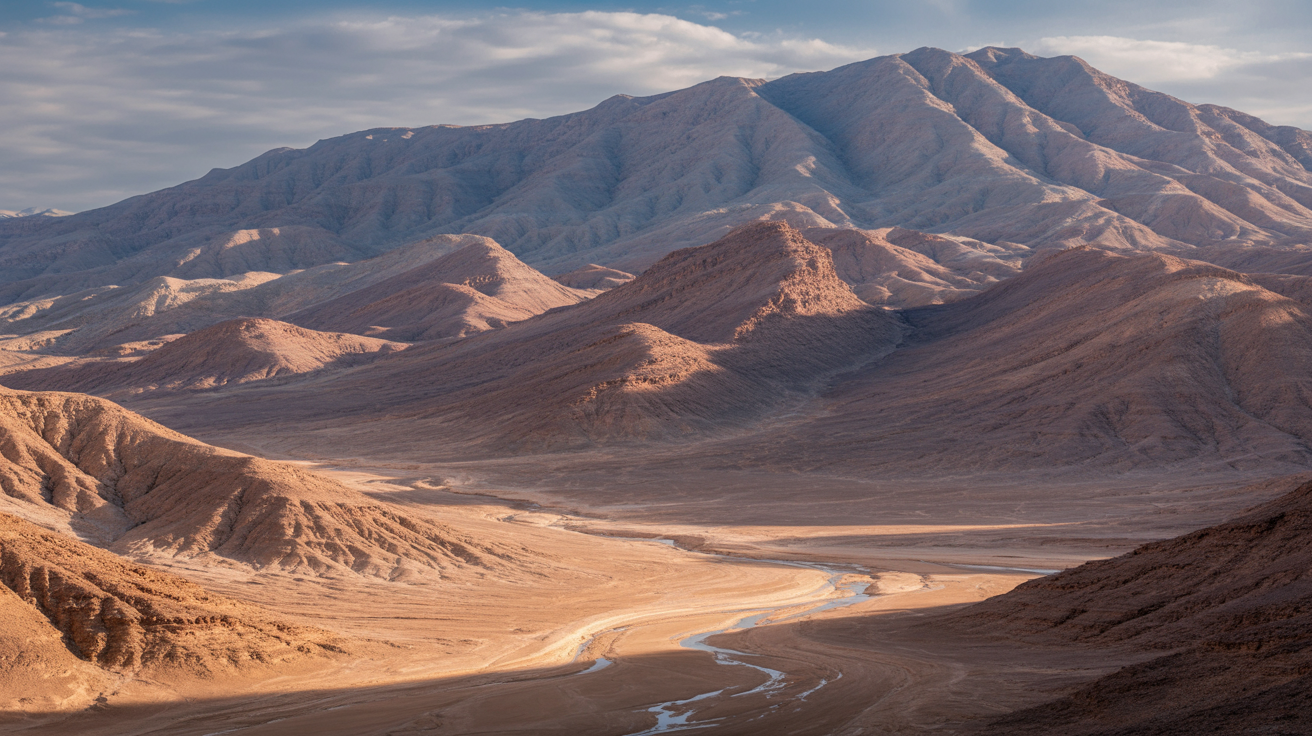
Coastal desert dunes
Conservation
The Desert Rain Frog is currently classified as Near Threatened on the IUCN Red List.
Threats & challenges
The primary threats to Breviceps macrops are habitat loss and degradation due to coastal mining (especially for diamonds and heavy minerals), expanding tourism infrastructure, and off-road vehicle activity that disrupts dune structure. Climate change poses additional risks by altering fog patterns and reducing available moisture. The species is currently classified as Near Threatened by the IUCN, with population declines observed in areas of intensive human activity. Fragmentation of habitat and limited dispersal ability further exacerbate vulnerability. Conservation challenges include the enforcement of protected areas and the need for habitat restoration in disturbed dune systems.
Taxonomy
Scientific name
Breviceps macrops
- Kingdom
- Animalia
- Phylum
- Chordata
- Class
- Amphibia
- Order
- Anura
- Family
- Brevicipitidae
- Genus
- Breviceps
- Species
- macrops
Community notes
Share your observations about the Desert Rain Frog.
No community notes yet. Be the first!
Discover more wildlife
More fascinating animals from the encyclopedia.