
About the Dik-dik
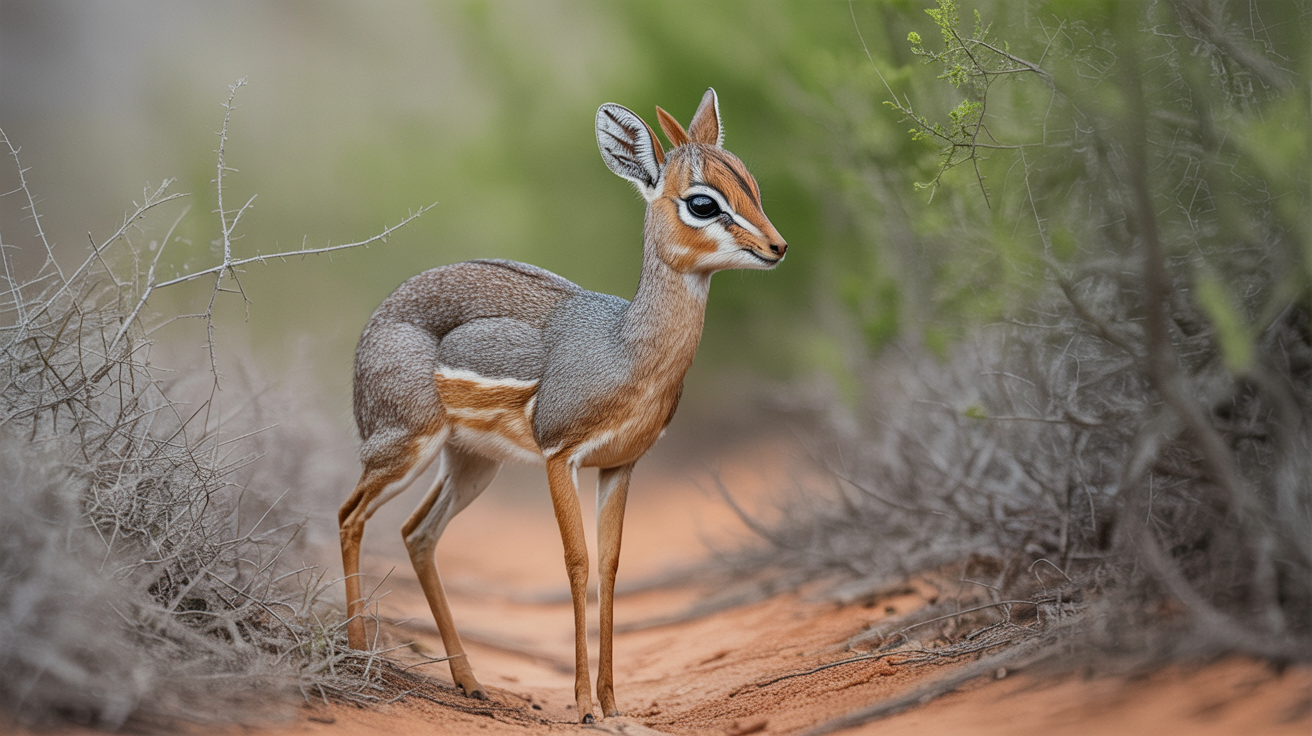
A dik-dik is a five-kilogram antelope with a nose that works as an air conditioner. The elongated, flexible snout houses an expanded chamber lined with blood vessels, and by pumping air through it in a rapid bellows-like pant the animal cools its blood by evaporation without losing the water it would waste by sweating or panting through the mouth. That, plus urine so concentrated it barely wets the ground, lets it live in dry East African scrub without drinking at all. Dik-diks are strictly monogamous, and a pair holds a small territory for life, patrolling boundaries and marking them with a sticky black secretion from a large gland below each eye that they dab onto twig tips at exactly nose height, alongside communal dung middens that both animals ceremonially add to. Females are slightly larger than males, and only the male grows horns, which are short, ridged and often half-hidden by a tuft of hair on the forehead. When flushed, a dik-dik bolts in a zig-zag of stiff-legged bounds through thorn scrub that a bigger predator cannot follow, giving a whistling alarm through the nose that sounds like "zik-zik" — the origin of the name.
Fascinating facts
Miniature Antelope
Dik-diks stand only about 30-40 cm tall at the shoulder, making them one of the smallest antelope species in the world.
Efficient Browsers
Their diet consists mainly of leaves, shoots, fruits, and sometimes grasses, allowing them to survive in dry habitats without free-standing water.
Built-in Cooling System
The dik-dik's long, mobile snout functions as a cooling system, helping regulate body temperature in the African heat.
Detailed description
The dik-dik (genus Madoqua) is a diminutive antelope, with adults typically standing 30–40 cm (12–16 in) at the shoulder and weighing between 3–7 kg (6.6–15.4 lbs). Their most distinctive anatomical feature is an elongated, flexible snout, which is highly vascularized and aids in thermoregulation by dissipating excess heat—an essential adaptation for arid environments. Dik-diks have large, dark eyes surrounded by conspicuous white rings, providing both enhanced vision and a means of visual communication. Their fur is soft and ranges in color from grayish-brown to reddish-brown, offering effective camouflage among dry grasses and shrubs. Males possess small, backward-curving horns (up to 7.5 cm/3 in), while females are hornless. The species exhibits pronounced sexual dimorphism, with females slightly larger than males. Dik-diks are renowned for their agility and speed, capable of rapid, zigzag sprints to evade predators. They are territorial and monogamous, with pairs maintaining and vigorously defending territories marked by dung middens and secretions from preorbital glands. Their vocalizations include alarm whistles and a characteristic 'dik-dik' call, from which their name is derived.
Did you know?
Dik-diks rarely need to drink water, as they obtain most of their moisture from their food.
Research & sources
Wikipedia summary
A dik-dik is the name for any of four species of small antelope in the genus Madoqua, which live in the bushlands of eastern and southern Africa.
Behaviour & social structure
Dik-diks are crepuscular, being most active during dawn and dusk to avoid the midday heat and nocturnal predators. They are highly vigilant, spending much of their time scanning for threats and utilizing well-worn paths within their territories. Feeding primarily on leaves, shoots, fruits, and occasionally flowers, dik-diks are selective browsers, favoring nutrient-rich foliage and avoiding tough, fibrous plants. They rarely drink free-standing water, obtaining necessary moisture from their diet and minimizing water loss through highly efficient kidneys and concentrated urine. Socially, dik-diks live in lifelong monogamous pairs, with offspring remaining in the parental territory until displaced by the next birth. Territorial boundaries are maintained through scent marking and ritualized displays, with aggressive encounters between neighboring males being rare but intense. Communication includes a repertoire of whistles, snorts, and body postures.
Reproduction & life cycle
Dik-diks breed year-round, though peaks may occur in response to rainfall and resource availability. After a gestation period of approximately 170 days (about 5.5 months), the female gives birth to a single fawn, typically weighing 0.5–0.7 kg (1.1–1.5 lbs). Twins are exceedingly rare. The fawn is hidden in dense vegetation for the first few weeks of life, visited periodically by the mother for nursing. Weaning occurs at around 6 weeks, but young may remain within the natal territory for up to 6 months. Both parents participate in territory defense, but the female is primarily responsible for direct care. Sexual maturity is reached at 6–8 months, though dispersal and establishment of new territories may take longer. Lifespan in the wild averages 3–4 years, with some individuals reaching up to 10 years in captivity.
Adaptations & survival
Dik-diks exhibit several remarkable adaptations for survival in arid and semi-arid habitats. Their elongated snout is lined with mucous membranes and a dense network of blood vessels, functioning as a heat exchange system to cool the blood. Their kidneys are highly efficient, allowing them to survive without direct water intake for extended periods. Cryptic coloration and small size enable them to remain inconspicuous among grasses and shrubs. Their monogamous, territorial lifestyle reduces intraspecific competition and maximizes resource use. Behavioral adaptations include crepuscular activity patterns and the use of alarm calls to warn mates of danger. Their rapid, zigzag running pattern is an effective anti-predator strategy against a range of carnivores, including jackals, caracals, and large birds of prey.
Cultural significance
Dik-diks hold a modest place in local folklore and are sometimes featured in East African proverbs and stories, often symbolizing alertness and agility. Their skins have been traditionally used in the production of high-quality suede gloves, known as 'dik-dik gloves,' prized for their softness and durability. However, they are not a major focus of traditional hunting or ritual, and their small size generally precludes them from being a primary food source. In ecotourism, dik-diks are appreciated for their endearing appearance and elusive behavior, making them a favorite among wildlife enthusiasts and photographers.
Recent research
Recent research has focused on the physiological adaptations of dik-diks to arid environments, particularly the role of their nasal heat exchange system and water conservation strategies. Genetic studies have clarified the taxonomy within the genus Madoqua, revealing cryptic species diversity and prompting revisions of species boundaries. Behavioral ecologists have investigated the evolution of monogamy and territoriality in dik-diks, providing insights into the selective pressures shaping social systems in small antelopes. Ongoing studies are examining the impacts of habitat fragmentation and climate change on population dynamics and genetic diversity. Dik-diks are also used as model organisms for studying anti-predator behavior and the ecological consequences of small mammal herbivory in African savannas.
Videos
Habitat
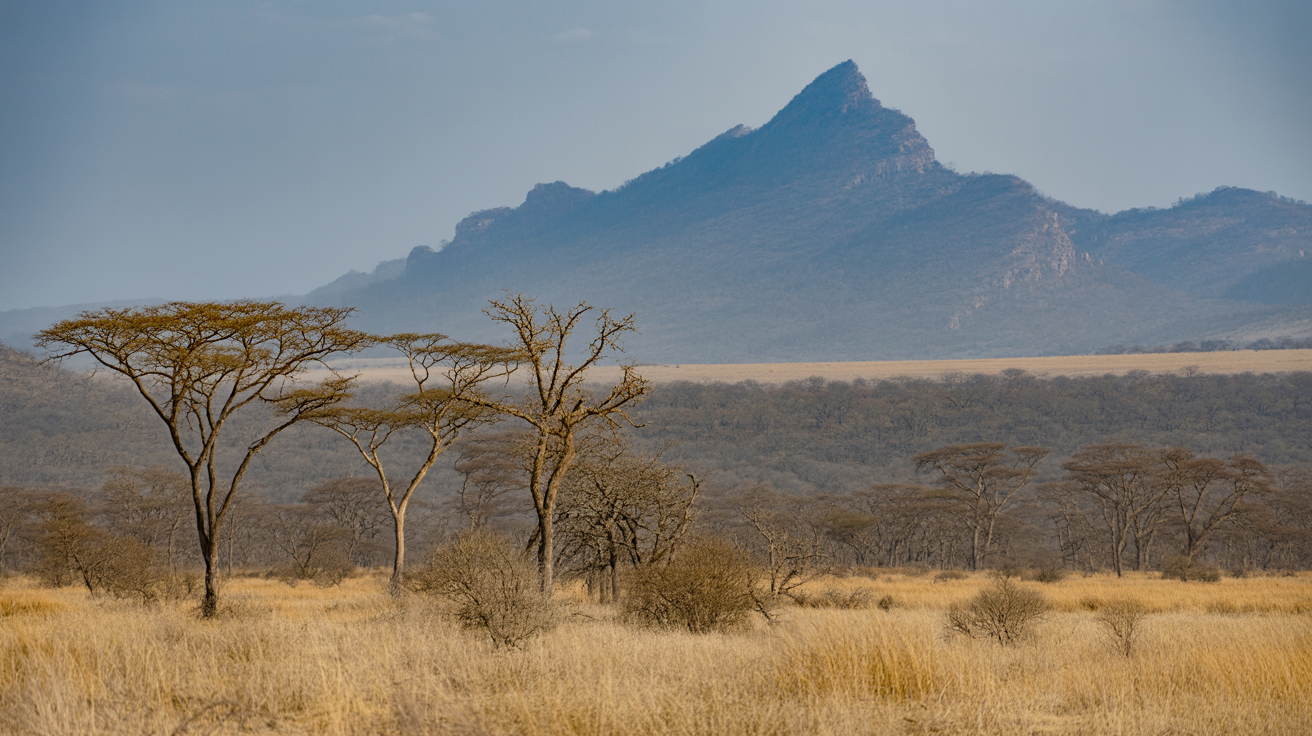
Savanna and shrubland

Conservation
The Dik-dik is currently classified as Least Concern on the IUCN Red List.
Threats & challenges
While dik-diks are currently classified as 'Least Concern' by the IUCN, they face localized threats from habitat loss due to agricultural expansion, overgrazing by livestock, and bush encroachment. They are also hunted for their skins, which are used to produce gloves and other leather goods, and occasionally for bushmeat. Predation by natural predators remains a significant mortality factor, especially for juveniles. Climate change and increasing drought frequency may pose future challenges by altering vegetation structure and water availability. Despite these pressures, dik-dik populations remain stable across much of their range, thanks to their adaptability and high reproductive potential.
Taxonomy
Scientific name
Madoqua kirkii
- Kingdom
- Animalia
- Phylum
- Chordata
- Class
- Mammalia
- Order
- Artiodactyla
- Family
- Bovidae
- Genus
- Madoqua
- Species
- kirkii
Where to see a dik-dik
5 zoos and aquariums in 4 countries are recorded as keeping this species.
 Zoo Dresden🇩🇪 Dresden, Germany
 Chester Zoo🇬🇧 Chester, United Kingdom
- 🦁The Maryland Zoo in Baltimore🇺🇸 Baltimore, United States
 Zoo de Lunaret🇫🇷 France
- 🦁Colchester Zoo🇬🇧 United Kingdom
Community notes
Share your observations about the Dik-dik.
No community notes yet. Be the first!
Discover more wildlife
More fascinating animals from the encyclopedia.