
About the Discus Fish
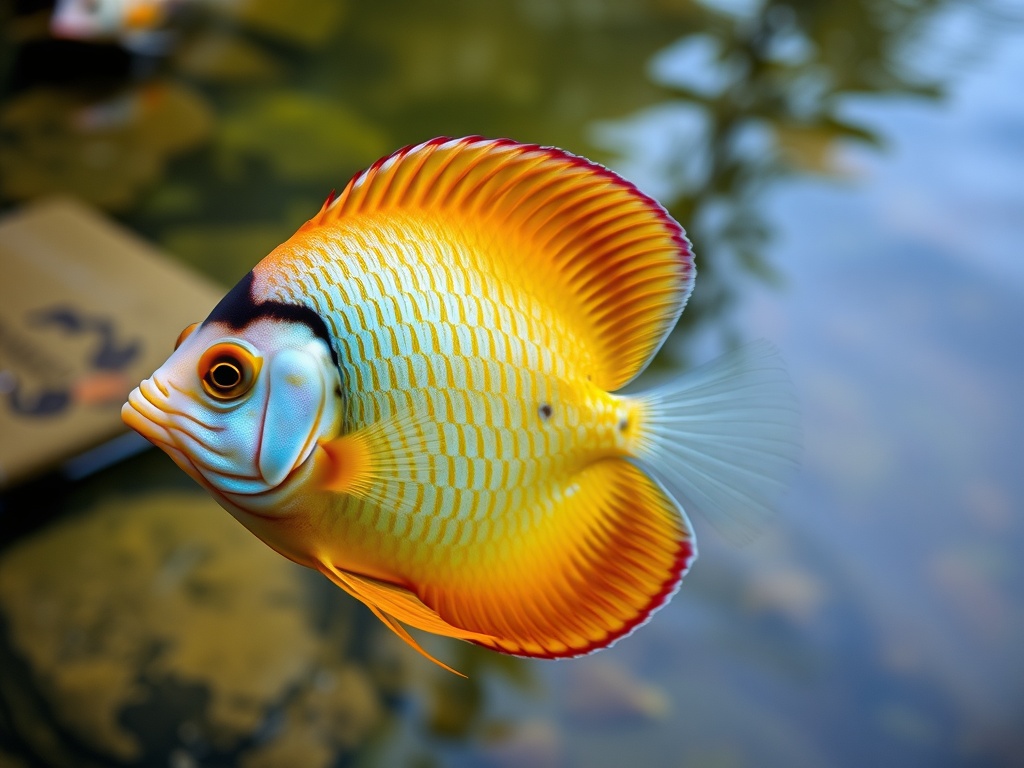
The discus fish is a strikingly colorful and laterally compressed freshwater fish native to the Amazon River Basin of South America. Known for their disc-shaped bodies and vibrant patterns, discus fish are highly prized among aquarium enthusiasts for their beauty and graceful swimming. They are social animals, often found in groups, and are sensitive to changes in water quality, requiring stable and clean environments. Discus fish exhibit unique parenting behaviors, with both parents caring for their young by secreting a nourishing mucus on their skin for the fry to feed upon.
Fascinating facts
Colorful Variations
Discus fish are renowned for their vibrant colors and patterns, which can range from solid blues and reds to intricate stripes and spots.
Parental Care
Both male and female discus fish care for their fry by secreting a special mucus on their skin, which the young feed on during their early days.
Sensitive to Water
Discus fish are highly sensitive to water quality and require stable, warm, and soft acidic water to thrive, making them challenging to keep in aquariums.
Detailed description
The Discus Fish (Symphysodon aequifasciatus) is a medium-sized cichlid, typically reaching 12–15 cm (4.7–6 in) in diameter, with a laterally compressed, disc-shaped body that enhances maneuverability among submerged roots and dense aquatic vegetation. Its coloration is highly variable, ranging from vibrant blues, greens, and reds to intricate patterns of stripes and spots, which serve as both camouflage and a means of intraspecific communication. The species possesses large, rounded dorsal and anal fins that contribute to its graceful, undulating swimming style. Discus fish have relatively small, terminal mouths adapted for picking at detritus, plant matter, and small invertebrates. Their eyes are large and positioned to provide a wide field of vision, aiding in predator detection and social interaction. Social by nature, Discus fish form loose shoals, exhibiting complex hierarchies and frequent social displays such as lateral presentation and color changes. They are renowned for their advanced parental care: both parents secrete a nutrient-rich mucus on their skin, which serves as the sole food source for newly hatched fry during their first weeks of life. This unique adaptation is coupled with a high degree of pair bonding and territoriality during breeding. Discus fish are sensitive to environmental changes, requiring soft, acidic water (pH 5.0–7.0) and stable temperatures (26–30°C/79–86°F), reflecting their adaptation to the blackwater habitats of the Amazon floodplains. Their longevity in captivity can exceed 10 years under optimal conditions.
Did you know?
Discus fish can recognize their owners and often respond to their presence, sometimes even eating from their hands.
Research & sources
Behaviour & social structure
Discus fish are diurnal, most active during daylight hours when they forage for food and engage in social interactions. In the wild, they feed by grazing on periphyton, detritus, small crustaceans, insect larvae, and plant material, often sifting through substrate or picking at submerged surfaces. Social structure is pronounced, with individuals forming shoals of up to several dozen, which provides safety from predators and facilitates communication. Within these groups, a dominance hierarchy is established, often maintained through subtle displays of coloration, fin extension, and body posturing. Aggressive encounters are rare but can occur, especially during breeding or when establishing territory. Discus fish communicate through body language and rapid color changes, which signal stress, dominance, or readiness to breed. They are known for their shy and cautious nature, often retreating to cover when startled. In captivity, they benefit from the presence of conspecifics and are prone to stress and illness if kept alone or in unstable environments.
Reproduction & life cycle
Discus fish are monogamous, forming long-term pair bonds during the breeding season, which in the wild is typically triggered by rising water levels and temperature fluctuations associated with the Amazonian rainy season. Courtship involves synchronized swimming, mutual cleaning of a chosen spawning site (usually a broad leaf or vertical surface), and frequent color intensification. Females lay between 100 and 400 adhesive eggs per spawning event, which are fertilized externally by the male. Both parents guard the eggs, fanning them with their fins to ensure oxygenation and removing any unfertilized or fungus-infected eggs. Incubation lasts 48–60 hours at optimal temperatures, after which the larvae hatch and remain attached to the spawning site for another 2–3 days before becoming free-swimming. At this stage, fry are guided to feed on the mucus secreted by both parents, a process that continues for 1–2 weeks until the young are able to consume other foods. Parental care is highly developed, with both parents actively defending the fry and maintaining close proximity until independence.
Adaptations & survival
Symphysodon aequifasciatus exhibits several adaptations to its native Amazonian environment. Its disc-shaped, laterally compressed body allows for agile navigation through dense aquatic vegetation and submerged root systems. The species' vivid coloration and pattern variability provide camouflage among dappled light and leaf litter, while also serving as social signals. Specialized gill structures enable efficient extraction of oxygen from warm, low-oxygen blackwater habitats. The secretion of epidermal mucus rich in immunoglobulins and nutrients is a unique adaptation that supports fry survival in environments with limited planktonic food. Discus fish also possess a well-developed lateral line system, enhancing their ability to detect water movement and communicate within shoals. Their sensitivity to water chemistry reflects evolutionary specialization to the soft, acidic waters of the Amazon basin.
Cultural significance
The Discus fish holds significant value in the global aquarium trade, prized for its beauty, unique behavior, and challenging care requirements. In Brazil and throughout South America, it is known as 'Peixe Disco' and is sometimes featured in local folklore as a symbol of the Amazon's biodiversity. The species has inspired numerous selective breeding programs, resulting in a wide array of color morphs and patterns highly sought after by hobbyists worldwide. Discus fish are often showcased in public aquaria and international exhibitions, symbolizing the richness and fragility of Amazonian aquatic ecosystems. There are no known traditional medicinal or subsistence uses among indigenous peoples, but the species' popularity has contributed to local economies through sustainable collection and ecotourism.
Recent research
Recent genetic studies have clarified the taxonomy of the Symphysodon genus, revealing cryptic diversity and supporting the distinction of several species and subspecies within the group. Research into parental care has identified unique biochemical properties of the mucus secreted by adults, including antimicrobial peptides and growth factors essential for fry development. Ongoing ecological studies are examining the impacts of habitat fragmentation and water chemistry changes on wild populations. Advances in captive breeding techniques, including hormonal induction and improved nutrition, have increased the availability of disease-resistant, captive-bred individuals for the aquarium trade, reducing pressure on wild stocks. Studies on social behavior and stress physiology have provided insights into optimal husbandry practices and welfare in captivity.
Videos
Habitat
Slow-moving freshwater rivers and floodplain lakes


Conservation
The Discus Fish is currently classified as Least Concern on the IUCN Red List.
Threats & challenges
While the IUCN currently lists Symphysodon aequifasciatus as Least Concern, wild populations face several threats. Habitat degradation due to deforestation, mining, and hydroelectric development alters water quality and flow regimes in the Amazon basin. Overcollection for the aquarium trade, particularly of wild-caught specimens, has historically impacted local populations, though captive breeding has alleviated some pressure. Pollution from agricultural runoff and urbanization introduces toxins and increases sedimentation, further stressing sensitive populations. Climate change poses emerging risks by altering rainfall patterns and water temperatures, potentially disrupting breeding cycles and habitat availability. Disease outbreaks, often exacerbated by poor water quality or introduction of pathogens through the aquarium trade, also pose localized threats.
Taxonomy
Scientific name
Symphysodon aequifasciatus
- Kingdom
- Animalia
- Phylum
- Chordata
- Class
- Actinopterygii
- Order
- Cichliformes
- Family
- Cichlidae
- Genus
- Symphysodon
- Species
- aequifasciatus
Where to see a discus fish
1 zoo and aquarium in 1 country are recorded as keeping this species.
Community notes
Share your observations about the Discus Fish.
No community notes yet. Be the first!
Discover more wildlife
More fascinating animals from the encyclopedia.