
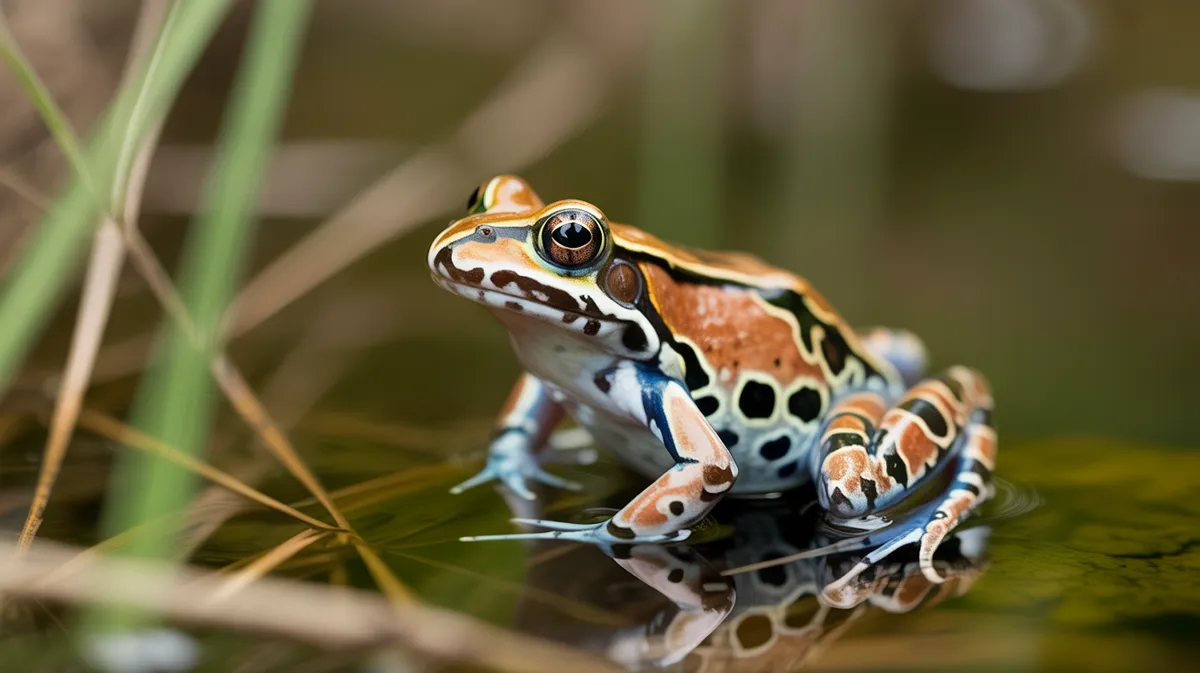
About the Eastern Banjo Frog
The Eastern Banjo Frog, also known as the 'pobblebonk,' is a robust, burrowing amphibian native to southeastern Australia. Its common name comes from the distinctive 'bonk' call made by males during the breeding season, which sounds remarkably like a plucked banjo string. Adapted to a variety of environments, it spends much of its life underground, emerging after rain to breed in water bodies. This species is known for its stocky build, warty skin, and a prominent yellow stripe running along the side of its body.
Fascinating facts
Unique Call
The male Eastern Banjo Frog produces a resonant 'bonk' sound during mating season that resembles the plucking of a banjo string.
Expert Burrower
This species spends much of its life underground, using its strong, spade-like hind feet to dig burrows where it stays moist and safe.
Large Tadpoles
Eastern Banjo Frog tadpoles can grow up to 80 mm in length, making them some of the largest tadpoles among Australian frogs.
Detailed description
The Eastern Banjo Frog (Limnodynastes dumerilii) is a medium to large-sized amphibian, with adults typically measuring 55–75 mm in snout-vent length, though some individuals can reach up to 85 mm. It is robustly built, featuring a broad, flattened head, short limbs, and a distinctive, warty dorsal skin that varies in color from brown to olive, often with irregular darker blotches. A prominent yellow or orange stripe runs along the upper lip and down the flank, a key identification feature. The ventral surface is pale, often marbled with grey or brown. Adapted for a fossorial lifestyle, the species possesses strong, muscular hind limbs and well-developed metatarsal tubercles, which function as digging spades for burrowing into loose soil. The tympanum (external ear) is indistinct, and the fingers are unwebbed, while the toes are moderately webbed. The eyes are large and positioned dorsally, providing a wide field of vision. Sexual dimorphism is subtle, with males developing darkened nuptial pads and a more pronounced vocal sac during the breeding season. The species is primarily nocturnal, spending daylight hours concealed underground or beneath debris, emerging after heavy rainfall to feed and breed.
Did you know?
Despite spending much of its life buried underground, the Eastern Banjo Frog can rapidly emerge and breed in temporary pools that form after heavy rainfall.
Research & sources
Wikipedia summary
Limnodynastes dumerilii is a frog species from the family Limnodynastidae. The informal names for the species and its subspecies include eastern or southern banjo frog, and bull frog. The frog is also called the pobblebonk after its distinctive "bonk" call, which is likened to a banjo string being plucked. There are five subspecies of L. dumerilii, each with different skin coloration. The species is native to eastern Australia. There has been one occurrence in New Zealand, when tadpoles of the species were found in 1999 and destroyed.
Behaviour & social structure
Limnodynastes dumerilii is a solitary and predominantly nocturnal species, spending much of its life underground in self-excavated burrows or natural crevices. It emerges mainly after rainfall, when humidity is high, to forage and breed. The diet consists primarily of terrestrial invertebrates, such as beetles, ants, spiders, worms, and occasionally small vertebrates, captured using a rapid, projectile tongue. Hunting is typically ambush-based, with the frog remaining motionless until prey approaches. Social interactions are limited outside the breeding season, though males may aggregate in large numbers at breeding sites, establishing loose choruses. Males are territorial during calling bouts, using their distinctive 'bonk' vocalization to attract females and deter rivals. The call is produced from concealed positions at the water’s edge, and males may physically compete for optimal calling sites. Outside the breeding season, individuals are highly sedentary, conserving energy and moisture underground.
Reproduction & life cycle
Breeding occurs opportunistically following heavy rainfall, primarily from late winter through early autumn (August to March), though timing varies with regional climate. Males congregate at the margins of still or slow-moving water bodies, where they call to attract females. Amplexus is inguinal, with the male grasping the female around the waist. Females lay large clutches—typically 2,000 to 4,000 eggs—encased in a floating, foamy mass produced by the female’s cloacal secretions. This foam provides oxygenation and protection from predators and desiccation. Embryonic development is rapid, with hatching occurring within 2–4 days, depending on temperature. Tadpoles are large (up to 70 mm), darkly pigmented, and develop over 3–6 months before metamorphosing into juvenile frogs. There is no parental care post-oviposition; survival relies on the protective properties of the foam nest and the ephemeral nature of breeding sites.
Adaptations & survival
The Eastern Banjo Frog exhibits several adaptations for survival in variable and often arid environments. Its burrowing behavior allows it to escape desiccation and temperature extremes, with individuals capable of aestivating underground for extended periods during drought. The species’ robust limbs and keratinized metatarsal tubercles facilitate efficient digging. The foam nest is a key reproductive adaptation, protecting eggs from predation, UV radiation, and dehydration. The loud, low-frequency call is adapted for long-distance propagation over water and through dense vegetation, maximizing breeding success. Tadpoles possess a high tolerance for fluctuating water quality and can exploit ephemeral pools, reducing competition and predation risk. The species’ generalist diet and flexible breeding strategy further enhance its resilience in disturbed and fragmented habitats.
Cultural significance
The Eastern Banjo Frog is well-known in Australian culture for its distinctive 'pobblebonk' call, which is often cited as a harbinger of rain and is featured in local folklore and children’s literature. Its calls are a familiar sound in suburban and rural environments, contributing to the auditory landscape of southeastern Australia. The species is sometimes used in educational programs to promote wetland conservation and amphibian awareness. There are no known traditional medicinal or culinary uses, but its presence in gardens and agricultural areas is generally regarded as beneficial due to its insectivorous diet.
Recent research
Recent research has focused on the species’ response to urbanization and habitat fragmentation, with studies indicating remarkable adaptability to anthropogenic environments. Genetic analyses have clarified the relationships among the five recognized subspecies, revealing subtle morphological and ecological differences. Ongoing studies are investigating the impact of climate variability on breeding phenology and foam nest composition. The species has also been used as a model for understanding amphibian resistance to chytridiomycosis, with preliminary findings suggesting innate immune defenses. Acoustic monitoring projects utilize the distinctive call of L. dumerilii for long-term population assessments and wetland health indicators.
Sources
Systematics and Ecology of the Limnodynastes dumerilii Complex
Anstis, M. (Amphibian Research Centre); Tyler, M.J. (2013)
scientificLimnodynastes dumerilii: The IUCN Red List of Threatened Species 2004
Hero, J.-M. et al. (2004)
conservationVideos
Habitat
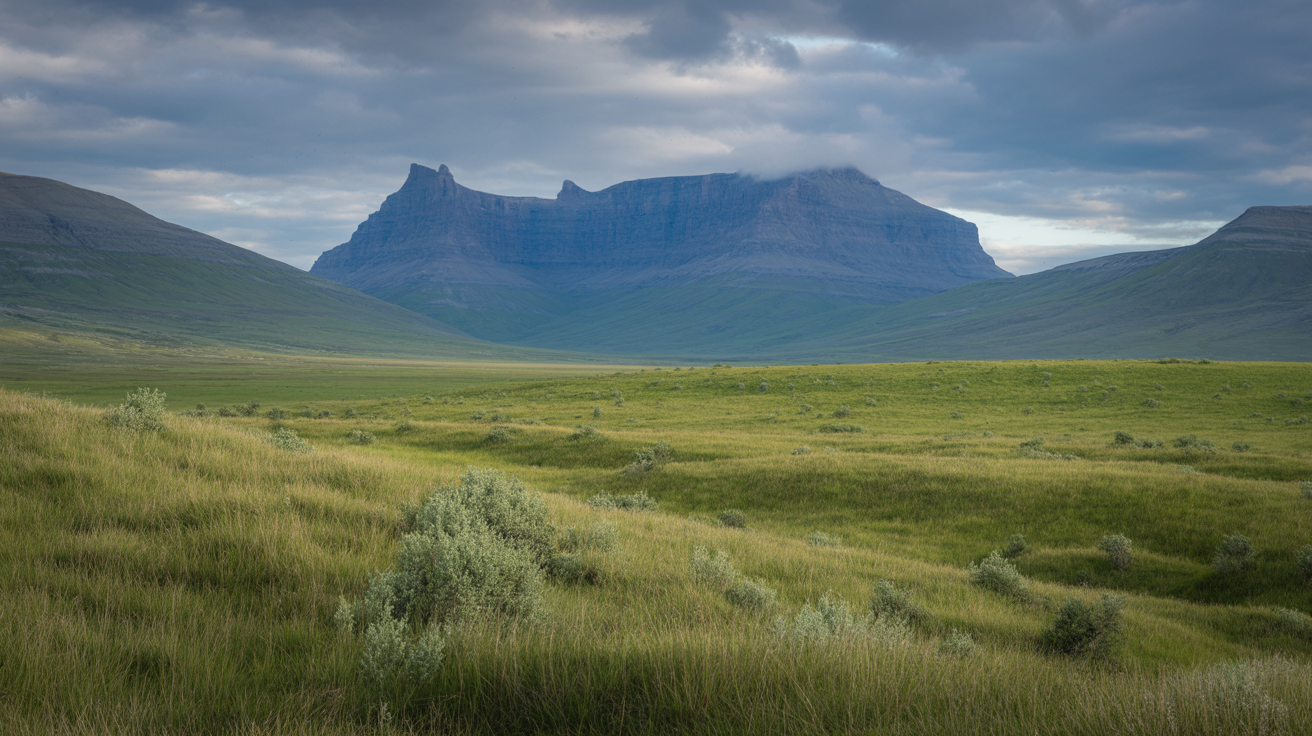
Freshwater wetlands, ponds, creeks, floodplains, and surrounding forests or grasslands
 Various Continental Regions
Grassland
Open areas dominated by grasses rather than trees, supporting numerous herbivores and their predators.
 Global
Forest
Wooded areas with significant tree cover and diverse plant and animal communities.
 Global
Freshwater
Lakes, rivers, and wetlands with diverse aquatic ecosystems.
Conservation
The Eastern Banjo Frog is currently classified as Least Concern on the IUCN Red List.
Threats & challenges
Currently assessed as Least Concern by the IUCN, Limnodynastes dumerilii maintains stable populations across much of its range, owing to its adaptability and broad ecological tolerance. However, localized threats include habitat loss from urbanization, wetland drainage, and agricultural expansion. Road mortality during mass breeding migrations and exposure to pollutants (e.g., pesticides, fertilizers) pose additional risks. The species is susceptible to the chytrid fungus (Batrachochytrium dendrobatidis), which has caused declines in other amphibian populations, though L. dumerilii appears relatively resilient. Climate change, altering rainfall patterns and hydroperiods, may impact breeding success in the future. Invasive species, such as predatory fish and cane toads, can affect tadpole survival in some areas.
Taxonomy
Scientific name
Limnodynastes dumerilii
- Kingdom
- Animalia
- Phylum
- Chordata
- Class
- Amphibia
- Order
- Anura
- Family
- Limnodynastidae
- Genus
- Limnodynastes
- Species
- dumerilii
Community notes
Share your observations about the Eastern Banjo Frog.
No community notes yet. Be the first!
Discover more wildlife
More fascinating animals from the encyclopedia.