
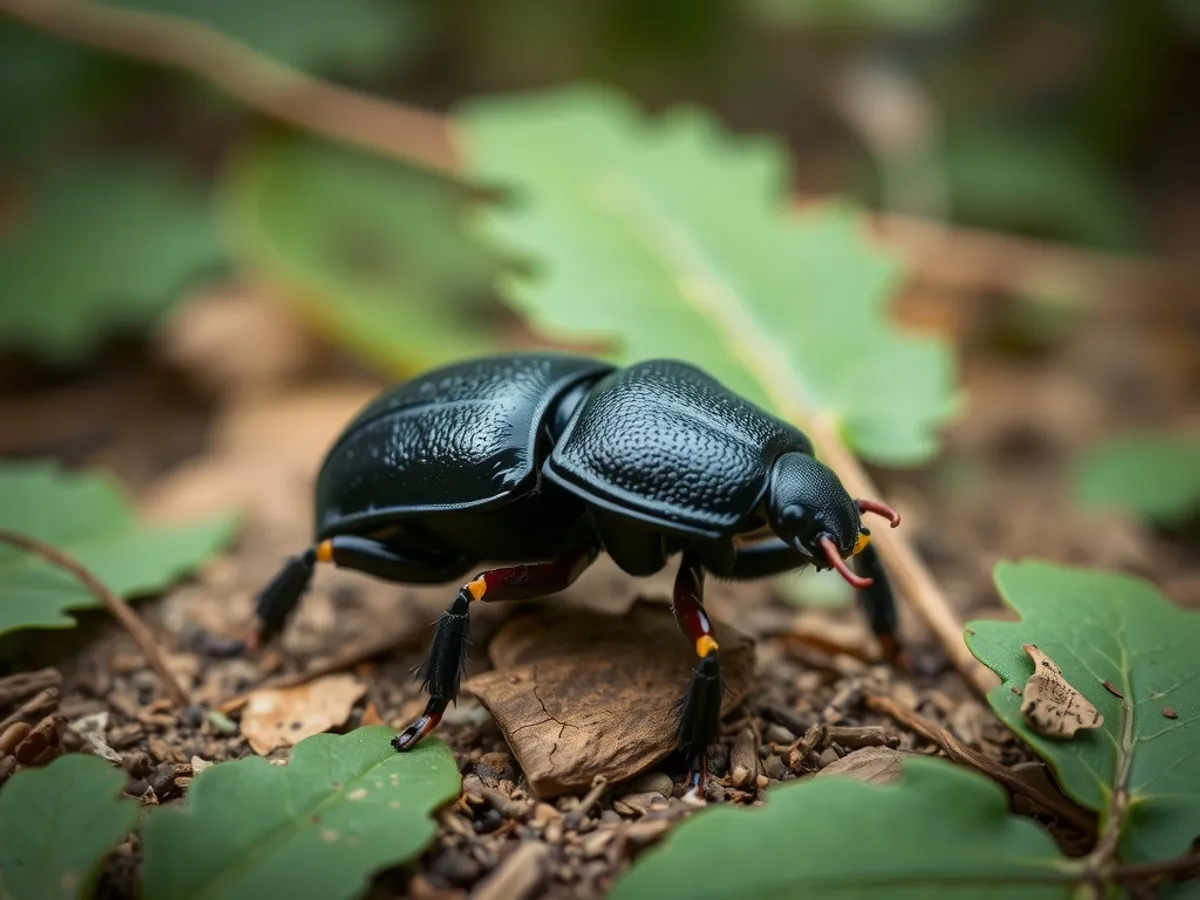
About the Eastern Hercules Beetle
The Eastern Hercules Beetle is one of the largest beetles in North America and is renowned for its impressive size and distinctive horn structures on males. Exhibiting a tough, mottled greenish-yellow exoskeleton with black markings, this beetle is found primarily in the forests of the eastern United States. Males display prominent horns used for combat and mating rights, while females are hornless. Both larvae and adults play important ecological roles in decomposition and nutrient cycling.
Fascinating facts
Giant Beetle
The Eastern Hercules Beetle is one of the largest beetles in the United States, with males reaching up to 2.5 inches (60 mm) in length.
Strong Horns
Male beetles use their large horns to wrestle rivals for access to females during the breeding season.
Forest Recycler
Larvae feed on decaying wood, playing a vital role in breaking down dead trees and returning nutrients to the forest ecosystem.
Detailed description
The Eastern Hercules Beetle (Dynastes tityus) is among the largest beetles in North America, with adult males reaching lengths of 40–60 mm, including their prominent horns, while females are slightly smaller and lack horns. The exoskeleton is robust and exhibits variable coloration, typically ranging from pale green to grayish or yellow-tan, adorned with irregular black blotches that provide camouflage against tree bark and leaf litter. Males possess a distinctive pair of horns: a long, forward-projecting thoracic horn and a shorter cephalic horn, which are used in intraspecific combat for access to mates. The body is oval and convex, with strong legs equipped with spines and claws for gripping wood and climbing. The beetle's antennae are lamellate, allowing them to detect pheromones and environmental cues. Larvae are large, C-shaped grubs that can reach up to 100 mm in length, feeding primarily on decaying hardwoods and playing a crucial role in nutrient cycling. Adults are primarily nocturnal and are attracted to lights at night. Their life cycle is holometabolous, with distinct egg, larval, pupal, and adult stages, and the complete development from egg to adult may take up to two years, depending on environmental conditions.
Did you know?
Despite their formidable appearance, Eastern Hercules Beetles are harmless to humans and do not bite or sting.
Research & sources
Wikipedia summary
Dynastes tityus, the eastern Hercules beetle, is a species of rhinoceros beetle native to the Eastern United States. The adult's elytra are green, gray or tan, with black markings, and the whole animal, including the male's horns, may reach 60 mm (2.4 in) in length. The larvae feed on decaying wood from various trees.
Behaviour & social structure
Eastern Hercules Beetles are generally solitary outside of the breeding season. Males are territorial and engage in ritualized combat using their horns to dislodge rivals from branches or logs, a behavior that is rarely fatal but determines access to receptive females. Adults are primarily crepuscular to nocturnal, remaining hidden under logs or leaf litter during the day to avoid predators and desiccation. Feeding behavior is opportunistic; adults consume rotting fruit, sap flows, and occasionally decaying plant matter, while larvae specialize in decomposing hardwoods such as oak, hickory, and ash. Larval feeding tunnels contribute to wood decomposition and soil enrichment. Adults are strong fliers but tend to remain within a limited home range. Communication is primarily chemical, with pheromones playing a key role in mate attraction.
Reproduction & life cycle
Breeding occurs in late spring to summer, with peak activity from May to August. Males locate females using pheromonal cues and compete for mating opportunities. After copulation, females lay eggs singly or in small clusters within decaying logs or stumps. The incubation period for eggs is approximately 2–4 weeks. Larvae undergo three instars over a period of 12–18 months, feeding extensively on decaying wood. Pupation occurs in a chamber constructed from wood fibers and frass, lasting 1–2 months. There is no parental care after oviposition; larvae are independent and rely on the microhabitat provided by rotting wood. Adults emerge in late summer or fall, overwintering in the pupal chamber and becoming active the following spring.
Adaptations & survival
Dynastes tityus exhibits several notable adaptations for survival. The large horns of males are an example of sexual selection, evolved for male-male competition. The cryptic coloration and tough exoskeleton provide protection from predators and environmental hazards. Larvae possess powerful mandibles for breaking down tough wood fibers, and their gut microbiota assist in cellulose digestion. Adults have well-developed wings for dispersal, though they are slow and deliberate fliers. The beetle's ability to utilize a wide range of decaying hardwoods as larval food sources allows it to exploit diverse forest habitats. Nocturnal behavior reduces predation risk and desiccation.
Cultural significance
While not as prominent in folklore as some tropical rhinoceros beetles, the Eastern Hercules Beetle has fascinated naturalists and collectors due to its impressive size and striking appearance. It is sometimes featured in educational programs and insect exhibits, symbolizing the diversity and ecological importance of decomposers. In some regions, beetles of the genus Dynastes are admired for their strength and are occasionally kept as pets by insect enthusiasts. There are no significant traditional uses or mythological associations documented for this species in North America.
Recent research
Recent research has focused on the biomechanics of horn use in male combat, revealing that horn size is a reliable indicator of male fitness and is subject to both natural and sexual selection. Studies on larval gut microbiota have provided insights into the coevolution of beetles and wood-degrading microbes, highlighting their role in forest nutrient cycling. Ongoing genetic research is investigating population structure and gene flow across the species' range, with implications for conservation management. Dynastes tityus is also used as a model organism for studying the evolution of exaggerated secondary sexual traits and the ecological impacts of saproxylic (wood-dependent) insects.
Videos
Habitat
Deciduous forest

Conservation
The Eastern Hercules Beetle is currently classified as Least Concern on the IUCN Red List.
Threats & challenges
Currently, the Eastern Hercules Beetle is classified as 'Least Concern,' with stable populations across its range. However, local declines may occur due to habitat loss, particularly the removal of deadwood from managed forests, urbanization, and logging practices that reduce suitable breeding sites. Pesticide use and light pollution may also negatively impact adult survival and reproduction. Climate change could alter the distribution of suitable habitats and host trees. Despite these pressures, the species remains relatively widespread and adaptable.
Taxonomy
Scientific name
Dynastes tityus
- Kingdom
- Animalia
- Phylum
- Arthropoda
- Class
- Insecta
- Order
- Coleoptera
- Family
- Scarabaeidae
- Genus
- Dynastes
- Species
- tityus
Community notes
Share your observations about the Eastern Hercules Beetle.
No community notes yet. Be the first!
Discover more wildlife
More fascinating animals from the encyclopedia.