
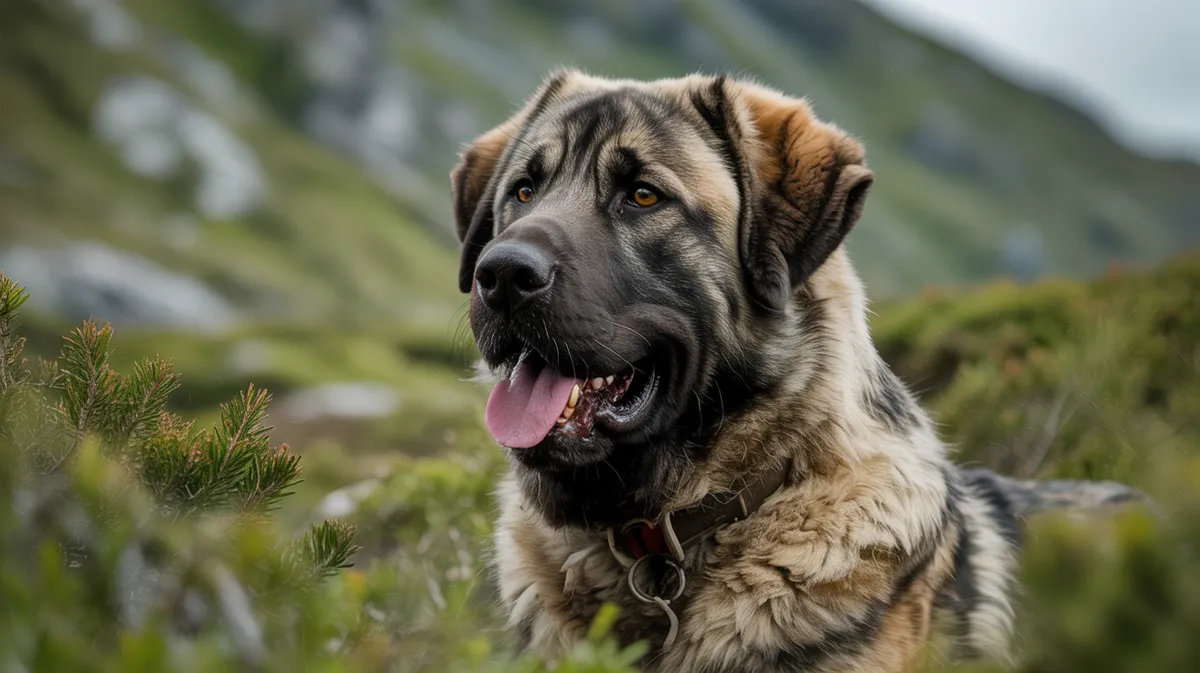
About the Estrela Mountain Dog
The Estrela Mountain Dog is a large, powerful livestock guardian breed native to the Estrela Mountains of Portugal. Bred for centuries to protect flocks from predators such as wolves and thieves, this dog is renowned for its courage, loyalty, and strong protective instincts. It has a thick, weather-resistant double coat, which can be either long or short, and comes in various shades of fawn, wolf gray, and brindle. Estrela Mountain Dogs are intelligent and independent, requiring experienced handling and early socialization. They are devoted to their families and make excellent guardians, both on farms and in homes.
Fascinating facts
Ancient Guardian
The Estrela Mountain Dog has been guarding Portuguese flocks since at least the 15th century, making it one of the country's oldest breeds.
Adapted for Mountains
Its dense double coat and sturdy build make it perfectly suited to the harsh, cold conditions of the Estrela Mountains.
Distinctive Appearance
A lion-like mane and a unique hook at the end of its tail set the Estrela Mountain Dog apart from other guardian breeds.
Detailed description
The Estrela Mountain Dog (Cão da Serra da Estrela) is a robust, large-boned breed, with males typically weighing 45–60 kg (99–132 lbs) and females 35–45 kg (77–99 lbs), standing 62–72 cm (24–28 in) at the withers. Its dense, double-layered coat, which can be long or short, provides insulation against the harsh, variable climate of the Estrela Mountains, with coloration ranging from fawn and wolf-gray to brindle, often with a characteristic black facial mask. The breed has a broad head, strong jaws, and well-developed musculature, reflecting its historical role as a livestock guardian. Estrelas are known for their calm, confident demeanor and pronounced territorial instincts; they are vigilant, making them formidable protectors against predators such as wolves, foxes, and even human intruders. Socially, they form close bonds with their flock and human family, displaying strong loyalty and a gentle disposition toward children and familiar animals. Their independence is notable, as centuries of working autonomously have selected for dogs capable of making decisions without direct human guidance. Reproduction is typical of large breeds, with moderate litter sizes and attentive maternal care. Unique adaptations include their weather-resistant coat, powerful build for traversing rugged terrain, and a deep, resonant bark used to deter threats. Estrela Mountain Dogs are intelligent and trainable but require consistent, experienced handling due to their independent nature.
Did you know?
Estrela Mountain Dogs have webbed feet, which help them traverse rugged, mountainous terrain with ease.
Research & sources
Wikipedia summary
The Estrela Mountain Dog is a large breed of dog from the Estrela Mountains of Portugal. They are a livestock guardian dog bred to guard herds and homesteads and also kept as a family pet. It is "one of the oldest breeds in the Iberian Peninsula."
Behaviour & social structure
Estrela Mountain Dogs are primarily nocturnal in their guardian role, patrolling boundaries and remaining alert to unfamiliar sounds or scents. Their feeding behavior is omnivorous, though in traditional settings, they subsist on a diet of meat scraps, bread, and local produce, reflecting the resourcefulness required in mountain environments. Socially, they are reserved with strangers but affectionate and playful with family members. They exhibit pronounced protective behaviors, including positioning themselves between perceived threats and their charges, and using vocalizations and posturing to warn off intruders. Estrelas are not prone to unnecessary aggression but will escalate if their warnings are ignored. Daily routines in working dogs involve patrolling, resting in vantage points, and interacting with livestock, while companion animals require regular physical and mental stimulation to prevent boredom and behavioral issues.
Reproduction & life cycle
The Estrela Mountain Dog typically reaches sexual maturity between 18–24 months. Breeding is generally seasonal, with most litters born in late winter to spring, coinciding with optimal conditions for puppy survival. The gestation period averages 63 days, with litter sizes ranging from 6 to 12 puppies. Females exhibit strong maternal instincts, providing attentive care and protection to their young. Puppies are born blind and deaf, opening their eyes at around two weeks, and are weaned at six to eight weeks. Early socialization is crucial for developing balanced temperaments, as puppies inherit both the independence and protective instincts of the breed.
Adaptations & survival
Physically, the Estrela Mountain Dog's thick, water-resistant double coat insulates against cold, wet, and windy mountain conditions, while its muscular frame and large, padded feet allow for efficient movement over rocky, uneven terrain. The breed's deep chest supports endurance and stamina for long patrols. Behaviorally, their independence and strong decision-making abilities are evolutionary responses to working autonomously in remote areas. Their acute senses of hearing and smell enhance their ability to detect predators or intruders at a distance. The breed's distinctive bark serves as both a warning and a deterrent, reducing the need for direct confrontation.
Cultural significance
The Estrela Mountain Dog is deeply embedded in the rural culture of Portugal, particularly in the Serra da Estrela region, where it has been a trusted guardian for centuries. It is celebrated in local folklore as a symbol of loyalty, strength, and resilience. The breed is featured in regional festivals and is recognized as a living heritage of Portuguese pastoral traditions. Historically, these dogs were essential for the survival of sheep and goat herders, and their reputation as reliable guardians has led to their increasing popularity as family protectors and therapy dogs.
Recent research
Recent genetic studies have confirmed the Estrela Mountain Dog's status as one of the oldest indigenous breeds of the Iberian Peninsula, with mitochondrial DNA analyses indicating a distinct lineage adapted to mountainous environments. Ongoing research focuses on the breed's behavioral genetics, particularly the inheritance of guardian instincts and independence. Veterinary studies have examined the breed's predisposition to certain health issues, such as hip dysplasia and gastric torsion, emphasizing the importance of responsible breeding. Ethological research highlights the effectiveness of Estrelas in non-lethal predator control, supporting their use in modern conservation grazing systems.
Videos
Habitat
Mountain


Conservation
The Estrela Mountain Dog is currently classified as Least Concern on the IUCN Red List.
Threats & challenges
While the Estrela Mountain Dog is not currently endangered, it faces challenges from declining traditional pastoralism, urbanization, and crossbreeding, which threaten genetic purity. The breed's large size and strong-willed nature can lead to abandonment if owners are unprepared for their needs. In Portugal, dedicated breed clubs and conservation programs promote responsible breeding and public education. Population trends are stable in their native region, but the breed remains rare internationally. Conservation efforts focus on maintaining working lines and genetic diversity.
Taxonomy
Scientific name
Canis lupus familiaris
- Kingdom
- Animalia
- Phylum
- Chordata
- Class
- Mammalia
- Order
- Carnivora
- Family
- Canidae
- Genus
- Canis
- Species
- familiaris
Community notes
Share your observations about the Estrela Mountain Dog.
No community notes yet. Be the first!
Discover more wildlife
More fascinating animals from the encyclopedia.