
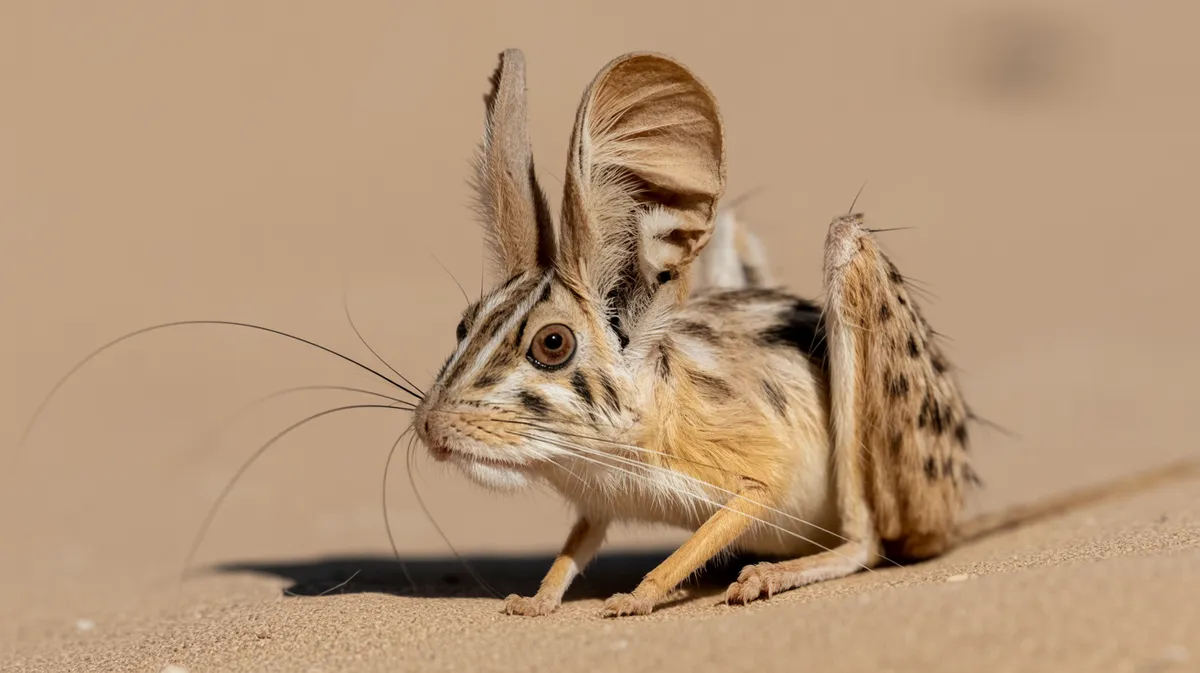
About the Gobi jerboa
The Gobi jerboa is a small nocturnal rodent native to the arid regions of the Gobi Desert in Mongolia and northern China. It is recognized for its remarkable long hind legs and tufted tail, adaptations that enable it to leap great distances to escape predators and navigate sandy terrain. The Gobi jerboa has large ears that aid in dissipating heat and detecting sounds in the sparse desert landscape. Its fur is soft and sandy-colored, providing excellent camouflage against the desert floor.
Fascinating facts
Amazing Jumpers
Gobi jerboas use their powerful hind legs to leap distances up to 15 times their body length, helping them escape predators and move quickly across the desert.
Desert Adapted
They are highly adapted to arid environments and can survive extreme temperature swings by being nocturnal and living in deep burrows during the day.
Super Senses
Their large ears not only help them hear approaching predators but also aid in regulating body temperature by releasing excess heat.
Detailed description
The Gobi jerboa (Allactaga bullata) is a small, nocturnal rodent characterized by its highly specialized morphology for life in arid environments. Adults typically have a head-body length of 90–120 mm, with disproportionately long hind legs (up to 70 mm) and a tail that can reach 150–180 mm, ending in a prominent tuft. The forelimbs are short and used primarily for feeding and grooming, while the elongated hind limbs enable powerful saltatory (jumping) locomotion, allowing leaps of up to 3 meters to evade predators. The species is notable for its large, rounded ears (up to 50 mm), which are among the largest relative to body size of any rodent, enhancing both auditory sensitivity and thermoregulation. The pelage is dense and soft, sandy to pale brown dorsally with a white ventral surface, providing camouflage against the desert substrate. The eyes are large and adapted for nocturnal vision. The Gobi jerboa's skull is robust with inflated auditory bullae, contributing to its acute hearing. Its dental formula is adapted to a diet of seeds, roots, and other plant material. These jerboas are solitary and highly territorial, occupying burrow systems that offer protection from temperature extremes and predators. Their activity is strictly nocturnal, emerging at dusk to forage and returning before dawn.
Did you know?
The Gobi jerboa can close its nostrils to keep out sand during dust storms or while burrowing.
Research & sources
Wikipedia summary
The Gobi jerboa is a species of rodent in the family Dipodidae. It is found in China and Mongolia. Its natural habitats are temperate grassland and temperate desert.
Behaviour & social structure
Gobi jerboas are primarily solitary and exhibit territorial behavior, with individuals maintaining and defending discrete home ranges. They are crepuscular to nocturnal, emerging from their burrows at dusk to forage and returning before sunrise. Their foraging behavior is characterized by rapid, erratic hopping interspersed with pauses to scan for predators. Diet consists mainly of seeds, roots, green plant material, and occasionally insects, depending on seasonal availability. They use their forepaws to manipulate food and groom themselves. Burrow systems are complex, with separate chambers for nesting, food storage, and waste. During the hottest and coldest periods, they may enter torpor or estivation to conserve energy and water. Social interactions are limited outside of the breeding season, though vocalizations and foot-drumming are used for communication, particularly in territorial disputes or mating contexts.
Reproduction & life cycle
Breeding in the Gobi jerboa typically occurs from late spring to early summer (May–July), coinciding with increased food availability. Males and females come together briefly for mating, after which the female constructs a nesting chamber within her burrow. Gestation lasts approximately 25–30 days, resulting in litters of 2–6 altricial young. The young are born blind and hairless, developing fur within 10 days and opening their eyes at around 14–16 days. Weaning occurs at 4–5 weeks, after which juveniles disperse to establish their own territories. Parental care is provided solely by the female, who nurses and protects the young until they are independent. Reproductive output may vary with environmental conditions, and in some years, females may produce two litters if resources allow.
Adaptations & survival
The Gobi jerboa exhibits a suite of adaptations for desert survival. Its elongated hind limbs and tail facilitate rapid, energy-efficient locomotion across sandy and rocky terrain, reducing predation risk. The large ears and inflated auditory bullae enhance hearing, crucial for detecting predators and prey in open habitats. The ears also aid in heat dissipation, helping to regulate body temperature during hot nights. The dense, pale fur provides camouflage and insulation against temperature extremes. Burrowing behavior allows the jerboa to escape surface heat and cold, while also conserving moisture. Kidney physiology is adapted for water conservation, producing highly concentrated urine. Behavioral adaptations include nocturnality and periods of torpor or estivation during adverse conditions.
Cultural significance
The Gobi jerboa holds limited direct significance in local human cultures, but it is occasionally referenced in Mongolian folklore as a symbol of agility and resourcefulness. Its unique appearance and remarkable jumping ability have made it a subject of interest among naturalists and wildlife enthusiasts. In some regions, jerboas are considered indicators of ecosystem health, as their presence reflects intact desert habitats. There are no known traditional uses of the species for food, medicine, or trade.
Recent research
Recent research on Allactaga bullata has focused on its physiological adaptations to arid environments, particularly kidney function and water conservation strategies. Genetic studies have clarified its taxonomic status within the Dipodidae family and revealed low genetic diversity, likely due to historical population bottlenecks. Ongoing ecological studies are investigating the impact of climate change and habitat fragmentation on population dynamics. Advances in bioacoustics have documented the species' vocal repertoire and its role in social communication. There is growing interest in the jerboa's locomotor biomechanics, with implications for biomimetic robotics.
Videos
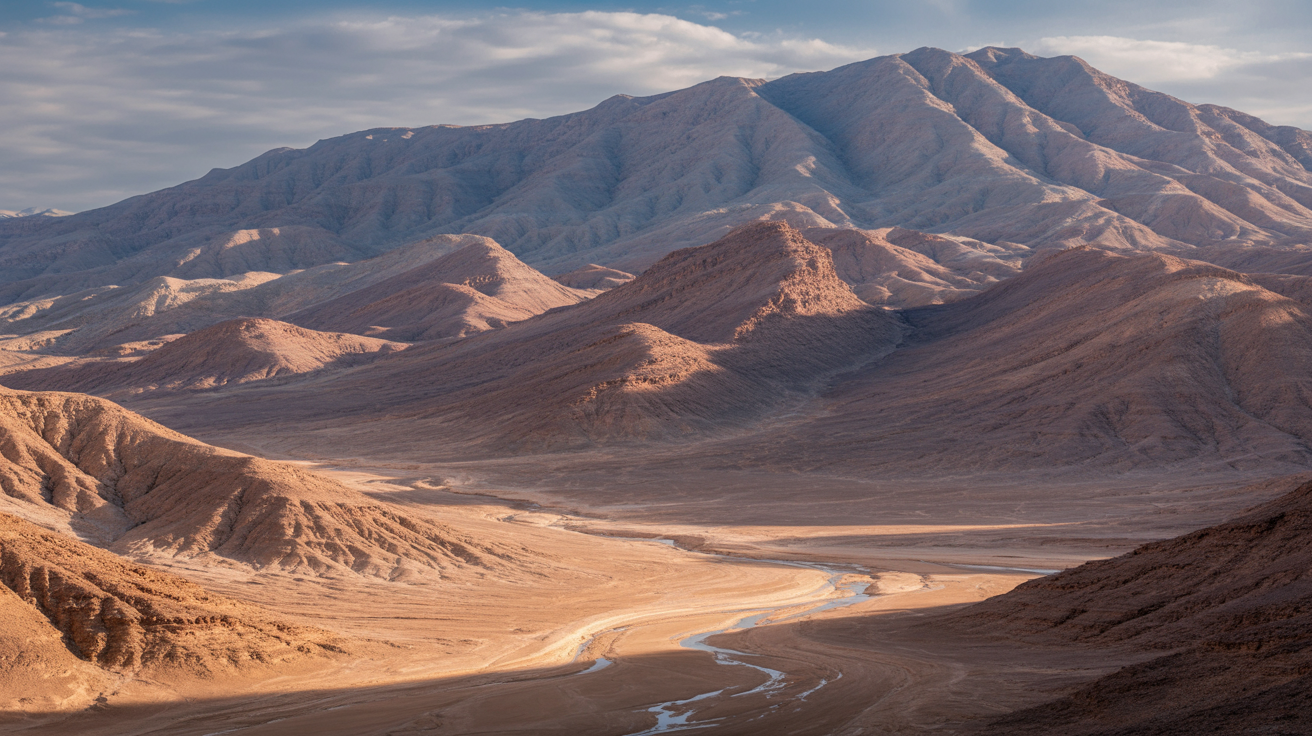
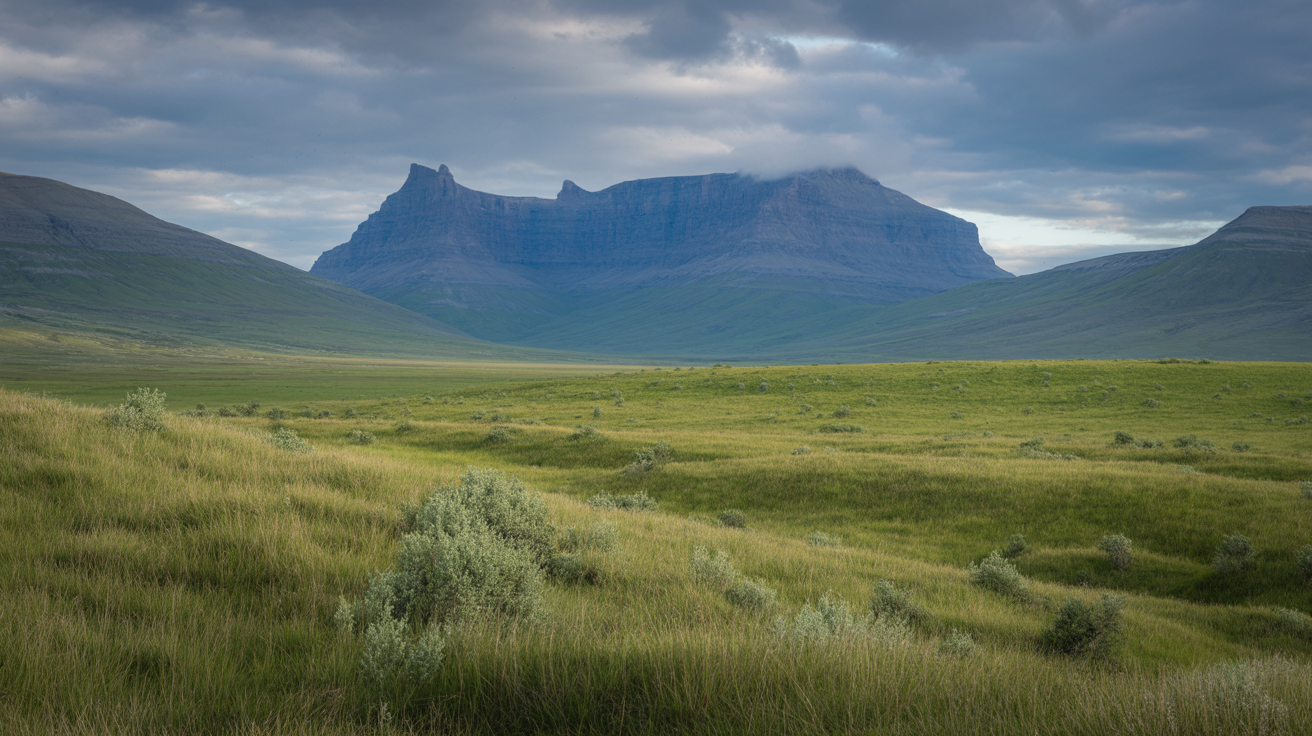
Habitat
Desert
Conservation
The Gobi jerboa is currently classified as Least Concern on the IUCN Red List.
Threats & challenges
Currently classified as Least Concern by the IUCN, the Gobi jerboa faces relatively few immediate threats due to its wide distribution and adaptability. However, localized population declines have been noted, primarily due to habitat degradation from overgrazing by livestock, expansion of agriculture, and infrastructure development. Climate change poses a long-term threat by altering precipitation patterns and vegetation cover in the Gobi Desert. Predation by foxes, owls, and snakes is a natural pressure. There is limited evidence of direct persecution or exploitation by humans. Population trends are generally stable, but ongoing monitoring is recommended due to increasing anthropogenic pressures.
Taxonomy
Scientific name
Allactaga bullata
- Kingdom
- Animalia
- Phylum
- Chordata
- Class
- Mammalia
- Order
- Rodentia
- Family
- Dipodidae
- Genus
- Allactaga
- Species
- bullata
Community notes
Share your observations about the Gobi jerboa.
No community notes yet. Be the first!
Discover more wildlife
More fascinating animals from the encyclopedia.