
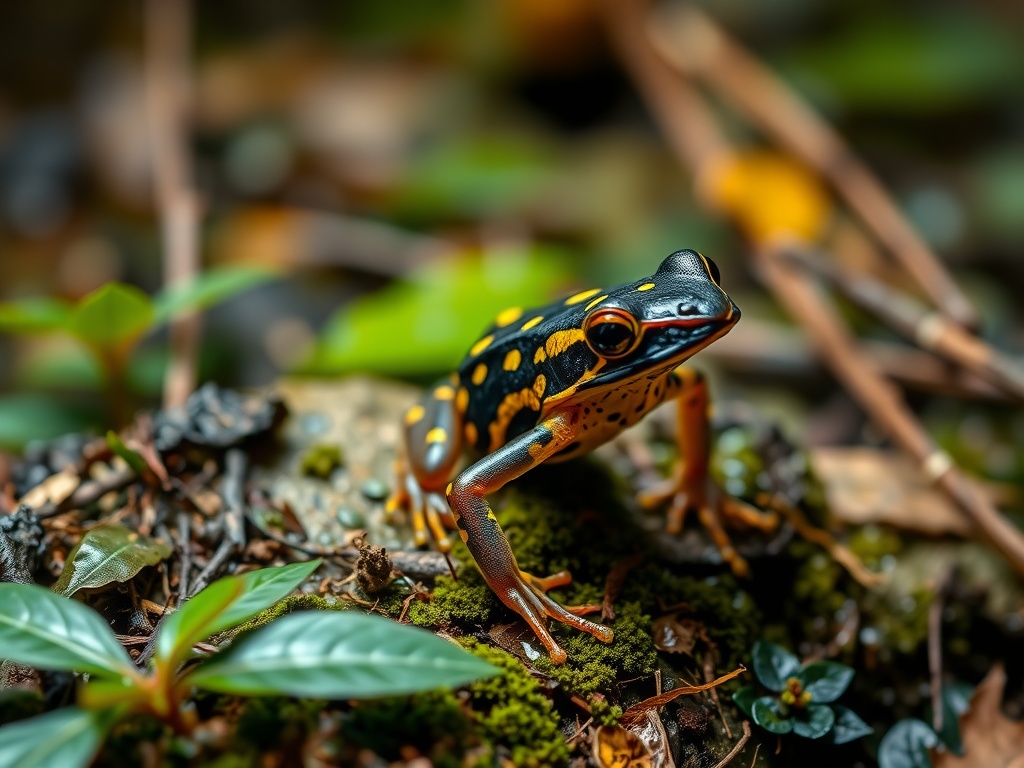
About the Golden Mantella
The Golden Mantella is a small, vividly colored amphibian native to the rainforests of Madagascar. Recognized for its bright orange to yellow skin, this tiny frog acts as a warning to predators about its toxicity. Golden Mantellas are terrestrial and are most often found near swamps, marshes, and seasonal pools in forested areas. Due to habitat loss and collection for the pet trade, their populations have declined significantly in the wild.
Fascinating facts
Bright Coloration
The Golden Mantella's vivid orange or yellow skin serves as a warning sign to predators, signaling that it is toxic and should not be eaten.
Tiny Size
These frogs are very small, usually measuring just 20-26 mm in length, making them one of the tiniest frogs in Madagascar.
Endangered Habitat
Golden Mantellas are found only in a very small area of Madagascar, and their habitat is rapidly shrinking due to deforestation and agriculture.
Detailed description
The Golden Mantella (Mantella aurantiaca) is a diminutive amphibian, with adults typically measuring 20–26 mm in length and weighing less than 2 grams. Its skin is smooth and vividly colored, ranging from bright orange to yellow, serving as a classic example of aposematism—warning coloration that signals toxicity to potential predators. The species lacks webbing between its toes, an adaptation for its primarily terrestrial lifestyle. Golden Mantellas possess large, forward-facing eyes that provide excellent binocular vision, aiding in the detection of small invertebrate prey. Their tympanum (external ear) is not visible, and they have a relatively short, rounded snout. This frog is diurnal, being most active during daylight hours, and is known for its distinctive, high-pitched, repetitive calls used in communication and mate attraction. Socially, Golden Mantellas are often found in small, loose aggregations, particularly during the breeding season. Their skin secretes alkaloid toxins, derived from their diet, which deter most predators. The species is highly sensitive to environmental changes, relying on moist microhabitats near swamps, marshes, and ephemeral pools within Madagascar's lowland rainforests.
Did you know?
Unlike many other toxic frogs, Golden Mantellas acquire their toxins from specific insects in their native habitat, and captive individuals often lose their toxicity.
Research & sources
Wikipedia summary
The golden mantella is a small, terrestrial frog endemic to Madagascar. It has an extremely restricted distribution in three distinct areas centered on the town of Moramanga - Beparasy and Ambohibary Communes, Torotorofotsy Wetland northwest of Andasibe, and in the area of Ambakoana. Mantella aurantiaca is one of Madagascar's most threatened amphibian species due to its limited distribution in an area under tremendous anthropogenic pressure. It may also be threatened by over-collection for the pet trade.
Behaviour & social structure
Golden Mantellas are primarily insectivorous, feeding on a variety of small invertebrates such as ants, termites, mites, and fruit flies. They employ a sit-and-wait hunting strategy, remaining motionless until prey comes within striking distance, then using their sticky tongues to capture it. These frogs are most active during the rainy season, when humidity is high and breeding sites are available. Social interactions are most pronounced during the breeding period, with males establishing small territories and engaging in vocal duels to attract females and deter rivals. Outside of breeding, they may be found in loose groups, often sheltering under leaf litter or moss to retain moisture. Golden Mantellas exhibit site fidelity, frequently returning to the same breeding pools each year. They are also known for their rapid, agile movements, which help them evade predators and navigate the complex forest floor.
Reproduction & life cycle
Breeding in Mantella aurantiaca is closely tied to the onset of the rainy season, typically from November to March. Males congregate near shallow, temporary pools and call to attract females. Courtship involves tactile interactions, with males nudging and positioning females towards suitable oviposition sites. Females lay clutches of 20–60 eggs on moist terrestrial substrates, such as under moss or leaf litter, near water bodies. The eggs are unguarded, and after an incubation period of 10–14 days, the hatched tadpoles are washed into nearby pools by rainfall. Tadpoles are aquatic, feeding on detritus and small organic matter, and undergo metamorphosis over 45–60 days, depending on environmental conditions. There is no parental care post-oviposition, and juvenile frogs disperse into the surrounding forest upon metamorphosis.
Adaptations & survival
Golden Mantellas have evolved several adaptations for survival in their restricted habitats. Their bright coloration is a form of aposematism, warning predators of their skin toxins, which are alkaloid compounds accumulated from their diet of specific arthropods. The absence of toe webbing and their robust, muscular legs facilitate efficient terrestrial locomotion and jumping. Their permeable skin allows for cutaneous respiration and moisture absorption, crucial in the humid microhabitats they occupy. Diurnal activity patterns reduce competition with nocturnal amphibians and coincide with peak activity of their prey. Additionally, their reproductive strategy—laying eggs on land near water—reduces predation risk from aquatic predators and synchronizes larval development with seasonal rains.
Cultural significance
While the Golden Mantella does not have a prominent role in traditional Malagasy folklore, it has become a symbol of Madagascar’s unique biodiversity and the urgent need for amphibian conservation. The species is featured in environmental education programs and conservation campaigns, serving as a flagship species for wetland and rainforest preservation. Its striking appearance makes it popular in the global pet trade, though this has contributed to its endangered status. Internationally, the Golden Mantella is recognized as an ambassador for amphibian conservation and is often highlighted in zoos and conservation outreach.
Recent research
Recent research on Mantella aurantiaca has focused on population genetics, habitat requirements, and the impact of environmental contaminants. Studies have demonstrated significant genetic differentiation among isolated populations, underscoring the importance of habitat connectivity for long-term viability. Conservation biologists are investigating the effects of habitat restoration and the efficacy of captive breeding and reintroduction programs. Research into the species’ skin alkaloids has revealed that toxin profiles vary depending on diet, highlighting the ecological importance of preserving native invertebrate communities. Ongoing monitoring efforts are tracking population trends and disease prevalence, particularly in relation to chytrid fungus outbreaks. The species is also a model organism for studying aposematism and chemical defense in amphibians.
Videos
Habitat
Tropical rainforest near swamps and marshes
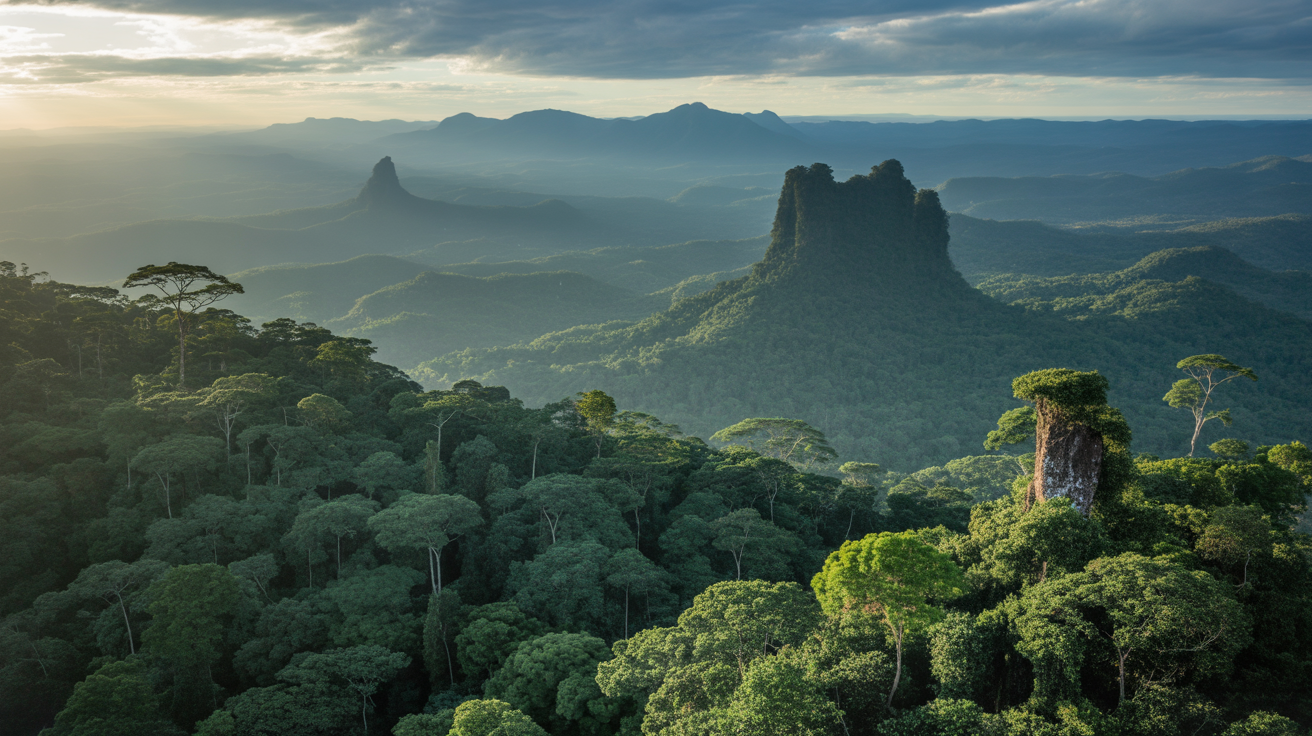 Tropical Regions
Rainforest
Dense, wet forests with the highest biodiversity on Earth, containing more than half of the world's plant and animal species.
 Global
Forest
Wooded areas with significant tree cover and diverse plant and animal communities.
 Global
Freshwater
Lakes, rivers, and wetlands with diverse aquatic ecosystems.
Conservation
The Golden Mantella is currently classified as Critically Endangered on the IUCN Red List.
Threats & challenges
The Golden Mantella faces severe threats from habitat destruction due to slash-and-burn agriculture, logging, mining, and expansion of rice paddies in eastern Madagascar. Its extremely limited range makes populations highly vulnerable to stochastic events and localized disturbances. Over-collection for the international pet trade has historically contributed to population declines, although captive breeding programs have somewhat reduced wild harvesting. Pollution, disease (notably chytridiomycosis), and climate change further exacerbate conservation challenges. The IUCN estimates the total wild population to be fewer than 5,000 mature individuals, with ongoing declines observed. Fragmentation of suitable habitat impedes gene flow and increases the risk of local extinctions.
Taxonomy
Scientific name
Mantella aurantiaca
- Kingdom
- Animalia
- Phylum
- Chordata
- Class
- Amphibia
- Order
- Anura
- Family
- Mantellidae
- Genus
- Mantella
- Species
- aurantiaca
Where to see a golden mantella
5 zoos and aquariums in 2 countries are recorded as keeping this species.
 Belfast Zoo🇬🇧 Belfast, United Kingdom
 National Zoological Park🇺🇸 Washington, United States
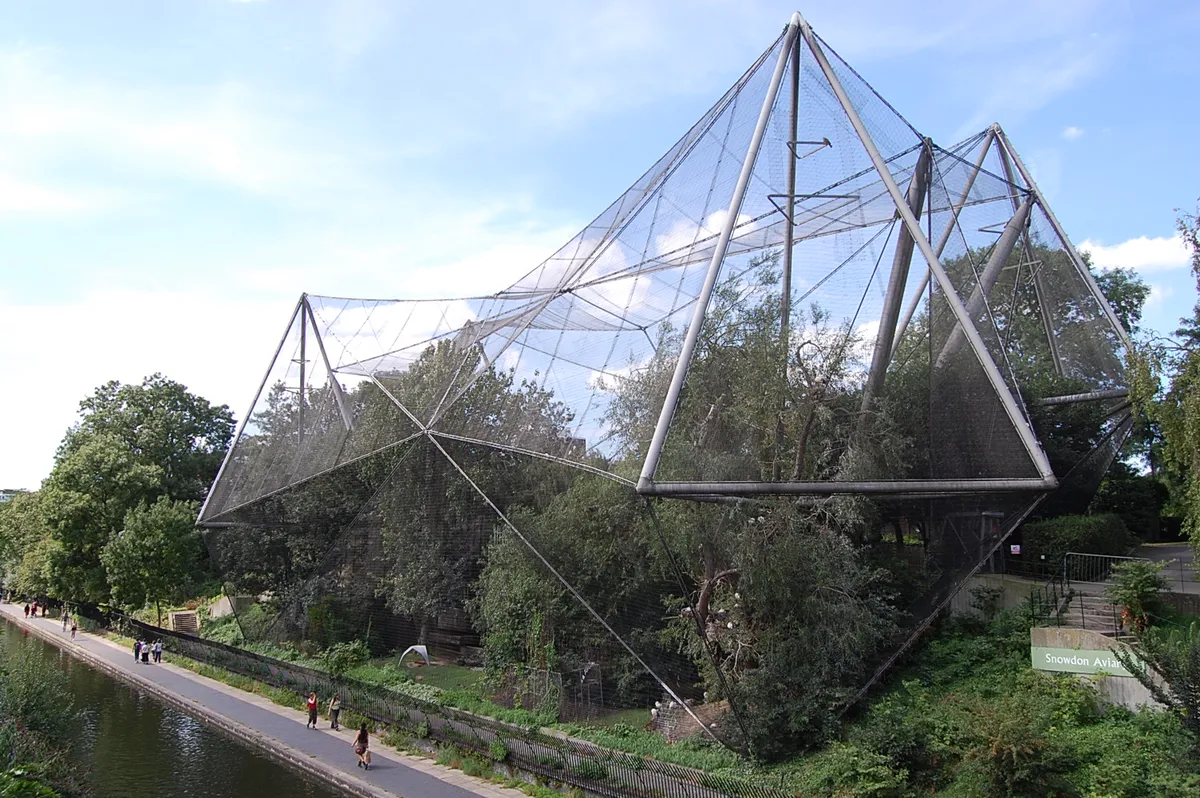 London Zoo🇬🇧 London, United Kingdom
 Sacramento Zoo🇺🇸 Sacramento, United States
 Oakland Zoo🇺🇸 United States
Community notes
Share your observations about the Golden Mantella.
No community notes yet. Be the first!
Discover more wildlife
More fascinating animals from the encyclopedia.