
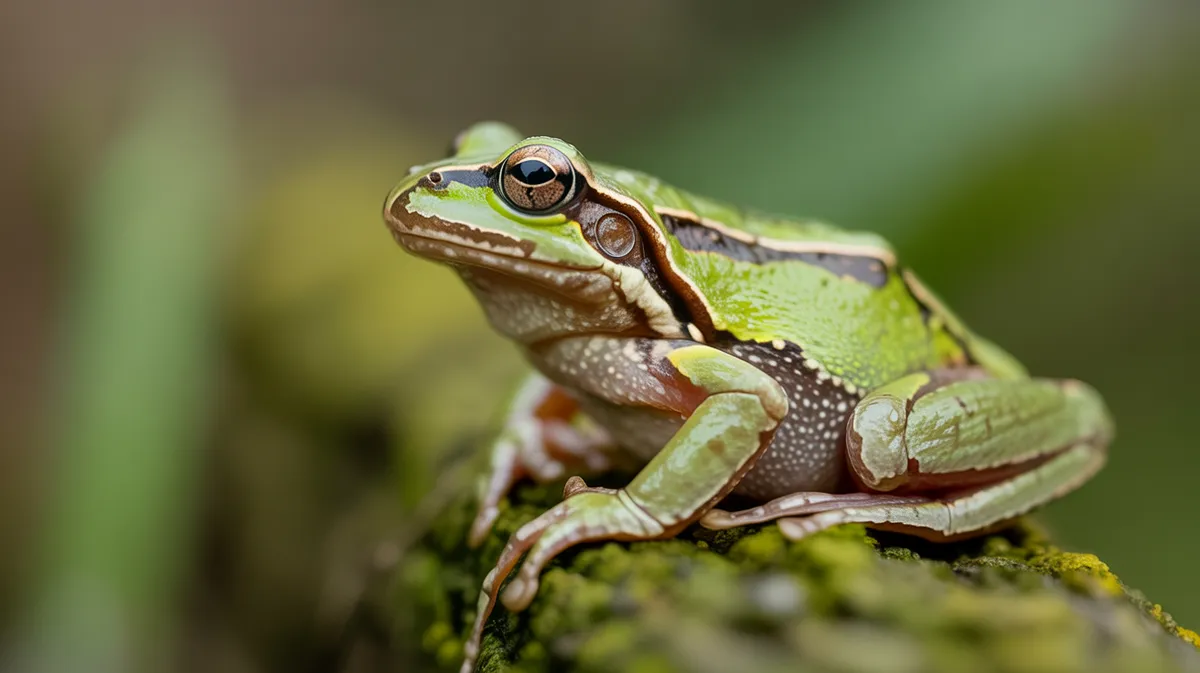
About the Gray Tree Frog
The eastern gray treefrog is really two species that no one can tell apart by eye: Hyla versicolor and Hyla chrysoscelis are identical in appearance and overlap widely, but versicolor is tetraploid, carrying four sets of chromosomes to chrysoscelis's two, having arisen from hybridisation events in the past. They are separated in the field only by call - chrysoscelis trills faster and harsher, versicolor slower and more musical - and by cell size, since the extra genome makes versicolor's red blood cells noticeably larger. Both change colour between green, gray and near-white over about half an hour depending on temperature, substrate and stress, which is where versicolor gets its name. They are astonishing climbers, with large toe pads that grip wet glass and bark by wet adhesion and, crucially, can be peeled off cleanly by rolling the toe. Their most extreme trait is freeze tolerance: as winter comes they flood their tissues with glycerol and glucose, allowing up to 65 percent of the body's water to turn to ice while the cells themselves stay unfrozen. The heart stops, breathing stops, and the frog thaws back to life in spring.
Fascinating facts
Expert Climbers
Gray Tree Frogs have specially adapted toe pads that help them grip and climb smooth surfaces, including trees and windows.
Distinctive Call
Male Gray Tree Frogs produce a loud, musical trill during the breeding season to attract females, which is often heard on warm, humid nights.
Freeze Tolerance
This species can survive being partially frozen in winter, thanks to chemicals in their bodies that prevent ice from damaging their cells.
Detailed description
The Gray Tree Frog (Dryophytes versicolor) is a small, robust amphibian, typically measuring 32–62 mm (1.25–2.5 in) in length. Its skin is warty and can vary in color from gray to green or even brown, allowing for remarkable camouflage against tree bark and foliage. This species possesses large, adhesive toe pads that facilitate climbing and adherence to smooth surfaces, a key adaptation for its arboreal lifestyle. The ventral surface is generally white, while the inner thighs display a vivid yellow or orange coloration, which may serve as a warning display to predators. The Gray Tree Frog is primarily nocturnal, seeking shelter during the day in tree cavities, under bark, or among leaves. Its call is a distinctive, melodious trill, produced by males during the breeding season to attract females and establish territories. The species is capable of surviving in a wide range of temperatures, including freezing conditions, due to the production of glycerol and other cryoprotectants in its tissues. Gray Tree Frogs are solitary outside of the breeding season, and their diet consists mainly of insects and other small invertebrates. Their distribution covers much of the eastern United States and southeastern Canada, favoring deciduous forests near permanent or temporary water bodies for breeding.
Did you know?
Despite being called 'gray,' this frog can change its color to green or brown depending on its environment for camouflage.
Research & sources
Wikipedia summary
The gray treefrog is a species of small arboreal holarctic tree frog native to much of the eastern United States and southeastern Canada.
Behaviour & social structure
Gray Tree Frogs are predominantly nocturnal, emerging at dusk to forage and call. They are sit-and-wait predators, ambushing prey such as moths, beetles, ants, spiders, and other arthropods. Their excellent climbing ability allows them to exploit a vertical niche, feeding both in the canopy and closer to the ground. Outside the breeding season, individuals are largely solitary and territorial, using camouflage and stillness to avoid predation. During the breeding season, males congregate at ponds, marshes, or ephemeral pools, where they vocalize to attract females and compete with rival males. These frogs are sensitive to humidity and temperature, often remaining inactive during dry or cold periods. They exhibit homing behavior, returning to the same breeding sites annually.
Reproduction & life cycle
Breeding occurs from late spring to midsummer, typically triggered by warm, rainy nights. Males call from vegetation or floating debris near water to attract females. Amplexus (the mating embrace) is axillary, with the male grasping the female behind her forelimbs. Females lay clusters of 1,000–2,000 eggs, attaching them to submerged vegetation. The eggs hatch in 3–7 days, depending on temperature. Tadpoles undergo metamorphosis in 45–65 days, developing into miniature versions of the adults. There is no parental care after egg-laying; both adults and tadpoles are vulnerable to predation. Breeding sites are often temporary pools, which reduces predation by fish but increases the risk of desiccation.
Adaptations & survival
The Gray Tree Frog exhibits several notable adaptations. Its color-changing ability, mediated by specialized chromatophores, allows rapid adjustment to match the substrate, enhancing camouflage. The large, adhesive toe pads provide exceptional climbing ability, enabling access to arboreal habitats. Physiologically, the species can survive freezing temperatures by producing cryoprotectants like glycerol, which prevent ice crystal formation in cells—a rare adaptation among amphibians. The bright yellow-orange coloration on the inner thighs may function as a flash coloration to startle predators during escape. Their calls are adapted for transmission through dense vegetation, with a frequency and duration that maximize attraction of mates while minimizing detection by predators.
Cultural significance
Gray Tree Frogs are often celebrated in North American folklore and naturalist literature for their distinctive calls, which are considered a harbinger of spring and summer. Their presence is sometimes associated with healthy forest and wetland ecosystems, making them a symbol of environmental quality. In some Indigenous traditions, frogs in general are seen as symbols of transformation and renewal. The Gray Tree Frog is occasionally kept as an educational animal in classrooms and nature centers, highlighting amphibian adaptations and the importance of wetland conservation.
Recent research
Recent research has focused on the Gray Tree Frog's remarkable freeze tolerance, with studies elucidating the molecular mechanisms of cryoprotectant synthesis and cellular protection. Genetic studies have clarified the species' relationship with its cryptic sibling, Cope's Gray Tree Frog (Dryophytes chrysoscelis), which is morphologically identical but differs in chromosome number and call rate. Ongoing research is examining the impacts of environmental contaminants, such as endocrine disruptors, on reproductive success and development. Bioacoustic studies continue to investigate the evolution of mating calls and their role in species recognition and reproductive isolation.
Videos
Habitat
Deciduous forests near freshwater sources
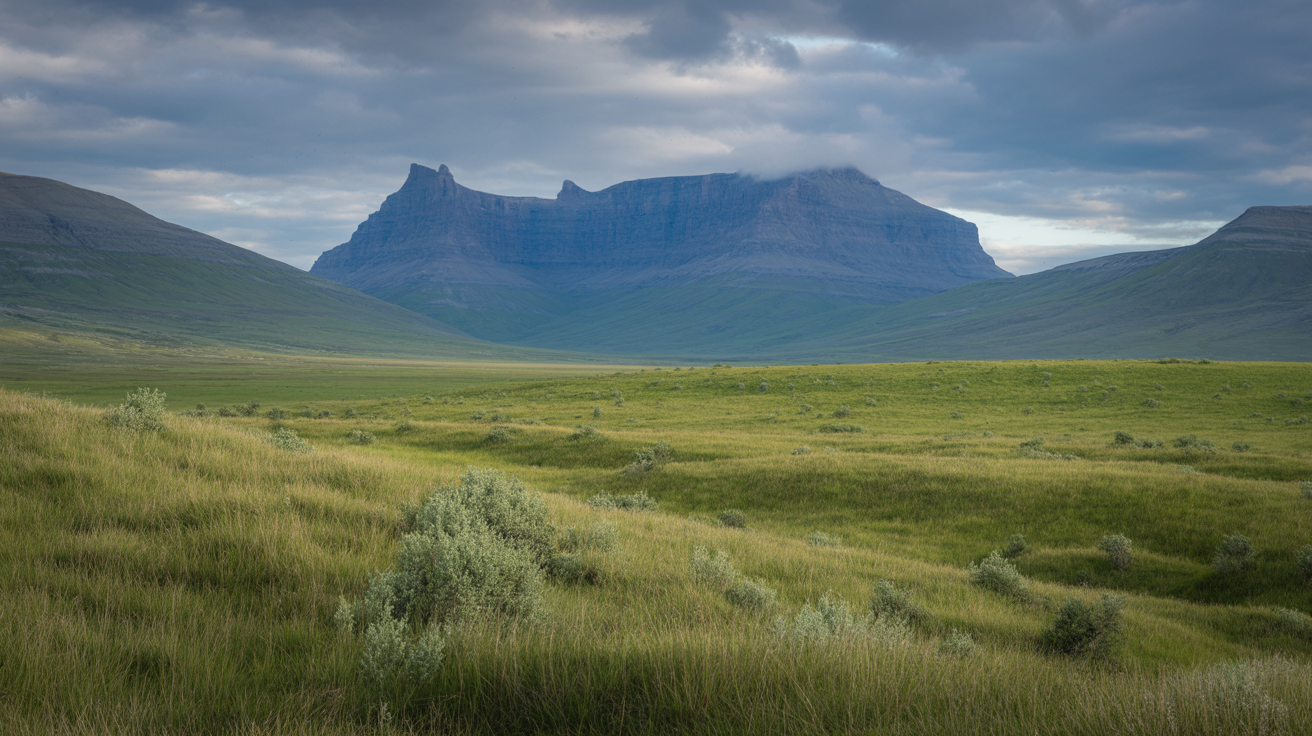 Various Continental Regions
Grassland
Open areas dominated by grasses rather than trees, supporting numerous herbivores and their predators.
 Global
Forest
Wooded areas with significant tree cover and diverse plant and animal communities.
 Global
Freshwater
Lakes, rivers, and wetlands with diverse aquatic ecosystems.
Conservation
The Gray Tree Frog is currently classified as Least Concern on the IUCN Red List.
Threats & challenges
While currently listed as Least Concern by the IUCN, Gray Tree Frogs face several threats. Habitat loss due to deforestation, wetland drainage, and urban development reduces available breeding and foraging sites. Pesticide use and water pollution can impact both adults and larvae, leading to developmental abnormalities and population declines. Climate change poses additional risks by altering breeding phenology and increasing the frequency of droughts, which can desiccate breeding pools. Road mortality during seasonal migrations to breeding sites is also a concern. Despite these challenges, the species' broad range and adaptability have allowed it to remain relatively stable, though local populations may be at risk.
Taxonomy
Scientific name
Hyla versicolor
- Kingdom
- Animalia
- Phylum
- Chordata
- Class
- Amphibia
- Order
- Anura
- Family
- Hylidae
- Genus
- Hyla
- Species
- versicolor
Community notes
Share your observations about the Gray Tree Frog.
No community notes yet. Be the first!
Discover more wildlife
More fascinating animals from the encyclopedia.