
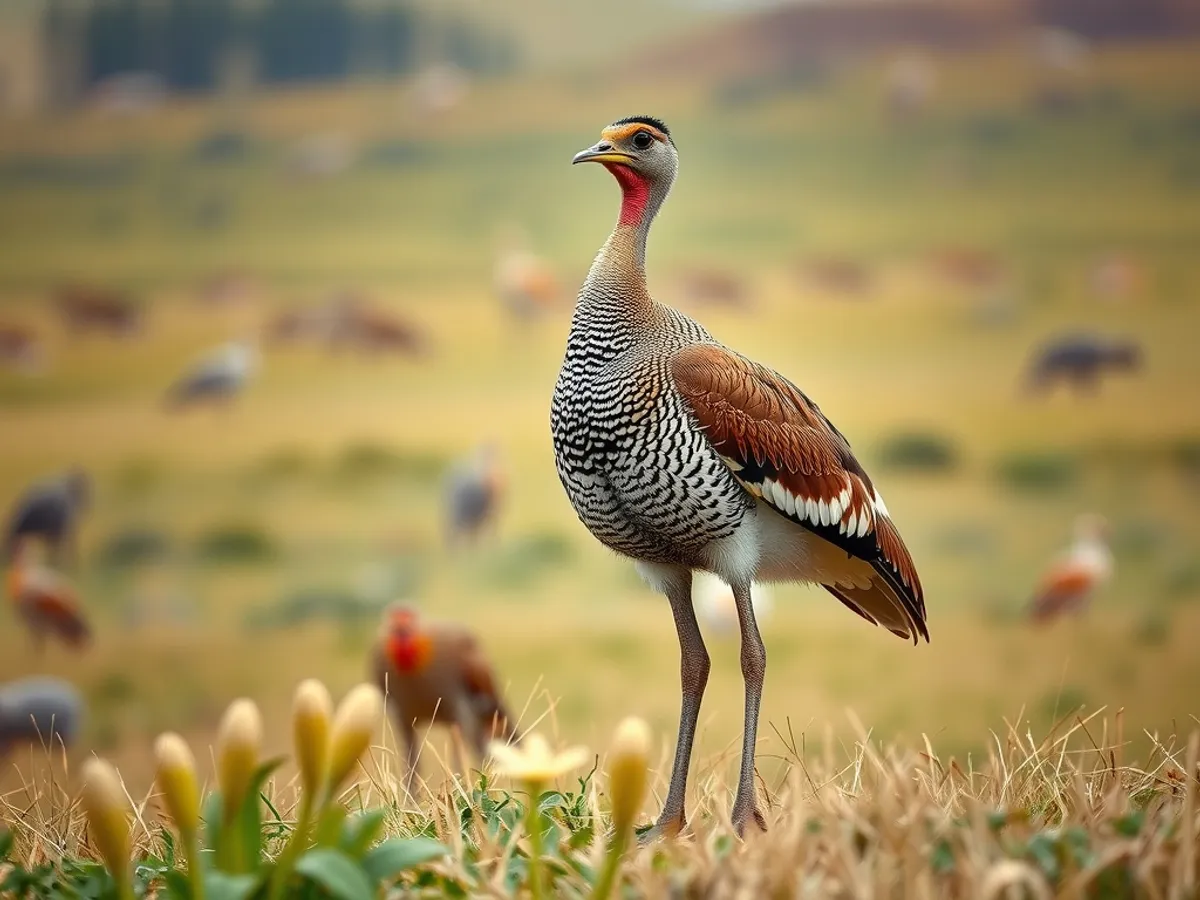
About the Great Bustard
Otis tarda is arguably the heaviest flying bird on Earth, with exceptional males exceeding 18 kg - some records approach 21 kg - which puts them right at the theoretical ceiling for powered flight. Sexual dimorphism is extreme: males can be more than twice the mass of females, one of the largest such gaps of any bird. In spring, males gather at traditional leks on open steppe and perform a display so contorted it has been called the "foam bath": the bird inflates a gular pouch, throws its wings back and its tail forward over its back, and turns itself briefly into a startling white mound of upturned feathers visible for kilometres across flat grassland. The species also provides one of the best-documented cases of self-medication in a wild bird: males eat blister beetles containing cantharidin, a compound toxic in quantity but effective at purging intestinal parasites, and they eat more of them than females do, apparently to keep themselves in visibly good condition for the lek. Great bustards need vast open landscapes and were extirpated from Britain by 1832; a reintroduction using Russian and Spanish stock on Salisbury Plain has since produced a small self-sustaining population. Spain and Portugal hold the bulk of the world's birds.
Fascinating facts
Heaviest Flying Bird
The Great Bustard is one of the heaviest living animals capable of flight, with some males weighing up to 16 kg (35 lbs).
Spectacular Courtship
During breeding season, males gather in leks and puff out their chests, raise their tails, and display their whisker-like feathers to impress females.
Threatened by Agriculture
Habitat loss due to intensive agriculture and infrastructure development is a major threat to the survival of Great Bustard populations.
Detailed description
The Great Bustard (Otis tarda) is among the heaviest flying birds, with adult males weighing between 8 and 16 kg (occasionally up to 21 kg), and females significantly lighter at 3.5–5.5 kg, exemplifying extreme sexual dimorphism. Males can stand up to 1.05 meters tall and measure up to 2.4 meters in wingspan, while females are notably smaller. The plumage is cryptically colored, with a mix of brown, buff, and white, providing camouflage in open grasslands. Males develop striking white whisker-like feathers at the base of the bill and display ornate chest plumes during elaborate courtship displays. The head is relatively small with a robust, thick neck, and the legs are long and strong, adapted for walking and running. Great Bustards are primarily terrestrial, preferring to walk or run rather than fly, though they are capable of strong, sustained flight when necessary. Their eyesight is acute, allowing them to detect predators at great distances. Social structure varies seasonally: outside the breeding season, they form single-sex flocks, sometimes numbering over 100 individuals, while during the breeding season, males gather at leks to display for females. The species is generally wary and secretive, especially in areas with human disturbance.
Did you know?
A male Great Bustard can weigh more than three times as much as a female, making them one of the most sexually dimorphic bird species on Earth.
Research & sources
Wikipedia summary
The great bustard is a bird in the bustard family, and the only living member of the genus Otis. It breeds in open grasslands and farmland from northern Morocco, South and Central Europe to temperate Central and East Asia. European populations are mainly resident, but Asian populations migrate farther south in winter. Endangered as of 2023, it had been listed as a Vulnerable species on the IUCN Red List since 1996.
Behaviour & social structure
Great Bustards are diurnal and spend most of their day foraging, resting, and engaging in social behaviors. Their diet is omnivorous, consisting of green plant material, seeds, cereals, insects, and small vertebrates such as rodents and amphibians, with seasonal variation depending on availability. Foraging is typically done by walking slowly through open fields, using their keen eyesight to spot food. During the non-breeding season, they form large, loose flocks segregated by sex and age, which helps reduce predation risk. Males are solitary or form small bachelor groups outside the breeding season. During courtship, males perform elaborate displays at leks, inflating their necks, fanning their tail feathers, and producing low-frequency booming calls to attract females. Bustards are generally silent outside the breeding season. They are highly sensitive to disturbance and will flush at long distances if approached. Roosting occurs on the ground, often in open areas with good visibility.
Reproduction & life cycle
The breeding season occurs from March to May, varying slightly across the range. Great Bustards are polygynous, with males displaying at traditional leks to attract multiple females. After mating, females select a nest site—usually a shallow scrape in short vegetation, well-concealed but with good visibility. Clutch size is typically 1–3 eggs, with 2 being most common. Incubation is performed solely by the female and lasts 21–28 days. Chicks are precocial, leaving the nest within hours of hatching and following the mother, who provides protection and guidance but not direct feeding. Fledging occurs at 30–40 days, but young remain with the female for several months. Juvenile mortality is high, primarily due to predation and agricultural activities.
Adaptations & survival
Great Bustards possess several adaptations for life in open habitats. Their cryptic plumage provides camouflage against predators. The large size and strong legs facilitate rapid running, an important escape mechanism. Acute vision allows early detection of threats. Males have evolved elaborate plumage and display behaviors for sexual selection, including inflatable neck sacs that amplify their booming calls. The species' omnivorous diet and flexible foraging strategies allow exploitation of a wide range of food sources. Migratory populations have strong flight muscles and high fat reserves to sustain long-distance movements between breeding and wintering grounds.
Cultural significance
The Great Bustard has long held symbolic value in many cultures across its range. In Spain and Hungary, it is a national symbol and features in folklore and traditional hunting lore. Its impressive size and elaborate displays have made it a subject of art and literature. Historically, bustards were prized game birds, and their meat was considered a delicacy in royal courts. Today, the species is a flagship for grassland conservation and ecotourism, especially in Spain and Portugal, where guided tours to observe leks are popular. In China, the Great Bustard appears in ancient poetry and is a symbol of open steppes.
Recent research
Recent research has focused on the effects of agricultural practices and infrastructure on Great Bustard survival and reproductive success. Satellite telemetry studies have elucidated migratory routes and habitat use, revealing critical stopover sites and threats along migration corridors. Genetic studies indicate low genetic diversity in some isolated populations, raising concerns for long-term viability. Behavioral ecology research has detailed the energetics and sexual selection pressures of lekking behavior. Conservation biology studies are testing the effectiveness of power line marking and habitat restoration. Ongoing reintroduction projects in the UK and Germany are being closely monitored for success and genetic integration.
Videos
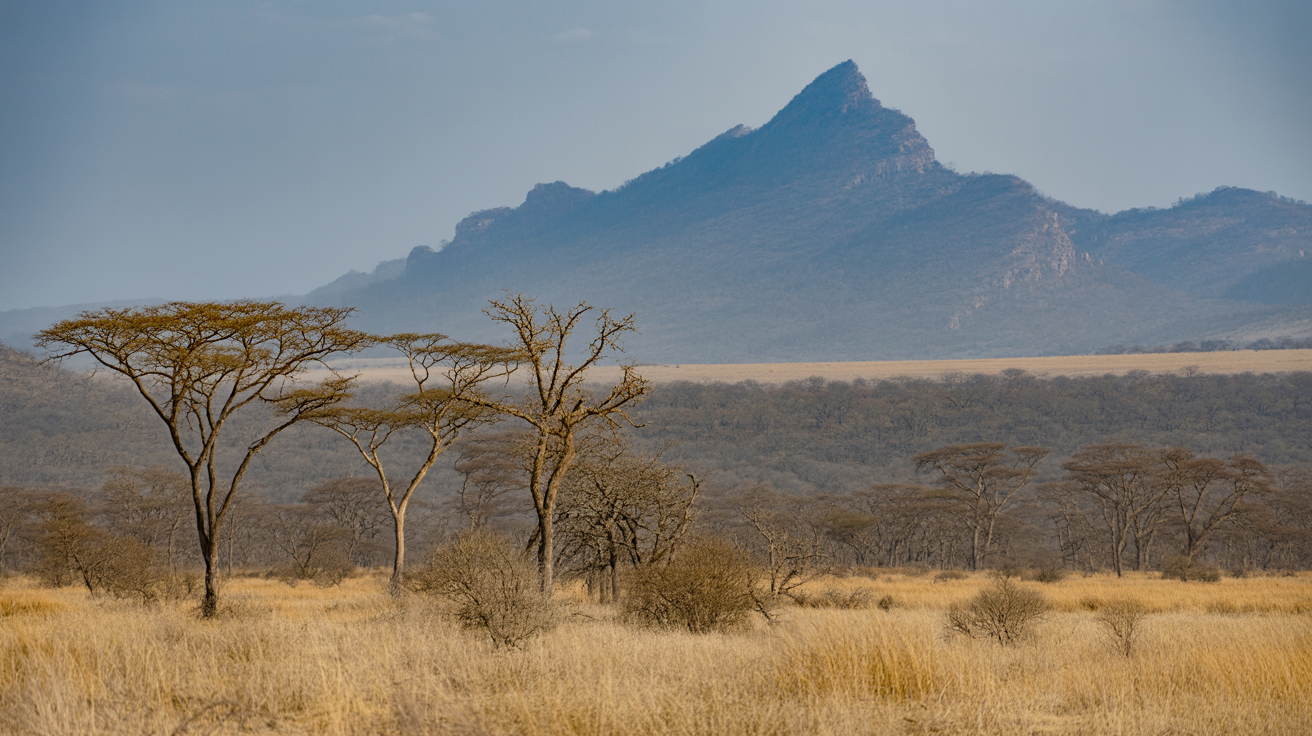
Habitat
Open grasslands and steppes

Conservation
The Great Bustard is currently classified as Vulnerable on the IUCN Red List.
Threats & challenges
The Great Bustard faces numerous threats, primarily habitat loss and fragmentation due to agricultural intensification, land conversion, and infrastructure development. Collisions with power lines are a significant cause of adult mortality. Hunting and egg collection, though illegal in most countries, persist in some areas. Disturbance during the breeding season, especially from agricultural machinery, leads to nest destruction and reduced reproductive success. Pesticide use can reduce food availability and cause poisoning. The global population is estimated at 44,000–57,000 individuals, with sharp declines in many regions, especially Western Europe and Asia. Conservation efforts include habitat protection, agri-environmental schemes, power line marking, and reintroduction projects, but the species remains Endangered (IUCN 2023) with a declining trend.
Taxonomy
Scientific name
Otis tarda
- Kingdom
- Animalia
- Phylum
- Chordata
- Class
- Aves
- Order
- Otidiformes
- Family
- Otididae
- Genus
- Otis
- Species
- tarda
Community notes
Share your observations about the Great Bustard.
No community notes yet. Be the first!
Discover more wildlife
More fascinating animals from the encyclopedia.