
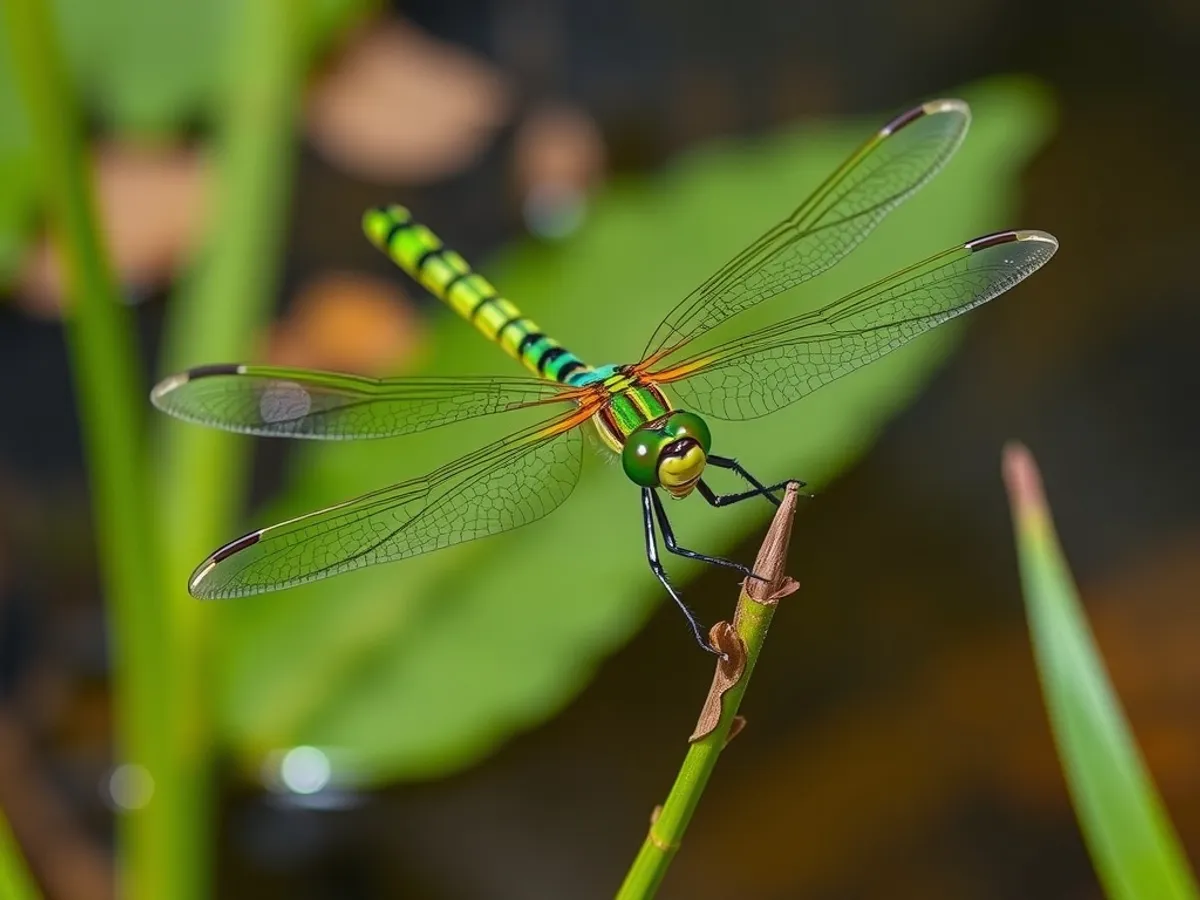
About the Green Darner Dragonfly
Anax junius is one of the very few insects known to make a true long-distance seasonal migration, and it does so in relay. Isotope analysis of wing chitin, published in 2018, showed that a first generation emerges in the southern United States and Mexico in spring and flies north, breeding and dying; their offspring emerge in the north in late summer and fly south, sometimes over 700 km, laying eggs in southern ponds; a third, resident generation overwinters there and starts the cycle again. No individual completes the round trip, which is why the pattern took so long to work out. Green darners often travel in visible swarms along coastlines and ridgelines, sometimes alongside migrating songbirds and hawks, which prey on them. Structurally the dragonfly is a spectacular flying machine: it can drive its four wings independently, hover, fly backwards, and intercept prey with predictive targeting, calculating where a mosquito will be rather than chasing where it is - a strategy that gives capture rates above 90 percent. The nymph, aquatic for months to a year, is an equally effective ambush hunter, firing out a hinged, harpoon-like lower lip to grab tadpoles and fish fry.
Fascinating facts
Remarkable Migrator
Green Darner Dragonflies undertake annual migrations from the northern United States and Canada to Texas, Mexico, and the Caribbean, and back.
Aquatic Beginnings
The nymph stage of the Green Darner is aquatic and can last several months, during which the nymphs are fierce underwater predators.
Exceptional Vision
With large compound eyes, Green Darners have nearly 360-degree vision, allowing them to spot prey and predators with remarkable accuracy.
Detailed description
The Green Darner Dragonfly (Anax junius) is a large and robust odonate, with adults typically measuring 65–80 mm in length and boasting a wingspan of up to 110 mm. Its vivid green thorax and striking blue abdomen, especially in males, make it easily identifiable among North American dragonflies. The species exhibits sexual dimorphism, with females often displaying a more muted brownish or greenish abdomen. The compound eyes are exceptionally large, nearly touching at the top of the head, providing a nearly 360-degree field of vision crucial for detecting prey and avoiding predators. Green darners are powerful fliers, capable of sustained flight over long distances, and are among the few dragonfly species known to undertake seasonal migrations spanning thousands of kilometers between northern breeding grounds and southern overwintering sites. Their life cycle is biphasic: aquatic nymphs (naiads) are voracious predators in freshwater habitats, while adults are aerial hunters. Nymphs can remain in the larval stage for several months to over a year, depending on environmental conditions. Adults are typically solitary but may aggregate in large numbers during migration or at abundant feeding sites. The species is an important ecological predator, regulating populations of mosquitoes and other insects. Green darners are also sensitive to environmental changes, making them valuable bioindicators of wetland health.
Did you know?
Unlike most insects, the Green Darner Dragonfly migrates in swarms that can number in the millions, similar to some species of birds.
Research & sources
Behaviour & social structure
Green darners are diurnal and highly active during daylight hours, especially in warm, sunny conditions. Adults patrol territories along water bodies, using their acute vision and rapid, agile flight to capture flying insects mid-air, including mosquitoes, flies, and even other dragonflies. They often hunt by perching on vegetation and launching swift aerial pursuits. During migration, they form loose swarms that can number in the thousands, traveling in a directional, purposeful manner. While generally solitary outside of migration and breeding, males may defend small territories near water to attract females and deter rivals. Nymphs are ambush predators, lying in wait on submerged vegetation to snatch aquatic invertebrates and even small fish or tadpoles. Both life stages exhibit strong predator avoidance behaviors, such as rapid escape responses and cryptic coloration in nymphs.
Reproduction & life cycle
Breeding typically occurs in spring and early summer in northern latitudes, and year-round in warmer southern regions. Mating involves a characteristic 'wheel' formation, where the male grasps the female behind the head with claspers at the end of his abdomen. After copulation, the female lays eggs (oviposits) by dipping her abdomen into submerged or emergent aquatic vegetation. Each female can lay hundreds to thousands of eggs during her lifetime. There is no parental care after oviposition. Eggs hatch in about 1–2 weeks, depending on temperature. Nymphal development is highly variable, lasting from 2–3 months in warm climates to over a year in cooler regions. Adults emerging from the water undergo a final molt, leaving behind their exuviae (shed skins) on vegetation.
Adaptations & survival
Green darners possess several key adaptations for survival. Their large, multifaceted eyes provide exceptional visual acuity, essential for detecting prey and avoiding predators. The elongated, streamlined body and powerful thoracic muscles enable sustained, agile flight and long-distance migration. Their legs are adapted for grasping prey in flight, forming a 'basket' to snare insects. Nymphs have extendable lower jaws (labium) equipped with hooks for rapid prey capture underwater. Both life stages exhibit cryptic coloration for camouflage. Physiologically, green darners can regulate their body temperature through behavioral thermoregulation, such as basking or seeking shade. Their migratory behavior is an evolutionary specialization that allows them to exploit seasonal resources and avoid adverse conditions.
Cultural significance
Dragonflies, including the green darner, hold significant symbolic value in many cultures, representing transformation, adaptability, and renewal due to their metamorphic life cycle. In North American indigenous traditions, dragonflies are often seen as symbols of swiftness and change. They are also appreciated in art and literature for their beauty and aerial prowess. In modern times, dragonflies are valued for their role in natural mosquito control and as indicators of healthy aquatic ecosystems.
Recent research
Recent studies have used stable isotope analysis and genetic markers to track green darner migration, revealing multi-generational migratory cycles similar to those of monarch butterflies. Research published in 2018 demonstrated that green darners complete a three-generation migratory loop between North America and the southern United States, Mexico, and the Caribbean. Ongoing research focuses on the physiological mechanisms underlying their navigation, including the use of polarized light, geomagnetic cues, and environmental factors. Studies also investigate the impacts of climate change on migration timing and success, as well as the species’ role in ecosystem services such as pest control.
Videos
Habitat
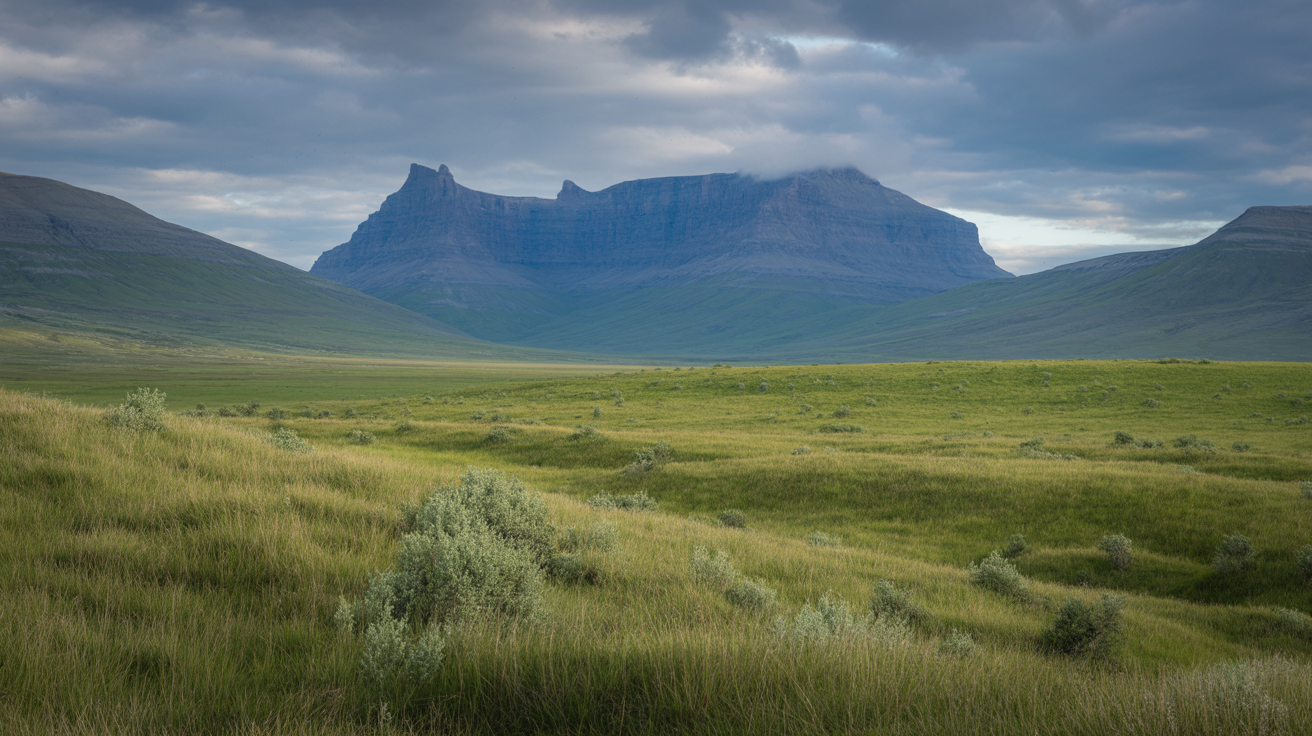
Freshwater wetlands, ponds, lakes, and slow-moving streams

Conservation
The Green Darner Dragonfly is currently classified as Least Concern on the IUCN Red List.
Threats & challenges
Currently classified as Least Concern by the IUCN, green darners face localized threats from habitat loss, wetland drainage, pollution (especially pesticides and heavy metals), and climate change, which may disrupt migratory cues and breeding habitats. Light pollution and urbanization can interfere with navigation and reproductive behaviors. While populations are generally stable, long-term monitoring is necessary due to their sensitivity to environmental changes. As bioindicators, declines in green darner populations may signal broader ecosystem health issues.
Taxonomy
Scientific name
Anax junius
- Kingdom
- Animalia
- Phylum
- Arthropoda
- Class
- Insecta
- Order
- Odonata
- Family
- Aeshnidae
- Genus
- Anax
- Species
- junius
Community notes
Share your observations about the Green Darner Dragonfly.
No community notes yet. Be the first!
Discover more wildlife
More fascinating animals from the encyclopedia.