
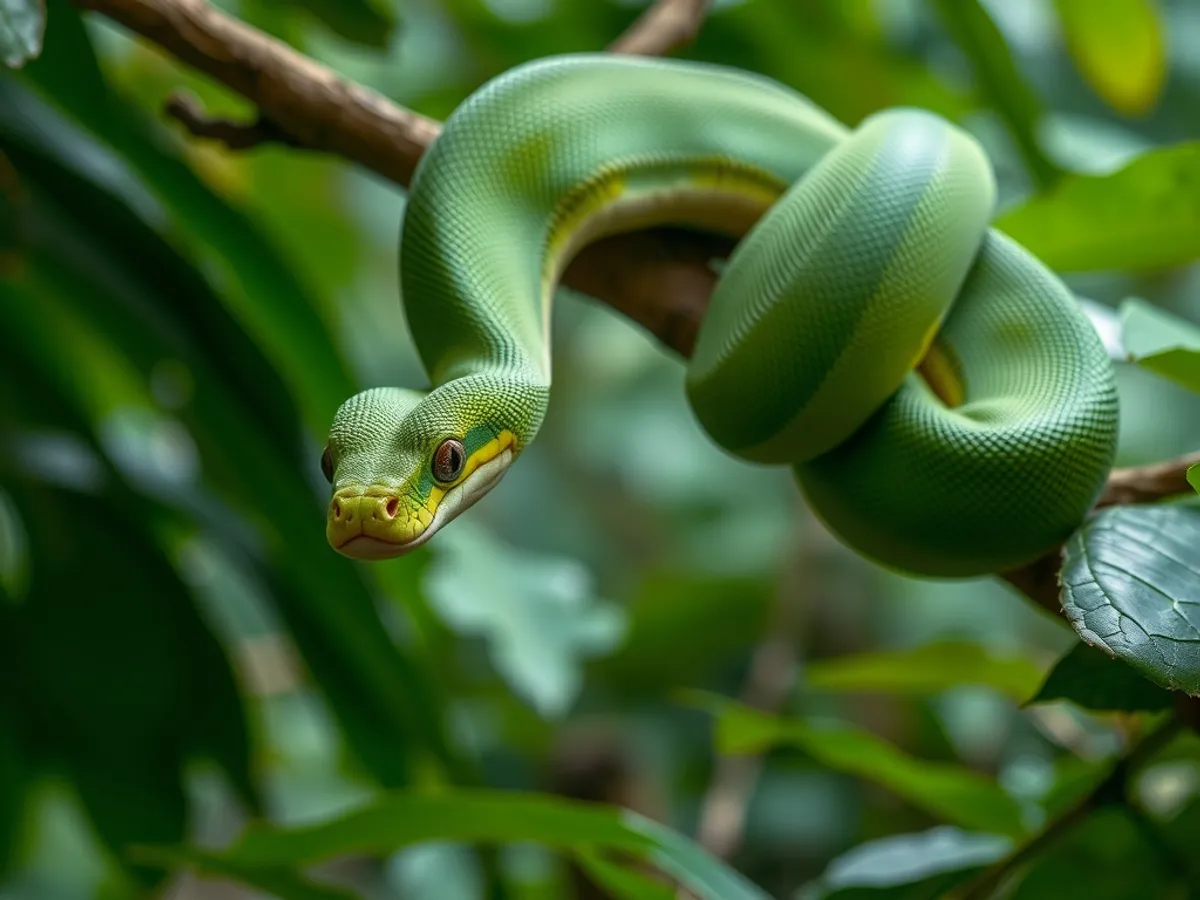
About the Green Tree Python
Morelia viridis of New Guinea, the Cape York Peninsula and nearby islands is the classic case of ontogenetic colour change in a snake: hatchlings emerge either bright lemon-yellow or brick-red, and over weeks to months in their first year they switch to the adult emerald green. The likely reason is habitat: juveniles hunt at the shrubby forest edge where a small yellow snake is cryptic among dappled light and dying leaves, while adults move up into the closed green canopy. The species' resting posture - draped in tight, symmetrical saddle coils over a horizontal branch with the head resting in the centre - is nearly identical to that of the emerald tree boa of the Amazon, which is unrelated, along with the prehensile tail, deep labial heat pits and long recurved front teeth. It is one of the most-cited examples of convergent evolution in reptiles. Green tree pythons ambush rather than hunt, hanging in place for days and using the tail tip as a lure, wriggling it like a grub to draw rodents and birds within reach. Their heat pits let them strike accurately in complete darkness. Colour is variable across regions, with distinct blue, turquoise and high-yellow local forms that command steep prices in the pet trade.
Fascinating facts
Arboreal Lifestyle
Green Tree Pythons spend nearly their entire lives in trees, using their prehensile tails for balance and grip on branches.
Colorful Juveniles
Juvenile Green Tree Pythons often hatch bright yellow, red, or orange before turning green as they mature.
Maternal Instincts
Females coil around their eggs after laying, shivering to produce heat and keep the eggs at an optimal temperature.
Detailed description
The Green Tree Python (Morelia viridis) is a medium-sized, non-venomous python renowned for its vivid emerald green coloration, which provides effective camouflage among the foliage of its arboreal rainforest habitat. Adults typically reach lengths of 1.5 to 2 meters (5–6.6 feet), with females generally larger and more robust than males, sometimes weighing up to 1.6 kg (3.5 lbs). The species is characterized by a slender, muscular body, a broad, angular head, and a prehensile tail that facilitates climbing and anchoring among branches. Its scales are smooth and glossy, often adorned with scattered white or yellow dorsal spots or flecks, and some populations exhibit blue or turquoise hues. Juveniles display striking ontogenetic color variation, hatching in bright yellow, red, or orange, and gradually transitioning to green over 6–12 months—a process thought to reduce predation by matching different microhabitats. The python’s heat-sensing pits, located along the upper lip, allow it to detect warm-blooded prey in low-light conditions. Green Tree Pythons are primarily nocturnal and arboreal, spending daylight hours coiled in a saddle position on branches, with their head resting in the center of the coils. They are solitary and highly territorial, with limited tolerance for conspecifics outside the breeding season. The species is oviparous, with females exhibiting maternal brooding behavior by coiling around their eggs to regulate temperature and humidity. Their specialized anatomy and behavior make them one of the most iconic rainforest snakes in Australasia.
Did you know?
Despite their name, Green Tree Pythons are not closely related to true pythons but show remarkable convergent evolution with the emerald tree boa of South America.
Research & sources
Wikipedia summary
The green tree python, is a species of snake in the family Pythonidae. The species is native to New Guinea, some islands in Indonesia, and the Cape York Peninsula in Australia. First described by Hermann Schlegel in 1872, it was known for many years as Chondropython viridis. As its common name suggests, it is a bright green snake that can reach a total length of 2 m (6.6 ft) and a weight of 1.6 kg (3.5 lb), with females slightly larger and heavier than males. Living generally in trees, the green tree python mainly hunts and eats small reptiles and mammals. It is a popular pet, and numbers in the wild have suffered with large-scale smuggling of wild-caught green tree pythons in Indonesia. Despite this, the green tree python is rated as least concern on the IUCN Red List of endangered species.
Behaviour & social structure
Green Tree Pythons are predominantly nocturnal ambush predators, relying on their camouflage to remain undetected by both prey and predators. They exhibit a characteristic hunting posture, draping their bodies over branches with their head poised downward, ready to strike at passing prey. Their diet in the wild consists mainly of small mammals (such as rodents and marsupials), birds, and occasionally reptiles. Juveniles tend to feed on smaller prey, including lizards and frogs, reflecting their smaller size and different microhabitat use. Feeding events are infrequent, with adults sometimes going weeks between meals. Social interactions are minimal outside the breeding season; individuals are territorial and may display defensive behaviors such as striking or hissing when threatened. During the day, they remain motionless and coiled, reducing energy expenditure and exposure to predators. Activity peaks after dusk, when they begin to hunt and explore their territory.
Reproduction & life cycle
Breeding in Green Tree Pythons typically occurs during the wet season (November to March in Australia), triggered by environmental cues such as increased humidity and temperature fluctuations. Males locate receptive females through pheromonal cues and may engage in combat with rival males. Courtship involves tactile stimulation and alignment of cloacae. Females lay clutches of 5–35 eggs, with clutch size correlating to female size and condition. Incubation lasts approximately 45–65 days at optimal temperatures (27–32°C/80–90°F). Females exhibit maternal care by coiling around the eggs, shivering to generate heat (shivering thermogenesis) and adjusting their position to maintain appropriate moisture levels. Hatchlings are independent from birth and exhibit rapid ontogenetic color change, which is hypothesized to reduce predation by matching different microhabitats as they grow.
Adaptations & survival
The Green Tree Python exhibits several notable adaptations for an arboreal lifestyle. Its prehensile tail acts as a fifth limb, allowing secure anchoring and precise movement among branches. The laterally compressed body and muscular build facilitate climbing and coiling around narrow perches. Heat-sensitive labial pits enable detection of endothermic prey in darkness. The ontogenetic color change from yellow, red, or orange to green is an adaptive strategy for camouflage at different life stages and habitats. The python’s cryptic resting posture minimizes its silhouette, reducing detection by predators and prey. Its slow metabolism and infrequent feeding are further adaptations to the resource-scarce canopy environment. Additionally, the species’ ability to regulate egg temperature through shivering thermogenesis is a rare trait among reptiles, enhancing reproductive success.
Cultural significance
The Green Tree Python holds cultural significance in parts of New Guinea and northern Australia, where it is sometimes featured in local folklore and traditional art. Its striking appearance has made it a symbol of the rainforest and a popular subject in wildlife photography and herpetoculture. In the international pet trade, the species is highly prized for its beauty and unique coloration, leading to both positive attention and conservation concerns. There are no widespread reports of the species being used for food or traditional medicine, but local beliefs may attribute spiritual or symbolic qualities to the snake.
Recent research
Recent research on Morelia viridis has focused on its phylogenetic relationships within the Pythonidae family, revealing close genetic ties to the Morelia spilota complex (carpet pythons). Studies have also investigated the genetic basis and ecological significance of ontogenetic color change, suggesting a role in predator avoidance and habitat selection. Ongoing research addresses the impact of the pet trade on wild populations, the effectiveness of captive breeding programs, and the species’ responses to habitat fragmentation. Advances in radio telemetry and molecular ecology are providing new insights into the movement patterns, home range, and population genetics of wild Green Tree Pythons. Conservation initiatives are increasingly emphasizing the need for habitat protection and sustainable trade practices.
Videos
Habitat
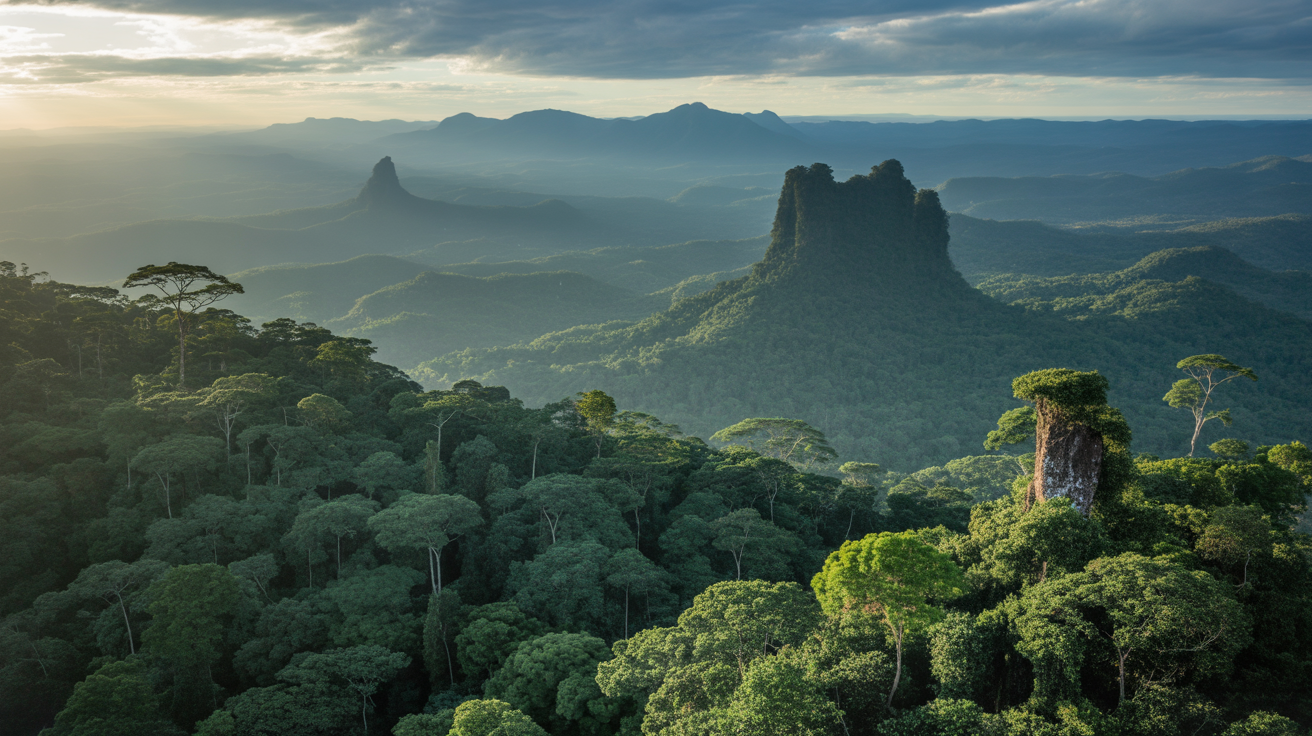
Tropical rainforest canopies

Conservation
The Green Tree Python is currently classified as Least Concern on the IUCN Red List.
Threats & challenges
While currently listed as Least Concern by the IUCN, Green Tree Python populations face several threats. Habitat loss due to deforestation, logging, and agricultural expansion is a significant concern, particularly in Indonesia and Papua New Guinea. Illegal collection for the international pet trade has led to localized population declines, especially in Indonesian provinces where enforcement is weak. Smuggling and overharvesting of wild individuals remain persistent issues, despite the existence of captive breeding programs. Other challenges include predation by birds of prey, monitor lizards, and introduced mammals, as well as the impacts of climate change on rainforest ecosystems. Population trends are difficult to assess due to the species’ cryptic nature and inaccessible habitat, but ongoing habitat degradation poses a long-term risk.
Taxonomy
Scientific name
Morelia viridis
- Kingdom
- Animalia
- Phylum
- Chordata
- Class
- Reptilia
- Order
- Squamata
- Family
- Pythonidae
- Genus
- Morelia
- Species
- viridis
Where to see a green tree python
10 zoos and aquariums in 3 countries are recorded as keeping this species.
 Kansas City Zoo & Aquarium🇺🇸 Kansas City, United States
 National Zoological Park🇺🇸 Washington, United States
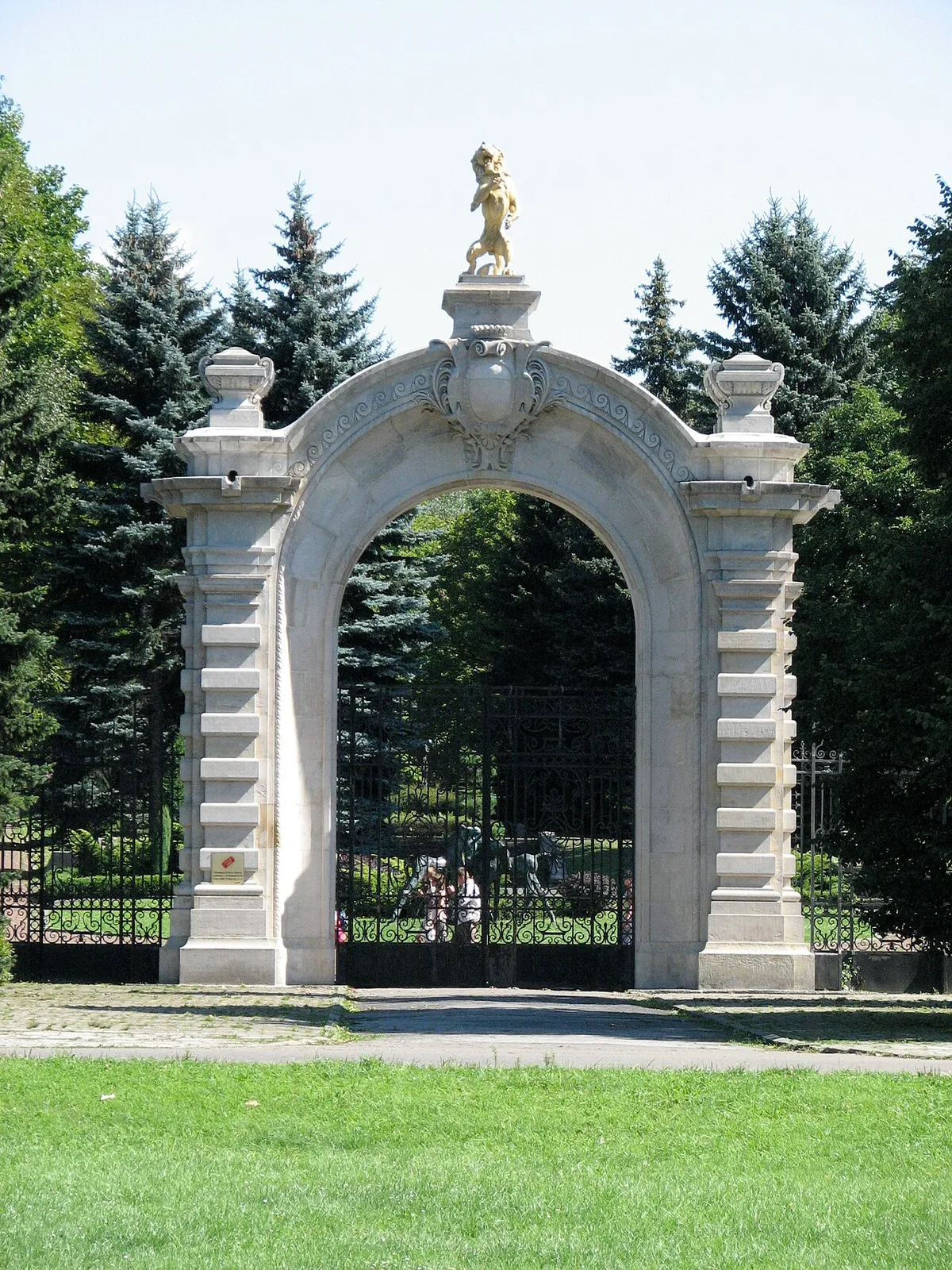 Śląski Ogród Zoologiczny🇵🇱 Chorzów, Poland
 Whipsnade Zoo🇬🇧 Dunstable, United Kingdom
 Denver Zoo🇺🇸 Denver, United States
Community notes
Share your observations about the Green Tree Python.
No community notes yet. Be the first!
Discover more wildlife
More fascinating animals from the encyclopedia.