
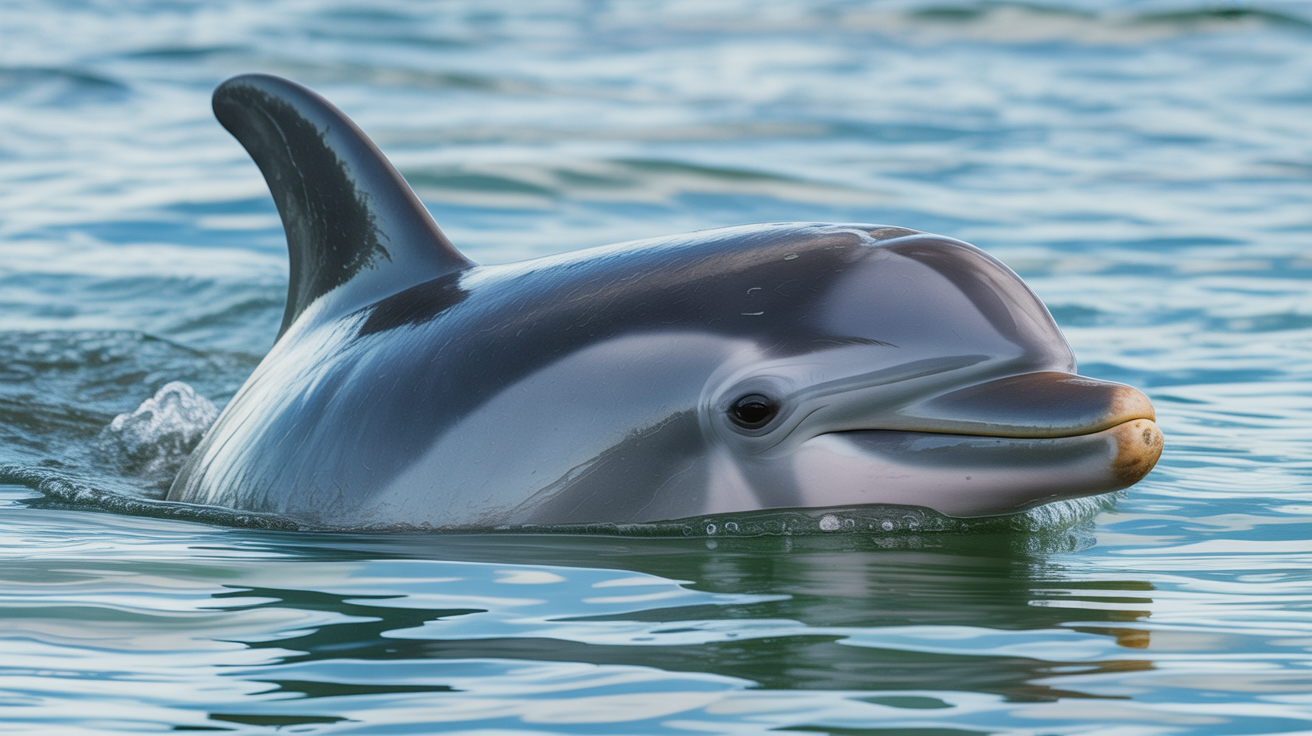
About the Guiana Dolphin
The Guiana dolphin, also known as the costero, is a small, coastal species of dolphin found along the Atlantic coast of South and Central America. It is characterized by its robust body, short beak, and light gray coloration with a lighter underside. Guiana dolphins are highly social, often seen in small groups navigating mangroves, estuaries, and shallow coastal waters. They play an important role in their ecosystem but are threatened by habitat degradation, pollution, and accidental bycatch.
Fascinating facts
Estuarine Specialist
Guiana dolphins are specially adapted to live in estuaries and mangrove-lined rivers, tolerating both fresh and saltwater environments.
Social Structure
They usually form small pods of 2 to 10 individuals, although larger groups may gather where food is abundant.
Diet Diversity
Their diet consists of a wide variety of fish, as well as squid, shrimp, and other invertebrates found in their habitat.
Detailed description
The Guiana dolphin (Sotalia guianensis) is a small to medium-sized cetacean, typically reaching lengths of 1.5 to 2.1 meters and weighing between 35 and 96 kilograms. Its body is robust with a short, well-defined beak and a gently sloping melon, giving it a distinctive profile among coastal dolphins. The dorsal fin is falcate and centrally positioned, aiding in agile maneuvering through shallow, complex habitats such as mangroves and estuaries. The coloration is generally light to medium gray dorsally, fading to pale gray or white on the ventral side, which provides camouflage from both predators and prey through countershading. Guiana dolphins are highly social, forming groups (pods) typically ranging from 2 to 10 individuals, though aggregations of up to 50 have been observed in areas of high prey abundance. Their vocal repertoire is complex, including whistles, clicks, and burst-pulse sounds used for communication and echolocation. These dolphins are opportunistic feeders, preying on a variety of fish, crustaceans, and cephalopods, and often employ cooperative hunting strategies. Reproduction occurs year-round but peaks seasonally, with calves born after a gestation of about 11 months. The species is endemic to the Atlantic coasts of Central and South America, from Nicaragua to southern Brazil, and is particularly associated with turbid, shallow waters, where it plays a crucial ecological role as both predator and prey.
Did you know?
Guiana dolphins were recognized as a distinct species only in 2007, after previously being grouped with the closely related tucuxi dolphin.
Research & sources
Behaviour & social structure
Guiana dolphins exhibit a range of complex behaviors, including cooperative foraging, where individuals work together to herd fish into tight schools for easier capture. They are known to use 'strand feeding' techniques in some regions, driving prey onto mudflats or shallow banks. Social interactions are frequent and involve tactile contact, synchronous swimming, and vocal communication. Daily routines are influenced by tidal cycles, with dolphins often moving into estuaries and river mouths during high tide to exploit incoming prey. Resting typically occurs in sheltered waters during midday, while foraging peaks in early morning and late afternoon. Play behavior, such as leaping, tail-slapping, and object manipulation, is common, especially among juveniles. Interactions with other species, including sympatric cetaceans and humans, are occasionally observed, with some individuals displaying curiosity towards boats.
Reproduction & life cycle
Guiana dolphins are polygynous, with males competing for access to receptive females. Courtship involves displays such as leaping, chasing, and gentle biting. Breeding can occur throughout the year, but there is a peak in births during the rainy season, which varies regionally. The gestation period lasts approximately 11 months, after which a single calf is born, measuring about 80-100 cm in length. Calves are nursed for up to 12 months, during which time they remain closely associated with their mothers. Maternal care is intensive, with mothers providing protection, guidance, and social integration for their young. Sexual maturity is reached at around 5-7 years for females and slightly later for males. Interbirth intervals are typically 2-3 years, reflecting the high investment in each offspring.
Adaptations & survival
Guiana dolphins possess several adaptations for life in dynamic coastal environments. Their echolocation system is highly developed, allowing them to navigate and hunt in turbid, low-visibility waters. The robust, flexible body and large pectoral fins facilitate agile maneuvering among mangrove roots and shallow channels. Their countershaded coloration provides camouflage from both aerial and aquatic predators. Physiologically, they can tolerate fluctuations in salinity, enabling them to exploit both marine and freshwater habitats. Socially, their cooperative hunting and complex communication enhance foraging efficiency and group cohesion. Evolutionarily, Sotalia guianensis is closely related to the Amazon river dolphin (Sotalia fluviatilis), with divergence driven by habitat specialization.
Cultural significance
Guiana dolphins hold cultural importance for many coastal communities in South America, often featuring in local folklore and stories as intelligent, playful beings. In some regions, they are considered omens of good luck or protectors of fishermen. Historically, there have been occasional instances of dolphins being captured for display or traditional uses, but these practices are rare. Increasingly, the species is recognized as a flagship for coastal conservation, with ecotourism initiatives promoting awareness and sustainable livelihoods.
Recent research
Recent genetic studies have clarified the taxonomic distinction between Sotalia guianensis and its freshwater relative, Sotalia fluviatilis, supporting their classification as separate species. Ongoing research focuses on population structure, acoustic communication, and the impacts of environmental contaminants on health and reproduction. Satellite telemetry and photo-identification are being used to map movement patterns and habitat use. Notably, studies have documented high levels of mercury and PCBs in some populations, raising concerns about long-term viability. Conservation programs are increasingly integrating local ecological knowledge and community-based monitoring.
Sources
Taxonomic status and distribution of the genus Sotalia
da Silva, V.M.F. & Best, R.C. (1996)
scientificSotalia guianensis (Guiana dolphin): Ecology, behavior and conservation
Flores, P.A.C. & Da Silva, V.M.F. (2009)
scientificSotalia guianensis: The IUCN Red List of Threatened Species 2018
IUCN SSC Cetacean Specialist Group
conservationVideos
Habitat
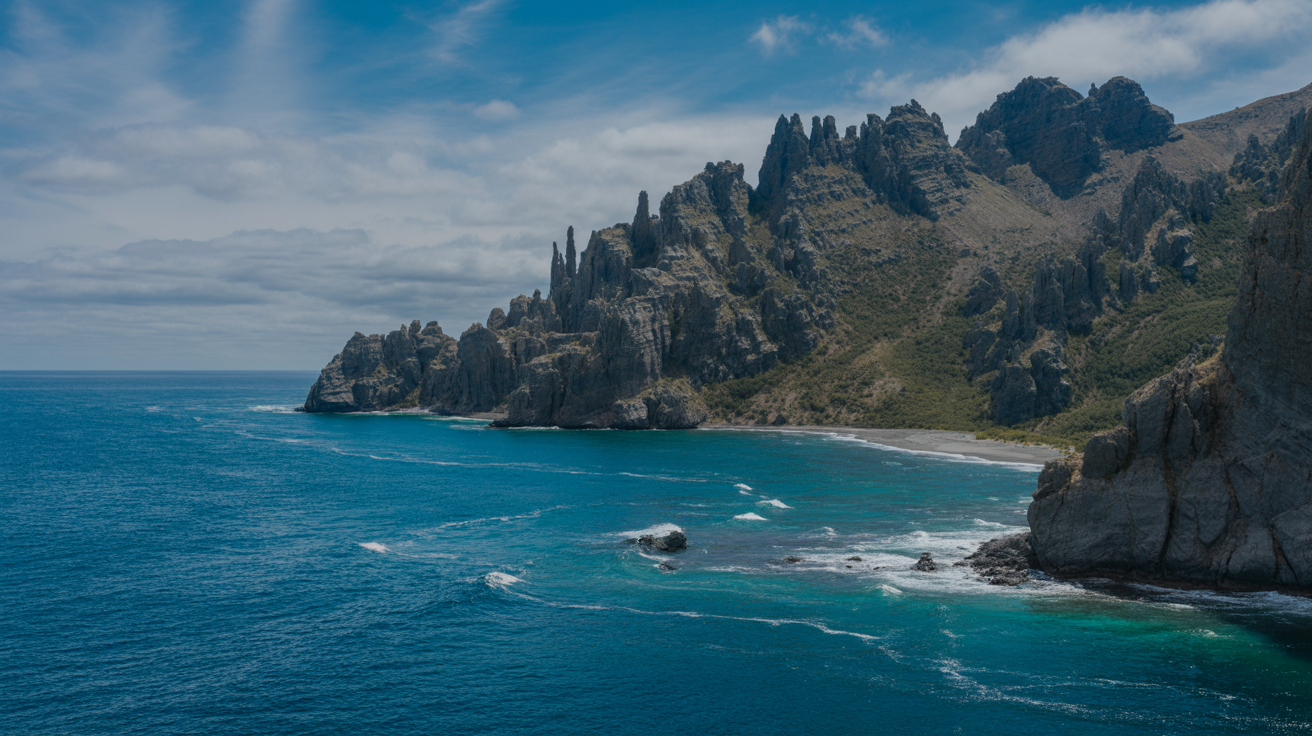
Coastal and estuarine waters

Conservation
The Guiana Dolphin is currently classified as Near Threatened on the IUCN Red List.
Threats & challenges
The primary threats to Guiana dolphins include habitat degradation from coastal development, pollution (especially heavy metals and organochlorines), and incidental capture in fishing gear (bycatch). Boat traffic and noise pollution disrupt communication and increase the risk of collisions. Overfishing reduces prey availability, while mangrove deforestation diminishes critical nursery and foraging habitats. Emerging threats include climate change, which may alter estuarine dynamics and prey distributions. Population trends are declining in several regions, with local extirpations reported. Conservation challenges are compounded by limited data on population sizes and distribution, as well as weak enforcement of protective regulations.
Taxonomy
Scientific name
Sotalia guianensis
- Kingdom
- Animalia
- Phylum
- Chordata
- Class
- Mammalia
- Order
- Cetacea
- Family
- Delphinidae
- Genus
- Sotalia
- Species
- guianensis
Community notes
Share your observations about the Guiana Dolphin.
No community notes yet. Be the first!
Discover more wildlife
More fascinating animals from the encyclopedia.