
About the Guianan Cock-of-the-rock
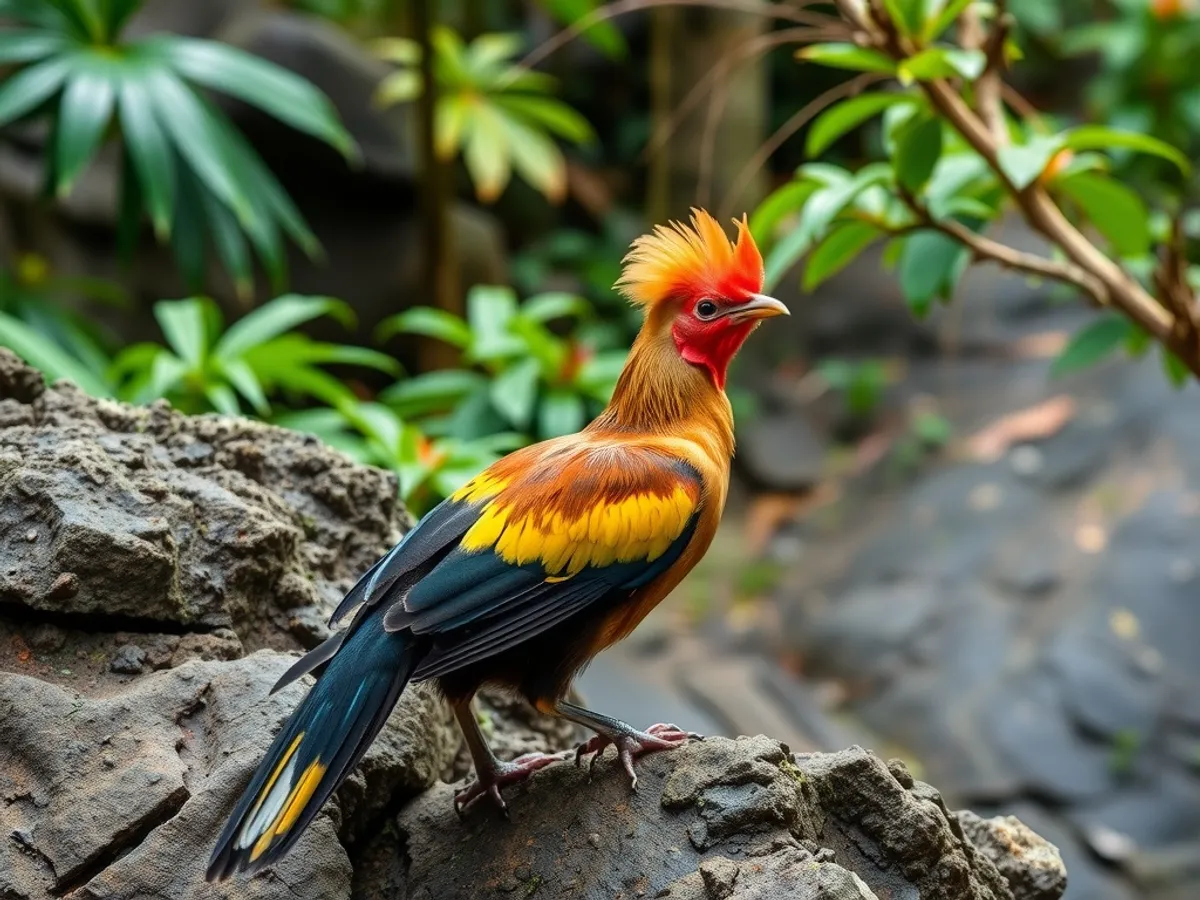
Rupicola rupicola is a fluorescent-orange cotinga of the Guiana Shield, and the male's crest is not a tuft but a permanent, half-moon disc of feathers that grows forward over the top of the bill, so far that from the side the beak is entirely concealed. That is not a display posture - the crest is fixed, and the bird lives with a hidden beak. Males gather at leks on the forest floor, each clearing and defending a small court of bare earth beneath the canopy, and they display not by singing much but by dropping to the court and freezing in a rigid, flattened crouch with the wings drooped and the head turned side-on to show the crest at its widest, holding the pose while females fly in to inspect. Neighbouring males call and snap their bills constantly, and disputes are frequent. Females are dull brown, nest alone, and cement mud nests to rock faces and cave walls - the genus name means "rock-dweller", and the species is almost always found near granite outcrops and boulder fields, which limits its distribution to a fraction of otherwise suitable forest. The orange comes from carotenoids in the fruit they eat, so the intensity of a male's colour reflects the quality of his foraging.
Fascinating facts
Spectacular Plumage
Male Guianan Cock-of-the-rocks boast one of the most vibrant orange plumages in the bird world, making them highly sought after by birdwatchers.
Unique Nesting Habits
Females construct their nests on vertical rock faces, often in caves, using mud, saliva, and plant fibers for protection against predators and moisture.
Lekking Displays
Males participate in communal leks where they perform acrobatic dances and loud calls to attract females, a behavior essential to their mating success.
Detailed description
The Guianan Cock-of-the-rock (Rupicola rupicola) is a medium-sized passerine bird, measuring approximately 30 cm (12 in) in length and weighing between 200–220 grams. Males are instantly recognizable by their brilliant orange plumage, prominent semicircular crest, and contrasting black wings and tail, while females are more cryptically colored in brownish or smoky grey, providing camouflage during nesting. Both sexes possess a robust, broad-based bill adapted for fruit consumption and strong legs for perching on rocky ledges. The species exhibits pronounced sexual dimorphism, with males displaying more elaborate ornamentation. Their eyes are set forward, providing binocular vision useful for navigating dense forest and rocky terrain. The Guianan Cock-of-the-rock is highly specialized for life in the humid, rocky forests of the Guiana Shield, where it is often found near caves, cliffs, and boulder-strewn riverbanks. Socially, males are lek breeders, congregating in specific display arenas where they perform elaborate visual and acoustic displays to attract females. The species is primarily frugivorous but opportunistically consumes small vertebrates such as lizards and snakes. Its ecological role as a seed disperser is vital for forest regeneration. The Guianan Cock-of-the-rock is generally shy and elusive outside of the breeding season, retreating to dense forest cover.
Did you know?
Despite their eye-catching appearance, female Guianan Cock-of-the-rocks are masters of camouflage, blending in perfectly with their forest environment while raising their young.
Research & sources
Wikipedia summary
The Guianan cock-of-the-rock is a species of cotinga, a passerine bird from South America. It is about 30 cm (12 in) in length and weighs about 200 to 220 g. It is found in tropical rainforests, near its preferred habitat of rocky outcrops. The female's plumage is brownish/dark smokey grey in colour, and generally less noticeable than the males because of their nesting work in rocky areas. The male's feathers are a bright orange. Both have a heavy body, broad-based bill and wear a remarkable half-moon crest on the head. It is one of two species of the genus Rupicola, the other being the Andean cock-of-the-rock. The Guianan cock-of-the-rock lives across the forested region of northeastern South America. Its diet consists mostly of fruit, but they sometimes feast on small snakes and lizards.
Behaviour & social structure
Guianan Cock-of-the-rocks are diurnal and spend much of their day foraging for fruit in the mid- to lower canopy, often following regular routes between fruiting trees. Males are highly territorial within leks, engaging in ritualized confrontations and displays that include wing-flapping, bowing, and loud, guttural calls. These leks may contain from a few to over a dozen males, each maintaining a small display court. Outside the breeding season, individuals are more solitary and secretive. Feeding is primarily on a wide variety of fruits, especially those of Lauraceae, Annonaceae, and Rubiaceae families, but they also take small reptiles and insects opportunistically, especially during periods of fruit scarcity. The species is known for its acrobatic agility, often hanging upside down to pluck fruit. Roosting typically occurs on rocky ledges or dense branches, and birds are most active at dawn and dusk.
Reproduction & life cycle
Breeding occurs during the rainy season, typically from January to June, though timing can vary locally. Males gather in leks and perform elaborate displays to attract females, who visit multiple males before selecting a mate. After mating, the female is solely responsible for nest construction, incubation, and chick rearing. Nests are built on vertical rock faces, often in caves or on cliff ledges, using mud, plant fibers, and moss. The clutch size is usually two eggs, which are incubated for about 27–28 days. Chicks are altricial and remain in the nest for approximately 42–44 days before fledging. The female feeds the chicks regurgitated fruit and occasionally small animal prey. There is typically only one brood per season.
Adaptations & survival
The Guianan Cock-of-the-rock exhibits several adaptations for its specialized habitat and lifestyle. Its vivid male plumage and crest are products of sexual selection, enhancing mating success in lek displays. The cryptic coloration of females provides camouflage against rocky nesting sites, reducing predation risk. The species has strong, dexterous feet and claws for gripping rocky surfaces and maneuvering in complex terrain. Its broad bill and wide gape facilitate the consumption of large fruits. Behavioral adaptations include lekking, which increases reproductive success by allowing females to assess multiple males, and the use of inaccessible nesting sites to avoid predators. The bird's digestive system is adapted to process a high-fruit diet, and it plays a key role in seed dispersal.
Cultural significance
The Guianan Cock-of-the-rock is an iconic species in the folklore and culture of indigenous peoples of the Guiana Shield, often symbolizing beauty, vitality, and the spirit of the forest. Its striking appearance and unique courtship behavior have made it a flagship species for ecotourism and conservation in the region. The bird features in local myths and is sometimes depicted in traditional art. In modern times, it serves as a symbol of biodiversity and the need for rainforest conservation.
Recent research
Recent studies have focused on the genetic diversity and population structure of Rupicola rupicola across its range, revealing significant gene flow among populations. Behavioral research has examined the dynamics of lekking, including the role of acoustic and visual signals in female choice. Ecological studies highlight the bird's importance as a seed disperser, with implications for forest composition and regeneration. Ongoing research is investigating the impacts of habitat fragmentation and human disturbance on lek stability and reproductive success. Advances in bioacoustics and remote camera monitoring are providing new insights into the species' secretive nesting and foraging behaviors.
Videos
Habitat
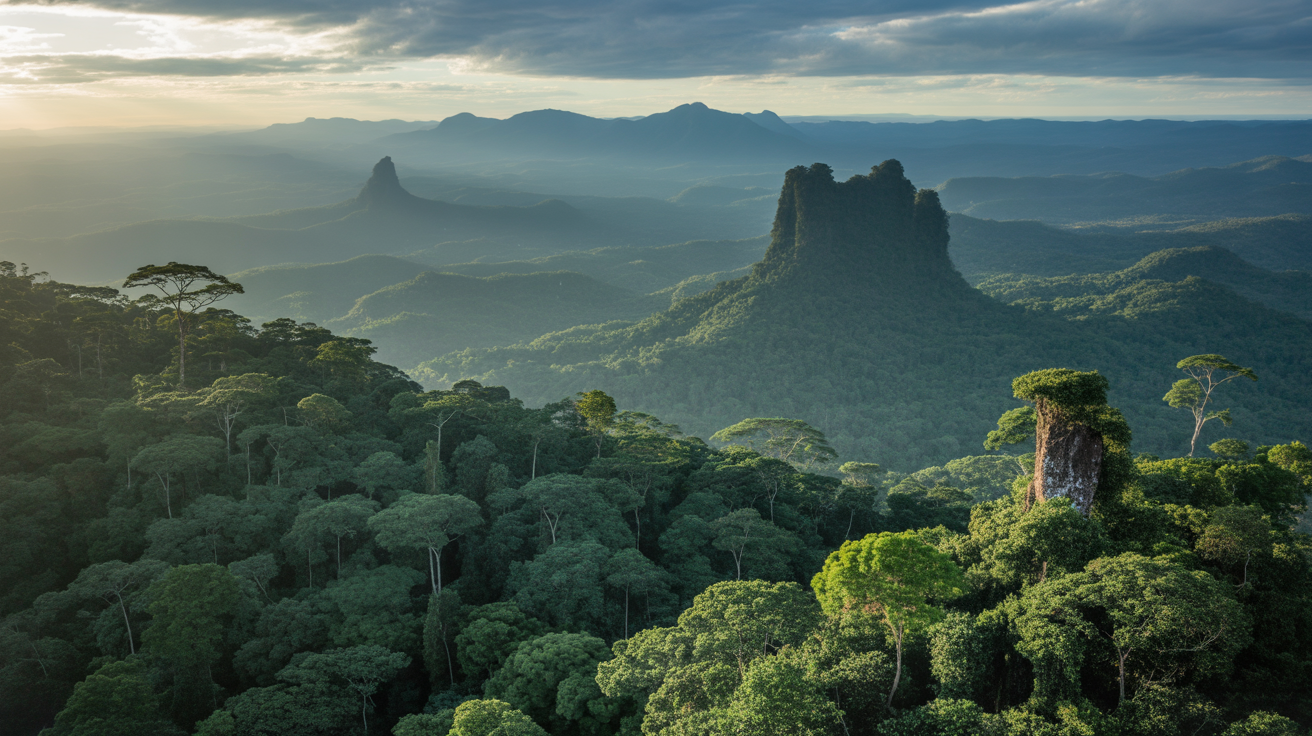
Tropical rainforest and rocky outcrops
 Elevated Terrain
Mountain
High-altitude environments with varying climates and specialized wildlife adapted to rugged terrain and thin air.
 Tropical Regions
Rainforest
Dense, wet forests with the highest biodiversity on Earth, containing more than half of the world's plant and animal species.
 Global
Forest
Wooded areas with significant tree cover and diverse plant and animal communities.
Conservation
The Guianan Cock-of-the-rock is currently classified as Least Concern on the IUCN Red List.
Threats & challenges
Although currently listed as Least Concern by the IUCN, the Guianan Cock-of-the-rock faces localized threats from habitat loss due to mining, logging, and infrastructure development, particularly in the Guiana Shield region. Disturbance of lek and nesting sites by human activity, including ecotourism, can disrupt breeding. Illegal capture for the pet trade, while not widespread, poses a potential risk. Climate change may alter the availability of fruiting trees and suitable nesting sites. Despite these threats, the species remains relatively common in protected and remote areas, with stable population trends overall.
Taxonomy
Scientific name
Rupicola rupicola
- Kingdom
- Animalia
- Phylum
- Chordata
- Class
- Aves
- Order
- Passeriformes
- Family
- Cotingidae
- Genus
- Rupicola
- Species
- rupicola
Community notes
Share your observations about the Guianan Cock-of-the-rock.
No community notes yet. Be the first!
Discover more wildlife
More fascinating animals from the encyclopedia.