
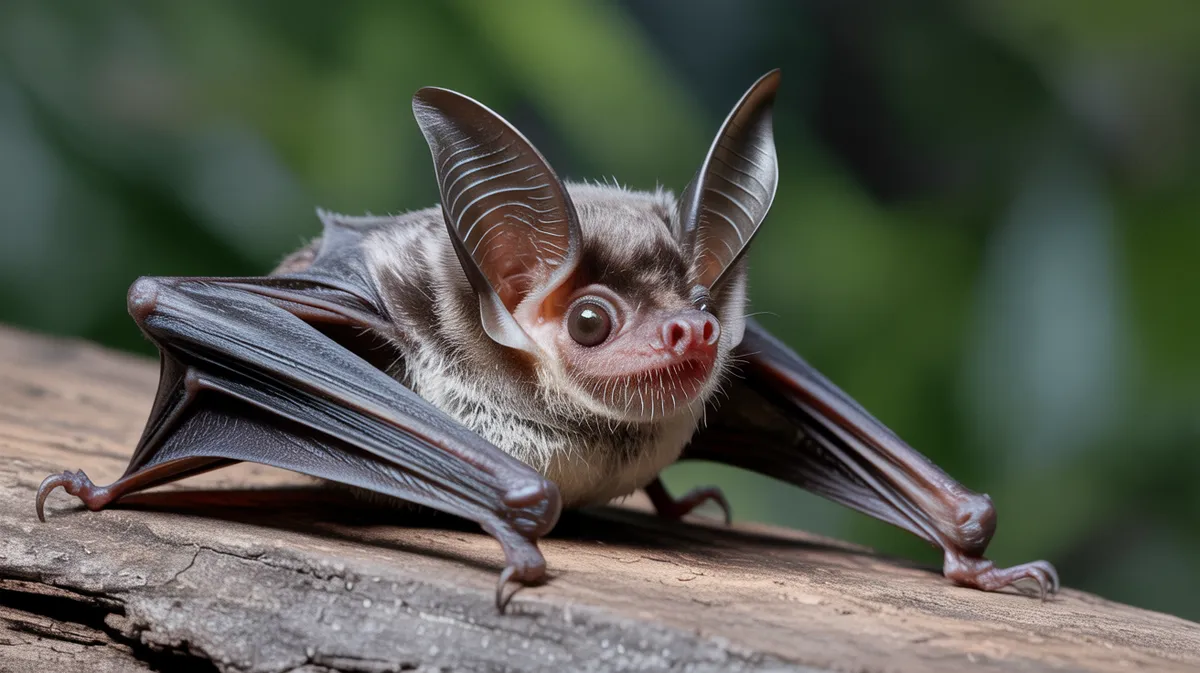
About the Hoary Bat
Lasiurus cinereus is North America's most widespread bat and one of its least often seen, because it roosts alone in the open foliage of trees rather than in caves or buildings - hanging by one foot from a leaf, wrapped in its own furred tail membrane, looking like a dead leaf. The "hoary" name comes from the white-tipped guard hairs frosting a mahogany coat. Unlike the colonial cave bats, hoary bats are solitary, long-distance migrants, moving thousands of kilometres between summer range in Canada and wintering grounds in Mexico and the southern United States, and their migration routes are still poorly mapped. That migratory habit has made them the single most frequently killed bat at wind turbines in North America: they are drawn to the tall structures, apparently mistaking them for roost trees or for mating landmarks, and they die both from blade strikes and from barotrauma - the sudden pressure drop behind a blade rupturing their lungs. Estimates run to hundreds of thousands of hoary bat deaths a year in the US alone, and modelling suggests the population could decline drastically this century without mitigation. A subspecies, the opeapea, is Hawaii's only native land mammal, having crossed 3,700 km of open ocean.
Fascinating facts
Frosted Fur
The Hoary Bat's fur is tipped with white, giving it a frosted or 'hoary' look, which helps with camouflage among tree foliage.
Nocturnal Hunter
This bat hunts mostly at night, preying on moths and other flying insects using echolocation to navigate and locate food.
Epic Migrator
Hoary Bats migrate long distances between their summer breeding grounds in North America and winter habitats further south.
Detailed description
The hoary bat (Lasiurus cinereus) is the largest bat species native to North America, with a forearm length of 45–55 mm and a wingspan reaching up to 40 cm. Adults typically weigh between 20 and 35 grams. Its dense, long fur is uniquely frosted with white tips, giving a 'hoary' or silvery appearance, and covers much of the upper surface of the tail membrane, an adaptation for insulation during flight and roosting. The ears are short and rounded, and the face is blunt with a dark mask-like marking. Hoary bats are solitary and highly migratory, spending summers in temperate forests of Canada and the United States and wintering as far south as Central and South America. They roost individually in the foliage of trees, often 3–5 meters above ground, using their camouflaged fur to blend with lichen or bark. Nocturnal by nature, they emerge at dusk, exhibiting swift, direct flight patterns as they forage over open areas or forest edges. Their diet consists primarily of moths, but they also consume beetles, flies, and other insects, playing a significant role in controlling pest populations. Despite their wide range, hoary bats are rarely seen due to their solitary habits, cryptic coloration, and preference for high, concealed roosts.
Did you know?
Hoary bats have been recorded flying at altitudes of over 2,000 meters during migration, making them some of the highest-flying bats in the world.
Research & sources
Wikipedia summary
The hoary bat is a species of bat in the vesper bat family, Vespertilionidae. It lives throughout most of North America.
Behaviour & social structure
Hoary bats are solitary outside of the breeding season, with individuals occupying separate roosts. They are crepuscular and nocturnal, becoming active shortly after sunset. Foraging typically occurs in open habitats such as forest clearings, over streams, or above fields, where they use echolocation to detect and capture prey mid-flight. Their hunting style is characterized by fast, straight, and agile flight, often at heights of 5–15 meters. They are known to cover large distances in a single night while foraging. During the day, hoary bats roost in dense foliage, hanging by one foot with the tail membrane wrapped around the body for warmth and concealment. Social interactions are minimal, except during mating season or when mothers care for their young. Vocalizations are primarily used for echolocation, but some social calls have been documented during mating.
Reproduction & life cycle
Breeding occurs in late summer and early autumn, coinciding with the onset of migration. Mating is promiscuous, and females store sperm over winter, delaying fertilization until spring. Gestation lasts approximately 40 days, with births occurring from mid-May to early July, depending on latitude. Females typically give birth to two pups (range: 1–4), which is unusually high for bats. Newborns are altricial, blind, and hairless, weighing about 3 grams. Mothers nurse and care for the pups in the roost, with young becoming volant (capable of flight) at around 3–4 weeks old. Parental care is provided solely by the female, and juveniles are independent by late summer, joining the migratory population.
Adaptations & survival
The hoary bat exhibits several adaptations for its migratory and solitary lifestyle. Its dense, frosted fur provides thermal insulation during long flights and in variable climates. The tail membrane, heavily furred on the dorsal side, aids in heat retention and may assist in prey capture. Hoary bats possess long, narrow wings with high aspect ratios, facilitating fast, efficient flight over long distances. Their echolocation calls are adapted for open-air hunting, with low-frequency, high-intensity pulses that detect large, flying insects at a distance. Physiologically, they can enter torpor to conserve energy during adverse weather or food scarcity. Their cryptic coloration and solitary roosting habits reduce predation risk.
Cultural significance
Hoary bats have limited direct cultural significance compared to some other bat species, largely due to their secretive, solitary behavior and nocturnal habits. However, they are sometimes featured in North American folklore as mysterious or omens, reflecting broader cultural attitudes toward bats. As major insectivores, they are increasingly recognized in modern conservation messaging for their ecological role in controlling agricultural pests, highlighting their indirect economic value to humans.
Recent research
Recent research has focused on the impact of wind energy development on hoary bat populations, revealing that this species accounts for a significant proportion of bat fatalities at wind farms in North America. Genetic studies have clarified the species' phylogenetic relationships within the genus Lasiurus and have identified cryptic diversity in related taxa. Satellite telemetry and stable isotope analysis have provided new insights into migratory routes, showing that hoary bats can migrate over 2,000 km between summer and winter ranges. Ongoing studies are investigating the physiological mechanisms underlying their long-distance migration and torpor use, as well as the effects of climate change on their phenology and distribution.
Videos
Habitat
Forests
 Various Continental Regions
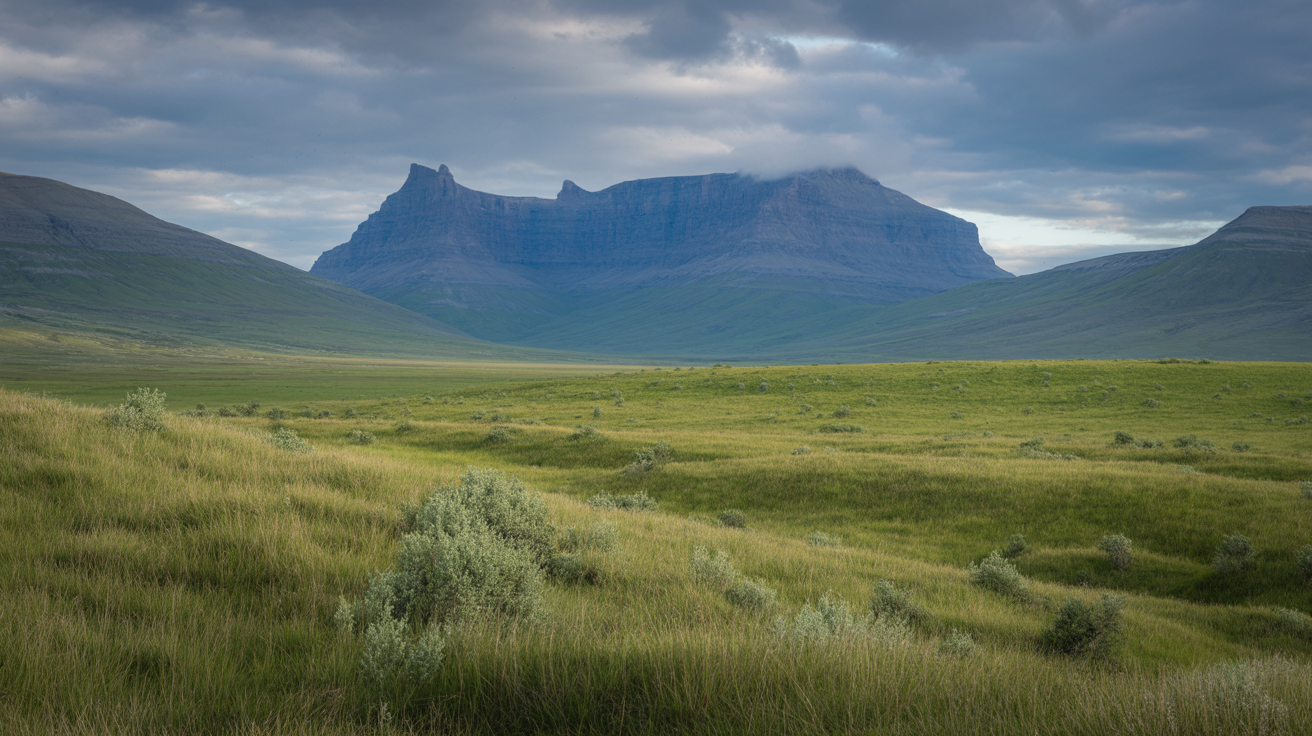
Grassland
Open areas dominated by grasses rather than trees, supporting numerous herbivores and their predators.
 Elevated Terrain
Mountain
High-altitude environments with varying climates and specialized wildlife adapted to rugged terrain and thin air.
 Global
Forest
Wooded areas with significant tree cover and diverse plant and animal communities.
Conservation
The Hoary Bat is currently classified as Least Concern on the IUCN Red List.
Threats & challenges
While currently classified as Least Concern by the IUCN, hoary bats face several emerging threats. The most significant is mortality from wind turbines, as they are disproportionately affected by turbine collisions during migration. Habitat loss due to deforestation and urbanization reduces suitable roosting and foraging sites. Pesticide use may decrease prey availability and expose bats to toxic compounds. Climate change could alter migratory patterns and the distribution of suitable habitats. Population trends are difficult to assess due to the species' elusive nature, but some regional declines have been reported, particularly in areas with high wind energy development.
Taxonomy
Scientific name
Lasiurus cinereus
- Kingdom
- Animalia
- Phylum
- Chordata
- Class
- Mammalia
- Order
- Chiroptera
- Family
- Vespertilionidae
- Genus
- Lasiurus
- Species
- cinereus
Community notes
Share your observations about the Hoary Bat.
No community notes yet. Be the first!
Discover more wildlife
More fascinating animals from the encyclopedia.