
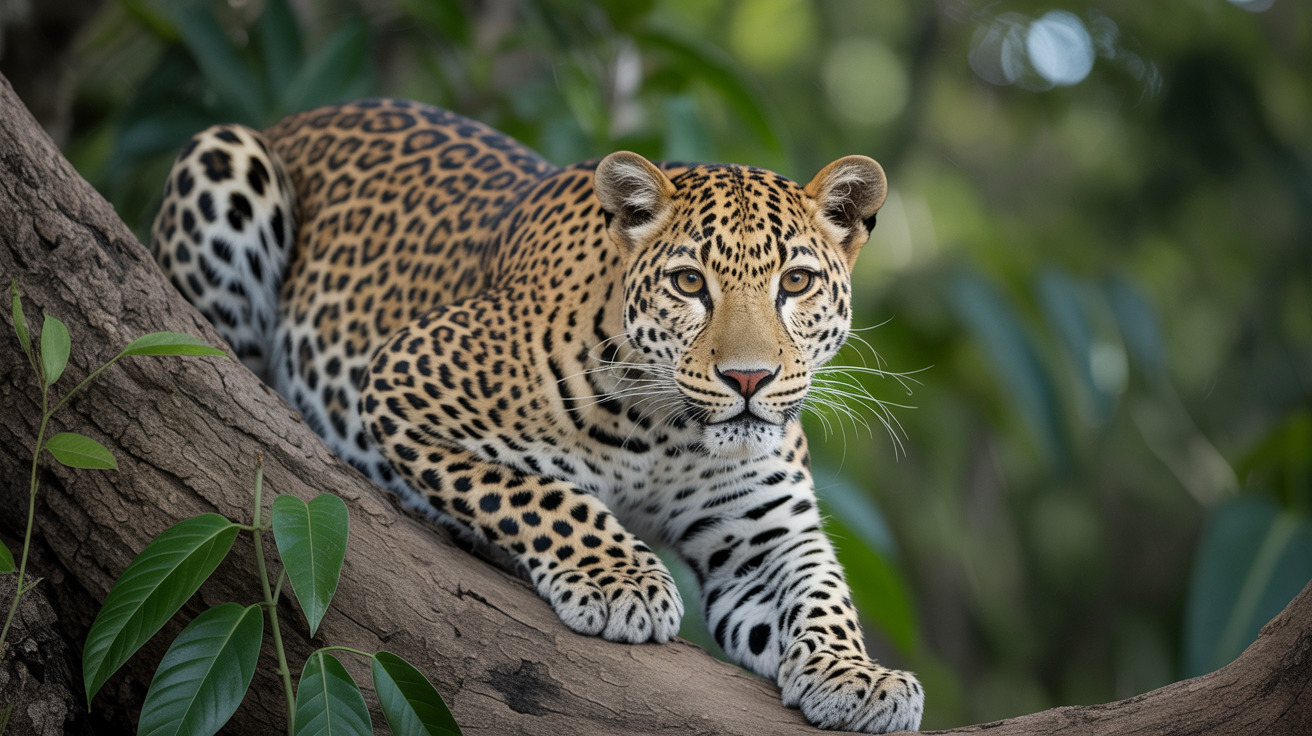
About the Indochinese Leopard
The Indochinese Leopard is a rare subspecies of leopard native to Southeast Asia, primarily found in the forested regions of Myanmar, Thailand, Laos, Cambodia, Vietnam, and Peninsular Malaysia. It is characterized by its striking golden-yellow coat covered with black rosettes and spots, providing excellent camouflage in dense forests. This elusive predator is solitary and mostly nocturnal, hunting a wide range of prey from ungulates to small mammals and birds. Due to significant habitat loss, poaching, and prey depletion, the Indochinese Leopard population is in steep decline and considered critically endangered in much of its range.
Fascinating facts
Forest Stealth
Their spotted coats provide superb camouflage in the dappled light of forest habitats, allowing them to ambush prey with stealth.
Wide Range
Historically, Indochinese Leopards ranged across much of Southeast Asia, but today they are restricted to increasingly fragmented forests.
Melanistic Leopards
A high proportion of Indochinese Leopards in certain regions are melanistic, leading to the 'black panther' phenomenon in Southeast Asia.
Detailed description
The Indochinese leopard (Panthera pardus delacouri) is a medium-sized felid subspecies, with males typically weighing between 50–90 kg and females 30–50 kg, though weights can vary regionally. Its coat is a rich golden-yellow to deep ochre, densely marked with black rosettes and spots, which provide effective camouflage in the dappled light of Southeast Asia’s dense forests. The body is muscular and agile, with relatively short limbs and a long tail that aids in balance during arboreal movement and hunting. The skull is robust, housing powerful jaw muscles for subduing prey. Indochinese leopards are solitary and territorial, with individuals maintaining large, overlapping home ranges that can span 15–50 km², depending on habitat quality and prey density. They are primarily nocturnal, exhibiting peak activity during twilight and nighttime hours, which helps them avoid human disturbance and larger predators such as tigers. Their diet is highly opportunistic, including medium-sized ungulates (e.g., muntjac, sambar), primates, birds, reptiles, and occasionally livestock. This subspecies is known for its adaptability, capable of surviving in a variety of forest types, from lowland evergreen to montane and dry deciduous forests, as well as secondary growth and fragmented landscapes. Despite their adaptability, Indochinese leopards are now largely confined to protected areas, with populations fragmented and isolated due to extensive habitat loss and poaching.
Did you know?
Some Indochinese Leopard populations have almost entirely black coats due to melanism, making them appear as 'black panthers.'
Research & sources
Wikipedia summary
The Indochinese leopard is a leopard subspecies native to mainland Southeast Asia and southern China. In Indochina, leopards are rare outside protected areas and threatened by habitat loss due to deforestation as well as poaching for the illegal wildlife trade. In 2016, the population was previously thought to comprise 973–2,503 mature individuals, with only 409–1,051 breeding adults. The historical range had decreased by more than 90%. However, as of 2019, it is estimated that there are 77-766 mature Indochinese leopards and that their numbers are decreasing.
Behaviour & social structure
Indochinese leopards are elusive and predominantly solitary, except during mating or when females are raising cubs. They mark their territories with scent markings, scratch marks, and vocalizations such as rasping coughs. Their hunting strategy relies on stealth and ambush, often stalking prey closely before launching a rapid, powerful attack. They are strong climbers and frequently cache kills in trees to avoid scavengers like dholes or tigers. Daily activity is largely nocturnal, with individuals resting in dense vegetation or rocky outcrops during the day. They are highly adaptable in their choice of prey, shifting to smaller animals or even carrion when larger prey is scarce. Social interactions are limited, with encounters between adults often resulting in avoidance or aggression, except during the breeding season.
Reproduction & life cycle
Breeding in Indochinese leopards occurs year-round but may peak during the dry season when prey is more abundant. Females come into estrus for 6–7 days, during which they may mate with multiple males. After successful copulation, gestation lasts approximately 90–105 days. Litters typically consist of 2–3 cubs, born blind and weighing around 500–700 grams each. Cubs are hidden in dense cover or rocky crevices for the first 6–8 weeks, during which the mother is highly protective and moves them frequently to avoid detection by predators. Weaning occurs at 3–4 months, but cubs remain with the mother for up to 18–24 months, learning hunting and survival skills. Sexual maturity is reached at 2–3 years for females and slightly later for males.
Adaptations & survival
The Indochinese leopard has evolved several adaptations for survival in dense forest habitats. Its cryptic coloration and rosette pattern provide excellent camouflage in the dappled light of the understory. The muscular, compact body and strong limbs facilitate agile climbing and leaping, allowing them to pursue arboreal prey and cache food in trees. Acute night vision and sensitive hearing aid in nocturnal hunting. Their broad dietary flexibility enables them to exploit a wide range of prey species, a key factor in their persistence in fragmented and human-altered landscapes. Behavioral plasticity, such as shifting activity patterns to avoid humans or competitors, further enhances their survival prospects.
Cultural significance
Leopards, including the Indochinese subspecies, hold a place in the folklore and traditional beliefs of Southeast Asia, often symbolizing strength, agility, and stealth. In some cultures, leopard skins and bones have been used in traditional medicine or as status symbols, contributing to their exploitation. However, direct cultural reverence is less pronounced compared to tigers or other large carnivores. In recent years, the Indochinese leopard has become a flagship species for forest conservation initiatives and anti-poaching campaigns in the region.
Recent research
Recent research has focused on population genetics, revealing significant genetic differentiation between Indochinese leopards and other Asian leopard subspecies, underscoring their conservation importance. Camera trap studies have provided new insights into their distribution, occupancy, and activity patterns, highlighting the extent of their decline and the importance of protected area networks. Ongoing studies are investigating the impacts of prey depletion and habitat fragmentation on leopard survival and reproductive success. Conservation genetics projects are assessing the viability of remnant populations and exploring the potential for genetic rescue. There is also increasing interest in the role of leopards in maintaining ecosystem balance as apex or mesopredators, especially in areas where tigers have disappeared.
Sources
Panthera pardus ssp. delacouri
Rostro-García, S., Kamler, J.F., Clements, G.R., Lynam, A.J., Naing, H. (2019)
scientificIUCN Red List of Threatened Species: Panthera pardus ssp. delacouri
IUCN SSC Cat Specialist Group
conservationPopulation genetics and conservation status of the Indochinese leopard
Wilting, A. et al. (2016)
scientificVideos
Habitat
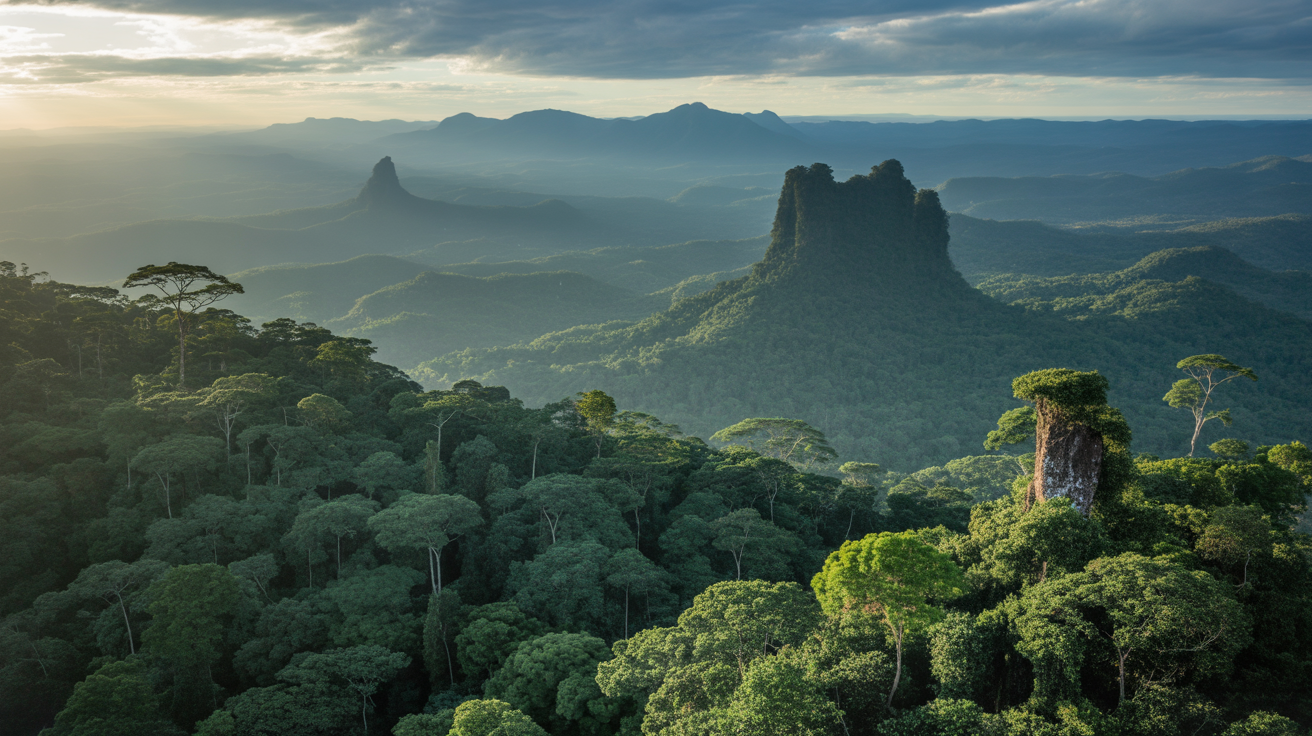
Dense tropical and subtropical forests
 Elevated Terrain
Mountain
High-altitude environments with varying climates and specialized wildlife adapted to rugged terrain and thin air.
 Tropical Regions
Rainforest
Dense, wet forests with the highest biodiversity on Earth, containing more than half of the world's plant and animal species.
 Global
Forest
Wooded areas with significant tree cover and diverse plant and animal communities.
Conservation
The Indochinese Leopard is currently classified as Critically Endangered on the IUCN Red List.
Threats & challenges
The Indochinese leopard faces severe threats from habitat loss due to deforestation, agricultural expansion, and infrastructure development. Poaching for skins, bones, and other body parts—driven by the illegal wildlife trade—remains a critical threat, with leopards often targeted for traditional medicine or ornamental use. Prey depletion from overhunting by humans further reduces their food base, leading to increased livestock predation and subsequent human-wildlife conflict. Population fragmentation has resulted in small, isolated groups vulnerable to genetic bottlenecks and inbreeding depression. Recent estimates suggest a catastrophic decline, with fewer than 800 mature individuals remaining and local extinctions in parts of their historical range. Conservation efforts are hampered by limited law enforcement, insufficient protected area coverage, and ongoing demand for leopard products.
Taxonomy
Scientific name
Panthera pardus delacouri
- Kingdom
- Animalia
- Phylum
- Chordata
- Class
- Mammalia
- Order
- Carnivora
- Family
- Felidae
- Genus
- Panthera
- Species
- pardus delacouri
Community notes
Share your observations about the Indochinese Leopard.
No community notes yet. Be the first!
Discover more wildlife
More fascinating animals from the encyclopedia.