
About the Irukandji Jellyfish
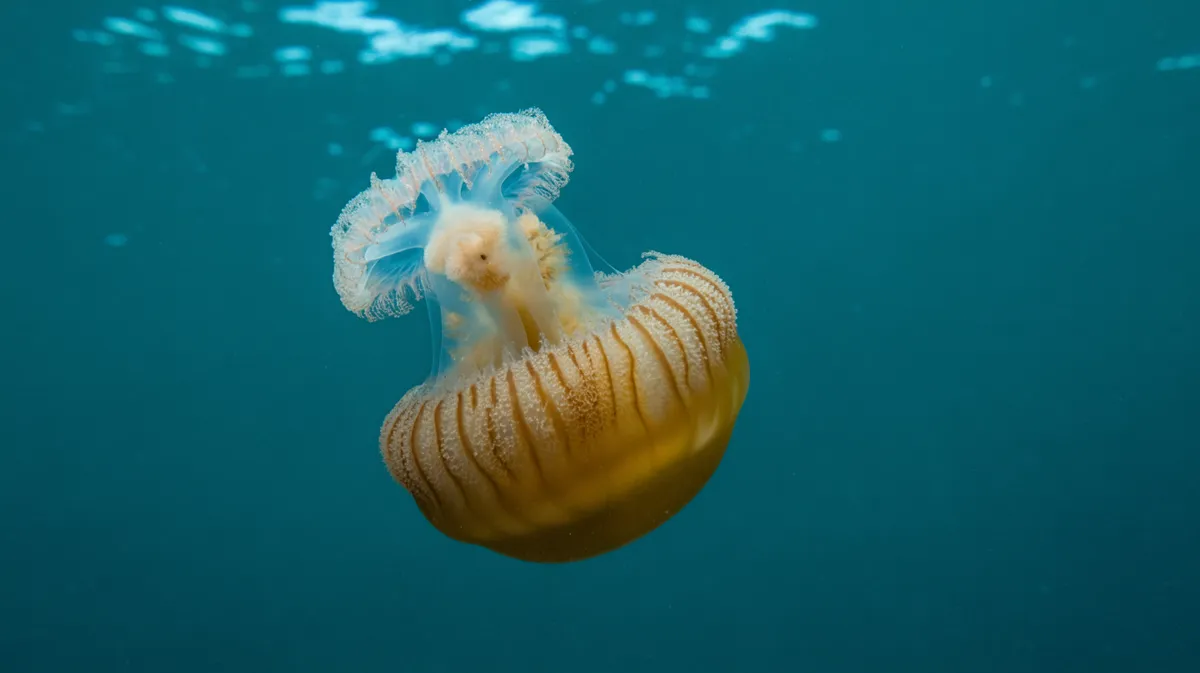
The Irukandji jellyfish, chiefly Carukia barnesi, is a box jellyfish the size of a fingernail - the bell is about a centimetre - with four thin tentacles, and it is nearly invisible in water. Its sting is often barely felt at the time. Then, 20 to 40 minutes later, comes Irukandji syndrome: excruciating lower back pain, muscle cramps, vomiting, sweating, a catastrophic surge in blood pressure, tachycardia, and a psychological symptom victims consistently describe as an overwhelming sense of impending doom so intense that patients beg to be killed. The mechanism appears to be a massive release of catecholamines - the body's own adrenaline flooding the system - and severe cases can cause pulmonary oedema and cardiac damage. Unusually, this jellyfish has stinging cells on its bell as well as its tentacles, and its nematocysts are concentrated in rings. The syndrome was named after the Yirrganydji people of the Cairns region. In 1961 the Australian physician Jack Barnes caught a suspect specimen and, to prove it was the culprit, deliberately stung himself, his nine-year-old son and a local lifeguard; all three developed the syndrome and were hospitalised, and the jellyfish now bears his name.
Fascinating facts
Tiny but Deadly
Measuring only about the size of a fingernail, the Irukandji Jellyfish can deliver one of the most excruciating stings in the animal kingdom.
Elusive Swimmer
Its nearly transparent body makes it extremely hard to detect in the water, increasing the risk for unsuspecting swimmers.
Irukandji Syndrome
A sting can trigger Irukandji syndrome, characterized by severe pain, vomiting, anxiety, and, in rare cases, heart failure.
Detailed description
The Irukandji jellyfish (Carukia barnesi) is a diminutive yet highly venomous cubozoan, with an adult bell measuring only 1–2 centimeters across and a height of up to 2.5 centimeters. Its nearly transparent, cube-shaped bell and long, delicate tentacles—often extending up to 1 meter—make it exceptionally difficult to detect in the water. The bell is adorned with four tentacles, each emerging from a pedalium at the corners, and the body contains specialized stinging cells (nematocysts) concentrated on both the tentacles and the bell. Unlike many jellyfish, Irukandji possess complex eyes with lenses, corneas, and retinas, allowing them to perceive light and movement, which may aid in hunting. Their musculature enables rapid bell contractions for agile swimming. Carukia barnesi is a solitary species, showing no evidence of social grouping or coordinated behavior. It is a pelagic predator, preying on small fish and zooplankton, and is capable of active hunting—a rare trait among jellyfish. Reproduction is sexual, with external fertilization occurring in the water column. The species undergoes a complex life cycle, including a sessile polyp stage and a free-swimming medusa stage. Its venom, among the most potent of any marine organism, can cause Irukandji syndrome in humans, characterized by severe systemic symptoms. This jellyfish is endemic to tropical and subtropical waters of northern Australia, with its range expanding southward, likely due to climate change.
Did you know?
The Irukandji Jellyfish was not scientifically described until 1964, after a researcher deliberately stung himself to prove its existence.
Research & sources
Wikipedia summary
The Irukandji jellyfish are any of several similar, extremely venomous species of rare box jellyfish. With a very small adult size of about a cubic centimetre, they are both one of the smallest and one of the most venomous jellyfish in the world. They inhabit the northern marine waters of Australia, and cost the Australian government $AUD 3 billion annually through tourism losses and medical costs associated with stings. This type of jellyfish reproduces sexually with eggs and sperm. They fire their stingers into their victim, causing a condition known in humans as Irukandji syndrome, which can be fatal and difficult to immediately recognise due to the delayed effects of the venom. There are about 16 known species of Irukandji, of which Carukia barnesi, Malo kingi, Malo maxima, Malo filipina and Malo bella are the best known.
Behaviour & social structure
Irukandji jellyfish are primarily solitary and exhibit minimal social interaction outside of brief encounters during spawning events. They are most active during the warmer months, coinciding with increased water temperatures. Recent research has shown that Carukia barnesi can actively hunt prey by using their tentacles to ensnare small fish and zooplankton, rather than relying solely on passive drifting. They employ a combination of visual cues and mechanoreception to detect prey, contracting their bells to maneuver and strike efficiently. Their daily activity patterns are not fully understood, but they are believed to remain in deeper water during the day and ascend to shallower depths at night, possibly to follow prey or avoid predators. Feeding is opportunistic, with prey immobilized by potent venom delivered through nematocysts. There is no evidence of parental care or social grouping, and individuals are generally dispersed throughout their habitat.
Reproduction & life cycle
Carukia barnesi reproduces sexually, with separate male and female medusae releasing gametes into the water column for external fertilization. Spawning is thought to occur seasonally, typically during the warmer months (November to May in northern Australia), when water temperatures and food availability are optimal. After fertilization, the resulting planula larvae settle onto a suitable substrate and develop into sessile polyps. These polyps can asexually bud off new medusae, continuing the life cycle. There is no parental care; all life stages are independent. The duration of the polyp stage is variable and may depend on environmental conditions, while the medusa stage—responsible for stings and reproduction—lasts several weeks to months.
Adaptations & survival
The Irukandji jellyfish has evolved several remarkable adaptations for survival. Its small, transparent body renders it nearly invisible to both predators and prey. The potent venom, delivered via specialized nematocysts, is highly effective at immobilizing prey and deterring predators. Its complex visual system, rare among jellyfish, provides advanced light detection and may facilitate active hunting. The ability to rapidly contract its bell allows for agile swimming and quick escapes. The life cycle includes both sessile and mobile stages, increasing resilience to environmental fluctuations. Additionally, the jellyfish's tolerance for a range of salinities and temperatures enables it to exploit various coastal habitats.
Cultural significance
The Irukandji jellyfish holds significant cultural and economic importance in northern Australia. Its name derives from the Irukandji people, traditional custodians of the region near Cairns. The jellyfish is infamous for causing Irukandji syndrome, a severe and sometimes fatal condition that has shaped local medical protocols and public safety campaigns. The economic impact is substantial, with stings resulting in costly medical treatment and lost tourism revenue. The species has also become a subject of fascination in documentaries and scientific literature, symbolizing the hidden dangers of the Australian marine environment.
Recent research
Recent studies have revealed that Irukandji jellyfish are capable of active hunting, using their visual and mechanosensory abilities to detect and pursue prey—a behavior previously undocumented in jellyfish. Ongoing research focuses on the molecular composition of their venom, which contains unique toxins with potential biomedical applications. Studies are also investigating the environmental factors influencing their distribution, particularly in relation to climate change. Improved detection methods, such as environmental DNA (eDNA) sampling, are being developed to better monitor populations and predict bloom events. The species continues to be a model organism for understanding venom evolution and jellyfish sensory biology.
Videos
Habitat
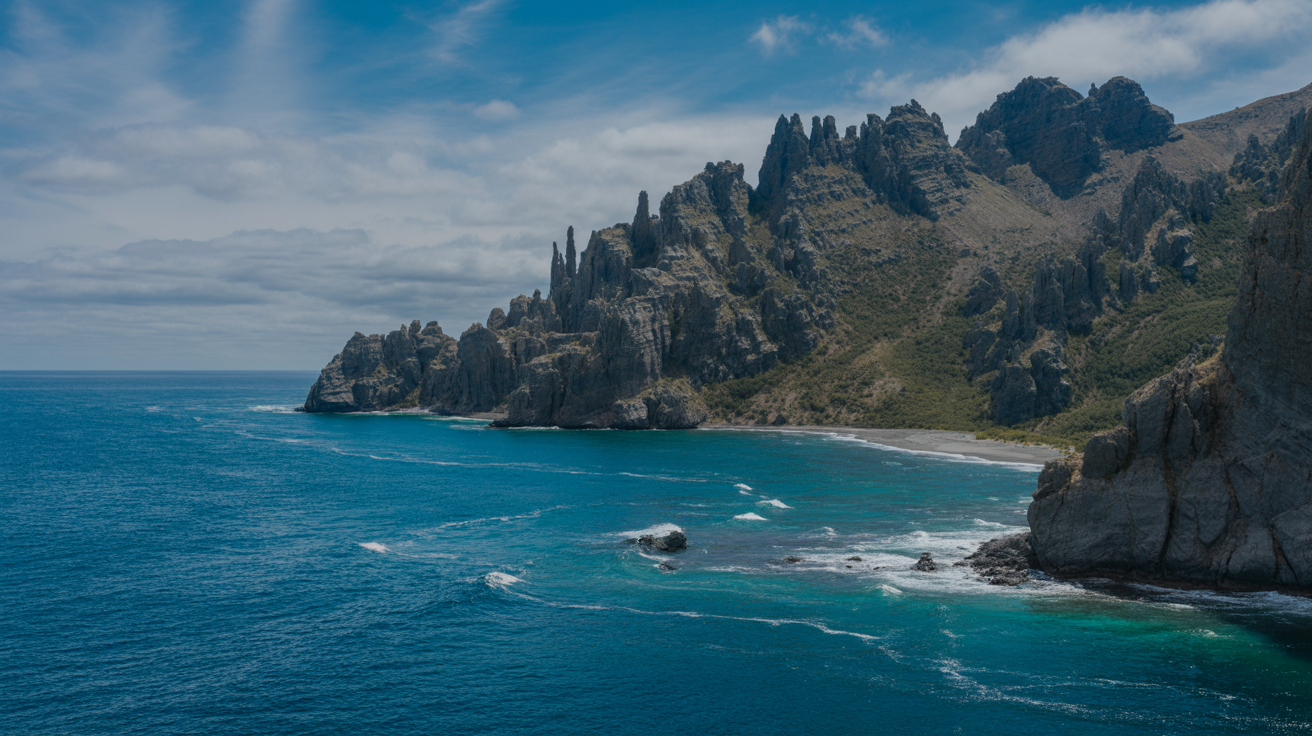
Tropical coastal ocean waters
Conservation
The Irukandji Jellyfish is currently classified as Least Concern on the IUCN Red List.
Threats & challenges
Currently, Carukia barnesi is not considered threatened and is listed as Least Concern. However, its populations are difficult to monitor due to its small size and cryptic nature. Potential threats include habitat degradation, pollution, and climate change, which may alter distribution patterns and prey availability. Human activities, such as coastal development and overfishing, could indirectly impact populations. Conversely, warming sea temperatures may be facilitating a southward range expansion, increasing the frequency of human encounters and stings. There are no targeted conservation measures, but public health concerns have prompted increased monitoring and research.
Taxonomy
Scientific name
Carukia barnesi
- Kingdom
- Animalia
- Phylum
- Cnidaria
- Class
- Cubozoa
- Order
- Carybdeida
- Family
- Carybdeidae
- Genus
- Carukia
- Species
- barnesi
Community notes
Share your observations about the Irukandji Jellyfish.
No community notes yet. Be the first!
Discover more wildlife
More fascinating animals from the encyclopedia.