
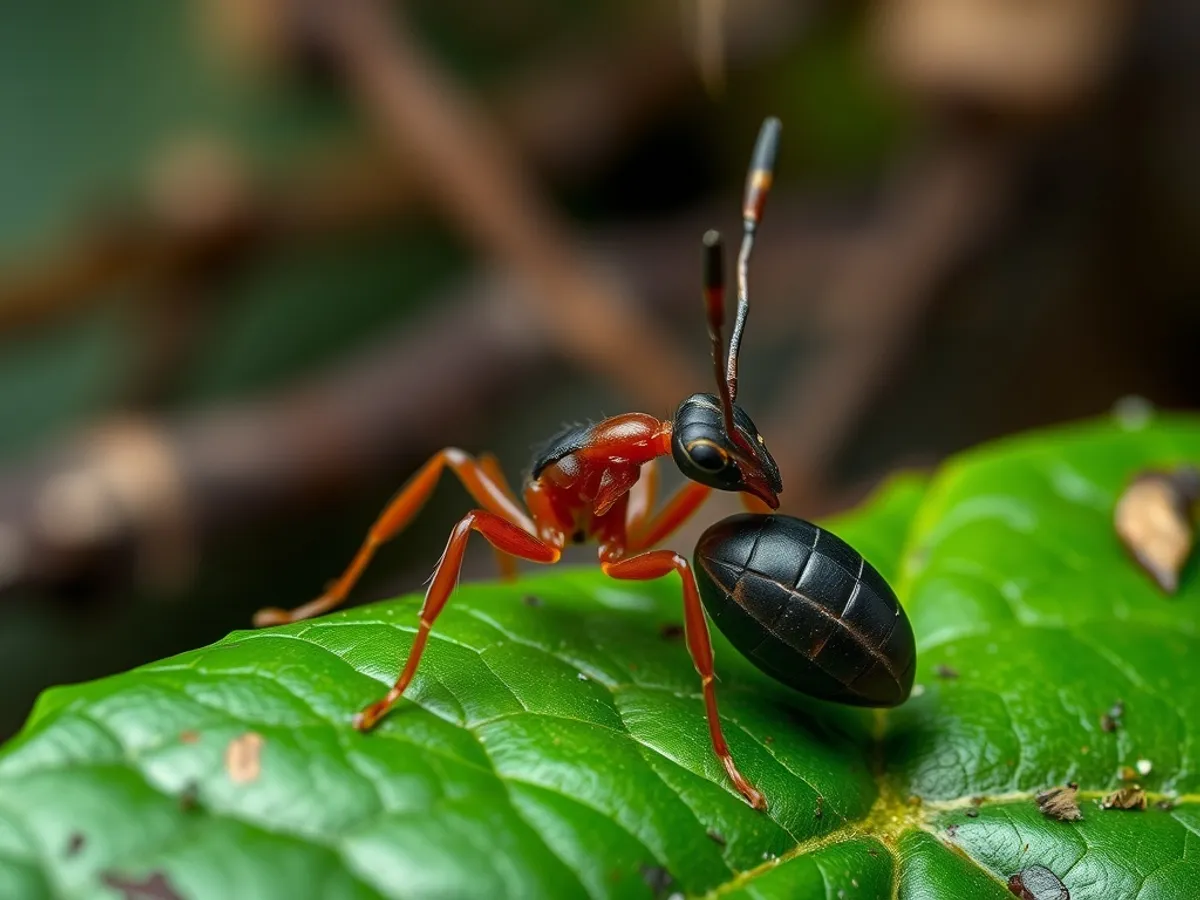
About the Leafcutter Ant
Leafcutter ants do not eat the leaves they carry. They are farmers: the cut fragments are hauled underground, cleaned, chewed to a pulp and used as compost to grow a fungus that the colony cultivates and lives on — an agricultural system that predates human farming by tens of millions of years. A mature colony runs into the millions and behaves as a superorganism, with castes sized for their jobs: heavy soldiers to defend, mediums to cut and carry, and minims so small they ride on the carried leaves, fending off parasitic flies that would lay eggs in the workers. The fungus garden is a monoculture and, like all monocultures, is fragile; the ants defend it by cultivating antibiotic-producing bacteria on their own bodies and applying them to the crop, and by exiling waste to refuse chambers tended by workers who never return to the nest proper. Foragers cut with mandibles that vibrate thousands of times a second, then carry many times their own weight along cleared trails stretching tens of metres. They are among the most important herbivores in the Neotropics — a single colony can strip roughly what a cow eats in a day.
Fascinating facts
Leaf Carriers
Leafcutter ants can carry leaf fragments up to 50 times their own body weight back to their nest.
Massive Colonies
Their colonies can contain millions of ants and elaborate networks of tunnels and chambers, some reaching depths of over 6 meters underground.
Fungus Farmers
Leafcutter ants use chewed leaf material to cultivate a specific fungus, which is their main food source and cannot survive without the ants.
Detailed description
Leafcutter ants (Atta cephalotes) are medium to large-sized ants, with workers ranging from 5 to 16 mm in length, exhibiting pronounced polymorphism to support their highly specialized roles within the colony. Their robust mandibles are adapted to efficiently cut through tough plant material, and their exoskeletons are reinforced with a mineralized layer of rhombohedral crystals, providing both strength and protection. Colonies can contain up to 8 million individuals, organized into a sophisticated caste system including minims, minors, mediae, and majors (soldiers). These ants are renowned for their mutualistic relationship with a specific fungus (Leucoagaricus gongylophorus), which they cultivate in subterranean chambers using freshly cut vegetation as a substrate. The colony’s nest architecture is highly complex, featuring a central mound that can exceed 30 meters in diameter and extend up to 6 meters deep, with radiating tunnels and satellite mounds. Communication within the colony is mediated by pheromones, tactile signals, and stridulation. Leafcutter ants play a vital ecological role as ecosystem engineers, recycling vast quantities of plant biomass and enhancing soil aeration and nutrient cycling. Their societies exhibit advanced division of labor, with specialized castes for foraging, nest maintenance, defense, and fungus gardening. Queens are the sole reproductive females, capable of founding new colonies after a single nuptial flight, and can live for over a decade, laying millions of eggs during their lifetime.
Did you know?
Leafcutter ant colonies can contain more than 8 million individuals, making them one of the largest and most complex animal societies on Earth.
Research & sources
Wikipedia summary
Leafcutter ants are fungus-growing ants that share the behaviour of cutting leaves which they carry back to their nests to farm fungus. Next to humans, leafcutter ants form some of the largest and most complex animal societies on Earth. In a few years, the central mound of their underground nests can grow to more than 30 m (98 ft) across, with smaller radiating mounds extending out to a radius of 80 m (260 ft), taking up 30 to 600 m2 and converted into 3.55 m individuals.
Behaviour & social structure
Atta cephalotes demonstrate highly coordinated foraging behavior, forming conspicuous trails that can stretch for over 100 meters from the nest. Foraging occurs primarily at night or during cooler parts of the day to avoid desiccation and predation. Workers use chemical pheromones to mark trails and recruit nestmates to productive vegetation sources. Leaf fragments are transported back to the nest atop the ants’ heads, and smaller workers ride atop the fragments to defend against parasitic flies (phorids). Inside the nest, workers meticulously clean and process the leaf material before incorporating it into the fungus gardens. Social interactions are complex, with constant antennal contact and grooming to maintain colony hygiene and cohesion. Defensive behaviors are pronounced, with soldier ants patrolling trails and nest entrances, using their powerful mandibles to deter intruders. The colony’s daily routines are tightly regulated, with shifts in activity corresponding to environmental conditions and resource availability.
Reproduction & life cycle
Reproduction in Atta cephalotes is characterized by synchronized nuptial flights, typically occurring at the onset of the rainy season. Winged males and virgin queens (alates) emerge en masse, mate in flight, and males die shortly thereafter. Fertilized queens shed their wings and seek suitable sites to found new colonies. The queen carries a small pellet of the symbiotic fungus in her infrabuccal pocket to inoculate the new nest. Initial colony growth is slow, with the queen solely responsible for brood care and fungus cultivation until the first workers emerge. There is no true gestation; eggs hatch into larvae after 18–28 days, and the complete development from egg to adult can take 6–10 weeks, depending on environmental conditions. Queens are highly fecund, laying thousands of eggs per day at colony maturity. Parental care is exclusively performed by worker ants, with specialized castes tending to brood and fungus gardens.
Adaptations & survival
Leafcutter ants exhibit remarkable physical and behavioral adaptations, including polymorphic worker castes optimized for cutting, carrying, and defending. Their mandibles generate bite forces up to 800 millinewtons—2,600 times their body weight—enabling efficient leaf cutting and defense. The exoskeleton’s mineral coating provides abrasion resistance and pathogen protection. Behavioral adaptations include advanced trail-laying and recruitment via pheromones, division of labor, and hygienic practices such as mutual grooming and removal of diseased fungus. The mutualism with their cultivated fungus is a key evolutionary specialization, with both partners dependent on each other for survival. Leafcutter ants also possess metapleural glands that secrete antimicrobial compounds, reducing the risk of fungal garden contamination.
Cultural significance
Leafcutter ants have long fascinated indigenous cultures and naturalists, often symbolizing industriousness, cooperation, and agricultural ingenuity. In some South American folklore, they are depicted as models of collective labor and organization. Their impressive foraging trails and nest mounds are prominent features in tropical landscapes, sometimes inspiring local myths about the origins of the forest floor. In modern science, leafcutter ants serve as model organisms for studying social evolution, mutualism, and ecosystem engineering.
Recent research
Recent studies have elucidated the genomic basis of caste differentiation and the molecular mechanisms underlying ant-fungus mutualism. Advanced imaging has revealed the microstructure of the exoskeleton’s mineral coating and its role in pathogen defense. Ongoing research explores the impact of environmental change on colony health and foraging efficiency, as well as the co-evolutionary arms race between leafcutter ants, their cultivated fungi, and pathogenic microbes. Leafcutter ants are also being investigated for their potential in sustainable agriculture and biocontrol, due to their efficient biomass processing and soil improvement.
Videos
Habitat
Tropical rainforest
 Various Continental Regions
Grassland
Open areas dominated by grasses rather than trees, supporting numerous herbivores and their predators.
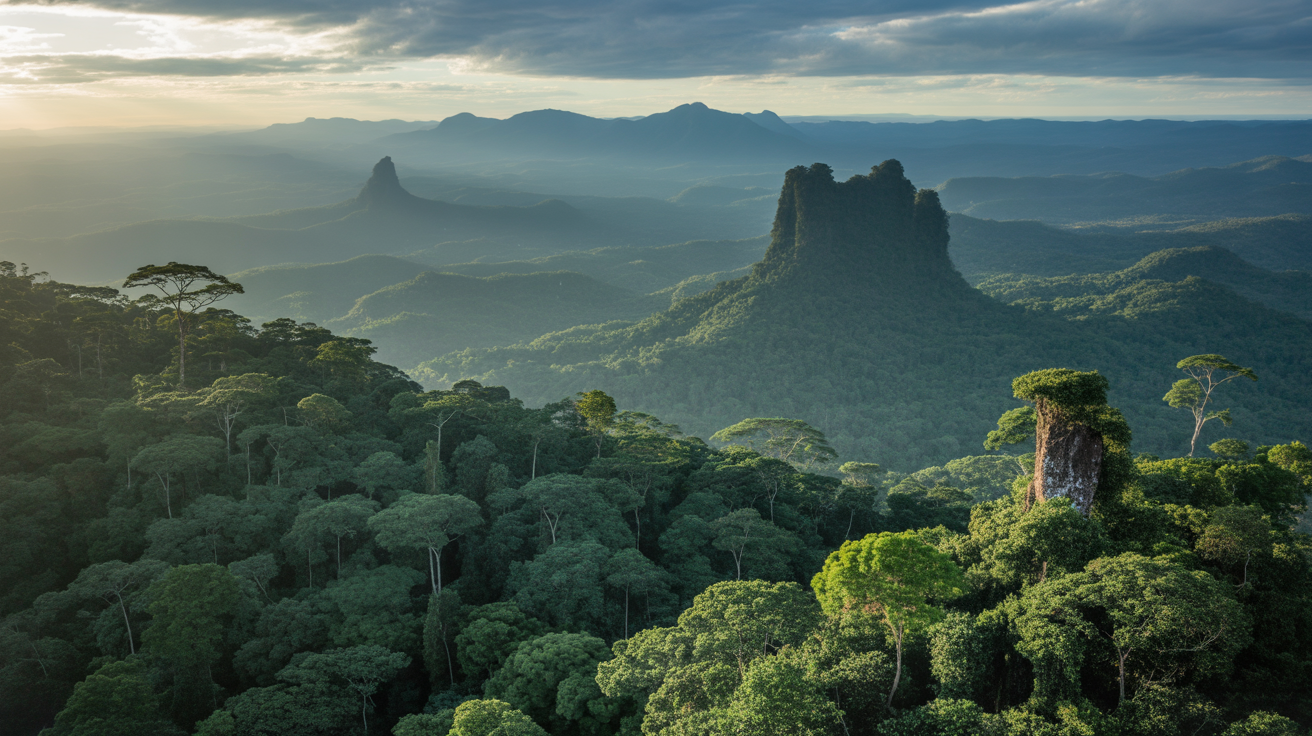 Tropical Regions
Rainforest
Dense, wet forests with the highest biodiversity on Earth, containing more than half of the world's plant and animal species.
 Global
Forest
Wooded areas with significant tree cover and diverse plant and animal communities.
Conservation
The Leafcutter Ant is currently classified as Least Concern on the IUCN Red List.
Threats & challenges
While Atta cephalotes is currently listed as Least Concern, local populations can be impacted by habitat loss due to deforestation and agricultural expansion. Pesticide use and habitat fragmentation pose additional threats, potentially disrupting colony dynamics and foraging routes. Natural enemies include phorid flies, parasitic fungi (Escovopsis), and various vertebrate and invertebrate predators. In some regions, leafcutter ants are considered agricultural pests due to their capacity to defoliate crops and young trees, leading to human-wildlife conflict. Climate change may also alter the distribution and productivity of their preferred habitats and fungal cultivars.
Taxonomy
Scientific name
Atta cephalotes
- Kingdom
- Animalia
- Phylum
- Arthropoda
- Class
- Insecta
- Order
- Hymenoptera
- Family
- Formicidae
- Genus
- Atta
- Species
- cephalotes
Where to see a leafcutter ant
2 zoos and aquariums in 2 countries are recorded as keeping this species.

Community notes
Share your observations about the Leafcutter Ant.
No community notes yet. Be the first!
Discover more wildlife
More fascinating animals from the encyclopedia.