
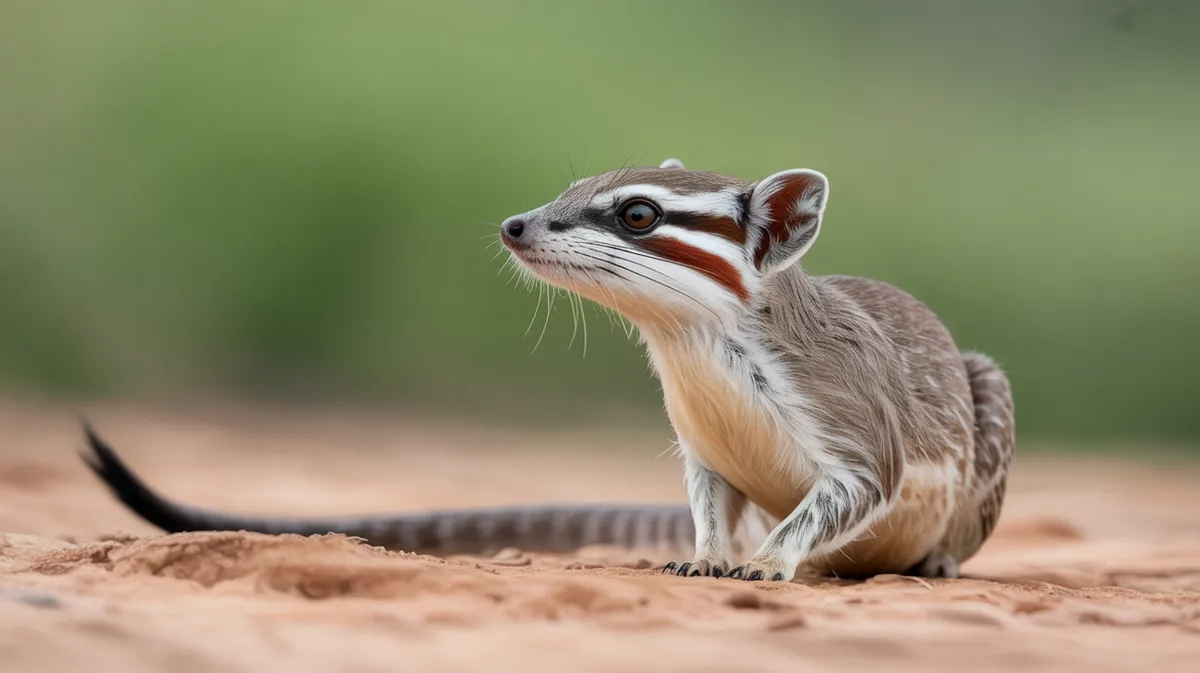
About the Long-tailed Planigale
Planigale ingrami of northern Australia is the smallest marsupial in the world - adults weigh about 4 g, less than a teaspoon of sugar - and its most extraordinary feature is its skull, which is flattened to a depth of only about 3 to 4 mm, thinner than a pencil. That squashed head is a tool. Planigales live in black-soil cracking clay plains, where the ground splits into deep fissures during the dry season, and the animal wedges itself into cracks a few millimetres wide, hunting through a three-dimensional maze that nothing else its size can enter. It is a ferocious predator for its size, taking insects, spiders, small lizards and even young mammals close to its own body weight, killing them with rapid bites to the head; it eats well over its own weight in prey per day. It has a poorly developed pouch - little more than a fold of skin - and can carry up to a dozen young, more than it has teats for, so the first to attach survive. Because its habitat is defined by soil that cracks, changes in grazing, fire and rainfall that alter how the black soil behaves have a direct effect on whether the animal can hunt at all.
Fascinating facts
Tiny Marsupial
The Long-tailed Planigale is one of the world’s smallest marsupials and mammals, with adults weighing as little as 2 grams.
Crack Dweller
Its uniquely flattened skull allows it to slip into narrow soil cracks in search of food and shelter, a specialized adaptation for floodplain life.
Nocturnal Hunter
This species is primarily nocturnal, emerging at night to hunt insects and small vertebrates, helping to balance local ecosystems.
Detailed description
The Long-tailed Planigale (Planigale ingrami) is a diminutive marsupial, with adults typically weighing between 4.3 and 6.0 grams and measuring 55–65 mm in head-body length, with a tail of 70–90 mm. Its most distinctive anatomical feature is its remarkably flattened head, which can be as little as 3–4 mm deep, allowing it to slip into narrow soil crevices and under debris in search of prey or shelter. The fur is short, dense, and a sandy or reddish-brown color, providing camouflage against the clay and blacksoil plains of its habitat. The eyes are relatively large for its size, adapted for nocturnal activity. Limbs are short but strong, with sharp claws suited for digging and grasping prey. The long, thin tail is prehensile and aids in balance and maneuverability. The species is primarily nocturnal and terrestrial, but it is also an adept climber and swimmer. Its diet consists mainly of insects, spiders, and other small invertebrates, but it will also take small vertebrates such as juvenile lizards when available. The Long-tailed Planigale is solitary and highly territorial, with individuals maintaining overlapping home ranges but rarely interacting outside of the breeding season. Reproduction occurs opportunistically, often triggered by rainfall and food abundance, with females producing up to 8 young per litter. The pouch is well-developed, opening towards the rear, and the young remain attached to the teats for several weeks before becoming more independent. Lifespan in the wild is typically less than 2 years, with high predation rates and environmental hazards contributing to mortality.
Did you know?
Long-tailed Planigales can survive in flood-prone environments by seeking refuge in deep soil cracks until the water recedes.
Research & sources
Wikipedia summary
The long-tailed planigale, also known as Ingram's planigale or the northern planigale, is the smallest of all marsupials, and one of the smallest of all mammals. It is rarely seen but is a quite common inhabitant of the blacksoil plains, clay-soiled woodlands, and seasonally flooded grasslands of Australia's Top End.
Behaviour & social structure
Long-tailed Planigales are strictly nocturnal, emerging at dusk to forage and returning to their nests before dawn. They are solitary hunters, using their acute sense of smell and touch to locate prey in soil cracks and under leaf litter. Hunting is characterized by rapid, jerky movements and sudden pounces. They subdue prey with a swift bite to the head or thorax, often consuming it immediately. During the day, they shelter in shallow burrows, soil fissures, or beneath dense vegetation. Social interactions are minimal outside the breeding season, with individuals displaying aggressive behavior if territories overlap. Vocalizations are rare but may include faint squeaks during mating or when threatened. Home ranges are small, typically less than 1000 square meters, and are marked with scent glands located near the cloaca.
Reproduction & life cycle
Breeding in Planigale ingrami is closely linked to environmental conditions, particularly rainfall, which increases food availability. Females can breed multiple times per year if conditions are favorable. The gestation period is extremely short, averaging 12–14 days, after which the tiny, underdeveloped young crawl into the mother's pouch. Up to 8 young may be born per litter, though not all may survive to weaning due to competition for the limited number of teats (usually 8). The pouch phase lasts about 4 weeks, after which the young are left in a nest while the mother forages. Weaning occurs at around 6–7 weeks of age. Sexual maturity is reached at approximately 3–4 months, allowing for rapid population growth during optimal conditions. Parental care is provided exclusively by the female; males play no role after mating.
Adaptations & survival
The Long-tailed Planigale exhibits several remarkable adaptations for survival in its harsh environment. Its flattened skull and flexible body enable it to exploit microhabitats inaccessible to most predators and competitors, such as deep soil cracks and narrow crevices. The dense fur provides insulation against temperature extremes and helps retain moisture. Its metabolic rate is high, supporting an active predatory lifestyle, but it can enter torpor during periods of food scarcity to conserve energy. Acute senses of smell and hearing compensate for poor eyesight in low light. The prehensile tail aids in balance and climbing, while sharp claws allow for efficient digging and prey capture. Behavioral adaptations include nocturnality to avoid daytime heat and predators, and opportunistic breeding to maximize reproductive success during favorable conditions.
Cultural significance
The Long-tailed Planigale holds limited direct significance in Australian Indigenous cultures or folklore, likely due to its secretive habits and tiny size. However, it is of scientific and educational interest as one of the world's smallest marsupials and a model organism for studying marsupial physiology, adaptation, and microhabitat specialization. Its ecological role as a predator of insects and small invertebrates is recognized in maintaining the health of grassland and savanna ecosystems.
Recent research
Recent research on Planigale ingrami has focused on its physiological adaptations to arid environments, including studies on torpor, water balance, and thermoregulation. Genetic studies have clarified its relationships within the genus Planigale and revealed cryptic diversity in northern Australian populations. Ongoing ecological studies are investigating the impact of habitat fragmentation and fire regimes on population dynamics. The species is also used in comparative studies of mammalian miniaturization and metabolic scaling. Notably, a 2022 field study documented the species' resilience to seasonal flooding and rapid recolonization of disturbed habitats.
Videos
Habitat
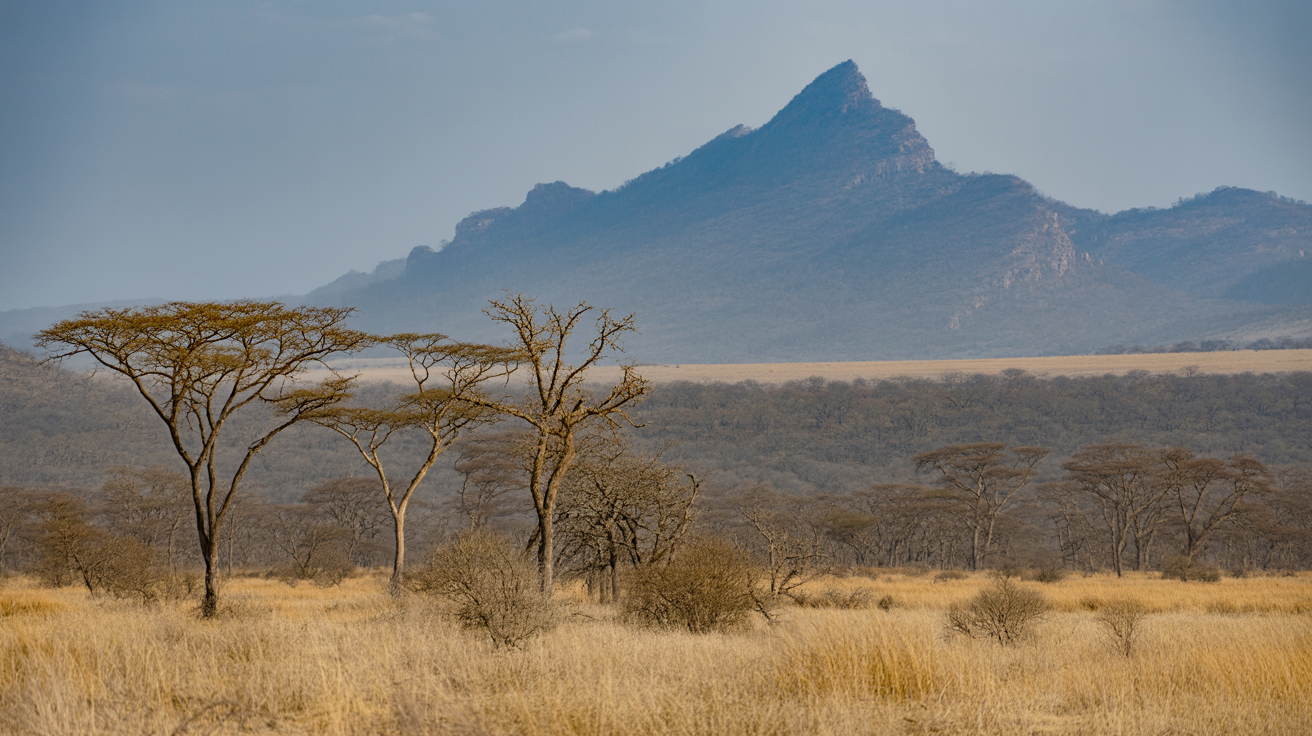
Floodplain grasslands and savannas

Conservation
The Long-tailed Planigale is currently classified as Least Concern on the IUCN Red List.
Threats & challenges
Currently, Planigale ingrami is classified as Least Concern by the IUCN due to its wide distribution and presumed large population. However, localized threats include habitat degradation from overgrazing by livestock, soil compaction, altered fire regimes, and land clearing for agriculture. Predation by introduced species such as cats and foxes poses a significant risk, especially in fragmented habitats. Climate change may also impact the frequency and duration of wet seasons, affecting food availability and breeding success. Despite these challenges, the species' high reproductive rate and adaptability have allowed it to persist in many areas, though ongoing monitoring is recommended.
Taxonomy
Scientific name
Planigale ingrami
- Kingdom
- Animalia
- Phylum
- Chordata
- Class
- Mammalia
- Order
- Dasyuromorphia
- Family
- Dasyuridae
- Genus
- Planigale
- Species
- ingrami
Community notes
Share your observations about the Long-tailed Planigale.
No community notes yet. Be the first!
Discover more wildlife
More fascinating animals from the encyclopedia.