
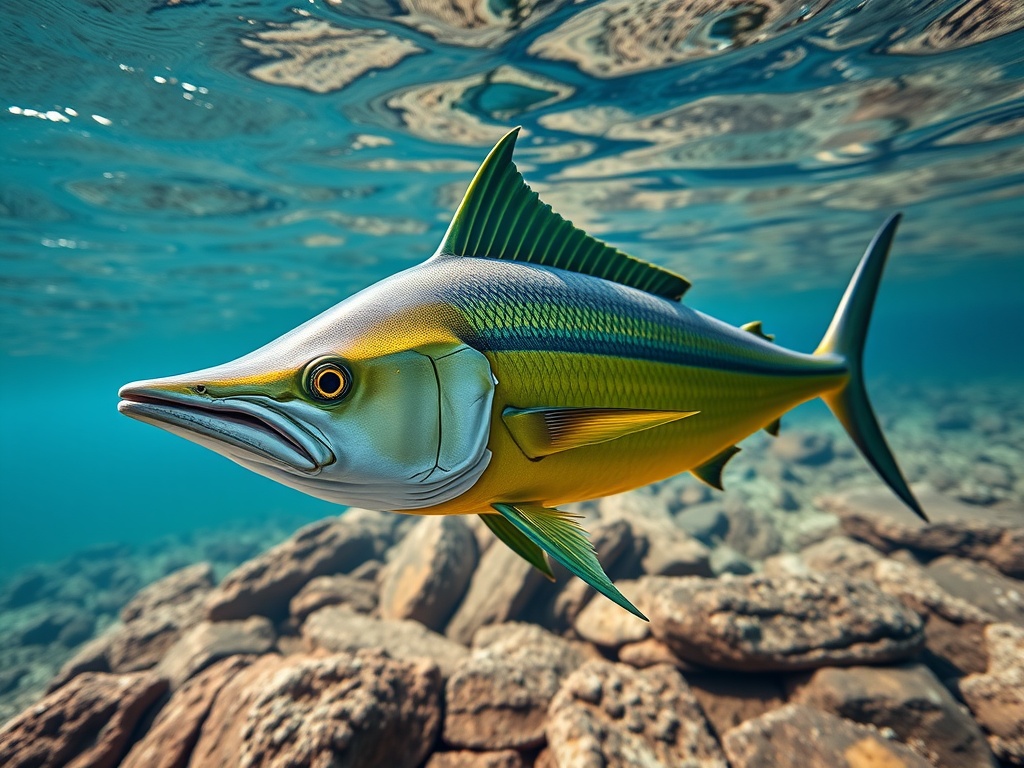
About the Mahi-mahi
Coryphaena hippurus is one of the fastest-growing fish in the ocean: it can reach 1 m and several kilograms within a year, mature within a few months of hatching, spawn repeatedly through the year, and it rarely lives beyond four or five years. That extreme life history is why it is one of the very few large predatory fish considered relatively resilient to fishing pressure - it replaces itself faster than tuna, marlin or swordfish possibly can. Mahi-mahi hunt in warm surface water and are strongly associated with floating objects: any patch of sargassum weed, driftwood, or debris gathers small fish, and mahi patrol beneath it, which is the basis of the fish-aggregating-device fisheries built around them. Adult males develop a steep, blunt, almost vertical forehead - the "bull" - while females keep a rounded profile, one of the clearest external sex differences in a pelagic fish. Alive, the fish is a shifting electric display of gold, green and blue, driven by chromatophores; the colour drains within minutes of death to a dull gray-yellow, which is why the name dolphinfish, and the Hawaiian mahi-mahi adopted commercially to stop people thinking they were eating dolphins, apply to a fish few consumers ever see in its living colours.
Fascinating facts
Colorful Camouflage
Mahi-mahi exhibit stunning iridescent colors that can fade quickly after death, helping them blend into the vibrant ocean waters and evade predators.
Growth Speed
This fish species can grow up to 1 meter (3.3 feet) in their first year of life, making them one of the fastest-growing fish in the ocean.
Sportfishing Icon
Mahi-mahi are highly sought after by anglers for their fighting spirit and are considered one of the best-tasting game fish.
Detailed description
The mahi-mahi (Coryphaena hippurus) is a strikingly colorful pelagic fish, instantly recognizable by its iridescent hues of electric blue, green, and gold, which fade rapidly after death. Adults typically measure between 70 and 130 cm in length, though individuals can reach up to 210 cm and weigh over 40 kg. The species is characterized by a compressed, elongated body, a deeply forked caudal fin, and a prominent, steep forehead—more pronounced in males (bulls) than females (cows). Its dorsal fin runs nearly the length of the body, aiding in stability and maneuverability at high speeds. Mahi-mahi are among the fastest-growing fish, capable of reaching sexual maturity within 4-5 months and living up to 5 years, though most live only 2-3 years. Their large mouths and sharp, villiform teeth are adapted for grasping slippery prey. They are highly migratory, traversing vast oceanic distances in search of food and suitable spawning grounds. Socially, mahi-mahi are often found in small, loose schools, especially as juveniles, but large adults may be solitary or found in pairs. Their vibrant coloration and acrobatic leaps when hooked make them a favorite among sport fishers worldwide.
Did you know?
Despite their nickname 'dolphinfish,' mahi-mahi are not related to dolphins (the mammals) at all.
Research & sources
Wikipedia summary
The mahi-mahi or common dolphinfish is a surface-dwelling ray-finned fish found in off-shore temperate, tropical, and subtropical waters worldwide. It is also widely called dorado and dolphin. It is one of two members of the family Coryphaenidae, the other being the pompano dolphinfish. These fish are most commonly found in the waters around the Gulf of Mexico, Costa Rica, Hawaii, and the Indian Ocean. In Italy it is called corifena, lampuga or pesce capone, and has even given its name to the caponata though eggplant has now taken the place of the fish.
Behaviour & social structure
Mahi-mahi exhibit diurnal activity patterns, being most active during daylight hours. They are opportunistic carnivores, preying on a wide variety of organisms including small pelagic fish (such as flying fish, mackerel, and sardines), squid, and crustaceans. Their hunting strategy involves rapid bursts of speed and agile maneuvers to chase down prey, often near the ocean surface or around floating debris and sargassum mats, which serve as both hunting grounds and shelter. Juveniles form tight schools for protection, while adults are more loosely associated or solitary, especially during spawning. Mahi-mahi are known for their aggressive feeding behavior and will often strike at bait or lures with great force. They exhibit pronounced vertical migrations, sometimes diving to deeper waters during the hottest parts of the day. Social interactions are generally limited outside of spawning, with little evidence of complex social hierarchies.
Reproduction & life cycle
Mahi-mahi are prolific broadcast spawners, capable of reproducing year-round in tropical and subtropical waters, with peak spawning typically occurring in warmer months. Females can spawn two to three times per week, releasing between 80,000 and 1,000,000 eggs per event, depending on size and age. Fertilization is external, with males and females releasing gametes simultaneously into the water column. There is no parental care; eggs are pelagic and hatch within 36-48 hours, depending on water temperature. Larvae are planktonic and grow rapidly, reaching juvenile stages within a few weeks. High fecundity and rapid growth rates are key adaptations that help sustain populations despite high natural and fishing mortality.
Adaptations & survival
Mahi-mahi possess several adaptations for a pelagic lifestyle. Their streamlined, laterally compressed bodies and long dorsal fins enable swift, sustained swimming and agile turns. The species’ rapid growth and early sexual maturity are evolutionary responses to high predation and fishing pressures. Their dazzling coloration provides camouflage in the open ocean, with counter-shading that blends with both the surface and deeper waters. Mahi-mahi have acute vision and a lateral line system sensitive to vibrations, aiding in prey detection and navigation. Their association with floating objects and sargassum mats offers both protection from predators and concentrated feeding opportunities. Physiologically, they exhibit high metabolic rates, supported by a well-developed circulatory system, allowing for bursts of speed up to 50-60 km/h.
Cultural significance
Mahi-mahi hold significant value in many coastal cultures. In Hawaii, they are a staple of local cuisine and a symbol of abundance. The fish is celebrated in sport fishing communities for its fighting spirit and beauty. Its name, meaning 'strong-strong' in Hawaiian, reflects its vigor. In Mediterranean countries, especially Italy, it is known as 'lampuga' and features in traditional dishes. The fish has also influenced local folklore and cuisine, such as Sicily’s caponata, originally named for the fish before eggplant became the main ingredient. Mahi-mahi are sometimes confused with marine mammals called dolphins, leading to the alternative market name 'dorado' to avoid confusion.
Recent research
Recent research on mahi-mahi has focused on their role as indicators of ocean health, particularly in relation to floating sargassum ecosystems. Studies have examined their rapid growth rates and metabolic physiology, revealing insights into their resilience to fishing pressure and environmental change. Genetic analyses have helped clarify population structure and connectivity across ocean basins, which is crucial for international management. Ongoing tagging and tracking studies are shedding light on their migratory routes and habitat use, informing conservation strategies. Additionally, mahi-mahi are increasingly used as model organisms in toxicology, given their sensitivity to pollutants such as oil and plastics.
Videos
Habitat
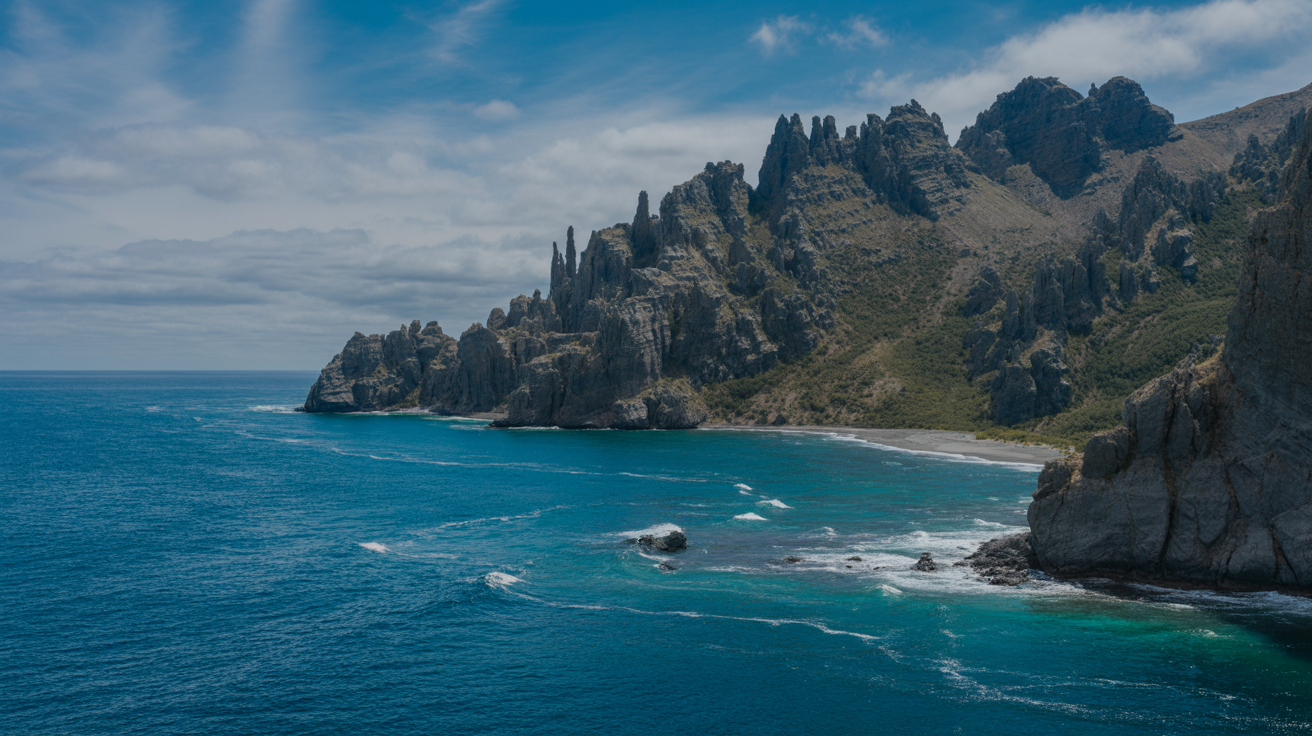
Open ocean (pelagic zone)
Conservation
The Mahi-mahi is currently classified as Least Concern on the IUCN Red List.
Threats & challenges
While currently listed as Least Concern by the IUCN, mahi-mahi face several threats, primarily from overfishing due to their popularity in commercial and recreational fisheries. Bycatch in longline and purse seine fisheries targeting tuna and swordfish can also impact populations. Habitat degradation, particularly the reduction of floating sargassum due to climate change and pollution, may affect juvenile survival. Despite these pressures, their rapid growth, high fecundity, and wide distribution confer resilience, but localized declines have been reported in some heavily fished regions. Ongoing monitoring is necessary to ensure sustainable harvests and to detect potential population shifts related to ocean warming and changing current patterns.
Taxonomy
Scientific name
Coryphaena hippurus
- Kingdom
- Animalia
- Phylum
- Chordata
- Class
- Actinopterygii
- Order
- Coryphaeniformes
- Family
- Coryphaenidae
- Genus
- Coryphaena
- Species
- hippurus
Community notes
Share your observations about the Mahi-mahi.
No community notes yet. Be the first!
Discover more wildlife
More fascinating animals from the encyclopedia.