
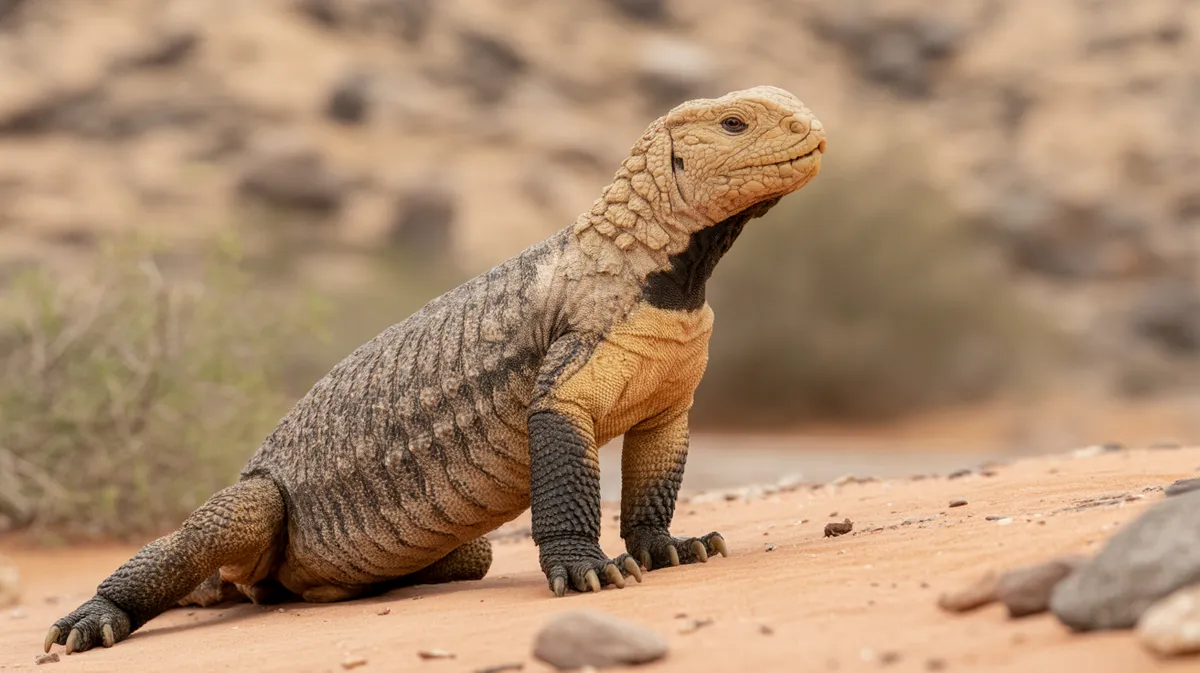
About the Mali Uromastyx
The Mali uromastyx is a robust, medium-sized lizard native to the arid Sahel region of West Africa. Recognized for its spiny, club-like tail and striking black and yellow coloration, this reptile is highly adapted to desert life, spending much of its time basking in the sun or hiding in burrows to avoid extreme heat. Primarily herbivorous, the Mali uromastyx feeds on leaves, flowers, and seeds, and rarely drinks standing water, obtaining most of its moisture from its diet. Known for its docile nature and unique appearance, it is a popular species in the exotic pet trade but faces threats from habitat loss and over-collection.
Fascinating facts
Desert Specialist
Mali uromastyx are expertly adapted to arid environments, often found in rocky deserts and scrublands where they bask and burrow.
Color Changers
They can alter their skin color to absorb more or less heat, turning darker to warm up or lighter to reflect sunlight.
Spiny Defender
Their tails are lined with sharp spines, which they use to fend off predators by lashing out when threatened.
Detailed description
The Mali Uromastyx (Uromastyx maliensis) is a robust agamid lizard, typically reaching adult lengths of 30–40 cm (12–16 in), with males generally larger and more vividly colored than females. Its most distinctive anatomical feature is its heavily armored, spiny tail, which serves as both a defensive weapon and a fat storage organ. The body is dorsoventrally flattened, aiding in thermoregulation and allowing the lizard to squeeze into tight rock crevices or burrows. The skin is covered with granular scales, with the dorsal surface displaying a striking pattern of black and yellow or yellow-green blotches, providing camouflage against the rocky, arid landscapes of the Sahel. Uromastyx maliensis is primarily diurnal, emerging from its burrow at sunrise to bask and raise its body temperature, a crucial adaptation for activity in its harsh desert environment. It is a solitary species outside of the breeding season, exhibiting territoriality, particularly among males. The species is almost exclusively herbivorous, with a digestive tract adapted for processing tough, fibrous desert plants. Reproduction is oviparous, with females laying clutches of 5–20 eggs in deep burrows. Notably, Mali Uromastyx can survive months without direct water intake, relying on metabolic water and moisture from food. Its longevity in captivity can exceed 15 years, though wild lifespans are likely shorter due to predation and environmental stresses.
Did you know?
Despite living in some of the driest regions on Earth, Mali uromastyx rarely drink water, surviving almost entirely on moisture from the plants they eat.
Research & sources
Behaviour & social structure
Mali Uromastyx are primarily solitary and territorial, especially adult males, which will defend prime basking and burrow sites through visual displays and tail lashing. Daily activity is dictated by ambient temperatures; they emerge from burrows in the morning to bask and forage, retreating underground during the hottest midday hours. Feeding occurs during cooler periods, with individuals methodically grazing on available vegetation, including leaves, flowers, and seeds. They have been observed using their spiny tails defensively, swinging them at potential predators or rivals. Social interactions are limited to brief encounters during the breeding season, with minimal aggression outside of territory disputes. In captivity, they may exhibit social tolerance if provided with ample space and resources, but stress and aggression can occur if overcrowded.
Reproduction & life cycle
Breeding in Uromastyx maliensis is seasonal, typically triggered by increasing temperatures and photoperiod in the late spring and early summer (April–June). Males engage in courtship displays involving head-bobbing, circling, and tail waving to attract females. After successful copulation, females undergo a gestation period of approximately 4–6 weeks before laying eggs. Clutch size ranges from 5 to 20 eggs, deposited in deep, humid burrows excavated by the female. Incubation lasts 8–10 weeks, depending on soil temperature (optimal range: 32–35°C/90–95°F). Hatchlings are independent from birth, receiving no parental care, and must immediately fend for themselves. Sexual maturity is typically reached at 3–4 years of age in the wild.
Adaptations & survival
Mali Uromastyx exhibit several key adaptations for desert survival. Their spiny, muscular tail serves both as a deterrent to predators and as a fat storage organ for periods of food scarcity. The flattened body and granular scales minimize water loss and facilitate heat absorption during basking. Specialized nasal salt glands allow for excretion of excess salts, reducing the need for water. The digestive system is highly efficient at extracting moisture from fibrous plant material, and the kidneys produce highly concentrated uric acid to conserve water. Behavioral adaptations include crepuscular foraging, burrow construction for thermoregulation and predator avoidance, and color changes to regulate body temperature (darker during cool mornings, lighter during peak heat).
Cultural significance
While not a major figure in local folklore, Mali Uromastyx have been traditionally hunted for food and, in some regions, for use in traditional medicine. Their striking appearance has made them popular in the international pet trade, contributing to their economic value but also to overexploitation. In some Sahelian cultures, lizards in general are associated with resilience and adaptability, though there is little specific mythology centered on Uromastyx maliensis.
Recent research
Recent research has focused on the species’ thermoregulatory behavior, dietary preferences, and the impact of the pet trade on wild populations. Genetic studies have clarified the phylogenetic relationships within the Uromastyx genus, confirming U. maliensis as a distinct species. Ongoing fieldwork aims to map population densities and assess the effectiveness of protected areas. Captive breeding programs have been established in Europe and North America, providing valuable data on reproductive biology and growth rates. There is growing interest in the species as a model for studying desert adaptation and herbivorous reptile physiology.
Sources
Uromastyx maliensis: The IUCN Red List of Threatened Species 2021
Wilms, T., Wagner, P., Niagate, B.
conservationUromastyx maliensis: The IUCN Red List of Threatened Species 2021
Wilms, T., Wagner, P. & Niagate, B.
conservationVideos
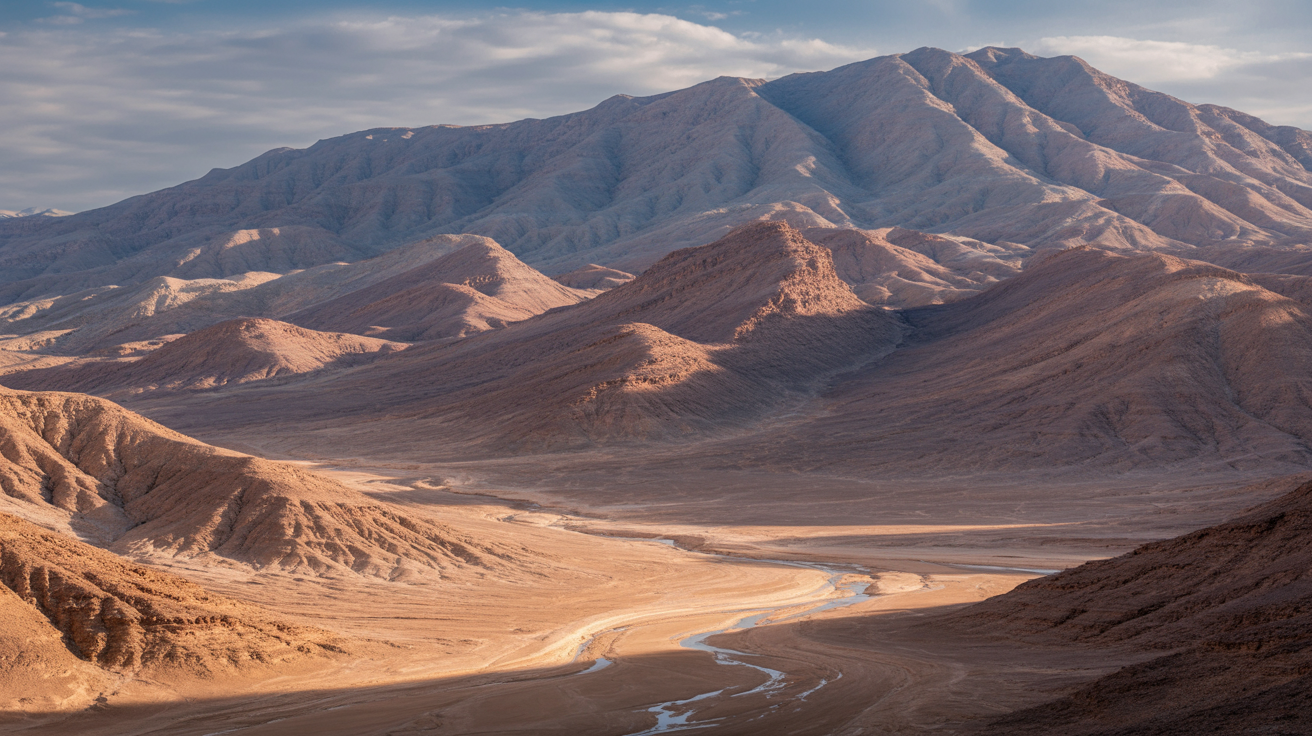
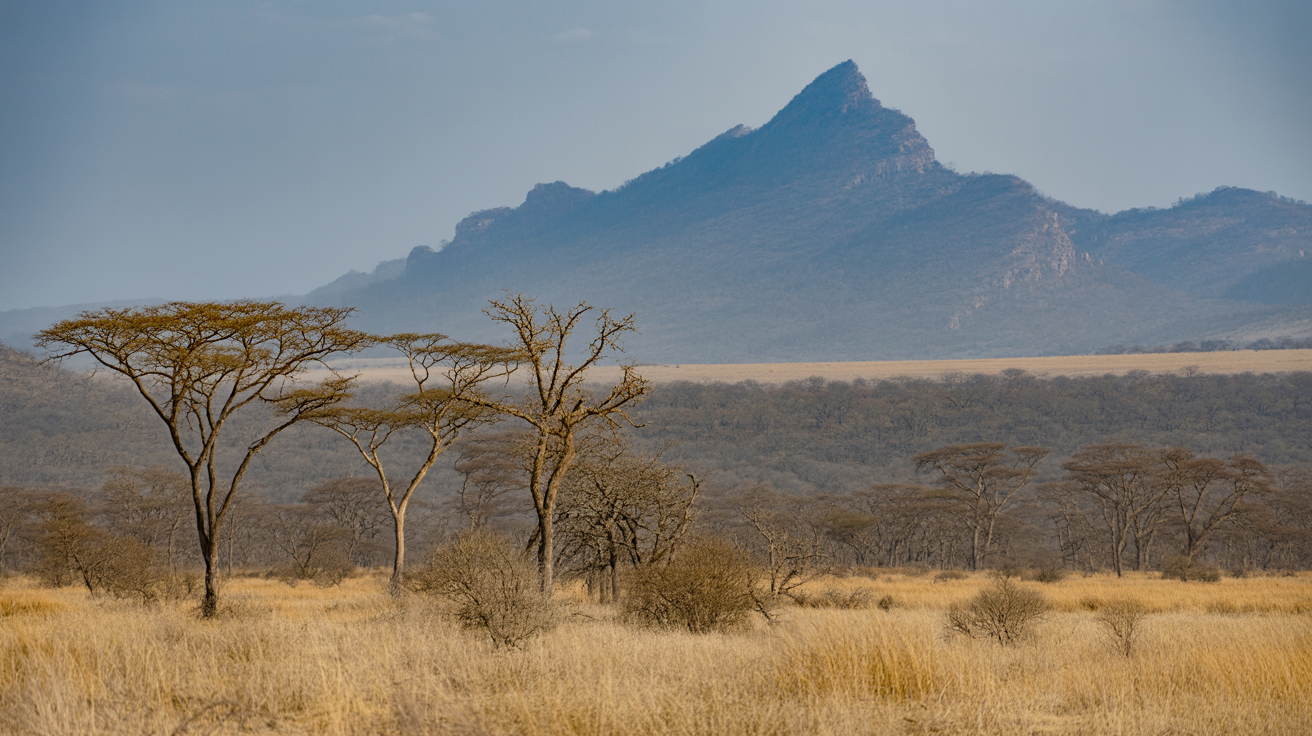
Habitat
Desert
Conservation
The Mali Uromastyx is currently classified as Near Threatened on the IUCN Red List.
Threats & challenges
The primary threats to Uromastyx maliensis are habitat degradation due to agricultural expansion, overgrazing by livestock, and collection for the international pet trade. Unsustainable harvesting has led to localized population declines, and the species is listed as Near Threatened by the IUCN. Climate change poses additional risks by exacerbating desertification and reducing the availability of suitable vegetation. Predation by birds of prey and carnivorous mammals is a natural threat, but human activities have intensified pressures. Conservation challenges include lack of effective legal protection in range countries, limited public awareness, and difficulties in monitoring wild populations due to their cryptic, burrowing habits.
Taxonomy
Scientific name
Uromastyx maliensis
- Kingdom
- Animalia
- Phylum
- Chordata
- Class
- Reptilia
- Order
- Squamata
- Family
- Agamidae
- Genus
- Uromastyx
- Species
- maliensis
Community notes
Share your observations about the Mali Uromastyx.
No community notes yet. Be the first!
Discover more wildlife
More fascinating animals from the encyclopedia.