
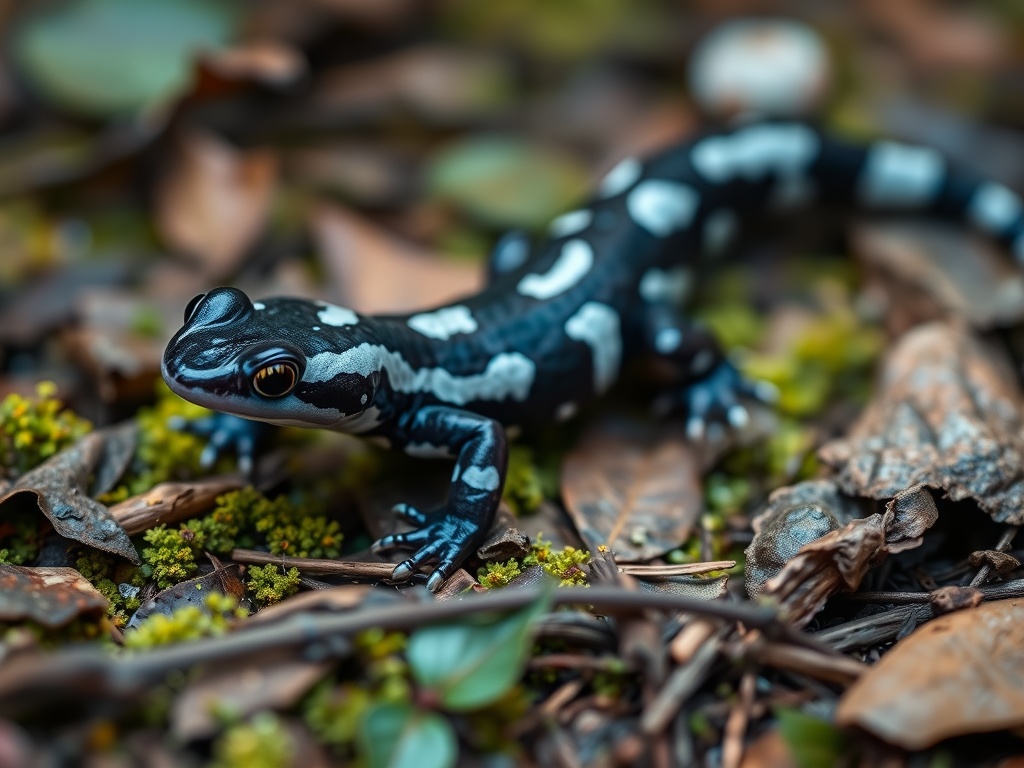
About the Marbled Salamander
The marbled salamander is a strikingly patterned amphibian native to the eastern United States. It is recognized by its stout body, black coloration, and distinctive silvery or white crossbands that give it a marbled appearance. This species is primarily terrestrial, spending much of its life hidden under logs, leaf litter, or burrowed in moist forest soil. Breeding occurs in the autumn, when females lay eggs in dry or shallow depressions that fill with water later in the season. The marbled salamander plays an important role in its ecosystem as both predator and prey.
Fascinating facts
Rainy Breeder
Marbled salamanders lay their eggs in dry depressions that only fill with water after autumn rains, an adaptation that protects their eggs from aquatic predators.
Parental Care
Females remain with their eggs, coiling around them to prevent desiccation and protect from small predators until rains arrive.
Terrestrial Lifestyle
Unlike many amphibians, marbled salamanders spend most of their adult lives on land, emerging only during rainy nights.
Detailed description
The marbled salamander (Ambystoma opacum) is a medium-sized mole salamander, typically measuring 9–13 cm (3.5–5 in) in total length, with females generally larger than males. Its robust, stocky body is characterized by a striking pattern of bold white or silvery crossbands on a jet-black background; these bands are more silvery in males and lighter gray in females, especially during the breeding season. The head is broad and rounded, with prominent costal grooves along the sides of the body, aiding in moisture retention. The limbs are relatively short but strong, adapted for digging and burrowing. Unlike many amphibians, the marbled salamander is primarily terrestrial outside the breeding season, spending much of its life hidden beneath logs, rocks, or within leaf litter in moist deciduous forests and floodplain woodlands. Its skin is smooth and moist, facilitating cutaneous respiration, which is vital since adults have reduced lungs. The species is nocturnal, emerging at night or during wet weather to forage. Marbled salamanders are secretive and solitary except during the breeding season, when they congregate at ephemeral pools. Their unique reproductive strategy involves autumn breeding and terrestrial egg-laying, with females often guarding their eggs until inundation. This adaptation allows larvae to hatch early and exploit temporary aquatic habitats before other amphibians arrive.
Did you know?
Marbled salamander larvae develop in temporary pools and can survive even when water levels fluctuate dramatically.
Research & sources
Wikipedia summary
The marbled salamander is a species of mole salamander found in the eastern United States.
Behaviour & social structure
Marbled salamanders are predominantly nocturnal and exhibit crepuscular activity peaks, especially during humid or rainy nights. They are solitary and territorial outside the breeding season, using chemical cues to avoid conspecifics. Foraging occurs on the forest floor, where they prey upon a variety of invertebrates such as earthworms, insects, spiders, snails, and slugs. Hunting is typically ambush-based, relying on stealth and rapid tongue projection. During dry periods, they retreat to underground burrows or deep leaf litter to avoid desiccation. Social interactions are limited, but during the autumn breeding season, males and females may interact at breeding sites, with some evidence of male-male competition for access to optimal nesting locations. Defensive behaviors include remaining motionless when threatened, secreting mildly toxic skin secretions, and occasionally tail autotomy in juveniles.
Reproduction & life cycle
Breeding occurs in the fall, typically from September to November, triggered by decreasing temperatures and increased rainfall. Unlike most Ambystoma species, marbled salamanders breed before pools are filled with water. Males arrive at dry or partially filled depressions first, where they court females using tactile and chemical cues. Females lay 50–200 eggs in small clusters under logs or leaf litter within these depressions. Uniquely, females often remain with the eggs, coiling around them and providing protection from desiccation and predation until the site floods, which stimulates hatching. Embryonic development is paused until inundation, after which larvae hatch within days. Larvae are aquatic, feeding on zooplankton, insect larvae, and other small aquatic organisms, and undergo metamorphosis in 2–5 months, depending on hydroperiod and temperature. There is no parental care after hatching.
Adaptations & survival
Marbled salamanders exhibit several adaptations for terrestrial life, including a thick, glandular skin that resists desiccation and facilitates cutaneous respiration. Their cryptic coloration and disruptive banding provide camouflage among leaf litter and forest debris. The ability to lay eggs terrestrially and delay hatching until inundation is a key evolutionary specialization, allowing larvae to exploit temporary pools before predators such as fish or other amphibians arrive. Their fossorial lifestyle is supported by strong limbs and a flattened body, enabling efficient burrowing. Chemical defenses in the skin deter some predators. Seasonal activity patterns and the use of underground refuges help them survive drought and temperature extremes.
Cultural significance
The marbled salamander does not have a prominent role in folklore or traditional medicine, but it is valued as an indicator species for healthy forest and wetland ecosystems. Its presence is often used in environmental education to highlight the importance of amphibian conservation and wetland protection. In some regions, it is featured in local conservation campaigns and is appreciated by naturalists and herpetologists for its unique life history and striking appearance.
Recent research
Recent research has focused on the marbled salamander’s reproductive ecology, particularly the evolutionary advantages of terrestrial egg-laying and parental care. Studies using genetic markers have revealed significant population structure and limited dispersal, emphasizing the importance of habitat connectivity. Ongoing work investigates the impacts of climate change on breeding phenology and larval survival, as well as the species’ sensitivity to environmental contaminants such as pesticides and endocrine disruptors. The marbled salamander is also used as a model organism for studying amphibian disease dynamics, including susceptibility to chytridiomycosis.
Videos
Habitat
Moist forests, woodlands, and seasonal wetlands
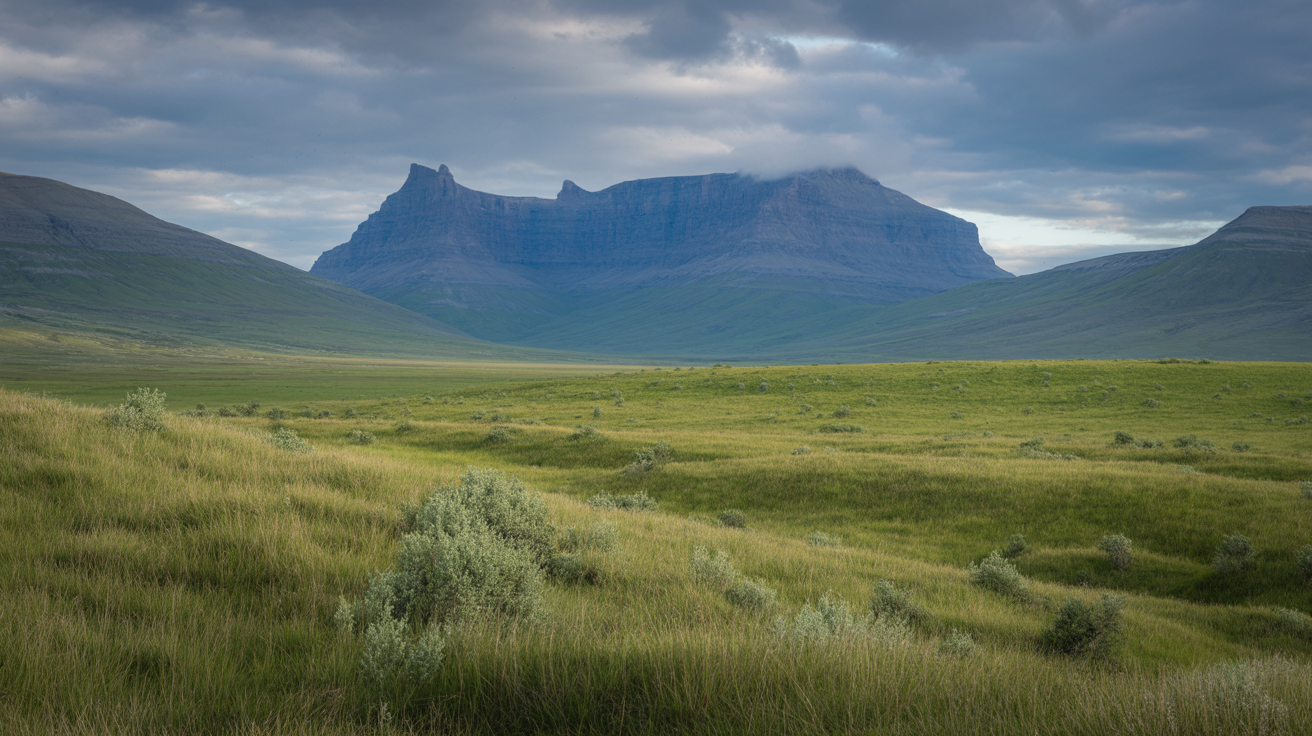 Various Continental Regions
Grassland
Open areas dominated by grasses rather than trees, supporting numerous herbivores and their predators.
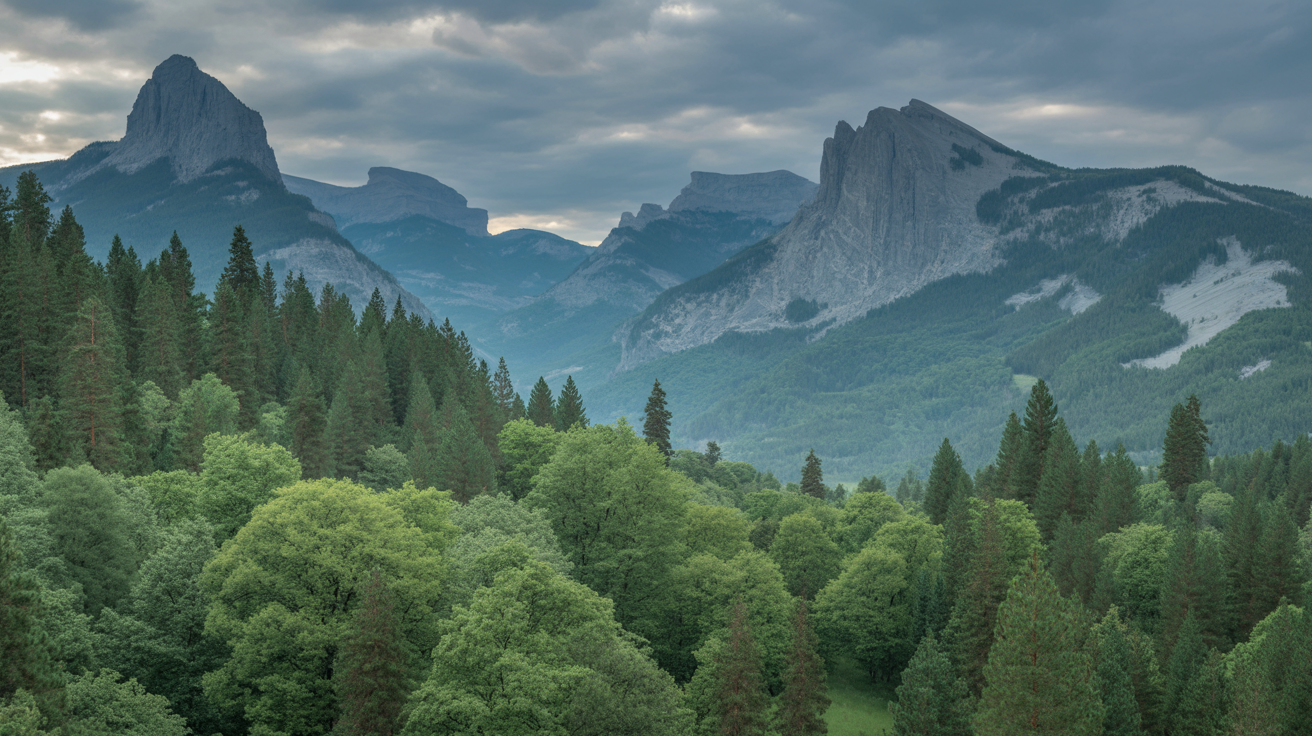 Global
Forest
Wooded areas with significant tree cover and diverse plant and animal communities.
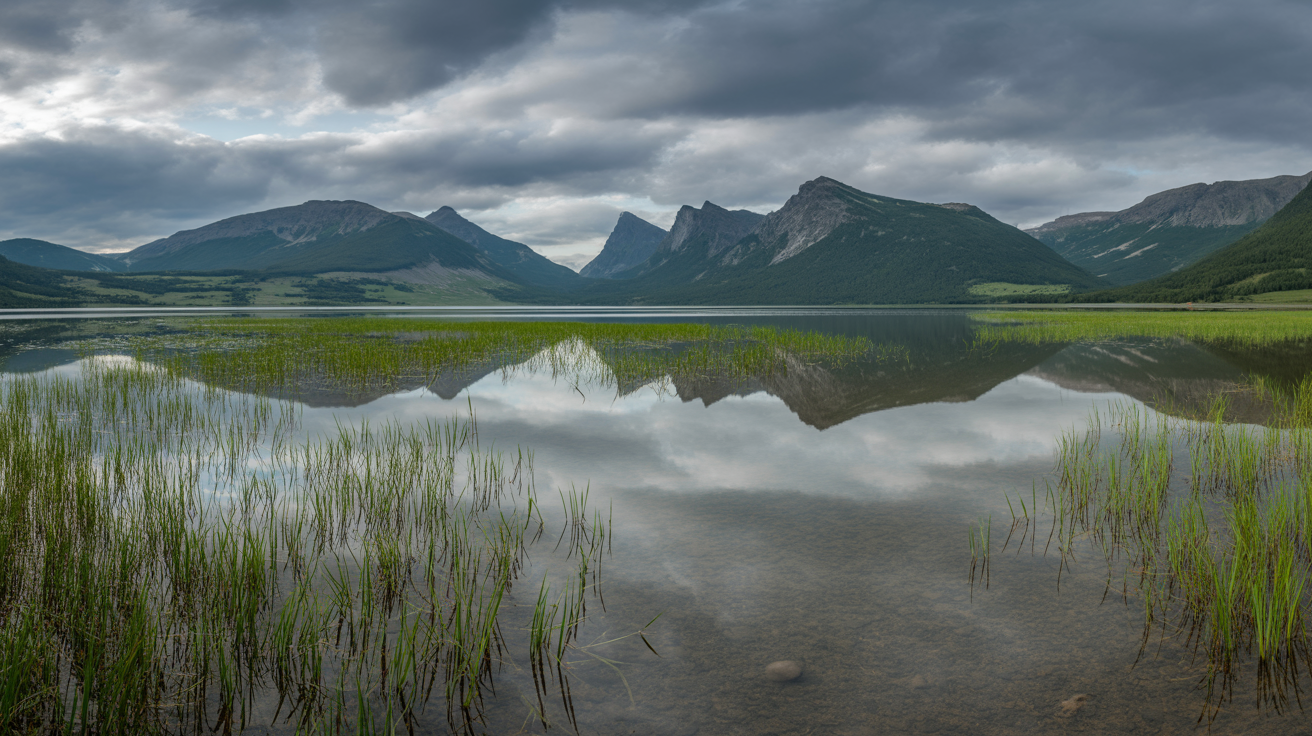 Global
Freshwater
Lakes, rivers, and wetlands with diverse aquatic ecosystems.
Conservation
The Marbled Salamander is currently classified as Least Concern on the IUCN Red List.
Threats & challenges
Although currently listed as Least Concern by the IUCN, marbled salamanders face several localized threats. Habitat loss and fragmentation due to urbanization, agriculture, and forestry reduce suitable breeding and foraging sites. Road mortality during seasonal migrations to breeding pools is a significant concern. Pollution, especially from pesticides and runoff, can impact both terrestrial adults and aquatic larvae. Climate change poses additional risks by altering precipitation patterns and the hydroperiod of breeding pools, potentially leading to reproductive failure. Despite these threats, populations remain stable across much of their range, though declines have been documented in areas of intense human activity.
Taxonomy
Scientific name
Ambystoma opacum
- Kingdom
- Animalia
- Phylum
- Chordata
- Class
- Amphibia
- Order
- Caudata
- Family
- Ambystomatidae
- Genus
- Ambystoma
- Species
- opacum
Where to see a marbled salamander
1 zoo and aquarium in 1 country are recorded as keeping this species.

Community notes
Share your observations about the Marbled Salamander.
No community notes yet. Be the first!
Discover more wildlife
More fascinating animals from the encyclopedia.