
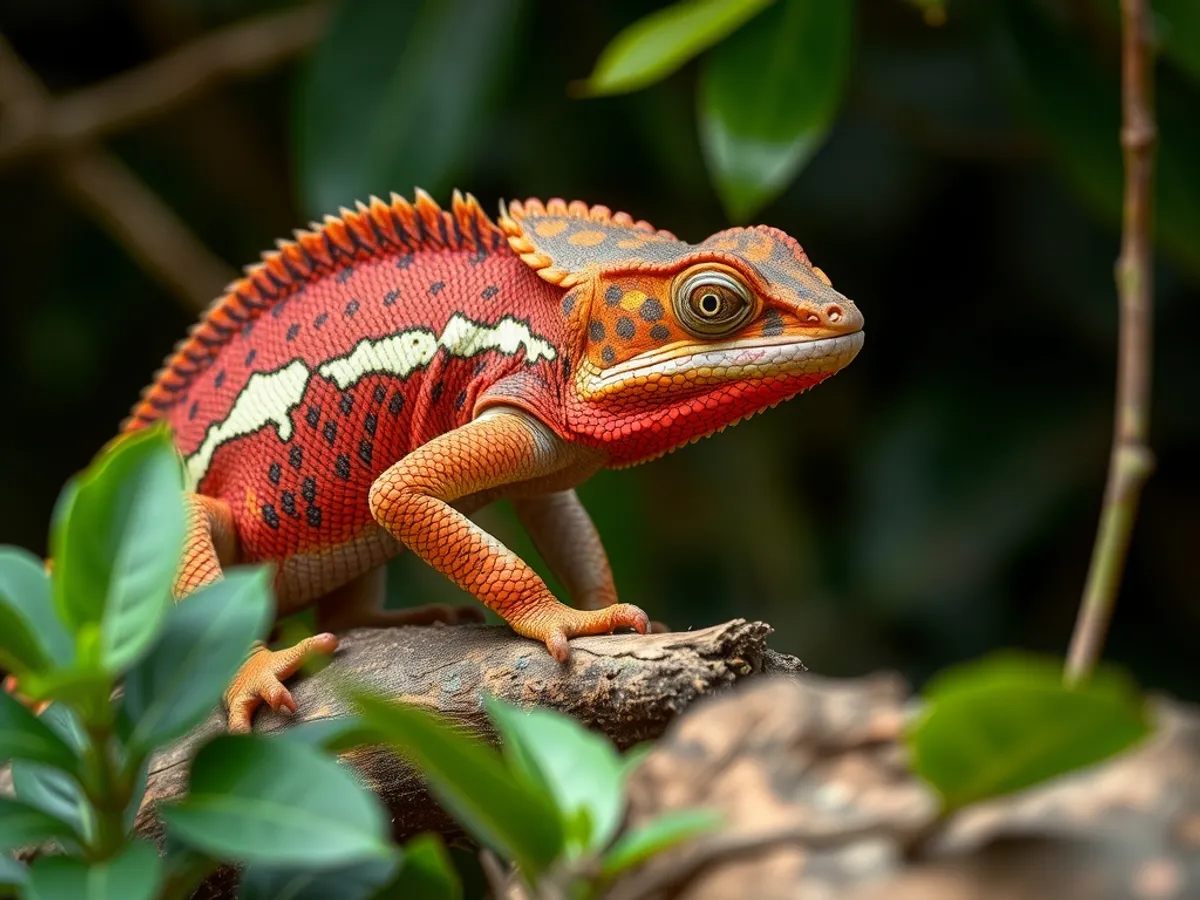
About the Meller's Chameleon
Meller's Chameleon is a large and striking species of chameleon native to the woodlands and savannas of East Africa. It is renowned for its impressive size, with adults reaching up to 2 feet in length, making it one of the largest chameleon species in the world. This chameleon displays a vibrant green coloration with white, yellow, or turquoise markings, and can change its color for communication or camouflage. Meller's Chameleon is primarily arboreal, spending most of its life in trees and bushes, and is known for its calm demeanor compared to other chameleons.
Fascinating facts
Incredible Tongue
Meller's Chameleon has a tongue that can extend up to twice its body length, allowing it to snatch prey with lightning speed.
Arboreal Lifestyle
This species spends nearly all of its life in trees and bushes, where it hunts, rests, and seeks shelter.
Largest African Chameleon
It holds the title of the largest chameleon native to mainland Africa, with some individuals reaching 60 cm (24 inches) in length.
Detailed description
Meller's Chameleon (Trioceros melleri) is the largest mainland African chameleon, with adults typically reaching 50–61 cm (20–24 in) in total length and weighing up to 600 grams, though exceptional individuals may exceed these measurements. Its robust body is laterally compressed, aiding in camouflage among branches, and features a prominent, singular rostral horn on the snout, especially well-developed in males. The skin is granular and exhibits a base color of vivid green, often overlaid with irregular white, yellow, or turquoise bands and spots, which can change rapidly in response to mood, temperature, or social interactions. The head bears a small casque, and the dorsal crest is lined with small, triangular tubercles. Eyes are large, turreted, and independently mobile, providing a nearly 360-degree field of vision crucial for detecting prey and predators. The prehensile tail and zygodactylous feet (two toes forward, three back) are highly adapted for arboreal life, allowing secure grasping of branches. Meller's Chameleon is primarily diurnal and solitary, exhibiting territorial behavior, especially among males. It is an ambush predator, relying on its long, sticky projectile tongue—often exceeding the length of its body—to capture a variety of invertebrates and occasionally small vertebrates. Reproduction is oviparous, with females laying large clutches of eggs after a prolonged gestation. This species is noted for its relatively calm disposition in captivity, though it can display threat postures when disturbed.
Did you know?
Meller's Chameleon can project its tongue up to twice the length of its body to catch prey!
Research & sources
Wikipedia summary
Trioceros melleri, with the common names Meller's chameleon and giant one-horned chameleon, is the largest species of chameleon from the African mainland.
Behaviour & social structure
Meller's Chameleon is predominantly arboreal and spends most of its life motionless among the foliage, relying on cryptic coloration and slow, rocking movements to avoid detection. It is a solitary species, with individuals maintaining exclusive territories; aggressive displays, such as color changes and lateral body flattening, are used to deter rivals. Feeding is primarily sit-and-wait: the chameleon remains still until prey—mainly large insects like locusts, mantids, and beetles—comes within range, then rapidly extends its tongue to capture it. In captivity, they have been observed to consume small birds and lizards opportunistically. Activity peaks during the early morning and late afternoon, with basking behavior common to regulate body temperature. At night, individuals sleep on exposed branches, often turning pale to blend with moonlit foliage. Social interactions are limited to brief encounters during the breeding season, and stress from overcrowding can lead to health issues.
Reproduction & life cycle
Breeding in Trioceros melleri typically coincides with the onset of the rainy season (November to March) in its native range. Males engage in ritualized combat for access to receptive females, displaying vibrant colors and engaging in pushing matches. Courtship involves head bobbing and gentle nudging. Females are oviparous, laying a single clutch of 30–80 eggs in a shallow nest dug into soft soil. The incubation period is notably long, ranging from 9 to 12 months at temperatures of 24–28°C (75–82°F). There is no parental care post-oviposition; hatchlings are independent from birth and exhibit adult-like behaviors. Sexual maturity is typically reached at 18–24 months. In captivity, successful breeding requires careful management of environmental conditions and minimizing stress.
Adaptations & survival
Meller's Chameleon exhibits several remarkable adaptations for arboreal predation and survival. Its independently rotating eyes allow simultaneous scanning of different visual fields, enhancing prey detection and predator avoidance. The projectile tongue, powered by specialized accelerator muscles and elastic collagen tissue, can extend up to twice the body length and strike with high speed and accuracy. Zygodactylous feet and a prehensile tail provide exceptional grip on branches, supporting its large size. The ability to change skin color serves multiple functions: camouflage, thermoregulation, and social signaling. The prominent rostral horn may play a role in intraspecific displays or mate selection. Additionally, slow, rhythmic movements mimic swaying leaves, reducing detection by predators.
Cultural significance
Meller's Chameleon is less prominent in African folklore than some other chameleon species, but chameleons in general are often associated with themes of transformation, patience, and adaptability in local mythologies. In some communities, chameleons are regarded with superstition—sometimes feared as omens or magical creatures, while in others, they are admired for their unique abilities. The striking appearance of T. melleri has made it a sought-after species in the exotic pet trade, though its specialized care requirements limit its popularity compared to smaller chameleons.
Recent research
Recent research on Trioceros melleri has focused on its reproductive physiology, color change mechanisms, and ecological role in East African woodlands. Studies using radio telemetry have begun to elucidate home range sizes and habitat preferences, revealing a preference for mid-elevation miombo woodlands. Genetic analyses have clarified its relationship to other Trioceros species, supporting its status as a distinct lineage. Captive breeding programs are being developed to reduce pressure on wild populations, with advances in incubation and husbandry protocols. Ongoing field studies are assessing the impact of habitat fragmentation and climate variability on population dynamics.
Videos
Habitat
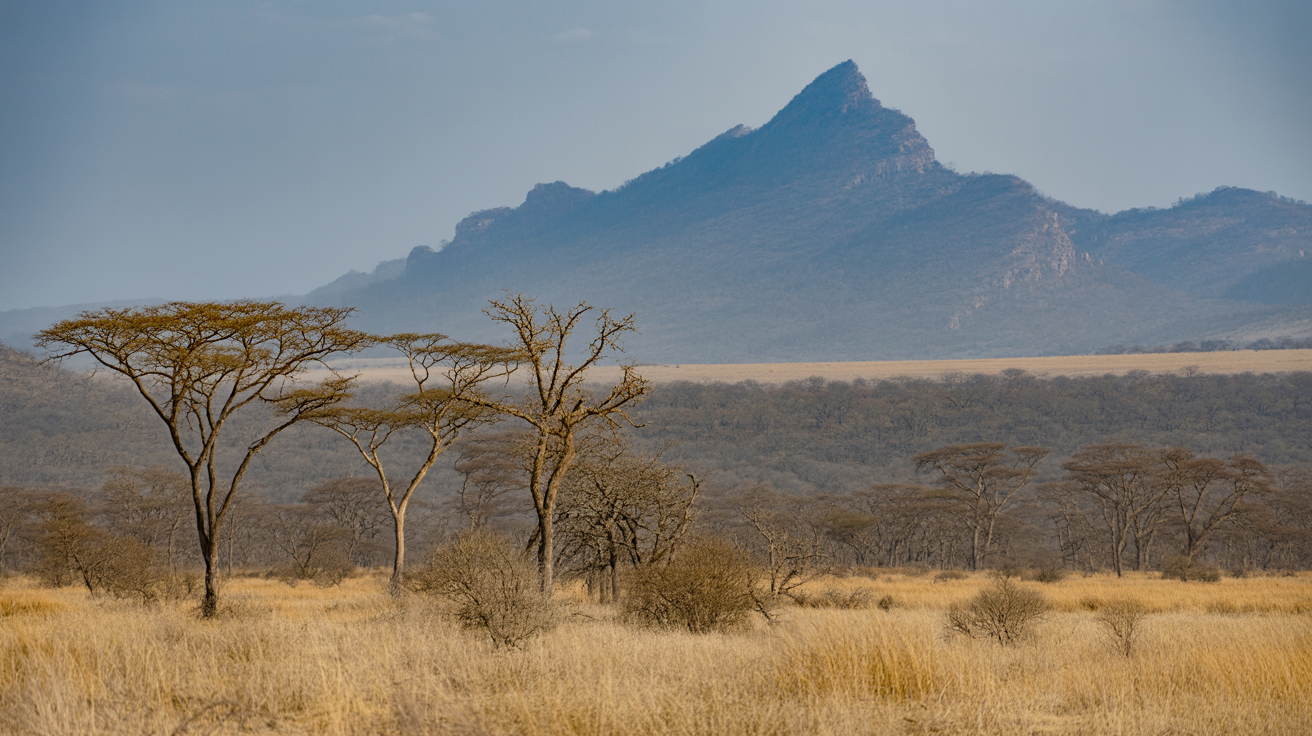
Woodlands and savanna

Conservation
The Meller's Chameleon is currently classified as Least Concern on the IUCN Red List.
Threats & challenges
Although currently listed as Least Concern by the IUCN, Meller's Chameleon faces several localized threats. Habitat loss due to agricultural expansion, deforestation, and urbanization in East Africa (notably Tanzania, Malawi, and Mozambique) is a growing concern. Collection for the international pet trade, particularly in the 1990s and early 2000s, has led to population declines in some areas. The species is sensitive to environmental changes and stress, making it vulnerable to habitat fragmentation. Climate change may alter rainfall patterns, impacting breeding success. Despite these pressures, populations remain stable in protected and remote regions, but ongoing monitoring is recommended.
Taxonomy
Scientific name
Trioceros melleri
- Kingdom
- Animalia
- Phylum
- Chordata
- Class
- Reptilia
- Order
- Squamata
- Family
- Chamaeleonidae
- Genus
- Trioceros
- Species
- melleri
Community notes
Share your observations about the Meller's Chameleon.
No community notes yet. Be the first!
Discover more wildlife
More fascinating animals from the encyclopedia.