
About the Milk Snake
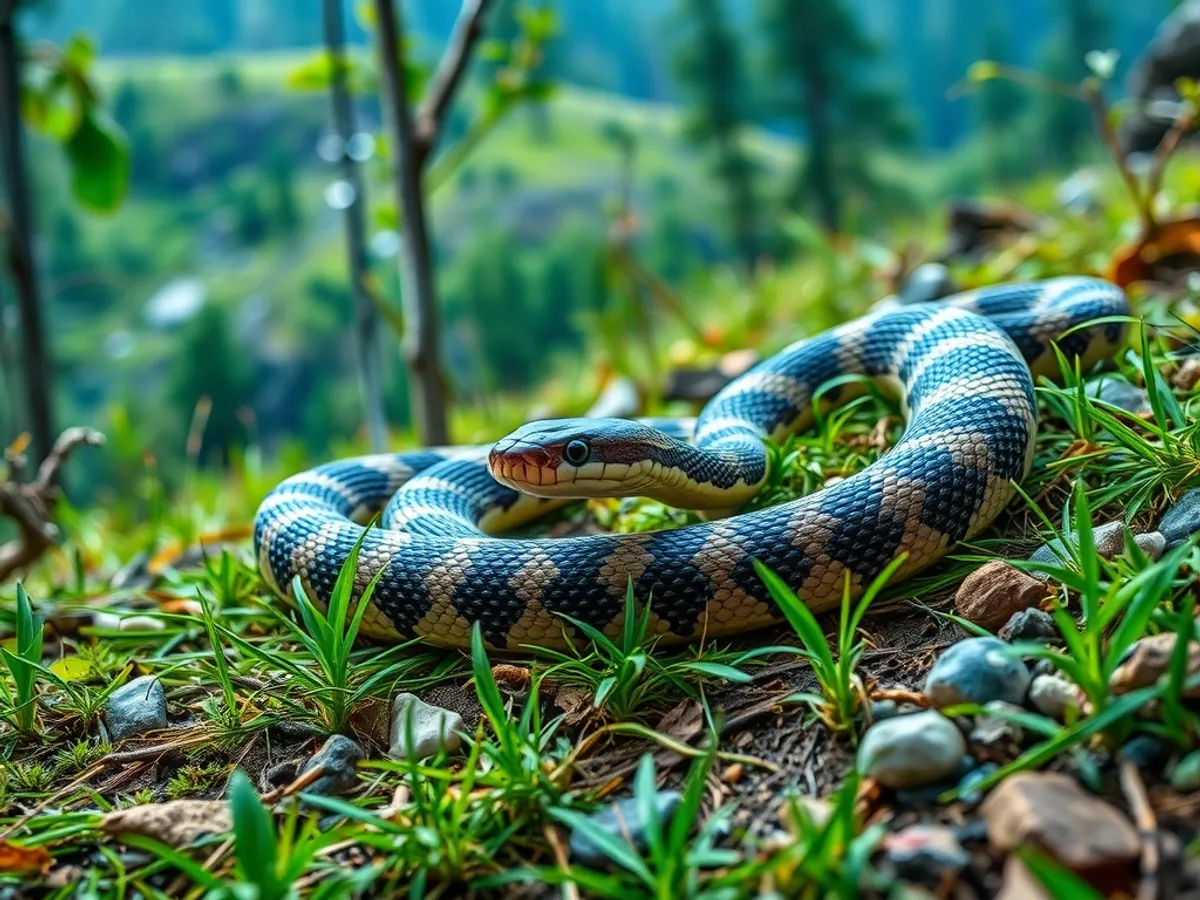
Lampropeltis triangulum is a constrictor with no venom whatsoever, yet its red, black and yellow banding has kept it alive for millennia by impersonating the deadly coral snakes it shares ground with. The old rhyme "red touches yellow, kills a fellow; red touches black, friend of Jack" works reasonably well in the southeastern United States, but it fails badly in Central and South America, where several genuinely dangerous coral snakes break the pattern — so the mnemonic is a regional rule of thumb, not a law of nature. The species once lumped roughly 25 subspecies across a range from southeastern Canada to Ecuador, though genetic work published in 2013 split that sprawling complex into several distinct species. The common name comes from a piece of folklore, not biology: farmers found them in barns and decided they were suckling milk from cows, when in fact the snakes were hunting the rodents that the grain attracted. Milk snakes are enthusiastic ophiophages, eating other snakes including venomous rattlesnakes, and they carry partial resistance to pit viper venom. They kill by constriction, tightening with each exhalation of the prey until circulation fails. Adults typically run 60 to 130 cm depending on the population, with tropical forms markedly larger than northern ones.
Fascinating facts
Vivid Coloration
The Milk Snake's bright bands of red, black, and yellow or white help it mimic the appearance of the venomous coral snake, providing protection from predators.
Nonvenomous Constrictor
Milk Snakes kill their prey by constriction, wrapping around and suffocating small animals before swallowing them whole.
Name Origin Myth
Their common name comes from the mistaken belief that they suck milk from cows; in reality, they are simply attracted to barns by rodent prey.
Detailed description
The milk snake (Lampropeltis triangulum) is a medium-sized, nonvenomous colubrid, typically ranging from 51 to 152 cm (20–60 inches) in length, with some regional variation among its 24 recognized subspecies. Its most distinctive feature is its bold, tri-colored banding pattern, which can include combinations of red, black, white, or yellow, arranged in rings that mimic the appearance of venomous coral snakes—a classic example of Batesian mimicry. The scales are smooth and glossy, contributing to the genus name 'Lampropeltis,' meaning 'shiny shield.' Milk snakes possess a slender, muscular body and a head only slightly wider than the neck, with round pupils and a forked tongue for chemoreception. They are primarily nocturnal or crepuscular, spending daylight hours concealed under debris or within burrows. Their diet is opportunistic and includes small mammals, birds, lizards, amphibians, and other snakes, including venomous species, as they are resistant to certain snake venoms. Milk snakes are solitary except during the breeding season and display secretive habits, rarely basking in the open. Reproduction is oviparous, with females laying clutches of 2–17 eggs in concealed, humid locations. Hatchlings emerge fully independent, measuring 15–28 cm (6–11 inches) and displaying brighter coloration than adults. Milk snakes are highly adaptable, occupying a range of habitats from forests and grasslands to rocky outcrops and agricultural areas, and are capable climbers and burrowers.
Did you know?
Milk Snakes can vibrate their tails to mimic rattlesnakes when threatened, even though they are nonvenomous.
Research & sources
Wikipedia summary
The milk snake or milksnake, is a species of kingsnake; up to 24 subspecies are sometimes recognized. Lampropeltis elapsoides, the scarlet kingsnake, was formerly classified as a 25th subspecies, but is now recognized as a distinct species. The subspecies have strikingly different appearances, and many of them have their own common names. Some authorities suggest that this species could be split into several separate species. They are not venomous to humans.
Behaviour & social structure
Milk snakes are primarily nocturnal, becoming most active at dusk and during the night, especially in warmer months. They are secretive and spend much of their time hidden under logs, rocks, or within leaf litter to avoid predators and extreme temperatures. When hunting, milk snakes use both olfactory and tactile cues to locate prey, employing constriction to subdue small mammals, birds, lizards, and other snakes. They are known to consume reptile eggs and have a notable resistance to the venom of pit vipers, allowing them to prey on venomous snakes. Milk snakes are generally non-aggressive towards humans and will attempt to flee when threatened, but may vibrate their tails, emit musk, or bite if handled. Social interactions are minimal outside of the breeding season, and individuals maintain solitary home ranges. During colder months, milk snakes enter brumation, often communally, in underground refuges such as mammal burrows or rock crevices.
Reproduction & life cycle
Breeding occurs in spring, shortly after emergence from brumation, with males seeking out females using pheromone trails. Courtship involves tactile stimulation and body alignment, followed by copulation. Females lay a single clutch per year, typically from late spring to midsummer, depositing 2–17 leathery eggs in moist, concealed locations such as rotting logs, leaf litter, or underground chambers. Incubation lasts 40–62 days, depending on temperature and humidity. There is no parental care; hatchlings are fully independent upon emergence and possess vibrant coloration that fades with age. Sexual maturity is reached at 2–4 years, depending on subspecies and environmental conditions.
Adaptations & survival
Milk snakes exhibit several key adaptations for survival. Their striking coloration is a form of Batesian mimicry, deterring predators by resembling the venomous coral snake. They possess smooth, glossy scales that reduce friction and facilitate movement through dense vegetation or underground. Their resistance to certain snake venoms allows them to prey on other snakes, including venomous species. Milk snakes are capable climbers and burrowers, enabling them to exploit a variety of microhabitats. Their secretive, nocturnal habits reduce predation risk and competition for food. Physiologically, they can tolerate a wide range of temperatures and humidity levels, contributing to their broad geographic distribution.
Cultural significance
Milk snakes have played a role in North American folklore, most notably the myth that they suck milk from cows, which is biologically impossible. This myth likely arose from their frequent presence in barns and agricultural settings, where they hunt rodents. Their resemblance to coral snakes has made them both feared and respected, and they are sometimes featured in local legends as omens or symbols of transformation. In modern times, milk snakes are popular in the pet trade due to their striking appearance and generally docile temperament. They are also used in educational programs to teach about mimicry and snake ecology.
Recent research
Recent phylogenetic studies using molecular data have prompted taxonomic revisions within the Lampropeltis genus, leading to the elevation of some former subspecies, such as Lampropeltis elapsoides (scarlet kingsnake), to full species status. Ongoing research focuses on the genetic diversity and evolutionary relationships among the 24 recognized subspecies, with some evidence suggesting further cryptic speciation. Studies on venom resistance mechanisms in milk snakes have provided insights into their ability to prey on venomous snakes. Ecological research continues to investigate their role in controlling rodent populations and their adaptability to fragmented landscapes.
Videos
Habitat
Forests, grasslands, rocky hillsides
 Various Continental Regions
Grassland
Open areas dominated by grasses rather than trees, supporting numerous herbivores and their predators.
 Elevated Terrain
Mountain
High-altitude environments with varying climates and specialized wildlife adapted to rugged terrain and thin air.
 Global
Forest
Wooded areas with significant tree cover and diverse plant and animal communities.
 Global
Freshwater
Lakes, rivers, and wetlands with diverse aquatic ecosystems.
Conservation
The Milk Snake is currently classified as Least Concern on the IUCN Red List.
Threats & challenges
Currently, the milk snake is classified as Least Concern by the IUCN, with stable populations across most of its range. However, localized threats include habitat destruction due to agriculture, urbanization, and deforestation. Road mortality is a significant cause of death in some areas, as is persecution by humans who mistake them for venomous snakes. Collection for the pet trade has impacted certain subspecies, though most populations remain robust. Climate change may alter habitat suitability and prey availability in the future. Conservation efforts focus on habitat preservation and public education to reduce unnecessary killing.
Taxonomy
Scientific name
Lampropeltis triangulum
- Kingdom
- Animalia
- Phylum
- Chordata
- Class
- Reptilia
- Order
- Squamata
- Family
- Colubridae
- Genus
- Lampropeltis
- Species
- triangulum
Where to see a milk snake
6 zoos and aquariums in 3 countries are recorded as keeping this species.
 Śląski Ogród Zoologiczny🇵🇱 Chorzów, Poland
- 🦁The Maryland Zoo in Baltimore🇺🇸 Baltimore, United States
- 🦁Topeka Zoo🇺🇸 Topeka, United States
 Birmingham Zoo🇺🇸 United States
 Zoo Montana🇺🇸 Billings, United States
Community notes
Share your observations about the Milk Snake.
No community notes yet. Be the first!
Discover more wildlife
More fascinating animals from the encyclopedia.