
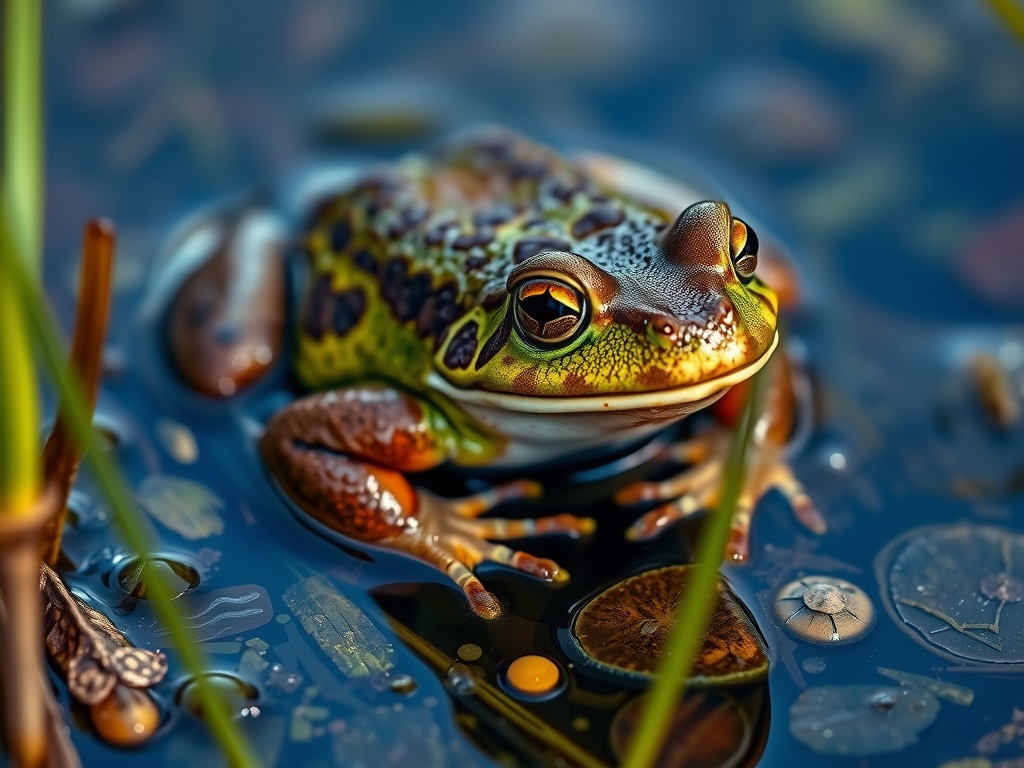
About the Moor Frog
The Moor Frog is a small, slender amphibian native to Europe and parts of Asia, particularly favoring wet meadows, marshes, and forested wetlands. Notably, males turn bright blue for a few days during the breeding season, a striking adaptation for attracting females. This species is highly adaptable, able to survive in a variety of freshwater habitats, including temporary pools and slow-moving streams. Its diet consists mainly of insects, spiders, and other small invertebrates, supporting healthy wetland ecosystems.
Fascinating facts
Blue Transformation
Male Moor Frogs turn a vivid blue color for just a few days during the spring mating season to attract females.
Cold Survivors
Moor Frogs can survive freezing winter temperatures by producing natural antifreeze compounds in their bodies.
Insect Hunters
Their diet includes a variety of insects, spiders, and other small invertebrates, helping control pest populations in their habitats.
Detailed description
The Moor Frog (Rana arvalis) is a medium-sized anuran, with adults typically measuring 5–7 cm in length, though females may reach up to 8 cm. Its body is slender and streamlined, with long hind limbs adapted for jumping and swimming. Dorsal coloration varies from reddish-brown to olive or grayish, often with a dark mask-like marking behind the eyes and a light vertebral stripe. The ventral surface is pale, sometimes with faint mottling. During the brief breeding period, males exhibit a remarkable transformation, turning bright sky-blue for several days—a phenomenon linked to sexual signaling and mate selection. Moor Frogs are primarily nocturnal or crepuscular, spending daylight hours hidden among dense vegetation or submerged. They are highly aquatic during the breeding season but become more terrestrial in summer, dispersing into meadows, forests, and even agricultural landscapes. Their skin is smooth and moist, aiding in cutaneous respiration, and they possess well-developed tympana for detecting sound. The species is known for its exceptional freeze tolerance, surviving subzero temperatures by producing cryoprotectants that prevent cellular damage. This adaptation enables populations to persist in northern latitudes and continental climates across Eurasia.
Did you know?
Despite their small size, Moor Frogs have a highly variable croaking call that can be heard up to several hundred meters away during mating season.
Research & sources
Wikipedia summary
The moor frog is a slim, reddish-brown, semiaquatic amphibian native to Europe and Asia. Moor frogs are known for their ability to freeze solid and survive thawing. The frog makes use of various cryoprotectants i.e. antifreeze that decrease its internal freezing temperature. The species is distributed over a large range, covering a significant portion of Eurasia. Male moor frogs are known to turn blue temporarily during the height of mating season. This coloration is assumed to signal a mate's fitness. Moor frogs typically mate through multimale amplexus a form of polyandry.
Behaviour & social structure
Moor Frogs are generally solitary outside the breeding season, exhibiting territoriality in optimal feeding areas. They are opportunistic carnivores, preying on a variety of invertebrates such as insects, arachnids, annelids, and mollusks. Hunting is primarily ambush-based: the frog remains motionless, then lunges at passing prey with a rapid extension of its sticky tongue. Activity peaks at dusk and dawn, with individuals foraging along water margins or in damp undergrowth. During the breeding season, males congregate in shallow waters, forming dense choruses to attract females with a distinctive, low-pitched, quacking call. Social interactions are most pronounced at this time, with frequent physical competition among males. Outside of breeding, Moor Frogs exhibit site fidelity to favored feeding and overwintering locations.
Reproduction & life cycle
Breeding occurs in early spring, often immediately after ice melt, when water temperatures reach 6–10°C. Males arrive first at breeding sites, typically shallow, sunlit pools or flooded meadows. The species is notable for polyandrous mating, with multiple males sometimes clasping a single female in a phenomenon known as 'multimale amplexus.' Fertilization is external: females lay up to 1,000–4,000 eggs in gelatinous clumps attached to submerged vegetation. Embryonic development is rapid, with hatching occurring within 7–21 days depending on temperature. Larvae (tadpoles) undergo metamorphosis over 6–12 weeks, with timing influenced by water temperature and food availability. There is no parental care post-oviposition; both adults and larvae are vulnerable to predation. Sexual maturity is typically reached at 2–3 years of age.
Adaptations & survival
The Moor Frog’s most remarkable adaptation is its freeze tolerance. As temperatures drop, the frog accumulates glucose and other cryoprotectants in its tissues, which lower the freezing point of body fluids and protect cells from ice damage. Up to 65% of the body water can freeze without fatal consequences. This adaptation allows the species to overwinter in shallow terrestrial burrows or under leaf litter, surviving temperatures as low as -4°C to -6°C. The temporary blue coloration of males during breeding is a unique sexual signal, likely enhancing visibility in turbid waters and serving as an honest indicator of male fitness. Morphologically, their long legs and webbed feet facilitate efficient swimming and escape from predators. Their permeable skin enables cutaneous respiration, crucial in oxygen-poor waters during early spring.
Cultural significance
The Moor Frog holds modest cultural significance in parts of its range, often featuring in local folklore as a symbol of spring and renewal due to its early breeding and striking blue coloration. In some regions, its presence is considered an indicator of healthy wetlands. While not widely used in traditional medicine, the species is occasionally referenced in Slavic and Scandinavian tales, where frogs are associated with transformation and fertility. Conservation efforts in Europe have sometimes used the Moor Frog as a flagship species for wetland restoration projects.
Recent research
Recent research has focused on the genetic and physiological mechanisms underlying freeze tolerance, with studies revealing the upregulation of specific genes involved in cryoprotectant synthesis and antioxidant defense. Population genetic analyses have shown significant regional differentiation, likely reflecting postglacial recolonization patterns. Ongoing studies are investigating the effects of endocrine-disrupting chemicals on reproductive success and the impacts of climate-driven habitat changes on breeding phenology. The species is also used as a model organism in studies of sexual selection, particularly regarding the evolution of temporary male coloration and multimale amplexus.
Videos
Habitat
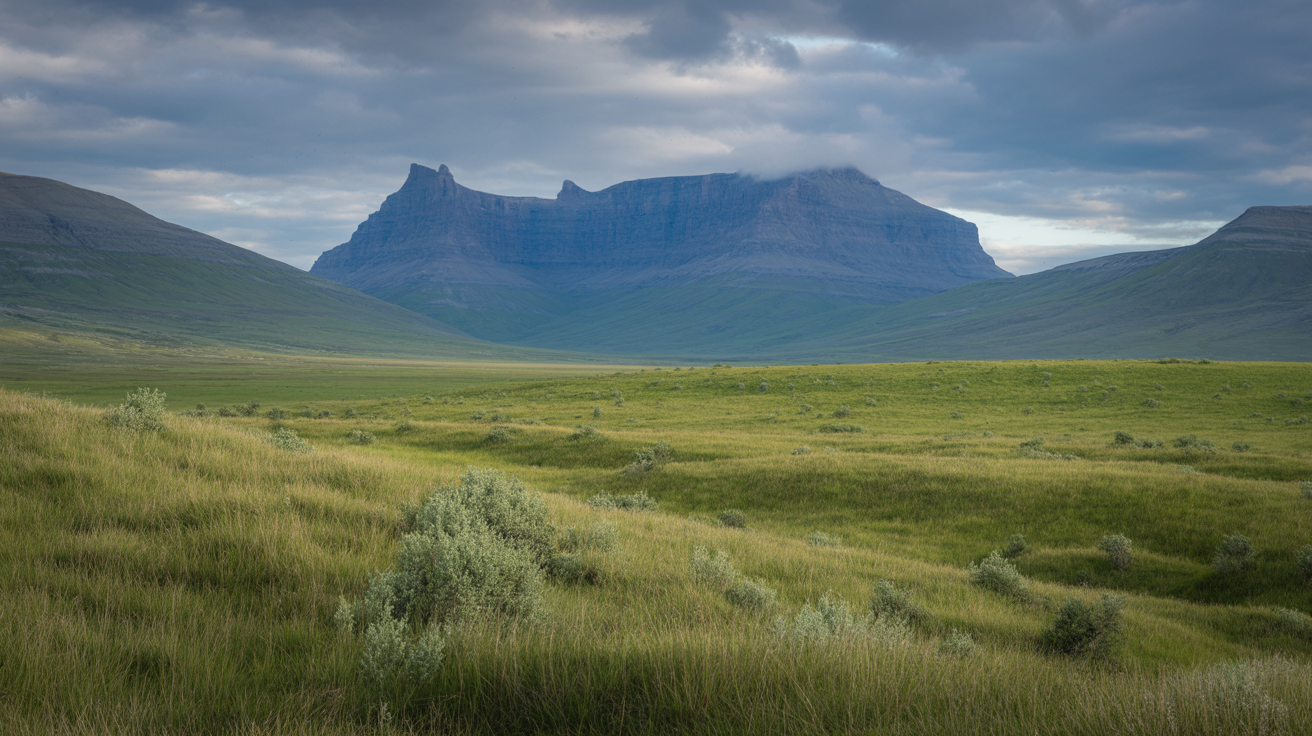
Wetlands and marshy areas
 Various Continental Regions
Grassland
Open areas dominated by grasses rather than trees, supporting numerous herbivores and their predators.
 Global
Forest
Wooded areas with significant tree cover and diverse plant and animal communities.
 Global
Freshwater
Lakes, rivers, and wetlands with diverse aquatic ecosystems.
Conservation
The Moor Frog is currently classified as Least Concern on the IUCN Red List.
Threats & challenges
Despite being classified as Least Concern by the IUCN, Moor Frogs face several localized threats. Habitat loss and fragmentation due to wetland drainage, agricultural expansion, and urbanization are primary concerns. Pollution from pesticides and fertilizers can disrupt larval development and reduce reproductive success. Climate change poses additional risks by altering hydroperiods of breeding sites and increasing the frequency of droughts. Road mortality during seasonal migrations and the spread of emerging infectious diseases (e.g., chytridiomycosis) also threaten some populations. Nevertheless, the species’ broad ecological tolerance and wide distribution buffer it against rapid population declines.
Taxonomy
Scientific name
Rana arvalis
- Kingdom
- Animalia
- Phylum
- Chordata
- Class
- Amphibia
- Order
- Anura
- Family
- Ranidae
- Genus
- Rana
- Species
- arvalis
Community notes
Share your observations about the Moor Frog.
No community notes yet. Be the first!
Discover more wildlife
More fascinating animals from the encyclopedia.