
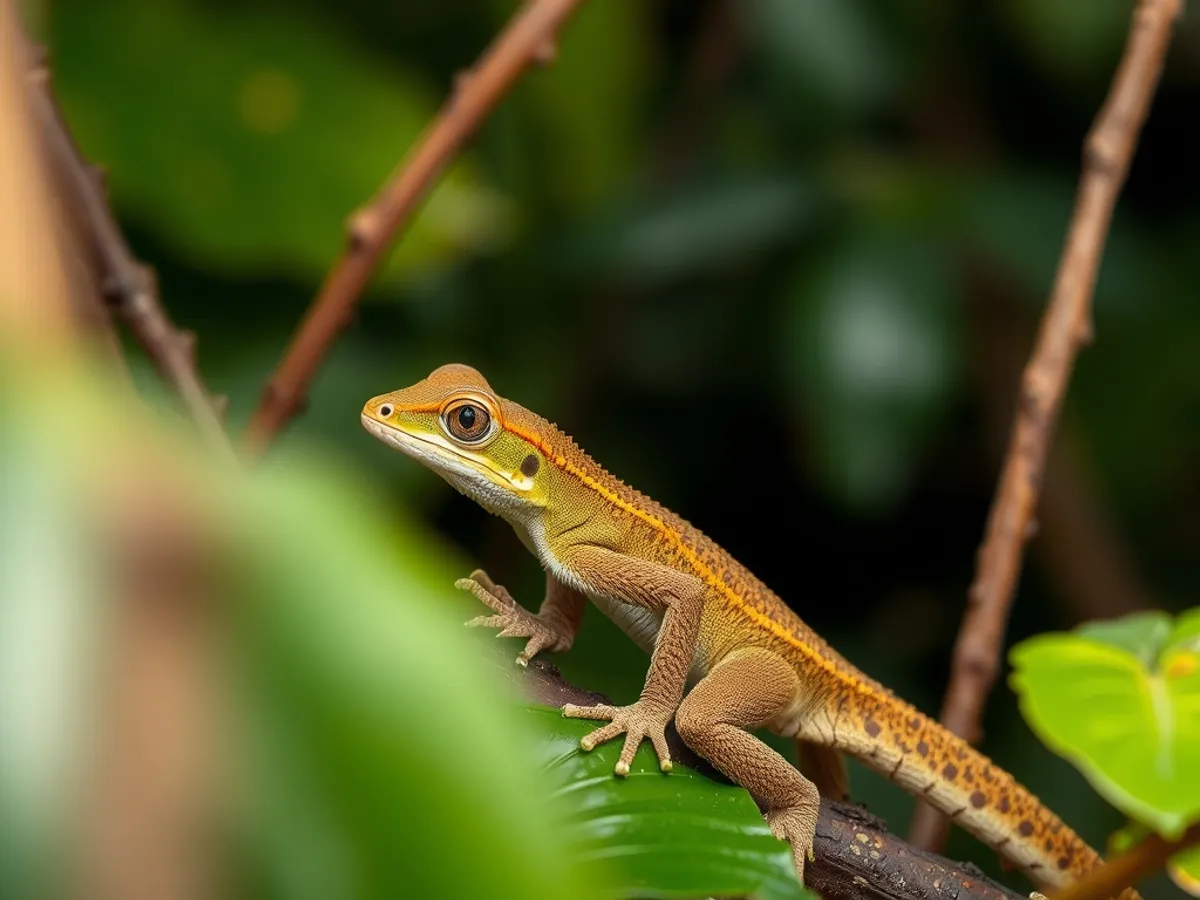
About the Mossy Leaf-Tailed Gecko
Uroplatus sikorae is one of the most complete camouflage systems in any vertebrate. Its crypsis does not rest on colour alone: a fringe of flattened dermal flaps runs down each side of the body, along the jaw and around the limbs, and when the gecko presses itself flat to a lichen-covered trunk these flaps spread out and scatter the shadow that would otherwise betray its outline. The result is that the animal has essentially no edge. The skin is mottled in greys, greens and browns that mimic bark and moss, and the gecko can adjust the tone. It is nocturnal and endemic to the eastern rainforests of Madagascar, and by day it sits head-down on a trunk, motionless, eyes lidless and covered by a transparent scale that it cleans with its tongue. If found, it does something quite different from hiding: it opens its mouth wide to reveal a startling bright red-orange lining and raises and waves its flattened, leaf-shaped tail. The genus Uroplatus is heavily trafficked for the pet trade and is entirely dependent on intact primary forest; several species are threatened. The eyes have a huge pupil that opens to a full circle at night and closes to a series of pinholes in daylight, with each pinhole forming its own image on the retina — a design that gives excellent colour vision in near-darkness.
Fascinating facts
Camouflage Expert
The Mossy Leaf-Tailed Gecko's appearance mimics moss, bark, and dead leaves, making it nearly invisible in its natural rainforest environment.
Unique Eye Care
This gecko lacks eyelids and uses its long tongue to clean and moisten its large, lidless eyes.
Tail Drop Defense
When threatened, the Mossy Leaf-Tailed Gecko can shed its tail to distract predators, a process known as autotomy.
Detailed description
The Mossy Leaf-Tailed Gecko (Uroplatus sikorae) is a medium-sized arboreal lizard, typically reaching a snout-vent length of 8–10 cm, with a total length including the tail of up to 20 cm. Its body is laterally compressed and adorned with elaborate dermal flaps along the head, body, and limbs, which help break up its outline and enhance its camouflage against mossy and lichen-covered bark. The skin coloration varies from mottled green, brown, gray, to yellow, often matching the specific microhabitat. Its broad, leaf-shaped tail is flattened and fringed, further aiding in concealment. The gecko has large lidless eyes with vertical pupils, providing excellent night vision for its nocturnal lifestyle. To avoid detection, it remains motionless during the day, pressed flat against tree trunks. Uroplatus sikorae is primarily insectivorous, preying on a variety of arthropods, but may also consume smaller vertebrates. It is a solitary species, with individuals occupying overlapping home ranges but rarely interacting outside of the breeding season. Reproduction is oviparous, with females laying small clutches of eggs in concealed locations. The Mossy Leaf-Tailed Gecko's extraordinary camouflage and cryptic behavior make it one of the most elusive reptiles in Madagascar's rainforests.
Did you know?
Despite their extraordinary camouflage, Mossy Leaf-Tailed Geckos can drop their tails as a last-resort defense mechanism to escape predators.
Research & sources
Behaviour & social structure
Uroplatus sikorae is strictly nocturnal, emerging at dusk to hunt and remaining active throughout the night. It employs a sit-and-wait predatory strategy, relying on its camouflage to ambush passing prey such as crickets, moths, beetles, and occasionally spiders or small vertebrates. The gecko uses its prehensile toes, equipped with adhesive lamellae, to climb vertical surfaces and navigate the forest canopy with agility. During the day, it adopts a flattened posture against tree bark, aligning its dermal flaps to minimize shadows and enhance camouflage. Social interactions are minimal; individuals are territorial and may display threat postures or vocalizations if confronted by conspecifics. Communication is primarily visual and tactile, with limited use of vocalizations during courtship or territorial disputes. The species is known for its ability to shed its tail (autotomy) as a defense mechanism, with the tail regenerating over time.
Reproduction & life cycle
The breeding season for Uroplatus sikorae typically coincides with the onset of the rainy season (November to March) in Madagascar. Courtship involves visual displays and tactile interactions, with males approaching females and performing head-bobbing or tail-waving behaviors. After mating, females lay 2–4 leathery eggs per clutch, often in concealed crevices or beneath leaf litter on the forest floor. Incubation lasts approximately 60–90 days, depending on ambient temperature and humidity. There is no parental care post-oviposition; hatchlings are independent from birth and possess fully developed camouflage. Females may lay multiple clutches per season if conditions are favorable.
Adaptations & survival
Uroplatus sikorae exhibits a suite of specialized adaptations for arboreal and nocturnal life. Its cryptic coloration and elaborate dermal flaps provide exceptional camouflage, reducing predation risk. The flattened body and tail allow it to press tightly against substrates, while the fringed skin minimizes shadow casting. Large, sensitive eyes with vertical pupils enhance night vision, crucial for nocturnal hunting. Toes are equipped with expanded adhesive pads, enabling efficient climbing on smooth or rough surfaces. The species can autotomize its tail to distract predators, with subsequent regeneration. Behavioral adaptations include motionless daytime resting and precise alignment with tree bark to maximize concealment.
Cultural significance
While not widely featured in Malagasy folklore, the Mossy Leaf-Tailed Gecko is admired locally and internationally for its remarkable camouflage and is sometimes regarded as a symbol of Madagascar's unique biodiversity. In recent years, it has become an ambassador species for rainforest conservation efforts. There are no known traditional uses, but its popularity in the exotic pet trade has increased its visibility and, unfortunately, its risk of exploitation.
Recent research
Recent research has focused on the biomechanics of Uroplatus sikorae's camouflage, including studies on the microstructure of its skin and the optical properties that enable background matching. Genetic studies have revealed considerable cryptic diversity within the Uroplatus genus, suggesting the presence of undescribed species or subspecies. Conservation biologists are investigating the impacts of habitat fragmentation and the effectiveness of protected areas in maintaining viable populations. Ongoing field studies are monitoring population densities, reproductive success, and responses to environmental change. Advances in non-invasive monitoring, such as camera trapping and environmental DNA, are improving detection and study of this elusive species.
Sources
A Review of the Genus Uroplatus (Squamata: Gekkonidae): Taxonomy, Distribution, and Conservation
Glaw, F. & Vences, M. (2007)
scientificUroplatus sikorae: The IUCN Red List of Threatened Species 2020
IUCN SSC Amphibian and Reptile Specialist Group
conservationVideos
Habitat
Tropical rainforest
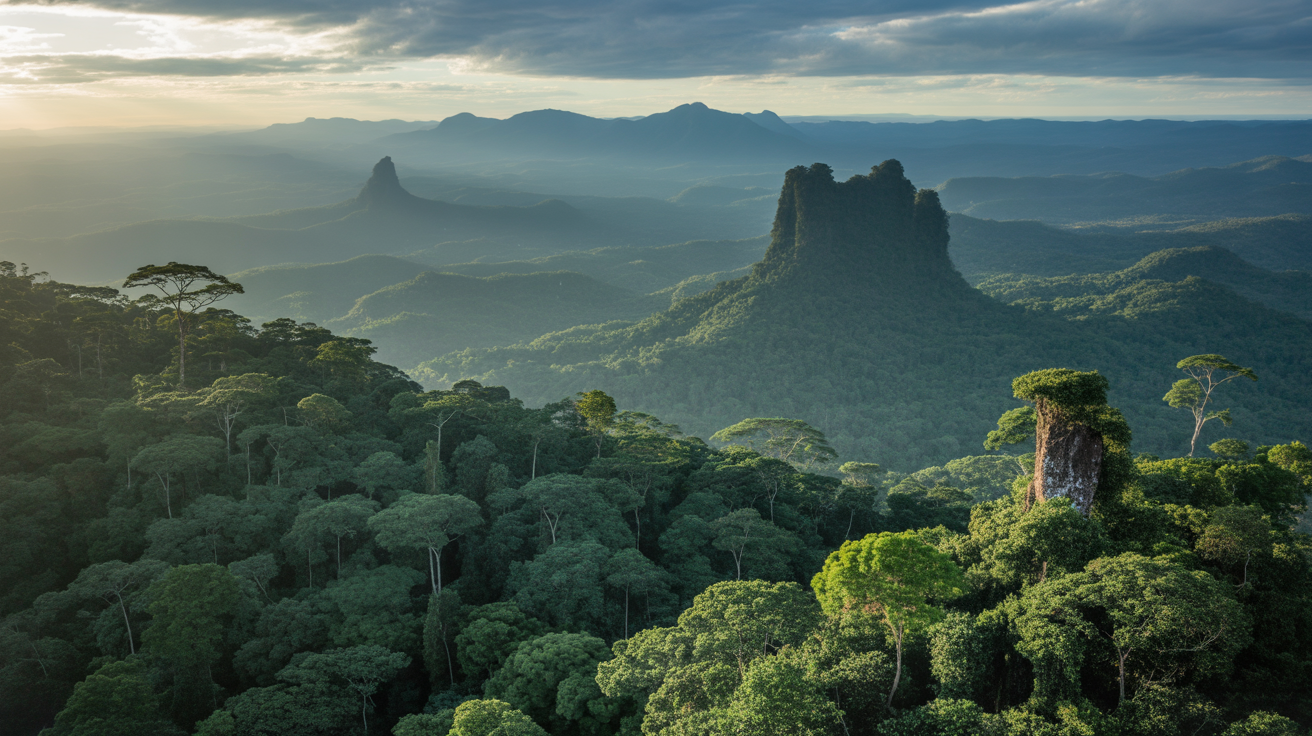

Conservation
The Mossy Leaf-Tailed Gecko is currently classified as Vulnerable on the IUCN Red List.
Threats & challenges
The Mossy Leaf-Tailed Gecko faces significant threats from habitat loss due to deforestation, slash-and-burn agriculture, and illegal logging in Madagascar. Collection for the international pet trade also poses a risk, as the species is highly sought after for its unique appearance. Fragmentation of rainforest habitats limits population connectivity and genetic diversity. Climate change may further impact its specialized microhabitats. The IUCN lists Uroplatus sikorae as Vulnerable, with declining population trends. Conservation challenges include enforcing habitat protection, regulating trade, and increasing local awareness of the species' ecological importance.
Taxonomy
Scientific name
Uroplatus sikorae
- Kingdom
- Animalia
- Phylum
- Chordata
- Class
- Reptilia
- Order
- Squamata
- Family
- Gekkonidae
- Genus
- Uroplatus
- Species
- sikorae
Where to see a mossy leaf-tailed gecko
1 zoo and aquarium in 1 country are recorded as keeping this species.

Community notes
Share your observations about the Mossy Leaf-Tailed Gecko.
No community notes yet. Be the first!
Discover more wildlife
More fascinating animals from the encyclopedia.