
About the Mountain Yellow-legged Frog
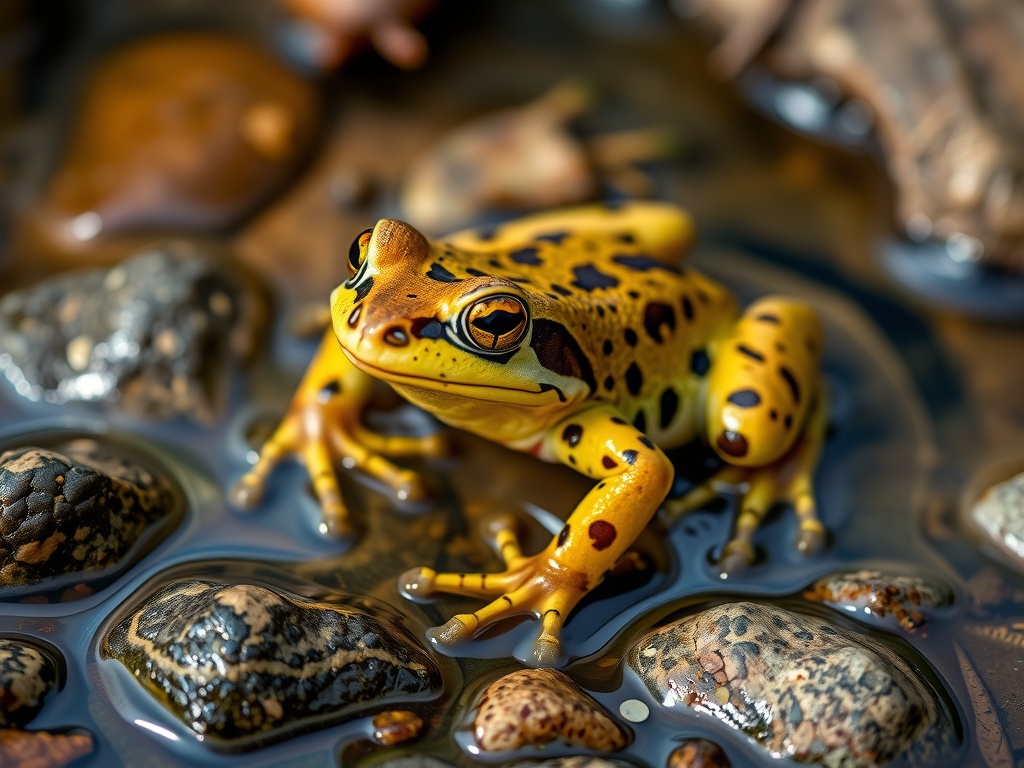
The Mountain Yellow-legged Frog is a medium-sized amphibian native to the mountainous regions of California. Recognizable by its yellowish underbelly and mottled brown or olive skin, this frog spends much of its life in or near cold, clear mountain streams and lakes. It is well adapted to high elevations and can often be found basking on sunny rocks near water. Once abundant, its populations have dramatically declined due to habitat loss, disease, and introduction of non-native predators.
Fascinating facts
Unique Hibernation
This frog can survive long, cold winters by hibernating underwater, sometimes under ice, for up to seven months.
High Elevation Specialist
It thrives in high-altitude environments, usually above 4,500 feet, in the Sierra Nevada and Southern California mountains.
Disease Threat
The species is highly susceptible to chytrid fungus, a deadly pathogen that has devastated amphibian populations worldwide.
Detailed description
The Mountain Yellow-legged Frog (Rana muscosa) is a medium-sized anuran, typically measuring 40–80 mm in snout-vent length, with females generally larger than males. Its dorsal coloration ranges from brown to olive or gray, often with dark blotches or flecks, while the ventral surface is characteristically yellow to orange, especially on the hind limbs and groin. The skin is granular, providing some protection against desiccation and predators. The head is broad with a rounded snout, and the eyes are prominent, aiding in both aquatic and terrestrial vision. This species exhibits well-developed, partially webbed hind feet, facilitating strong swimming ability in swift mountain streams and lakes. Mountain Yellow-legged Frogs are primarily diurnal, often observed basking on rocks or stream banks during daylight hours. They are highly aquatic, spending most of their life in or near cold, clear, high-elevation waters between 1,200 and 3,650 meters. Their vocalizations are relatively quiet and infrequent, with males producing a low, rattling call during the breeding season. The species is known for its site fidelity, often returning to the same breeding pools year after year.
Did you know?
Over 90% of Mountain Yellow-legged Frog populations have disappeared from their historic range, making them one of North America's most endangered amphibians.
Research & sources
Wikipedia summary
The mountain yellow-legged frog, also known as the southern mountain yellow-legged frog, is a species of true frog endemic to California in the United States. It occurs in the San Jacinto Mountains, San Bernardino Mountains, and San Gabriel Mountains in Southern California and the Southern Sierra Nevada. It is a federally listed endangered species, separated into two distinct population segments (DPS): a northern DPS, listed endangered in 2014, and a southern DPS that was listed endangered in 2002.
Behaviour & social structure
Rana muscosa is largely solitary outside of the breeding season, although loose aggregations may form in optimal basking or feeding sites. Their activity peaks during warm, sunny days when they emerge to bask and forage. They are opportunistic carnivores, preying on aquatic and terrestrial invertebrates such as insects, spiders, and occasionally small vertebrates like tadpoles or fish fry. Foraging is typically done by ambush or slow stalking, using their sticky tongues to capture prey. When threatened, they may dive into water and hide among submerged rocks or aquatic vegetation. They exhibit a freeze response to avoid detection by predators. During winter, individuals enter a state of torpor, sheltering under rocks or in mud at the bottom of streams and lakes.
Reproduction & life cycle
Breeding occurs from late spring to early summer (May–July), triggered by snowmelt and rising water temperatures. Males arrive at breeding sites first and call to attract females, though their calls are faint and often difficult to detect. Amplexus is axillary, with males grasping females behind the forelimbs. Females lay egg masses containing 100–350 eggs, attaching them to submerged vegetation or rocks in shallow water. The eggs hatch in 18–21 days, depending on temperature. Tadpoles are slow-growing, often requiring two to four years to metamorphose due to the cold, nutrient-poor environments. There is no parental care after egg deposition. Juveniles reach sexual maturity at 3–4 years.
Adaptations & survival
Mountain Yellow-legged Frogs possess several adaptations for high-elevation life. Their granular skin reduces water loss and provides some resistance to cold temperatures. The yellow pigmentation on the ventral surface may serve as camouflage among sunlit rocks and aquatic vegetation. Their extended larval period allows tadpoles to overwinter under ice, surviving in low-oxygen conditions. Behavioral thermoregulation, such as basking, helps them maintain body temperature in cold environments. Their strong swimming ability and site fidelity aid in surviving flash floods and variable mountain hydrology.
Cultural significance
While the Mountain Yellow-legged Frog does not have a prominent role in indigenous mythology or widespread cultural symbolism, it has become a flagship species for amphibian conservation in California. Its plight has raised public awareness about the impacts of disease, invasive species, and climate change on mountain ecosystems. The frog is sometimes featured in educational programs and conservation campaigns highlighting the importance of biodiversity in the Sierra Nevada and Southern California mountains.
Recent research
Recent research has focused on disease ecology, particularly the dynamics of chytridiomycosis and potential mitigation strategies such as antifungal treatments and captive breeding. Genetic studies have clarified the distinction between northern and southern populations, supporting their management as separate conservation units. Ongoing reintroduction and habitat restoration projects, often involving removal of non-native fish, have shown promise in restoring some populations. Long-term monitoring is revealing insights into population recovery, genetic diversity, and the effects of environmental change.
Videos
Habitat
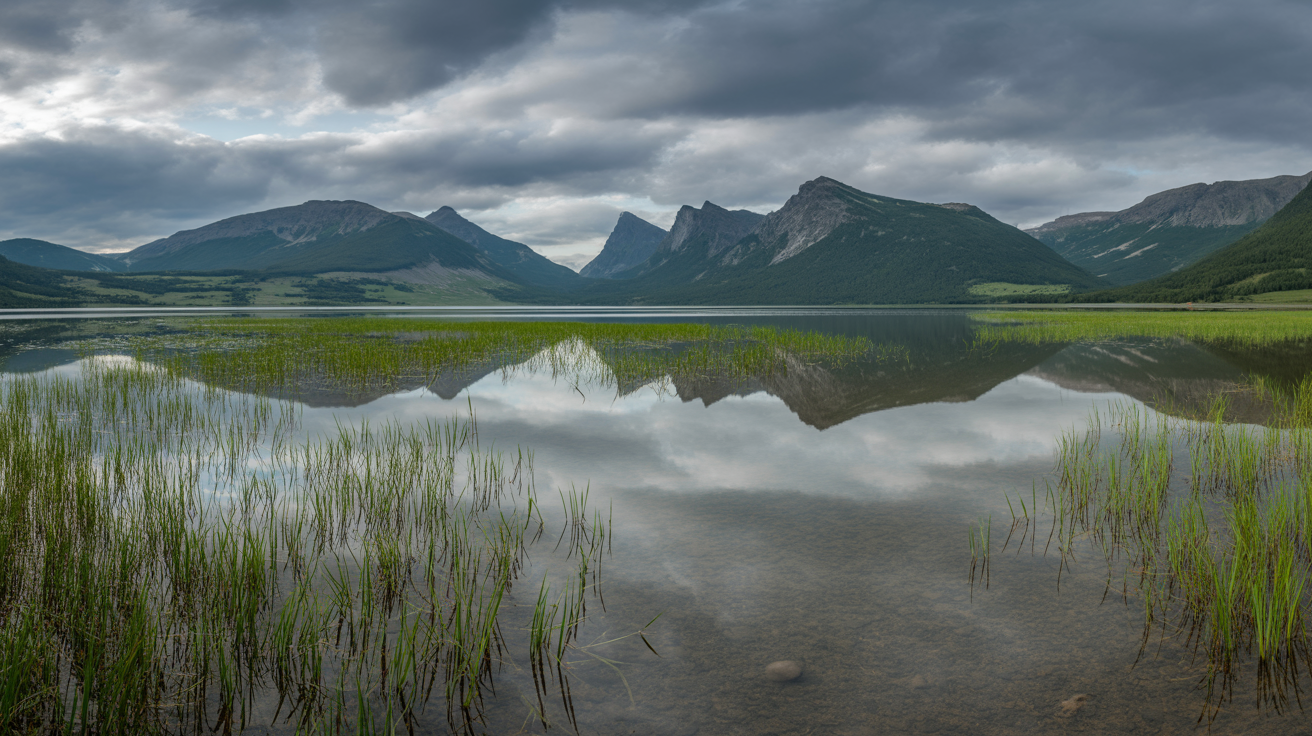
Mountain streams and alpine lakes

Conservation
The Mountain Yellow-legged Frog is currently classified as Endangered on the IUCN Red List.
Threats & challenges
The species faces severe threats from habitat loss due to water diversion, damming, and recreational activities. The introduction of non-native predators, particularly trout, has devastated many populations by preying on tadpoles and juveniles. Chytridiomycosis, a fungal disease caused by Batrachochytrium dendrobatidis, has led to dramatic declines and local extinctions. Climate change poses additional risks through altered snowmelt patterns, increased drought, and higher temperatures. As of 2022, the IUCN estimates that over 90% of the historical range has been lost, with many populations now isolated and at risk of inbreeding and stochastic events.
Taxonomy
Scientific name
Rana muscosa
- Kingdom
- Animalia
- Phylum
- Chordata
- Class
- Amphibia
- Order
- Anura
- Family
- Ranidae
- Genus
- Rana
- Species
- muscosa
Community notes
Share your observations about the Mountain Yellow-legged Frog.
No community notes yet. Be the first!
Discover more wildlife
More fascinating animals from the encyclopedia.