
About the Northern Bald Ibis
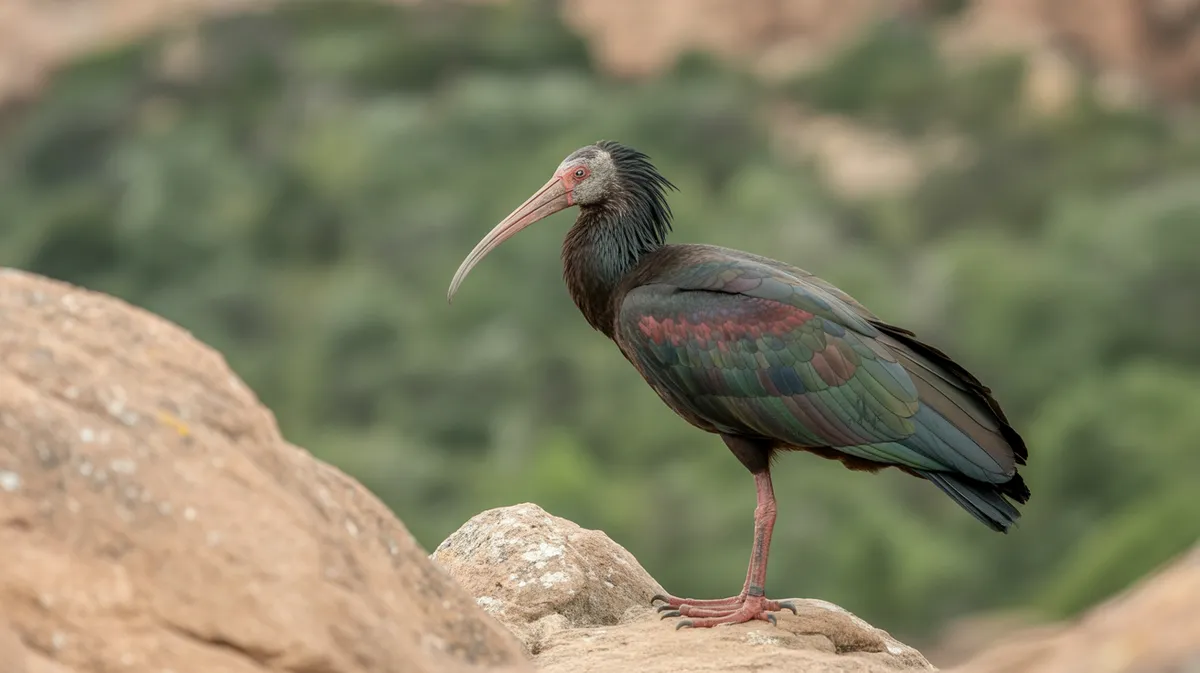
The Northern Bald Ibis is a large, striking bird known for its unfeathered red face and long, downward-curved bill. Once widespread across Europe, the Middle East, and North Africa, it is now critically endangered with only a few wild populations remaining. These ibises are highly social and nest on cliff ledges, often in colonies. Their glossy black plumage and unique appearance make them one of the most distinctive wading birds, and they have been revered in various cultures throughout history.
Fascinating facts
Unusual Appearance
Northern Bald Ibises have a featherless face with bright red skin and a shaggy crown of black feathers, setting them apart from most other ibises.
Ancient Symbolism
They were considered sacred in Ancient Egypt and often associated with the afterlife and the god Thoth.
Migratory Patterns
Despite their rarity, reintroduced populations in Europe are trained to follow ultralight aircraft to learn historic migratory routes.
Detailed description
The Northern Bald Ibis (Geronticus eremita) is a medium-to-large bird, measuring 70–80 cm in length with a wingspan of 125–135 cm and weighing between 1.0–1.3 kg. Its most distinctive features are the unfeathered, wrinkled red skin covering its face and crown, and a long, slender, decurved bill that is also bright red in adults. The plumage is predominantly glossy black with iridescent green and purple sheens, especially noticeable in sunlight. The nape and upper neck are adorned with a shaggy crest of elongated feathers, adding to its striking appearance. Unlike many ibises, the Northern Bald Ibis is largely terrestrial, foraging on the ground rather than wading in water. Its strong, broad wings and robust flight muscles enable it to undertake long migratory journeys, often flying in V-shaped formations. Social by nature, it forms dense colonies during the breeding season and maintains complex social hierarchies. Vocalizations are varied and include croaks, grunts, and whistles, used for communication within colonies. The species is highly gregarious, engaging in mutual preening and cooperative vigilance against predators. Its lifespan in the wild can reach up to 20 years, with even longer records in captivity.
Did you know?
The Northern Bald Ibis is one of the few bird species known to migrate in a V-formation, a rare behavior among ibises.
Research & sources
Wikipedia summary
The northern bald ibis, hermit ibis, or Waldrapp is a migratory Old World ibis found in open areas such as grasslands, rocky mountains, and semi-deserts, often close to running water. This 70–80 cm (28–31 in) glossy black ibis, which, unlike many members of the ibis family, is non-wading, has an unfeathered red face and head, and a long, curved red bill. It breeds colonially on coastal or mountain cliff ledges, where it typically lays two to three eggs in a stick nest, and feeds on lizards, insects, and other small animals.
Behaviour & social structure
Northern Bald Ibises are diurnal and spend much of the day foraging in open habitats such as semi-arid steppes, rocky plateaus, and grasslands. They primarily hunt by probing the soil and leaf litter with their long bills, searching for insects, beetles, spiders, scorpions, small reptiles, and occasionally seeds or plant material. Foraging is often conducted in coordinated groups, which helps flush out prey and provides protection from predators. Social interactions are complex; birds engage in allopreening, synchronized displays, and vocal exchanges to reinforce pair bonds and group cohesion. During the breeding season, territorial disputes and courtship displays become more frequent. Roosting occurs communally on cliffs or rocky outcrops, where birds remain alert to threats. Migration is a key aspect of their behavior, with some populations undertaking long-distance journeys between breeding and wintering grounds, often guided by experienced adults.
Reproduction & life cycle
Breeding occurs in colonies, typically on inaccessible cliff ledges near water sources. The breeding season varies by region but generally falls between March and May. Courtship involves ritualized displays such as bowing, bill clattering, and mutual preening. Pairs are monogamous for the season, and both sexes participate in nest building using sticks, twigs, and vegetation. Females lay 2–4 eggs, which are incubated for 24–25 days by both parents. After hatching, chicks are altricial and require intensive parental care; both parents feed the young by regurgitation. Fledging occurs at 40–50 days, but juveniles remain dependent on adults for several weeks thereafter. Breeding success is highly variable and sensitive to disturbance, predation, and food availability.
Adaptations & survival
The Northern Bald Ibis exhibits several adaptations for survival in arid and rocky environments. Its long, curved bill is specialized for probing into crevices and loose soil to extract hidden prey. The unfeathered head and face may help reduce feather soiling during foraging and minimize parasite loads. Strong, broad wings facilitate efficient soaring and gliding during migration, conserving energy over long distances. Social behaviors such as colonial nesting and cooperative vigilance reduce predation risk and enhance foraging efficiency. The species is also highly adaptable in diet, able to exploit a range of terrestrial invertebrates and small vertebrates, which is advantageous in variable environments.
Cultural significance
The Northern Bald Ibis has been revered in various cultures for millennia. In ancient Egypt, it was associated with the god Thoth and symbolized wisdom and renewal. The bird appears in hieroglyphs and temple art, reflecting its spiritual importance. In medieval Europe, it was considered a harbinger of good fortune and was protected by local laws in some regions. The species also features in Islamic tradition, where it is said to have guided Noah after the flood. Its dramatic decline and ongoing conservation have made it a flagship species for international cooperation and environmental awareness.
Recent research
Recent research has focused on the species' migratory navigation, revealing that juvenile ibises learn migration routes through social learning from experienced adults. Satellite tracking has provided insights into migration corridors and stopover sites, informing conservation planning. Genetic studies indicate low genetic diversity in remaining populations, underscoring the need for careful management of captive breeding and reintroduction programs. Behavioral studies have documented the importance of social structure and communication in colony cohesion. Ongoing projects in Europe are experimenting with human-led migration to reestablish traditional routes. The species is also monitored as an indicator of ecosystem health in arid and semi-arid regions.
Videos
Habitat
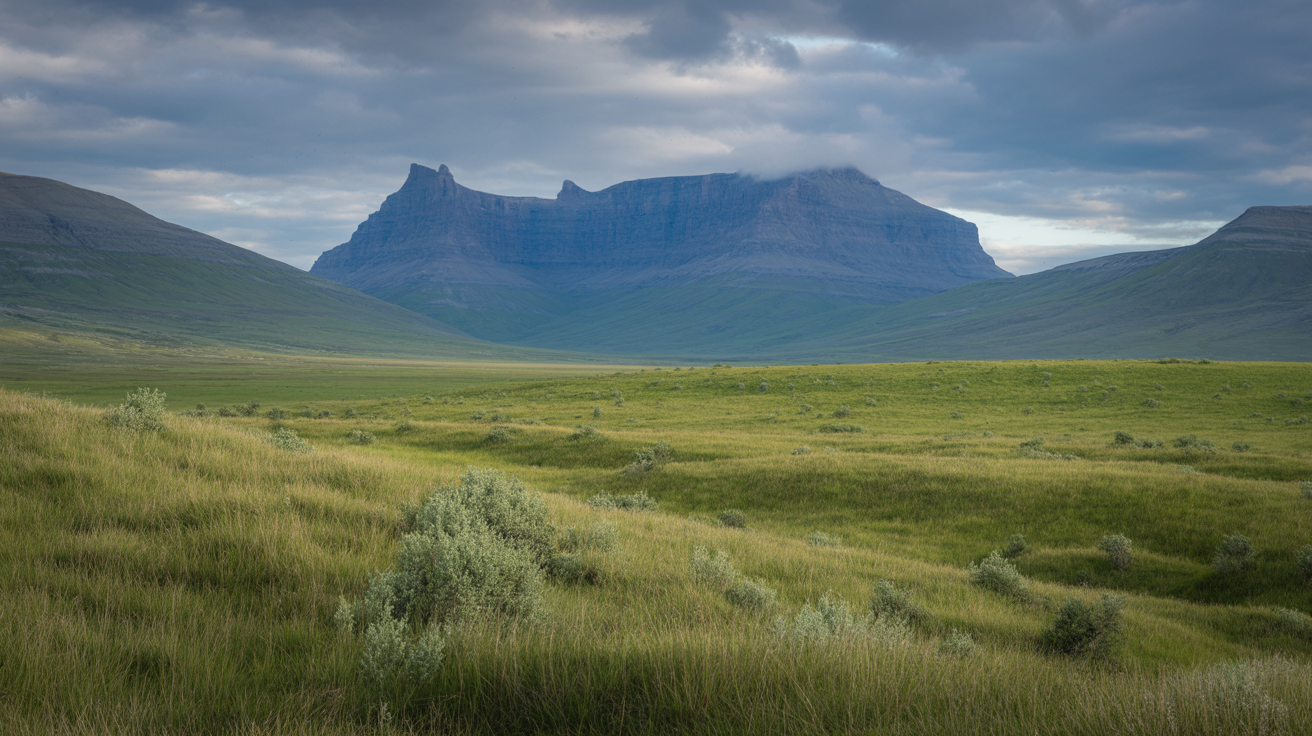
Semi-arid and rocky habitats near cliffs and river valleys
 Various Continental Regions
Grassland
Open areas dominated by grasses rather than trees, supporting numerous herbivores and their predators.
 Elevated Terrain
Mountain
High-altitude environments with varying climates and specialized wildlife adapted to rugged terrain and thin air.
 Arid Regions
Desert
Arid lands with minimal rainfall, extreme temperatures, and specialized wildlife adapted to harsh conditions.
Conservation
The Northern Bald Ibis is currently classified as Endangered on the IUCN Red List.
Threats & challenges
The Northern Bald Ibis faces numerous threats, including habitat loss due to agricultural expansion, overgrazing, and infrastructure development. Human disturbance at breeding sites, illegal hunting, and egg collection have historically decimated populations. Pesticide use and poisoning, especially in wintering areas, remain significant threats. Natural predation by mammals and birds of prey, as well as competition for nesting sites, also impact reproductive success. Climate change may exacerbate habitat degradation and alter migration patterns. The global population is estimated at fewer than 700 wild individuals, with the majority in Morocco and a small, reintroduced population in Turkey. Intensive conservation efforts, including habitat protection, captive breeding, and reintroduction programs, are ongoing but face logistical and socio-political challenges.
Taxonomy
Scientific name
Geronticus eremita
- Kingdom
- Animalia
- Phylum
- Chordata
- Class
- Aves
- Order
- Pelecaniformes
- Family
- Threskiornithidae
- Genus
- Geronticus
- Species
- eremita
Community notes
Share your observations about the Northern Bald Ibis.
No community notes yet. Be the first!
Discover more wildlife
More fascinating animals from the encyclopedia.