
About the Northern Cricket Frog
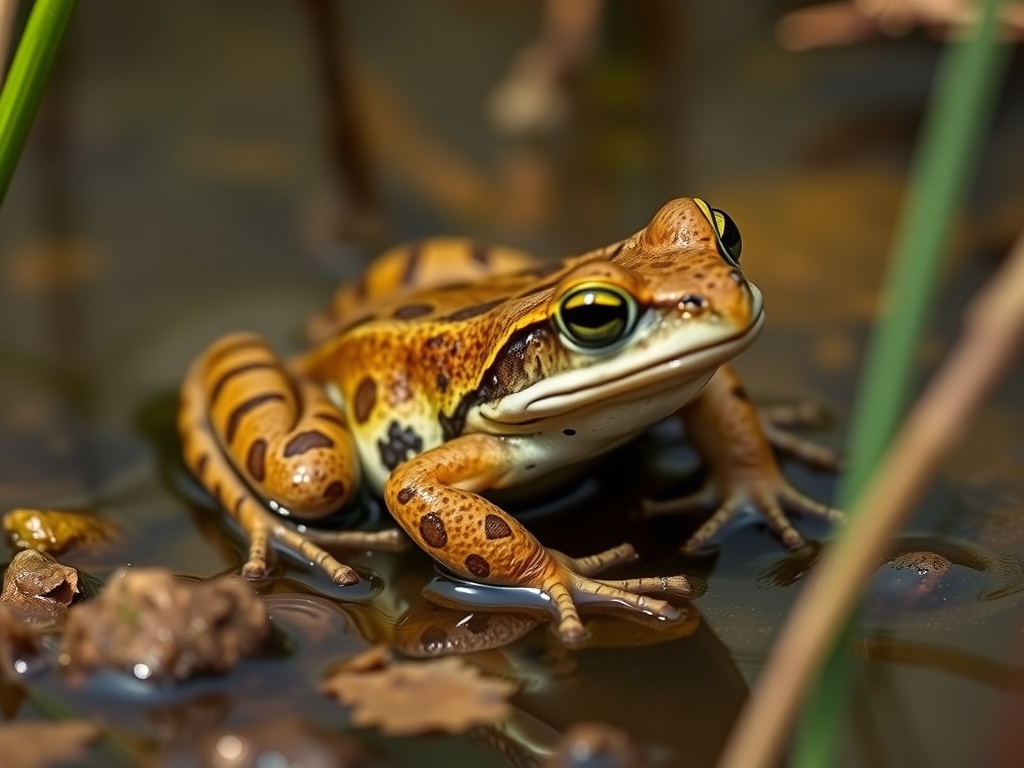
The Northern Cricket Frog is a small, agile amphibian native to much of the eastern and central United States. Recognized by its warty skin and distinctive dark triangle between the eyes, this frog is often found along the edges of ponds, lakes, and slow-moving streams. Despite its tiny size, the Northern Cricket Frog is known for its remarkable jumping ability, leaping many times its own body length to escape predators. Its call, which resembles the sound of two pebbles being clicked together, can be heard during the warmer months.
Fascinating facts
Cricket-Like Call
The Northern Cricket Frog gets its name from its call, which sounds like two pebbles or marbles being rapidly clicked together.
Tiny Jumper
Despite growing to less than 1.5 inches long, this frog can leap more than 60 times its own body length when startled.
Colorful Camouflage
They display a range of colors from green to brown with stripes or spots, helping them blend into muddy or grassy habitats.
Detailed description
The Northern Cricket Frog (Acris crepitans) is a diminutive member of the Hylidae family, typically measuring 19–38 mm (0.75–1.5 inches) in snout-vent length, making it one of the smallest vertebrates in North America. Its skin is granular and warty, often colored in shades of gray, green, or brown, with irregular dark blotches that provide camouflage among leaf litter and mud. A distinctive dark triangle is present between the eyes, and many individuals display a bright orange or reddish stripe running down the dorsal midline. The limbs are slender and long, with webbed toes that aid in swimming and powerful leaping—these frogs can jump over 60 times their body length in a single bound. Unlike most tree frogs, A. crepitans is primarily terrestrial and is rarely found climbing vegetation, instead preferring the margins of shallow ponds, marshes, and slow-moving streams. Its call is a rapid, metallic 'gick-gick-gick,' reminiscent of clicking pebbles, and is most prominent during the breeding season. The species is diurnal, often basking in the sun on mud flats or floating vegetation. Northern Cricket Frogs are opportunistic insectivores, feeding on a wide variety of small arthropods. Their cryptic coloration, erratic jumping, and rapid escape responses are key anti-predator adaptations. They are short-lived, with most individuals surviving only one year in the wild, though some may reach two years under optimal conditions.
Did you know?
Unlike most frogs, the Northern Cricket Frog overwinters as an adult rather than as a tadpole or juvenile.
Research & sources
Wikipedia summary
The northern cricket frog is a species of small hylid frog native to the United States and northeastern Mexico. These frogs are majorly in grey, green, and brown color with blotching patterns. Many have a brown or orange stripe down the center of their back and a triangular marking on the top of their head. Despite being members of the tree frog family, they are not arboreal. These frogs prefer habitats near the edges of slow-moving bodies of water, and in close proximity to shelter items, like rocks. It has two recognized subspecies, A. c. crepitans and A. c. paludicola.
Behaviour & social structure
Northern Cricket Frogs are highly active during the day, especially in warm, humid conditions. They are solitary outside the breeding season, exhibiting minimal territoriality. When threatened, individuals employ a zigzag escape pattern, making unpredictable leaps to evade predators such as birds, snakes, and larger amphibians. Feeding occurs primarily at the water's edge, where they hunt for small insects, spiders, and other invertebrates using a sit-and-wait strategy or short lunges. These frogs are known for their rapid response to environmental changes, quickly seeking shelter under rocks, logs, or aquatic vegetation when disturbed. Vocalizations are a key aspect of male behavior during the breeding season, with males calling from exposed perches to attract females and establish breeding territories. Social interactions are generally limited to breeding aggregations, where males may engage in vocal competition but rarely in physical combat.
Reproduction & life cycle
Breeding occurs from late spring through summer (typically May to August), depending on latitude and local climate. Males congregate at the edges of shallow water bodies and produce loud, repetitive calls to attract females. Amplexus is axillary, with the male grasping the female behind her forelimbs. Females lay small clusters of 10–40 eggs, attaching them to submerged vegetation; a single female may lay up to 400 eggs in a season. Embryonic development is rapid, with eggs hatching in 2–7 days depending on temperature. The tadpole stage lasts 5–10 weeks, after which metamorphosis occurs. There is no parental care after egg deposition. Sexual maturity is reached within a year, and most individuals breed only once due to high predation and environmental mortality.
Adaptations & survival
Acris crepitans exhibits several adaptations for survival in ephemeral and variable aquatic habitats. Its cryptic coloration and irregular dorsal markings provide effective camouflage against predators. The species' powerful hind limbs allow for extraordinary jumping ability, facilitating rapid escape from threats. Its skin is relatively resistant to desiccation, enabling survival in temporarily dry environments. The call of the male is adapted for transmission across open water and dense vegetation, maximizing mate attraction. Physiologically, the species can tolerate a wide range of temperatures and water chemistries, contributing to its broad distribution. The rapid life cycle and high reproductive output are evolutionary responses to high mortality rates and fluctuating habitat conditions.
Cultural significance
The Northern Cricket Frog holds modest cultural significance, primarily as an indicator species in ecological monitoring due to its sensitivity to environmental changes. Its distinctive call is a familiar sound in many rural and suburban wetlands, contributing to the acoustic landscape of North American summer evenings. The species has occasionally appeared in regional folklore as a symbol of rain or good luck, but it does not have a prominent role in mythology or traditional medicine. In scientific research and education, A. crepitans is valued for studies on amphibian ecology, behavior, and environmental health.
Recent research
Recent research on Acris crepitans has focused on population genetics, revealing significant genetic structuring across its range, which may inform future taxonomic revisions. Studies have also examined the effects of agricultural contaminants and endocrine-disrupting chemicals on development and reproductive success, highlighting the frog's utility as a bioindicator. Ongoing monitoring efforts track the spread of chytrid fungus and other emerging amphibian diseases. Behavioral research has explored the mechanics of the frog's remarkable jumping ability and the acoustic properties of its mating calls. Climate change models predict potential range shifts and increased vulnerability in marginal populations, prompting calls for enhanced habitat protection and restoration.
Sources
A Field Guide to the Amphibians and Reptiles of the United States and Canada
Roger Conant & Joseph T. Collins (1998)
scientificPopulation genetics and phylogeography of the northern cricket frog (Acris crepitans)
J. M. Gamble et al. (2008)
scientificVideos
Habitat
Freshwater wetlands, ponds, lakeshores, and slow-moving streams
 Various Continental Regions
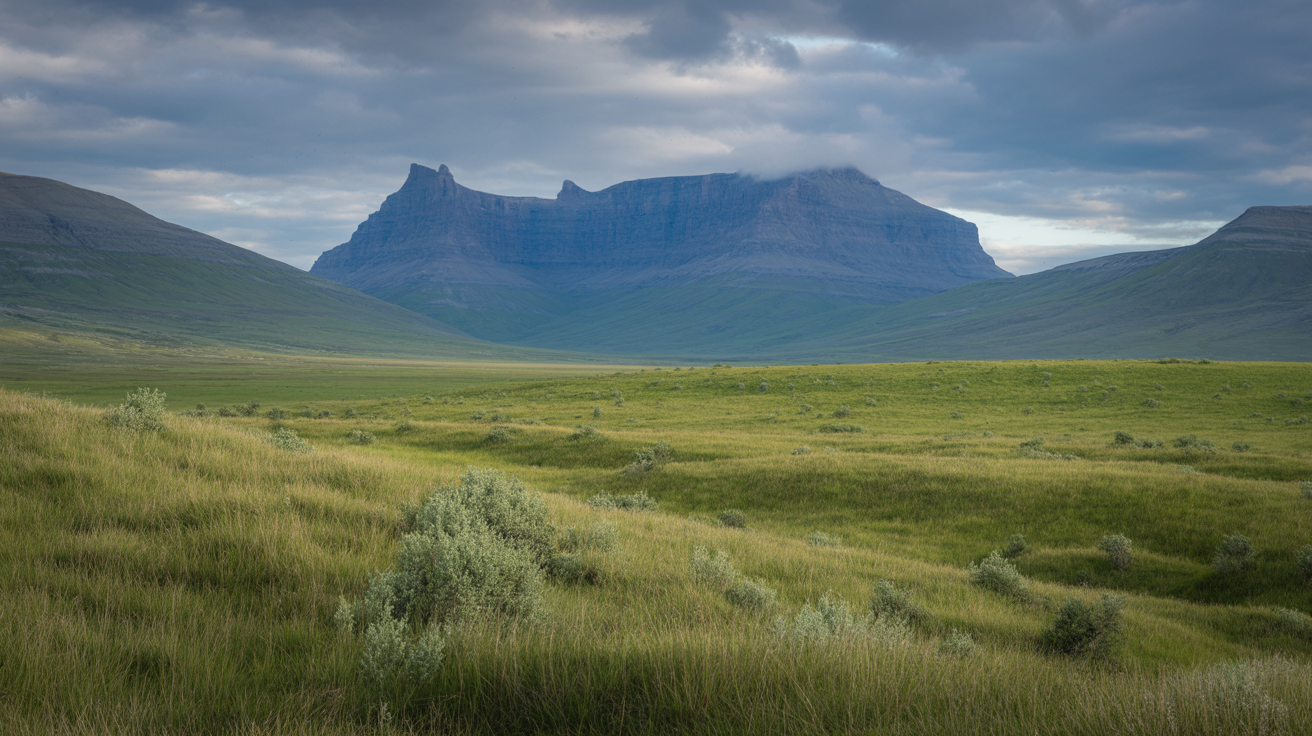
Grassland
Open areas dominated by grasses rather than trees, supporting numerous herbivores and their predators.
 Global
Forest
Wooded areas with significant tree cover and diverse plant and animal communities.
 Global
Freshwater
Lakes, rivers, and wetlands with diverse aquatic ecosystems.
Conservation
The Northern Cricket Frog is currently classified as Least Concern on the IUCN Red List.
Threats & challenges
While currently listed as Least Concern by the IUCN, Northern Cricket Frog populations face several localized threats. Habitat loss and degradation due to wetland drainage, agricultural expansion, and urban development are primary concerns. Water pollution from pesticides, fertilizers, and industrial runoff can negatively impact larval development and adult health. The species is sensitive to changes in hydroperiod and water quality, making it vulnerable to drought and climate change. Introduced predators, such as fish and bullfrogs, may also contribute to population declines. Disease, particularly chytridiomycosis caused by Batrachochytrium dendrobatidis, has been detected in some populations but is not currently considered a major threat. Population trends are generally stable across much of the range, but regional declines have been documented, especially at the northern and western edges of distribution.
Taxonomy
Scientific name
Acris crepitans
- Kingdom
- Animalia
- Phylum
- Chordata
- Class
- Amphibia
- Order
- Anura
- Family
- Hylidae
- Genus
- Acris
- Species
- crepitans
Community notes
Share your observations about the Northern Cricket Frog.
No community notes yet. Be the first!
Discover more wildlife
More fascinating animals from the encyclopedia.