
About the Northern Leopard Frog
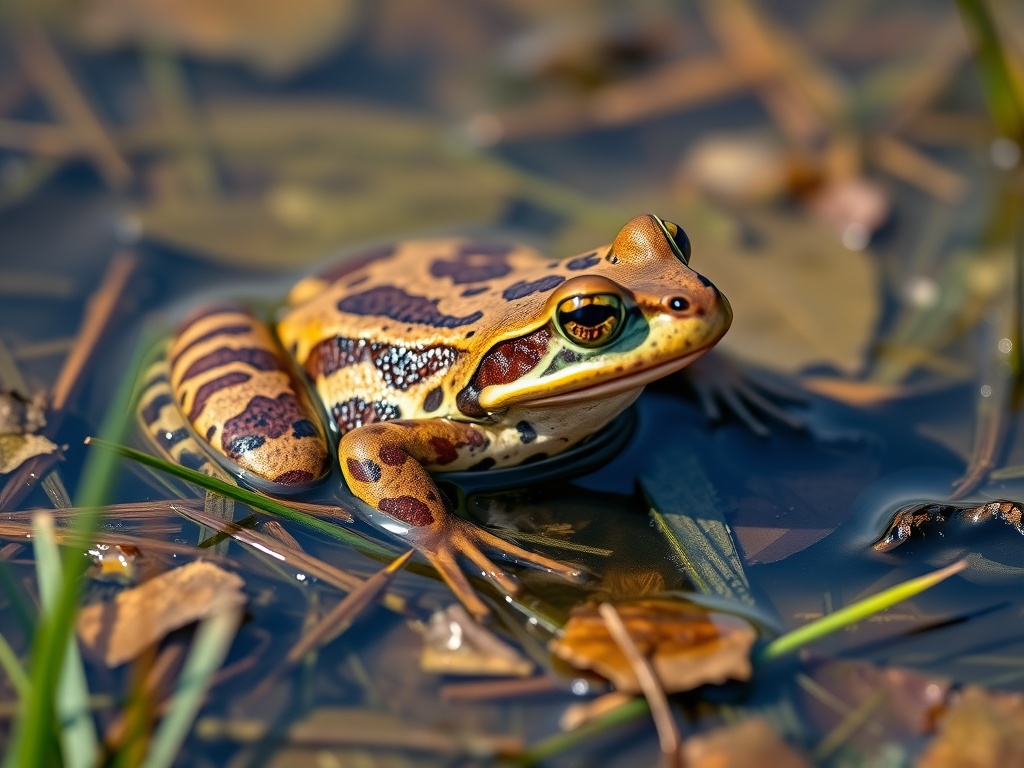
The Northern Leopard Frog is a medium-sized amphibian known for its striking green or brown coloration with distinctive dark spots bordered by pale halos. This species is commonly found near ponds, marshes, and slow-moving streams across much of North America. It has a smooth, moist skin and long, powerful hind legs adapted for leaping and swimming. Northern Leopard Frogs play a vital ecological role as both predator and prey in aquatic and terrestrial food webs.
Fascinating facts
Spotted Appearance
The Northern Leopard Frog gets its name from the leopard-like spots that cover its back and legs, which help it blend into grassy and aquatic environments.
Unique Vocalizations
Males produce a distinctive, low, snore-like call to attract females during the breeding season, which can be heard from a considerable distance.
Hibernation Habits
In colder climates, these frogs survive winter by hibernating underwater, where they absorb oxygen through their skin while remaining mostly inactive.
Detailed description
The Northern Leopard Frog (Lithobates pipiens) is a medium-sized anuran, typically measuring 5–11 cm (2–4.3 in) in snout-vent length, with females generally larger than males. Its dorsal coloration ranges from bright green to brown, adorned with prominent, irregularly shaped dark spots outlined by pale borders, giving the species its 'leopard' moniker. The ventral surface is pale, often white or cream, and the frog features distinct dorsolateral folds running from behind the eyes to the lower back. The tympanum (external eardrum) is visible and slightly larger in males. Adapted for both aquatic and terrestrial environments, its long, muscular hind limbs facilitate powerful leaps and efficient swimming. The skin is smooth and moist, aiding in cutaneous respiration, which supplements pulmonary breathing. Northern Leopard Frogs are primarily crepuscular, being most active at dawn and dusk, but may also be seen during the day, especially in moist conditions. Outside the breeding season, they are largely solitary, dispersing into grasslands and meadows, but congregate in large numbers at breeding sites in early spring. Their keen vision and rapid reflexes make them effective ambush predators, and their sensitivity to environmental changes renders them important bioindicators in wetland ecosystems.
Did you know?
Northern Leopard Frogs were once widely used in medical research and as a source of frog legs for culinary purposes.
Research & sources
Wikipedia summary
Lithobates pipiens formerly Rana pipiens, commonly known as the northern leopard frog, is a species of leopard frog from the true frog family, native to parts of Canada and the United States. It is the state amphibian of Minnesota and Vermont.
Behaviour & social structure
Northern Leopard Frogs exhibit a combination of sit-and-wait and active foraging behaviors, preying on a diverse array of invertebrates such as insects, spiders, and earthworms, as well as smaller vertebrates including other amphibians and small fish. They rely heavily on visual cues to detect movement and strike rapidly with their sticky tongues. During the non-breeding season, individuals are largely solitary and maintain home ranges, but may aggregate in favorable microhabitats. They are known for their remarkable migratory behavior, sometimes traveling over a kilometer between overwintering and breeding sites. During periods of high humidity or after rain, they may be observed moving considerable distances overland. When threatened, they employ rapid, zigzag leaps to evade predators, and may emit a high-pitched distress call if captured. Vocalizations are most prominent during the breeding season, with males producing a distinctive, low, snore-like call to attract females and establish territories.
Reproduction & life cycle
Breeding occurs in early spring, often soon after ice melt, in shallow, still waters such as ponds, marshes, and flooded fields. Males arrive first at breeding sites and call to attract females, forming temporary choruses. Amplexus (the mating embrace) is axillary, with males grasping females behind the forelimbs. Females lay large, gelatinous egg masses containing 600–7,000 eggs, which are attached to submerged vegetation. Embryonic development is temperature-dependent, with hatching occurring within 7–14 days. The larval (tadpole) stage lasts 2–3 months, during which tadpoles feed primarily on algae and detritus. Metamorphosis into juvenile frogs typically occurs by midsummer. There is no parental care after egg deposition. Sexual maturity is reached at 2–3 years of age.
Adaptations & survival
Northern Leopard Frogs possess several adaptations for survival in variable environments. Their cryptic coloration and irregular spots provide camouflage among aquatic vegetation and grasslands, reducing predation risk. The dorsolateral folds may aid in channeling water over the skin, enhancing cutaneous respiration. Their powerful hind limbs are specialized for both leaping on land and swimming in water. During winter, they overwinter in oxygen-rich, unfrozen portions of ponds or streams, entering a state of torpor and relying on cutaneous respiration to survive low temperatures and reduced oxygen availability. Their broad diet and flexible habitat use allow them to exploit a range of ecological niches, from ephemeral wetlands to upland meadows.
Cultural significance
The Northern Leopard Frog holds cultural and educational significance in North America. It is the state amphibian of Minnesota and Vermont, symbolizing healthy wetland ecosystems. Historically, it has been used in biological research and education, particularly in physiology and developmental biology studies, due to its abundance and ease of care. In some Indigenous cultures, frogs are seen as symbols of transformation and renewal. The species has also featured in local folklore and children's literature, often representing the vitality of natural wetlands.
Recent research
Recent research on Northern Leopard Frogs has focused on the impacts of environmental contaminants, such as endocrine-disrupting chemicals, on development and reproductive success. Studies have documented increased susceptibility to chytrid fungus and ranavirus, highlighting the need for disease surveillance. Population genetics research has revealed significant genetic structuring across the range, suggesting limited dispersal between populations and the importance of habitat connectivity. Ongoing studies are investigating the species' role as a bioindicator for wetland health and the effects of climate change on breeding phenology and larval development. Conservation genetics and reintroduction efforts are underway in regions where populations have been extirpated.
Videos
Habitat
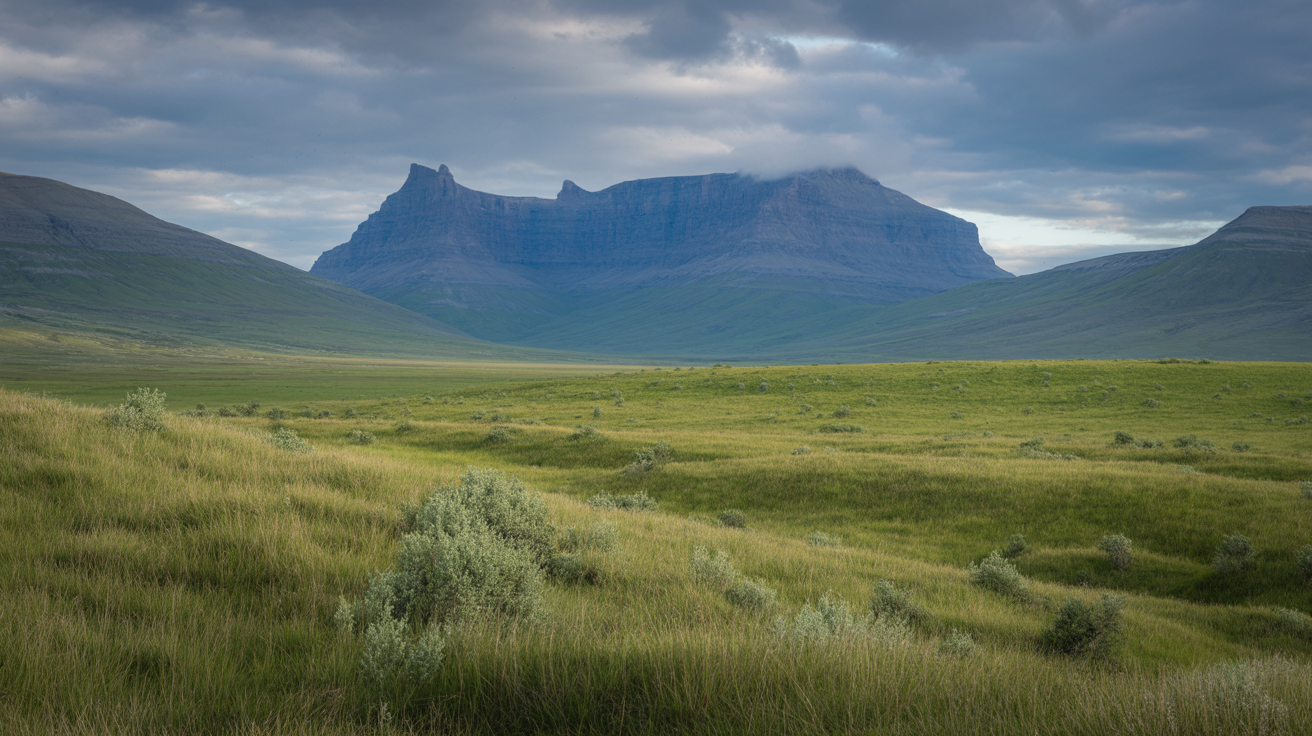
Freshwater wetlands, ponds, marshes, slow-moving streams, and adjacent grasslands
 Various Continental Regions
Grassland
Open areas dominated by grasses rather than trees, supporting numerous herbivores and their predators.
 Global
Forest
Wooded areas with significant tree cover and diverse plant and animal communities.
 Global
Freshwater
Lakes, rivers, and wetlands with diverse aquatic ecosystems.
Conservation
The Northern Leopard Frog is currently classified as Least Concern on the IUCN Red List.
Threats & challenges
While still widespread and classified as Least Concern, Northern Leopard Frog populations have experienced significant declines in parts of their range, particularly in the western United States and Canada. Major threats include habitat loss and fragmentation due to agriculture, urbanization, and wetland drainage. Exposure to agricultural pesticides and pollutants, emerging infectious diseases such as chytridiomycosis (caused by Batrachochytrium dendrobatidis), and introduced predators (e.g., fish, bullfrogs) further threaten populations. Climate change, leading to altered hydrological regimes and increased frequency of droughts, poses additional risks. Road mortality during seasonal migrations and collection for the pet and bait trade have also contributed to local declines. Conservation efforts focus on habitat protection, disease monitoring, and research into population genetics and resilience.
Taxonomy
Scientific name
Lithobates pipiens
- Kingdom
- Animalia
- Phylum
- Chordata
- Class
- Amphibia
- Order
- Anura
- Family
- Ranidae
- Genus
- Lithobates
- Species
- pipiens
Community notes
Share your observations about the Northern Leopard Frog.
No community notes yet. Be the first!
Discover more wildlife
More fascinating animals from the encyclopedia.