
About the Northern walking stick
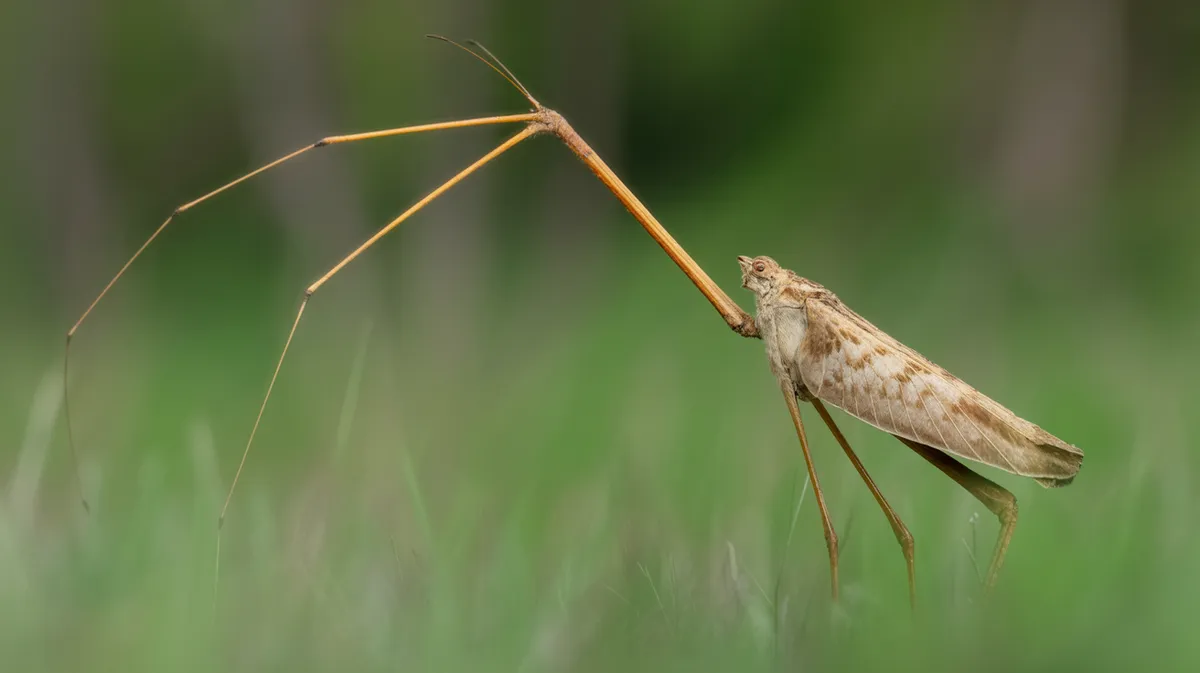
The Northern walking stick is a slender, elongated insect native to North America, expertly camouflaged to resemble twigs and branches. Its coloration ranges from greenish to brown, aiding in its ability to blend seamlessly into forested environments and avoid predators. Adults are wingless and can reach impressive lengths for an insect, with long, stick-like legs and antennae. This species is primarily active during late summer and autumn, often going unnoticed due to its remarkable mimicry.
Fascinating facts
Master of Disguise
The Northern walking stick’s twig-like appearance makes it nearly invisible to predators in its natural habitat.
Egg Camouflage
Its eggs are shaped and colored like seeds, helping them avoid detection by predators and blend into the forest floor.
Regeneration
Juvenile walking sticks can regrow lost legs during subsequent molts, enhancing their chances of survival.
Detailed description
The Northern walking stick (Diapheromera femorata) is a medium-to-large phasmid insect, with adult females typically reaching lengths of 75–95 mm and males measuring 60–80 mm. Its elongated, cylindrical body is remarkably slender, mimicking the appearance of twigs or stems, with coloration ranging from pale green to dark brown, often with subtle mottling to enhance camouflage. The head is small and triangular, equipped with long, threadlike antennae that can be nearly as long as the body itself. Legs are also elongated and thin, facilitating movement through foliage and contributing to its stick-like illusion. The species is wingless throughout its life cycle, relying on stealth and immobility rather than flight for predator avoidance. Diapheromera femorata is primarily nocturnal, remaining motionless during daylight hours to avoid detection. Its exoskeleton is relatively soft, making it vulnerable to desiccation and predation, but its cryptic coloration and behavior provide effective defense. Molting occurs several times during development, with nymphs resembling miniature adults. This species is solitary, with individuals rarely interacting outside of mating. The Northern walking stick plays a subtle but important role in forest ecosystems as a herbivore, influencing plant community dynamics through selective feeding.
Did you know?
The Northern walking stick spends most of its life motionless, swaying gently to mimic the movement of twigs in the breeze.
Research & sources
Behaviour & social structure
Northern walking sticks are predominantly solitary and exhibit minimal social interaction except during the brief mating period. They are primarily nocturnal feeders, emerging at dusk to climb trees and shrubs in search of leaves, their main food source. Their feeding behavior is slow and methodical, often targeting the leaves of oak, hazel, black cherry, and other deciduous trees. During the day, they remain almost perfectly still, aligning their bodies with twigs and branches to maximize camouflage. When threatened, they may drop to the ground and remain motionless (thanatosis), a behavior known as 'playing dead.' They do not exhibit territoriality or parental care, and aggregation is rare. Their movement is generally slow and deliberate, further aiding in their concealment. In the presence of predators, such as birds or small mammals, their primary defense is their cryptic appearance and immobility.
Reproduction & life cycle
Mating in Diapheromera femorata occurs in late summer to early autumn. Males locate females by following pheromone trails, and copulation can last several hours. Females are capable of both sexual and parthenogenetic reproduction, though sexual reproduction is more common. After mating, females lay eggs singly, dropping them to the forest floor from the canopy. Each female can lay several hundred eggs over her lifetime. The eggs are oval, about 2.5 mm long, and resemble plant seeds, providing additional camouflage. Incubation is prolonged, with eggs overwintering in the leaf litter and hatching the following spring, typically after 6–10 months depending on environmental conditions. There is no parental care; nymphs are independent upon hatching and undergo 5–6 molts before reaching maturity, a process that takes 2–3 months.
Adaptations & survival
The Northern walking stick exhibits a suite of adaptations for survival in temperate forests. Its most notable adaptation is extreme morphological and behavioral crypsis: the body, legs, and antennae are elongated and colored to mimic twigs, while behavioral stillness enhances this effect. Eggs mimic plant seeds, reducing predation by egg-eating insects and birds. The species is also capable of limb autotomy, shedding a leg to escape predators, though lost limbs are only regenerated during nymphal molts. Nocturnal activity reduces exposure to diurnal predators. The ability to reproduce parthenogenetically ensures population persistence even when mates are scarce. Their slow metabolism and low activity levels help conserve energy and reduce detection.
Cultural significance
The Northern walking stick has limited direct cultural significance but is often featured in educational programs and natural history exhibits as an example of evolutionary adaptation and camouflage. Its remarkable mimicry has inspired curiosity and study in both scientific and lay communities. In some Native American traditions, stick insects are symbols of patience and stillness. The species is sometimes kept in classrooms or by hobbyists to teach about insect life cycles and adaptation, but it is not used in traditional medicine or as a food source.
Recent research
Recent research on Diapheromera femorata has focused on its developmental biology, particularly the genetic and hormonal regulation of molting and limb regeneration. Studies have also examined its ecological role in forest herbivory and the impact of climate change on phenology and distribution. Ongoing research is investigating the chemical composition of its cuticle and the molecular basis of its camouflage. There is growing interest in the evolutionary pathways that led to parthenogenesis in stick insects. Additionally, citizen science initiatives have contributed valuable distribution data, improving understanding of its range and population dynamics.
Sources
The Biology of Stick Insects (Phasmatodea): Morphology, Behavior, and Ecology
Paul D. Brock & Daniel Otte (2004)
scientificThe Biology of Stick Insects (Phasmatodea): Ecology, Behavior, and Evolution
Paul D. Brock & Daniel Otte (2004)
scientificLife History and Ecology of the Northern Walkingstick, Diapheromera femorata
J. E. Lloyd (1971)
scientificThe Biology of Stick Insects (Phasmatodea): Morphology, Reproduction, and Ecology
Paul D. Brock & Daniel Otte (2004)
scientificVideos
Habitat
Deciduous forests

Conservation
The Northern walking stick is currently classified as Least Concern on the IUCN Red List.
Threats & challenges
Currently, Diapheromera femorata is classified as Least Concern due to its wide distribution and stable populations. However, localized threats include habitat loss from deforestation, pesticide use, and climate change, which may alter the composition of deciduous forests and affect food availability. Predation by birds, rodents, and some invertebrates is a natural challenge, though their camouflage is highly effective. There is little evidence of significant population decline, but monitoring is recommended in areas of intensive forestry or urbanization. The species is not targeted by commercial trade or collection.
Taxonomy
Scientific name
Diapheromera femorata
- Kingdom
- Animalia
- Phylum
- Arthropoda
- Class
- Insecta
- Order
- Phasmatodea
- Family
- Diapheromeridae
- Genus
- Diapheromera
- Species
- femorata
Where to see a northern walking stick
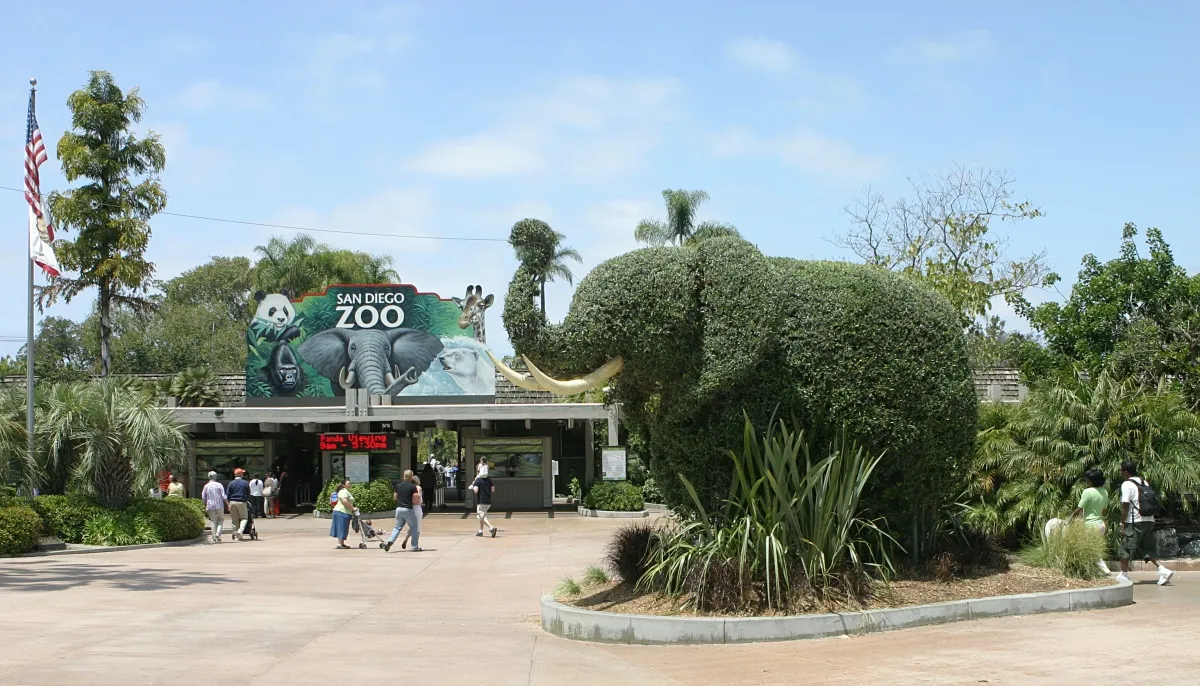
1 zoo and aquarium in 1 country are recorded as keeping this species.
Community notes
Share your observations about the Northern walking stick.
No community notes yet. Be the first!
Discover more wildlife
More fascinating animals from the encyclopedia.