
About the Ocellated Turkey
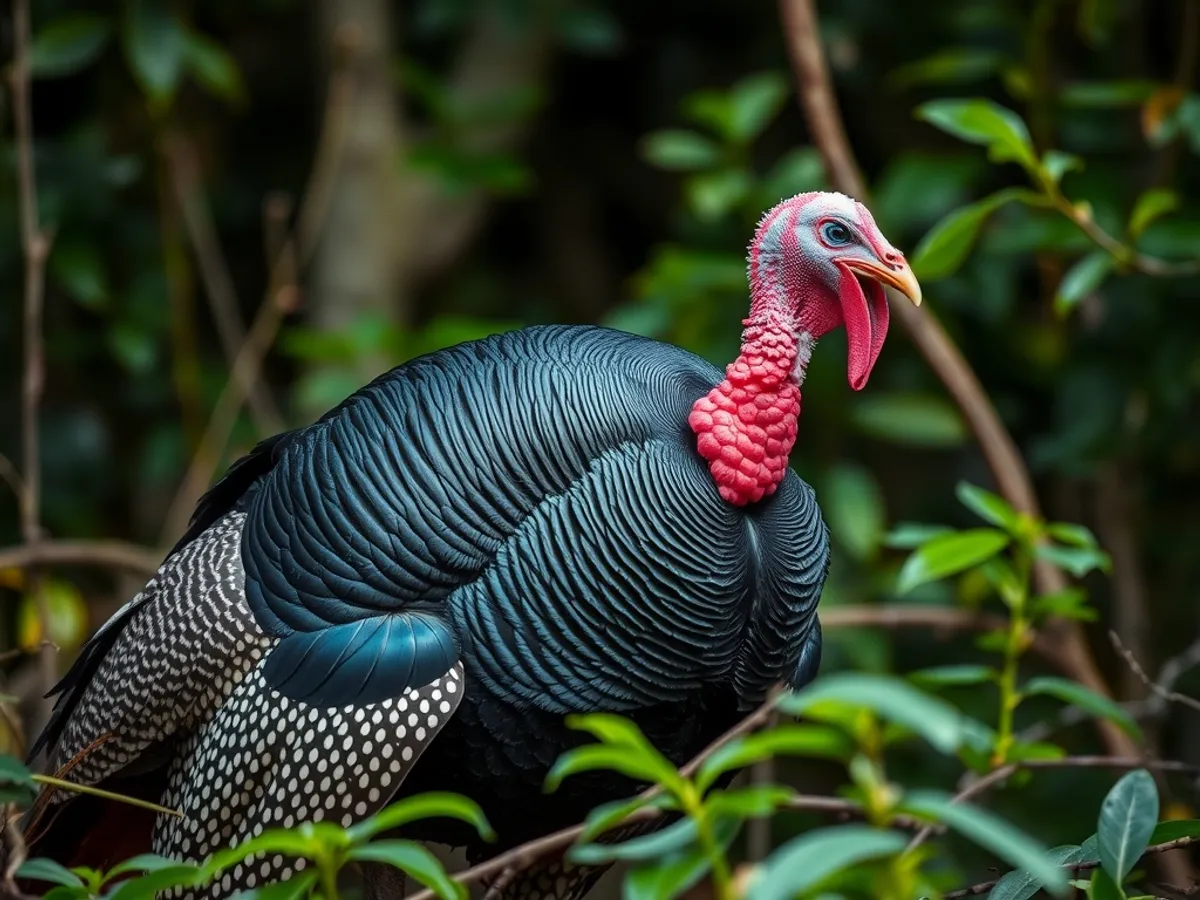
Meleagris ocellata is not just a colourful wild turkey — it is a separate species restricted to the Yucatan Peninsula and adjacent Guatemala and Belize, and it is far more visually extreme than its northern relative. The male has a bare blue head studded with orange-red caruncles, a body of bronze-green iridescence, and tail feathers ending in a blue-bronze eyespot that gives the bird its name and looks distinctly peacock-like. It has no beard, the tuft of bristles a North American wild turkey male carries on the chest. Its display and voice differ too: the male does not gobble in the familiar way, instead producing a strange accelerating drumming series of low-frequency notes that ends in a high-pitched, ringing crescendo, delivered before dawn from a roost. He also has a fleshy crown on top of the head that engorges and swells during display. The species is a true forest bird, moving in small groups through the lowland tropical forest and the clearings around Maya ruins — Tikal and Calakmul are among the best places to see them, where they are habituated and walk among tourists. Ocellated turkeys are heavily hunted for meat across their small range, and they are far more sensitive to habitat disturbance than the North American species.
Fascinating facts
Vivid Plumage
Ocellated Turkeys display iridescent green-bronze feathers and blue heads dotted with orange-red nodules, making them one of the most colorful members of the turkey family.
Forest Dweller
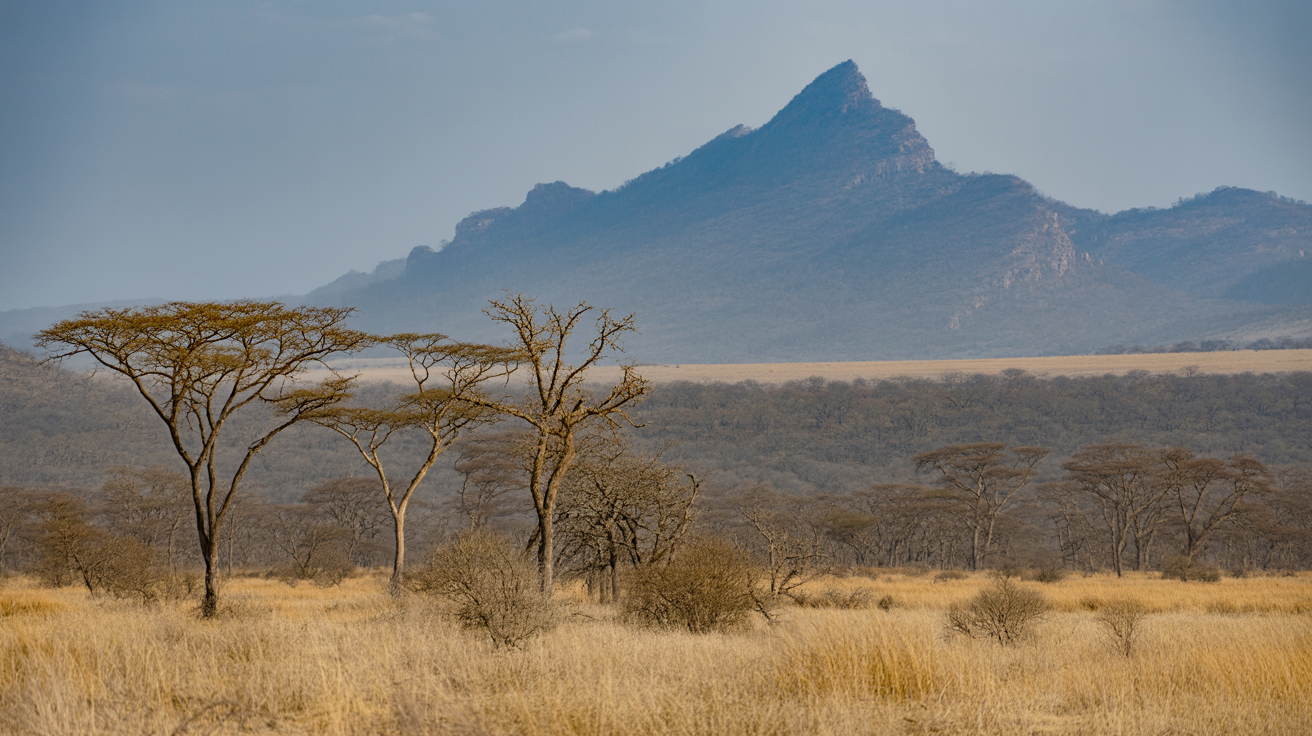
This species inhabits lowland tropical forests and savannas, mostly within the Yucatán Peninsula and northern Belize and Guatemala.
Egg Clutch
Females lay clutches of 8–15 eggs in shallow ground nests, with chicks hatching after about 28 days of incubation.
Detailed description
The Ocellated Turkey (Meleagris ocellata) is a strikingly ornate galliform bird, notable for its iridescent plumage that shifts between metallic shades of blue, green, and bronze. Adult males, known as toms, typically measure 100–120 cm in length and weigh up to 5 kg, while females (hens) are smaller, averaging 70–90 cm and 3 kg. The head and neck are bare, colored a vivid sky-blue and adorned with conspicuous orange to red caruncles (wart-like nodules), particularly prominent in males during the breeding season. The tail feathers are marked with distinctive eye-shaped spots, or ocelli, each ringed with bright blue and gold, giving the species its common name. The legs are long and pinkish-red, with males possessing pronounced spurs used in territorial disputes. The species is adapted to a terrestrial lifestyle, with strong legs for running and scratching the forest floor, though it can fly short distances to escape predators or roost in trees. Ocellated Turkeys are generally shy and elusive, relying on their cryptic coloration and alertness to avoid detection. Their vocalizations include a unique, high-pitched gobble and a series of drumming and whistling sounds, especially during courtship displays. The species is primarily diurnal, spending daylight hours foraging and retreating to elevated roosts at dusk for safety.
Did you know?
The Ocellated Turkey is found only in a small region of Central America and cannot be found in the wild anywhere else in the world.
Research & sources
Wikipedia summary
The ocellated turkey is a species of turkey residing primarily in the Yucatán Peninsula, Mexico, as well as in parts of Belize and Guatemala. A relative of the North American wild turkey, it was sometimes previously considered in a genus of its own (Agriocharis), but the differences between the two turkeys are currently considered too small to justify generic segregation. It is a relatively large bird, at around 70–122 cm (28–48 in) long and an average weight of 3 kg (6.6 lb) in females and 5 kg (11 lb) in males.
Behaviour & social structure
Ocellated Turkeys are ground-dwelling birds that forage in small groups, typically composed of hens and their offspring, while adult males may be solitary or form loose bachelor groups outside the breeding season. Their diet is omnivorous, consisting of seeds, fruits, berries, leaves, insects, and small invertebrates, with a preference for fallen fruits and arthropods during the wet season. Foraging occurs mainly in the early morning and late afternoon, with birds using their strong feet to scratch through leaf litter. Social interactions are complex, especially during the breeding season, when males engage in elaborate displays involving fanned tails, strutting, and vocalizations to attract females and establish dominance. Roosting occurs communally in tall trees, often near forest edges or clearings, which provides protection from terrestrial predators such as jaguars, ocelots, and snakes. The species is generally wary of humans and will flee or take flight if approached.
Reproduction & life cycle
Breeding occurs from March to June, coinciding with the onset of the rainy season. Males establish and defend small territories, performing elaborate courtship displays that include strutting, tail fanning, and vocalizations to attract females. After mating, females select a concealed nest site on the ground, often in dense vegetation, where they lay clutches of 8–15 buff-colored eggs. Incubation lasts approximately 28 days and is performed solely by the female, who remains highly secretive during this period. Upon hatching, precocial chicks are able to leave the nest within 24 hours and follow the mother, who provides guidance and protection but little direct feeding. Broods remain together for several months, gradually integrating into larger flocks as the young mature. Sexual maturity is reached at about one year of age.
Adaptations & survival
The Ocellated Turkey exhibits several adaptations to its tropical forest and savanna habitat. Its iridescent plumage provides camouflage in dappled light, while the bare, brightly colored head and neck aid in thermoregulation and social signaling. Strong legs and feet are adapted for terrestrial foraging and rapid escape from predators. The species' acute vision and hearing enhance predator detection. Behavioral adaptations include communal roosting for safety and cryptic nesting to reduce egg predation. The elaborate courtship displays and vocalizations are evolutionary specializations for mate attraction and territory establishment in dense habitats where visual cues may be limited.
Cultural significance
The Ocellated Turkey holds cultural importance among indigenous Maya communities, where it has been traditionally hunted for food and its feathers used in ceremonial attire and ornamentation. In pre-Columbian times, the bird was depicted in Maya art and iconography, symbolizing abundance and fertility. Today, it is occasionally featured in local festivals and ecotourism initiatives, serving as a flagship species for conservation awareness in the region.
Recent research
Recent research has focused on the population genetics of the Ocellated Turkey, revealing low genetic diversity in some isolated populations, which may impact long-term viability. Studies on habitat use have highlighted the species' reliance on mature forest patches and the negative effects of fragmentation. Ongoing telemetry studies are tracking movement patterns and habitat preferences to inform conservation planning. There is also interest in the species' role in seed dispersal and ecosystem functioning, as well as the impact of climate change on its distribution and breeding phenology.
Videos
Habitat
Tropical forests and savannas

Conservation
The Ocellated Turkey is currently classified as Near Threatened on the IUCN Red List.
Threats & challenges
The primary threats to the Ocellated Turkey are habitat loss due to deforestation, agricultural expansion, and human settlement, particularly in the Yucatán Peninsula. Hunting for meat and feathers, both for local consumption and the illegal pet trade, has also contributed to population declines. The species is sensitive to habitat fragmentation, which increases vulnerability to predation and reduces genetic diversity. Current population estimates suggest a continuing decline, with the IUCN Red List categorizing the species as Near Threatened. Conservation challenges include enforcing hunting regulations, protecting remaining forest tracts, and promoting sustainable land use practices among local communities.
Taxonomy
Scientific name
Meleagris ocellata
- Kingdom
- Animalia
- Phylum
- Chordata
- Class
- Aves
- Order
- Galliformes
- Family
- Phasianidae
- Genus
- Meleagris
- Species
- ocellata
Community notes
Share your observations about the Ocellated Turkey.
No community notes yet. Be the first!
Discover more wildlife
More fascinating animals from the encyclopedia.