
About the Orangutan
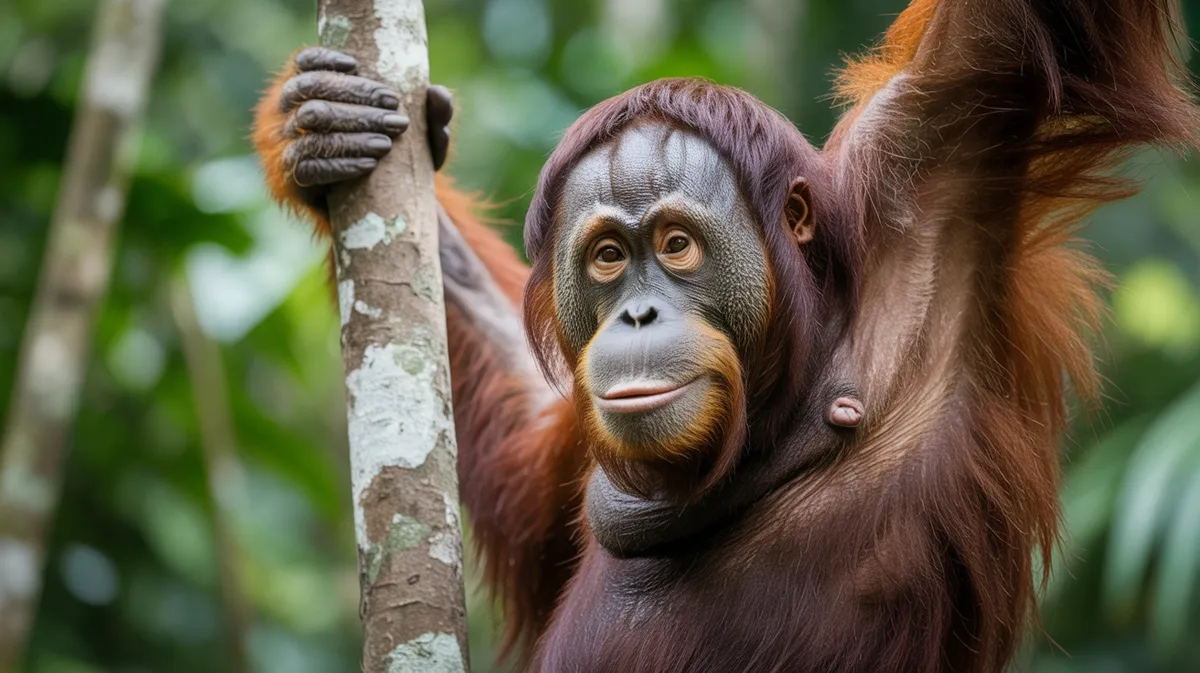
Orangutans, belonging to the genus Pongo, are critically endangered great apes native to the dwindling rainforests of Borneo and Sumatra. These arboreal primates are the largest tree-dwelling mammals, with males weighing up to 90 kilograms and possessing an arm span of over two meters. Their reddish-brown hair provides camouflage in the dappled sunlight of the forest canopy. The Bornean (Pongo pygmaeus), Sumatran (Pongo abelii), and the recently identified Tapanuli orangutan (Pongo tapanuliensis) each exhibit unique behaviors and genetic differences, with the Tapanuli being the most critically endangered, numbering fewer than 800 individuals. Orangutans are primarily frugivorous, relying heavily on fruit availability, which influences their solitary nature as they must cover large areas to find sufficient food. Their cognitive abilities are remarkable, showcasing tool use and cultural transmission of learned behaviors, which are crucial for survival in their complex jungle habitats. The evolutionary divergence of orangutans from other great apes occurred approximately 16 to 19 million years ago, making them one of the most ancient lineages within the Hominidae family.
Fascinating facts
Longest Arms
Orangutans have incredibly long arms that can stretch up to 2 meters, allowing them to move effortlessly through the forest canopy.
Nest Builders
They build complex sleeping nests from branches and foliage every night, sometimes adding a roof for protection from rain.
Tool Users
Orangutans are among the few non-human animals that use tools, such as sticks to extract insects or seeds from hard-to-reach places.
Detailed description
Orangutans (genus Pongo) are the largest arboreal mammals, with adult males weighing between 50–100 kg (110–220 lbs) and females 30–50 kg (66–110 lbs), and standing 1.2–1.5 meters (4–5 ft) tall when upright. Their long, powerful arms span up to 2 meters (6.6 ft), enabling them to move efficiently through the forest canopy. Orangutans are characterized by their shaggy, reddish-brown hair, prominent cheek pads (flanges) in mature males, and large throat sacs used for vocalizations. They possess highly flexible hands and feet with opposable thumbs and big toes, allowing precise grasping of branches and manipulation of objects. Orangutans are primarily frugivorous, but their diet also includes leaves, bark, insects, and occasionally bird eggs. They are largely solitary, with adult males maintaining large, overlapping territories and females living with dependent offspring. Females give birth to a single infant every 6–9 years, the slowest reproductive rate among mammals, and provide prolonged maternal care for up to 8 years. Orangutans construct elaborate sleeping nests in trees each night and exhibit advanced cognitive abilities, including tool use and cultural transmission of learned behaviors. Their ecological role as seed dispersers is vital for forest regeneration, and their presence indicates healthy, biodiverse ecosystems.
Did you know?
Orangutans share approximately 97% of their DNA with humans, making them one of our closest living relatives in the animal kingdom.
Research & sources
Wikipedia summary
Orangutans are great apes native to the rainforests of Indonesia and Malaysia. They are now found only in parts of Borneo and Sumatra, but during the Pleistocene they ranged throughout Southeast Asia and South China. Classified in the genus Pongo, orangutans were originally considered to be one species. In 1996, they were divided into two species: the Bornean orangutan and the Sumatran orangutan ; a third species, the Tapanuli orangutan, was identified definitively in 2017. The orangutans are the only surviving members of the subfamily Ponginae, which diverged genetically from the other hominids between 19.3 and 15.7 million years ago.
Behaviour & social structure
Orangutans are diurnal, spending most of their daylight hours foraging, traveling, and resting in the forest canopy. Their locomotion is primarily 'quadrumanous climbing' and 'brachiation,' using all four limbs to grasp branches. Feeding behavior is highly selective and seasonal, with a preference for ripe, sugary fruits such as figs, durians, and lychees. They supplement their diet with young leaves, flowers, honey, termites, and occasionally small vertebrates. Tool use is well-documented, especially among Sumatran orangutans, who use sticks to extract insects or seeds and leaves as makeshift umbrellas or drinking vessels. Social interactions are generally limited to mother-offspring pairs, occasional associations between females, and transient encounters during periods of high fruit abundance. Adult males are mostly solitary, but may compete aggressively for access to receptive females. Daily routines include constructing a new nest each evening, with some individuals building secondary 'day nests' for resting. Vocalizations, such as the 'long call' of flanged males, serve to communicate presence and establish territory over distances up to 1 km.
Reproduction & life cycle
Orangutans have a polygynous mating system, with dominant flanged males attracting females through long calls, while unflanged males may employ forced copulation. Females reach sexual maturity at 10–15 years, while males mature later, often not developing cheek flanges until their late teens or early twenties. The gestation period is approximately 8.5 months, after which a single infant is born. Twins are extremely rare. Infants are highly dependent, clinging to their mothers for the first 2–3 years and gradually increasing independence until weaning at 6–8 years. Interbirth intervals average 7–9 years, the longest among great apes, reflecting the extensive maternal investment required. There is no fixed breeding season, but births may coincide with periods of fruit abundance. Male parental care is absent; all offspring care is provided by the mother, who teaches foraging, nest-building, and social skills.
Adaptations & survival
Orangutans exhibit several key adaptations for arboreal life: elongated arms and hook-shaped hands for brachiation, highly mobile shoulder joints, and strong, flexible feet for grasping branches. Their large throat sacs amplify vocalizations, aiding long-distance communication in dense forests. Cognitive adaptations include advanced problem-solving, memory for fruiting tree locations, and cultural transmission of tool use and foraging techniques. Their slow reproductive rate is an evolutionary response to unpredictable fruiting cycles in Southeast Asian rainforests. Orangutans also possess a low basal metabolic rate, allowing survival during periods of food scarcity. Their solitary lifestyle reduces competition for resources in patchy environments.
Cultural significance
Orangutans have long featured in the folklore and mythology of indigenous peoples in Borneo and Sumatra, often depicted as forest spirits or 'people of the forest.' The name 'orangutan' derives from the Malay words 'orang' (person) and 'hutan' (forest). In modern times, orangutans have become global symbols of rainforest conservation and biodiversity. They are frequently used in environmental campaigns and ecotourism, raising awareness about deforestation and wildlife trafficking. In some traditional practices, orangutans were believed to possess supernatural powers or to be closely related to humans, reflecting their striking anatomical and behavioral similarities.
Recent research
Recent genetic studies have clarified the evolutionary relationships among orangutan species, confirming the Tapanuli orangutan (P. tapanuliensis) as a distinct species in 2017 based on genomic and morphological evidence. Ongoing research focuses on orangutan cognition, revealing complex tool use, planning, and cultural variation in behaviors across populations. Long-term field studies, such as those at Gunung Leuser (Sumatra) and Tanjung Puting (Borneo), have documented detailed life histories, social dynamics, and the impact of habitat disturbance. Conservation biology research is increasingly using satellite imagery and population modeling to guide habitat restoration and anti-poaching efforts. Emerging threats, such as zoonotic disease transmission (e.g., COVID-19), are also a focus of current research due to orangutans' close genetic relationship to humans.
Videos
Habitat
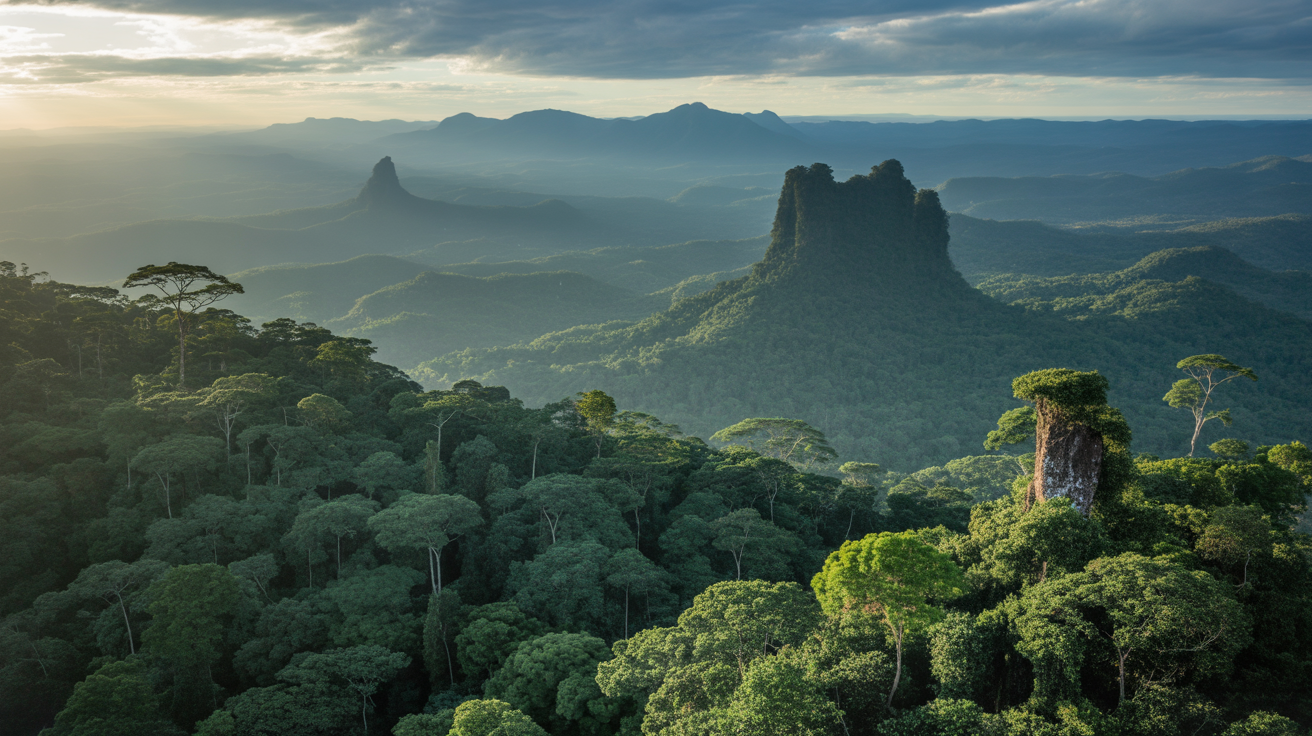
Tropical rainforest

Conservation
The Orangutan is currently classified as Critically Endangered on the IUCN Red List.
Threats & challenges
The primary threats to orangutans are habitat loss due to deforestation for palm oil plantations, illegal logging, and forest fires, particularly in Borneo and Sumatra. Poaching for the illegal pet trade and human-wildlife conflict further exacerbate population declines. Fragmentation of habitat isolates populations, reducing genetic diversity and increasing vulnerability to disease and environmental changes. All three extant species—Bornean (Pongo pygmaeus), Sumatran (P. abelii), and Tapanuli (P. tapanuliensis)—are classified as Critically Endangered by the IUCN, with fewer than 120,000 Bornean, 14,000 Sumatran, and approximately 800 Tapanuli orangutans remaining. Conservation challenges include enforcing anti-poaching laws, restoring habitat connectivity, and mitigating the impacts of climate change and agricultural expansion.
Taxonomy
Scientific name
Pongo spp.
- Kingdom
- Animalia
- Phylum
- Chordata
- Class
- Mammalia
- Order
- Primates
- Family
- Hominidae
- Genus
- Pongo
- Species
- Pongo
Where to see an orangutan
8 zoos and aquariums in 2 countries are recorded as keeping this species.
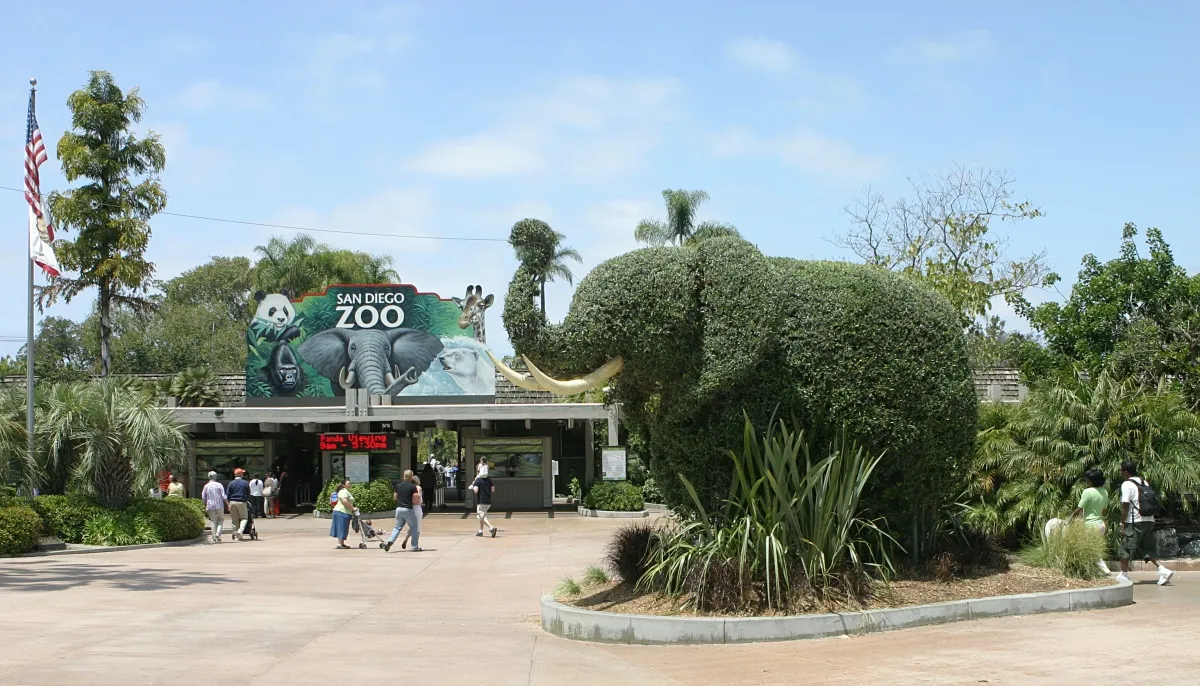 San Diego Zoo🇺🇸 San Diego, United States
 Honolulu Zoo🇺🇸 Honolulu, United States
 Houston Zoo🇺🇸 Houston, United States
 National Zoological Park🇺🇸 Washington, United States
- 🦁Greenville Zoo🇺🇸 Greenville, United States
Community notes
Share your observations about the Orangutan.
No community notes yet. Be the first!
Discover more wildlife
More fascinating animals from the encyclopedia.