
About the Paddle-tail Newt
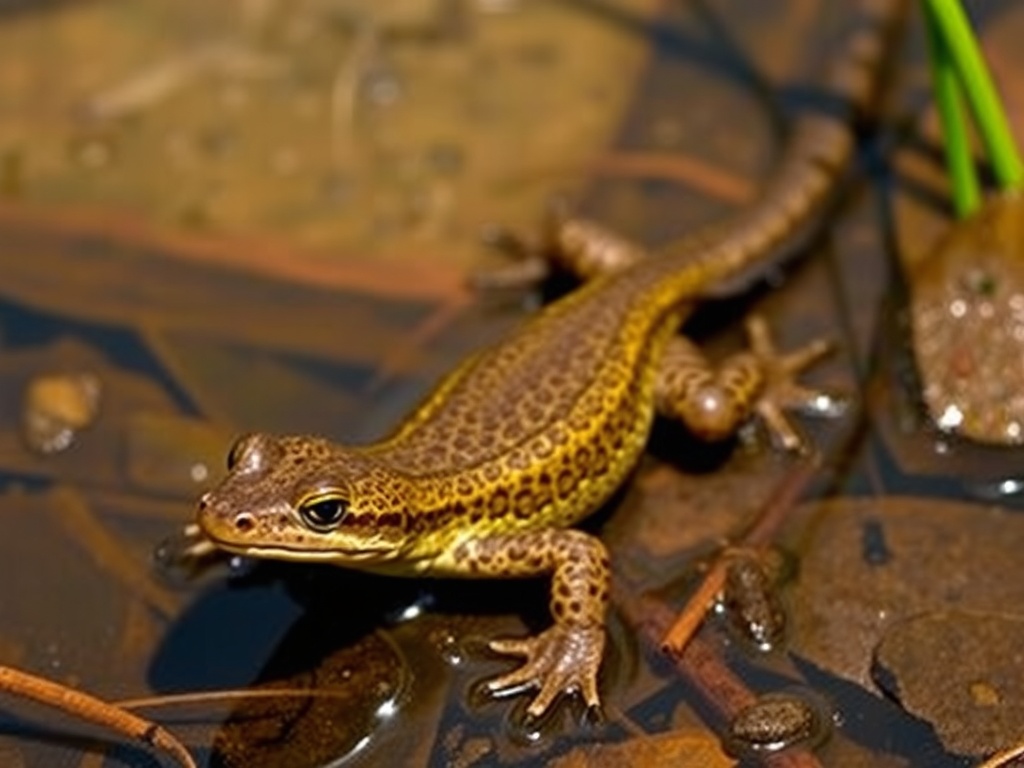
The Paddle-tail Newt is a robust aquatic amphibian native to southern and eastern China. Distinguished by its flattened, paddle-shaped tail, this newt is well-adapted to its freshwater environment, using its tail for powerful swimming. Its skin is typically dark brown to black, sometimes with orange or yellow markings along the sides and belly. Paddle-tail Newts are popular in the pet trade due to their hardiness and unique appearance, but they play an important role in their natural habitats as both predators and prey. Although adaptable, they depend on clean, well-oxygenated streams and ponds for breeding and survival.
Fascinating facts
Tail Adaptation
Their strong, paddle-shaped tails are specially adapted for swimming, allowing them to move swiftly in flowing streams.
Regenerative Powers
Paddle-tail Newts can regenerate not just limbs but also portions of their heart, jaws, spinal cord, and eyes if injured.
Aquatic Lifestyle
Unlike some newts, Paddle-tail Newts are almost entirely aquatic, rarely leaving the water even as adults.
Detailed description
The Paddle-tail Newt (Paramesotriton chinensis) is a medium to large-sized member of the family Salamandridae, typically reaching adult lengths of 12–18 cm, with some individuals recorded up to 20 cm. Its most distinctive feature is the laterally compressed, muscular tail, which is edged with a prominent fin and accounts for nearly half its total length, providing exceptional propulsion in aquatic environments. The skin is granular and often covered in small tubercles, which may secrete mild toxins as a defense against predators. Dorsal coloration ranges from dark brown to black, while the ventral surface is marked with irregular orange or yellow blotches, which may serve as aposematic (warning) coloration. The head is broad and flattened, with small eyes and a rounded snout. Paddle-tail Newts possess well-developed limbs with four digits on the forelimbs and five on the hindlimbs. They are primarily aquatic but may occasionally venture onto land during periods of high humidity. Their robust build and tough skin make them resilient to environmental fluctuations, and their ability to regenerate lost limbs and tails is notable among amphibians. The species exhibits sexual dimorphism during the breeding season, with males developing a more pronounced tail fin and cloacal swelling.
Did you know?
Despite their aquatic lifestyle, Paddle-tail Newts can survive short periods out of water by absorbing oxygen through their moist skin.
Research & sources
Behaviour & social structure
Paddle-tail Newts are largely nocturnal, spending daylight hours hiding under rocks, submerged logs, or dense aquatic vegetation. They are solitary and territorial, especially during the breeding season, when males may display aggressive behaviors to defend prime territories. Feeding occurs primarily at dusk and night; they are opportunistic carnivores, preying on aquatic invertebrates such as insect larvae, worms, crustaceans, and occasionally small fish or amphibian larvae. They use a sit-and-wait hunting strategy, remaining motionless until prey approaches, then striking rapidly with a suction-feeding motion. Social interactions outside of breeding are minimal, though individuals may aggregate in favorable microhabitats. In captivity, they may exhibit cannibalistic tendencies if overcrowded or underfed. Paddle-tail Newts are known for their investigative behavior, often exploring their environment and displaying a degree of problem-solving ability.
Reproduction & life cycle
Breeding typically occurs from late winter to early spring (February to April), triggered by rising water temperatures and increased rainfall. Males court females with a series of tail-fanning displays and tactile nudges, releasing pheromones to attract mates. Fertilization is internal; the male deposits a spermatophore, which the female picks up with her cloaca. Females lay 50–200 eggs individually attached to submerged vegetation or detritus. Embryonic development lasts 2–4 weeks, depending on water temperature. Larvae are fully aquatic, possessing external gills and a pronounced tail fin, and undergo metamorphosis after 3–5 months. Parental care is absent; eggs and larvae are vulnerable to predation. Sexual maturity is typically reached at 2–3 years of age.
Adaptations & survival
Paramesotriton chinensis exhibits several adaptations for aquatic life, including a laterally compressed tail for efficient swimming and well-developed lungs supplemented by cutaneous respiration through its moist, permeable skin. The granular skin contains toxin-secreting glands that deter predators. Their cryptic dorsal coloration provides camouflage among leaf litter and stream substrates, while the bright ventral markings serve as a warning when threatened (unken reflex). Paddle-tail Newts can tolerate a wide range of water temperatures (10–25°C) and moderate pollution, contributing to their resilience. Their regenerative abilities allow them to recover from injuries, including limb and tail loss. Behavioral adaptations include nocturnality and a preference for structurally complex habitats that offer shelter and ambush sites.
Cultural significance
In parts of China, Paddle-tail Newts have been collected for traditional medicine, although their use is less common than that of other amphibians. They are sometimes featured in local folklore as symbols of resilience and transformation due to their regenerative abilities. In the global pet trade, they are valued for their hardiness and unique appearance, contributing to their popularity among amphibian enthusiasts. However, there is no significant widespread cultural or mythological association compared to some other Asian salamanders.
Recent research
Recent molecular studies have clarified the taxonomy of Paramesotriton chinensis, distinguishing it from closely related species within the genus. Research on their toxin composition has identified unique peptides with potential biomedical applications. Studies on their regenerative capabilities continue to inform regenerative medicine and developmental biology. Ongoing ecological research focuses on their habitat requirements and the impact of environmental changes on breeding success. Conservation genetics studies are underway to assess population structure and inform management strategies, particularly in regions affected by habitat loss and collection.
Sources
A review of the genus Paramesotriton (Caudata: Salamandridae) from China, with description of a new species
Fei, L., Ye, C.Y., Jiang, J.P. (2012)
scientificParamesotriton chinensis: The IUCN Red List of Threatened Species 2021
IUCN SSC Amphibian Specialist Group
conservationVideos
Habitat
Freshwater streams and ponds


Conservation
The Paddle-tail Newt is currently classified as Least Concern on the IUCN Red List.
Threats & challenges
While currently listed as Least Concern by the IUCN, Paddle-tail Newts face localized threats from habitat degradation, water pollution, and stream modification due to agriculture and urbanization. Over-collection for the international pet trade has led to population declines in some areas, and illegal trade remains a concern despite regulatory measures. Introduced predators, such as fish and crayfish, may impact larval survival. Climate change poses a long-term threat by altering hydrological regimes and breeding habitats. Monitoring of wild populations is limited, and further research is needed to assess population trends and genetic diversity.
Taxonomy
Scientific name
Paramesotriton chinensis
- Kingdom
- Animalia
- Phylum
- Chordata
- Class
- Amphibia
- Order
- Caudata
- Family
- Salamandridae
- Genus
- Paramesotriton
- Species
- chinensis
Community notes
Share your observations about the Paddle-tail Newt.
No community notes yet. Be the first!
Discover more wildlife
More fascinating animals from the encyclopedia.