
About the Ping-pong tree sponge
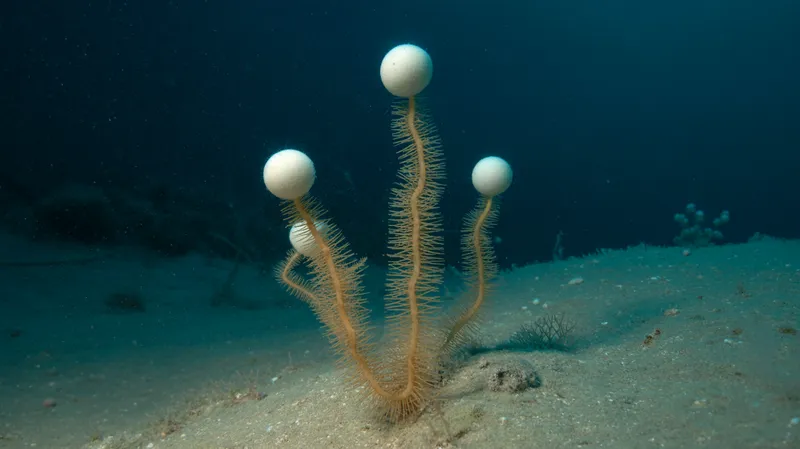
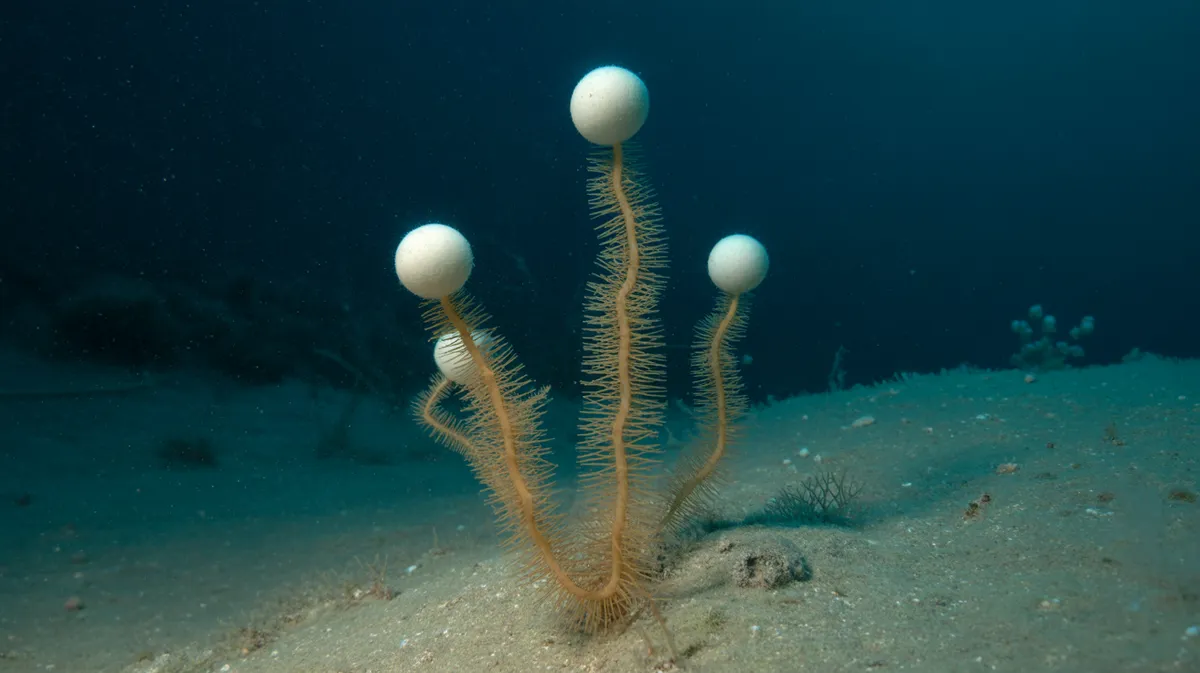
The ping-pong tree sponge is a deep-sea sponge known for its unique appearance, resembling a tiny tree adorned with ping-pong ball-like spheres. These white, globular structures are actually specialized appendages used for capturing prey, making this sponge a rare example of a carnivorous sponge. Found at depths exceeding 2,000 meters, it thrives in cold, dark ocean environments where it anchors itself to the seafloor. Its unusual feeding method and alien-like form have fascinated marine biologists since its discovery.
Fascinating facts
Carnivorous Sponge
The ping-pong tree sponge feeds on small crustaceans by trapping them with its sticky, spherical appendages, unlike most sponges that filter feed.
Deep-Sea Dweller
This sponge is found at extreme ocean depths, typically over 2,000 meters below the surface, where sunlight never reaches.
Scientific Enigma
Discovered only in the 21st century, much of its behavior, reproduction, and ecology remain unknown due to its inaccessible habitat.
Detailed description
Chondrocladia lampadiglobus, commonly known as the ping-pong tree sponge, is a remarkable deep-sea sponge distinguished by its tree-like stalk and numerous spherical, translucent appendages that resemble ping-pong balls. These globular swellings, typically 1–3 cm in diameter, are actually modified branches called 'spheres' or 'globular appendages' that function as specialized prey-capture structures. The sponge's main stalk can reach up to 40 cm in height and is anchored firmly to the soft sediment of the abyssal seafloor, often at depths between 2,000 and 2,900 meters. Its body is composed of a siliceous skeleton, providing both rigidity and flexibility to withstand deep-sea currents. Unlike most sponges that filter-feed on microscopic particles, C. lampadiglobus is carnivorous, trapping small crustaceans and other invertebrates on its sticky spheres. Once ensnared, the prey is enveloped by the sponge's tissue and digested extracellularly. The species is solitary, with individuals spaced widely apart due to the sparse distribution of suitable substrate in the deep ocean. Reproduction is believed to be sexual, with the release of gametes into the water column, although direct observations are rare. The ping-pong tree sponge's unique morphology and feeding strategy are highly adapted to the nutrient-poor, high-pressure environment of the deep sea, making it a subject of fascination for marine biologists and evolutionary researchers.
Did you know?
Some of the ping-pong tree sponge's relatives can emit bioluminescence, though this particular species is not known to glow.
Research & sources
Behaviour & social structure
Chondrocladia lampadiglobus exhibits a largely sessile lifestyle, remaining anchored to the seafloor throughout its life. Its primary behavioral adaptation is its carnivorous feeding strategy: the sponge passively captures prey by extending its globular appendages into the surrounding water. These spheres are covered in fine, hook-like spicules and a sticky mucous layer that efficiently trap small crustaceans and copepods that drift by. Once prey is ensnared, the sponge's cells migrate to envelop and digest the organism, a process that can take several days. There is no evidence of social behavior or aggregation; individuals are solitary and do not interact except potentially during reproductive events. The sponge does not exhibit daily or circadian activity cycles, as the deep-sea environment is perpetually dark and stable.
Reproduction & life cycle
Reproductive biology in Chondrocladia lampadiglobus is not fully understood due to the challenges of deep-sea observation, but it is presumed to follow the general reproductive patterns of demosponges. Most likely, the species is gonochoristic (having separate sexes), releasing sperm into the water column to be taken up by other individuals, where internal fertilization occurs. Embryos develop into free-swimming parenchymella larvae, which eventually settle on the seafloor and metamorphose into juvenile sponges. There is no parental care; larvae are planktonic and must survive independently. Breeding is thought to be opportunistic rather than seasonal, as environmental cues in the deep sea are minimal.
Adaptations & survival
The ping-pong tree sponge displays several evolutionary adaptations for deep-sea survival. Its siliceous skeleton provides structural support and resistance to high pressures. The globular prey-capture appendages are a unique adaptation among sponges, allowing it to exploit a carnivorous niche in an environment where particulate food is scarce. The sticky mucous and hook-like spicules on the spheres are specialized for ensnaring mobile prey. Its slow metabolic rate conserves energy in the nutrient-poor abyssal zone. The sponge's ability to anchor in soft sediments with a robust root-like base helps it remain stable in deep-sea currents.
Cultural significance
The ping-pong tree sponge has no known role in traditional human culture, mythology, or symbolism, owing to its deep-sea habitat and recent scientific discovery. However, it has gained attention in popular science and media for its bizarre appearance and unusual carnivorous feeding strategy, often featured in documentaries and educational materials about deep-sea biodiversity.
Recent research
Since its formal description in 2008, Chondrocladia lampadiglobus has been the subject of ongoing research into deep-sea sponge diversity, carnivory in Porifera, and adaptations to extreme environments. Recent studies have focused on the molecular and structural basis of its prey-capture mechanism, the composition of its siliceous skeleton, and its ecological role in abyssal ecosystems. Advances in remotely operated vehicle (ROV) technology have enabled in situ observations and specimen collection, leading to new insights into its distribution and behavior. The species is also of interest for biomimetic research, particularly in the development of novel adhesive and filtration materials.
Sources
Carnivorous sponges: diversity, ecology and evolution
Jean Vacelet, Michelle Kelly, and others (2012)
scientificTwo new species of carnivorous sponges (Porifera, Cladorhizidae) from the deep South Pacific
Jean Vacelet, Michelle Kelly, and Martina Schlacher-Hoenlinger (2009)
scientificChondrocladia lampadiglobus (Ping-pong tree sponge) – IUCN Red List
IUCN Red List of Threatened Species
conservationVideos
Habitat
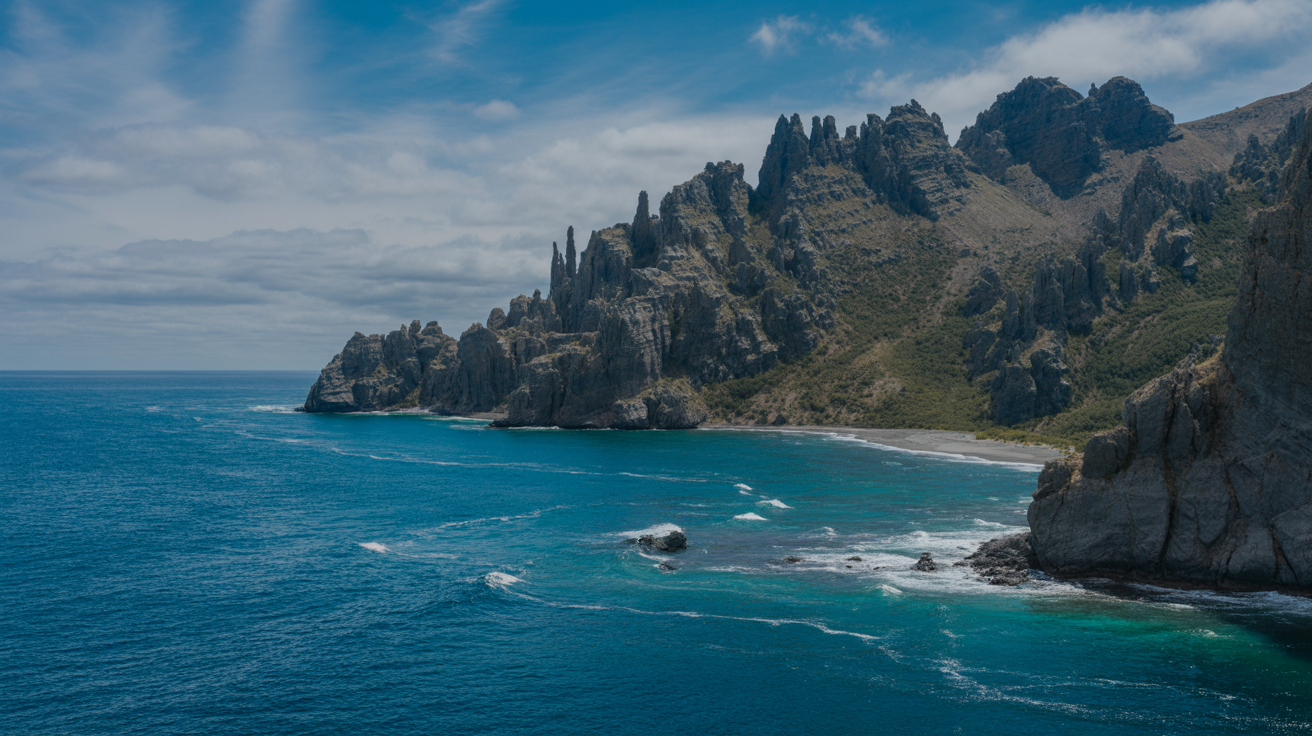
Deep ocean
Conservation
The Ping-pong tree sponge is currently classified as Not Evaluated on the IUCN Red List.
Threats & challenges
Currently, Chondrocladia lampadiglobus faces minimal direct threats due to its remote habitat, but deep-sea mining, trawling, and climate change-induced alterations in ocean chemistry (such as acidification and deoxygenation) could pose future risks. The species has not been evaluated by the IUCN, and population trends are unknown. Its specialized habitat and slow growth may make it vulnerable to disturbance and habitat loss, while its low reproductive rate could hinder recovery from population declines.
Taxonomy
Scientific name
Chondrocladia lampadiglobus
- Kingdom
- Animalia
- Phylum
- Porifera
- Class
- Demospongiae
- Order
- Poecilosclerida
- Family
- Cladorhizidae
- Genus
- Chondrocladia
- Species
- lampadiglobus
Community notes
Share your observations about the Ping-pong tree sponge.
No community notes yet. Be the first!
Discover more wildlife
More fascinating animals from the encyclopedia.