
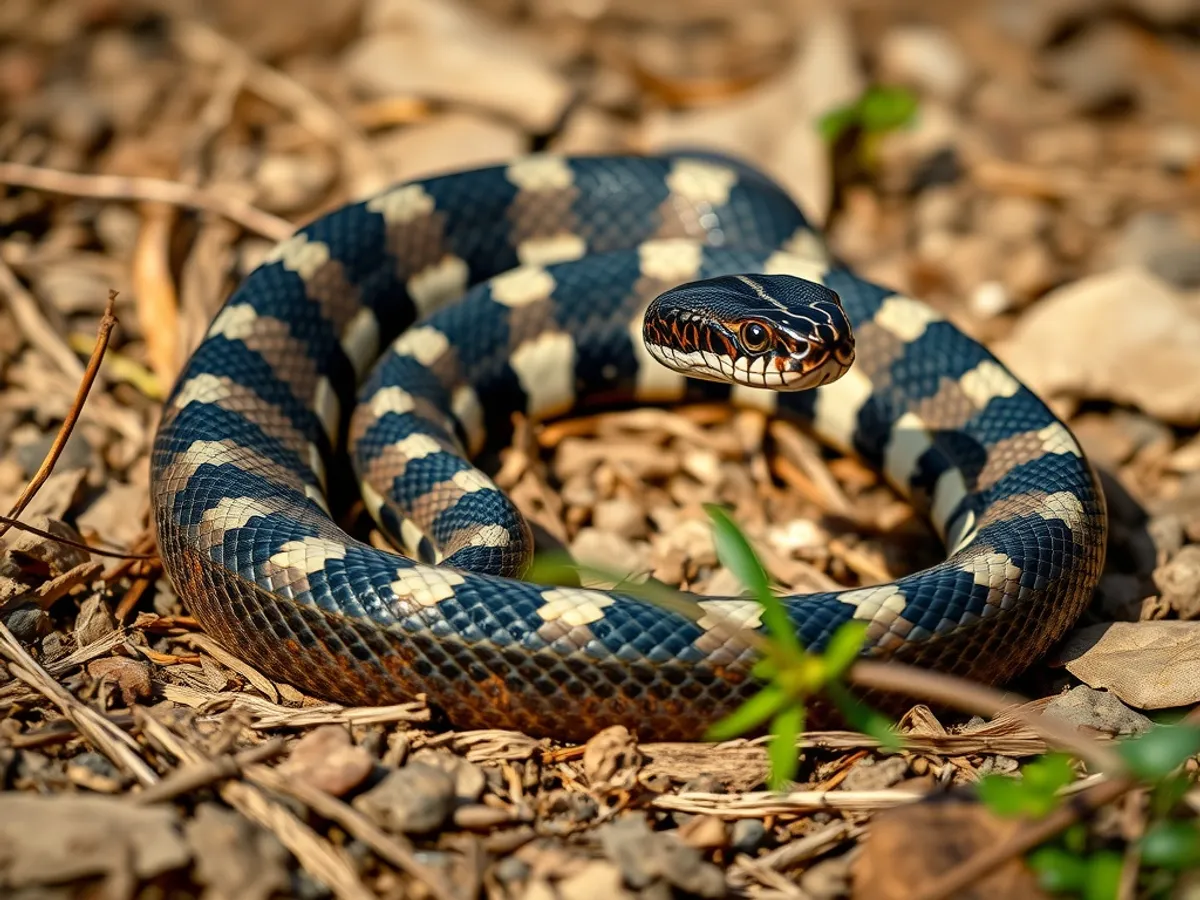
About the Pueblan Milk Snake
The Pueblan milk snake is a strikingly colored, non-venomous colubrid native to the Puebla region of Mexico. Its bold bands of red, black, and white or yellow serve as a classic example of Batesian mimicry, imitating the appearance of venomous coral snakes to deter predators. This adaptable species inhabits a range of environments from dry forests to grasslands and is popular in the pet trade due to its manageable size and docile temperament. The Pueblan milk snake is primarily nocturnal and secretive, often hiding under rocks or debris during the day.
Fascinating facts
Colorful Mimicry
The Pueblan milk snake's red, black, and white/yellow pattern serves as mimicry of the venomous coral snake, helping to ward off predators.
Escape Artists
They are known for their ability to escape enclosures, squeezing through extremely small openings if given the opportunity.
Nocturnal Habits
Pueblan milk snakes are primarily nocturnal, spending the day hidden under logs, stones, or leaf litter and becoming active at night.
Detailed description
The Pueblan milk snake (Lampropeltis triangulum campbelli) is a medium-sized, slender-bodied colubrid, typically reaching adult lengths of 90–120 cm (35–47 inches), though some individuals may exceed this. Its smooth, glossy scales are arranged in a distinctive tri-color pattern of red, black, and white or pale yellow bands, with the red bands being the broadest. The head is usually black with a white or yellow snout, and the ventral surface is checkered black and white. This species is primarily nocturnal and crepuscular, exhibiting secretive behavior and spending much of the day concealed beneath rocks, logs, or leaf litter. Pueblan milk snakes are solitary outside of breeding season and are known for their docile temperament, both in the wild and captivity. Their diet consists mainly of small mammals, lizards, birds, and other snakes, including venomous species, thanks to their natural resistance to certain snake venoms. Reproduction is oviparous, with females laying clutches of 6–15 eggs in concealed, humid microhabitats. Hatchlings emerge after an incubation period of 50–70 days, displaying the same vivid coloration as adults. The species is highly adaptable, tolerating a range of environmental conditions from arid scrublands to semi-humid forests, and is noted for its ability to thrive in disturbed habitats, including agricultural areas.
Did you know?
Despite their vivid, threatening appearance, Pueblan milk snakes are completely harmless to humans and lack venom.
Research & sources
Behaviour & social structure
Pueblan milk snakes are predominantly nocturnal, becoming active at dusk and during the night when temperatures are cooler and prey is more abundant. They are opportunistic feeders, employing both active foraging and ambush strategies. Their diet is varied and includes rodents, birds, eggs, amphibians, and other reptiles, with a particular proficiency for preying on other snakes (ophiophagy), including venomous species. They kill prey via constriction, coiling around the animal and suffocating it before ingestion. Social interactions are minimal outside of the breeding season; individuals are territorial and may exhibit defensive behaviors such as tail rattling, musking, or mock strikes when threatened. During the day, they seek shelter in burrows, under debris, or within rock crevices to avoid predators and extreme temperatures. Seasonal activity peaks during the wet season, coinciding with increased prey availability.
Reproduction & life cycle
Breeding in the wild typically occurs in late spring to early summer (April–June), triggered by rising temperatures and increased humidity. Males locate receptive females through pheromone trails and may engage in combat with rival males. Courtship involves tactile stimulation, with the male aligning his body alongside the female and vibrating his tail. Females lay 6–15 elongated, leathery eggs in concealed, moist locations such as under logs or within leaf litter. Incubation lasts 50–70 days at optimal temperatures (26–29°C/78–84°F). Hatchlings measure 20–28 cm (8–11 inches) and are independent from birth, receiving no parental care. Sexual maturity is typically reached at 2–3 years of age in the wild, though captive individuals may mature slightly earlier.
Adaptations & survival
The Pueblan milk snake exhibits several adaptations for survival. Its striking coloration is a classic example of Batesian mimicry, closely resembling the venomous coral snakes (Micrurus spp.) found in its range, thereby deterring potential predators. The species possesses smooth, glossy scales that reduce water loss and facilitate movement through leaf litter and tight spaces. Its resistance to certain snake venoms allows it to prey on other snakes, expanding its dietary niche. Behavioral adaptations include nocturnality and secretive habits, which help avoid diurnal predators and extreme heat. The ability to exploit a wide range of habitats, including disturbed and agricultural areas, demonstrates ecological flexibility. Additionally, when threatened, Pueblan milk snakes may vibrate their tails rapidly against substrate, mimicking the sound of a rattlesnake as a defensive bluff.
Cultural significance
Milk snakes, including the Pueblan subspecies, have been subjects of folklore and myth throughout their range. The name 'milk snake' originates from the erroneous belief that these snakes would milk cows, a myth likely stemming from their frequent presence in barns and stables, where they hunt rodents. Their resemblance to coral snakes has made them a symbol of caution in local cultures, and they are sometimes featured in educational programs to teach the difference between venomous and non-venomous species. In the pet trade, Pueblan milk snakes are prized for their striking appearance and docile nature, contributing to their popularity among reptile enthusiasts.
Recent research
Recent genetic studies have clarified the taxonomy of Lampropeltis triangulum, supporting the distinction of the Pueblan milk snake as a valid subspecies. Ongoing research focuses on the ecological impacts of their predation on local snake communities, particularly their role in controlling populations of venomous snakes. Studies on their resistance to snake venoms have potential biomedical applications, offering insights into antivenom development. Conservation research is monitoring the effects of habitat fragmentation and the pet trade on wild populations. Additionally, behavioral studies in captivity have provided valuable data on their reproductive biology and stress responses.
Sources
Systematics of the Lampropeltis triangulum complex (Serpentes: Colubridae): Mimicry and taxonomy
Ruane, S., Bryson, R. W., Pyron, R. A., & Burbrink, F. T. (2014)
scientificLampropeltis triangulum: The IUCN Red List of Threatened Species 2007
IUCN SSC Amphibian and Reptile Specialist Group
conservationSystematics and Phylogeography of the Milk Snake (Lampropeltis triangulum) Complex
Ruane, S., Bryson, R. W., Pyron, R. A., & Burbrink, F. T. (2014)
scientificBatesian Mimicry and the Evolution of Coral Snake Coloration
Greene, H. W., & McDiarmid, R. W. (1981)
scientificIUCN Red List of Threatened Species: Lampropeltis triangulum
IUCN SSC Amphibian and Reptile Specialist Group
conservationVideos
Habitat
Dry forest, grassland, and scrubland
 Various Continental Regions
Grassland
Open areas dominated by grasses rather than trees, supporting numerous herbivores and their predators.
 Elevated Terrain
Mountain
High-altitude environments with varying climates and specialized wildlife adapted to rugged terrain and thin air.
 Global
Forest
Wooded areas with significant tree cover and diverse plant and animal communities.
Conservation
The Pueblan Milk Snake is currently classified as Least Concern on the IUCN Red List.
Threats & challenges
Currently classified as Least Concern by the IUCN, the Pueblan milk snake faces relatively few major threats in the wild. However, localized habitat loss due to agricultural expansion, urbanization, and land conversion can impact populations. Collection for the international pet trade, while regulated, poses a potential risk if not managed sustainably. Road mortality and persecution due to mistaken identity with venomous snakes are additional concerns. Despite these challenges, the species' adaptability and broad distribution contribute to stable population trends. Ongoing monitoring is recommended to ensure that wild populations remain healthy, particularly in areas experiencing rapid habitat change.
Taxonomy
Scientific name
Lampropeltis triangulum campbelli
- Kingdom
- Animalia
- Phylum
- Chordata
- Class
- Reptilia
- Order
- Squamata
- Family
- Colubridae
- Genus
- Lampropeltis
- Species
- campbelli
Community notes
Share your observations about the Pueblan Milk Snake.
No community notes yet. Be the first!
Discover more wildlife
More fascinating animals from the encyclopedia.