
About the Quetzalcoatlus
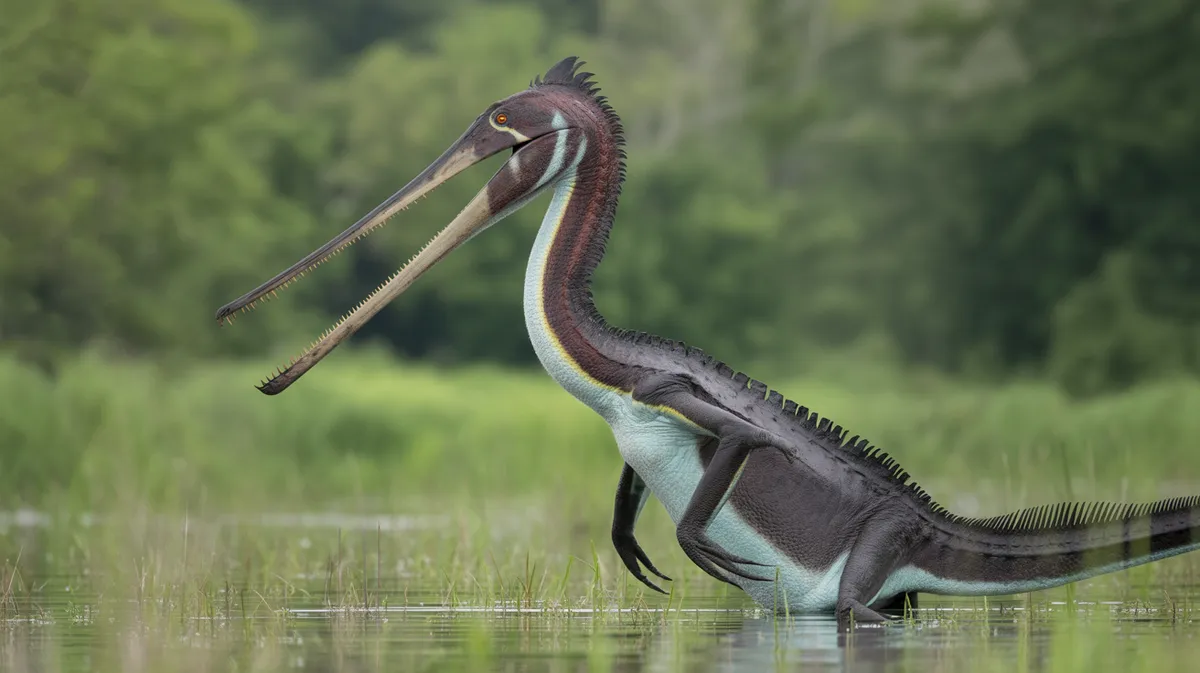
Quetzalcoatlus northropi was an azhdarchid pterosaur from the Late Cretaceous of Texas with a wingspan estimated around 10 to 11 metres — the size of a small aeroplane — and yet it probably weighed only 200 to 250 kg, because its skeleton was a lattice of hollow, air-filled bones with walls sometimes only a millimetre or two thick. The popular image of it soaring over an ocean scooping fish like a giant pelican is almost certainly wrong. Detailed work by Witton and Naish argues that azhdarchids were terrestrial stalkers: their necks were long and stiff, poorly suited to the sideways sweeping a skimmer needs, their feet were small and blunt rather than webbed, and their limb proportions made them competent walkers. The picture now is of a stork-like or ground-hornbill-like predator striding across Cretaceous floodplains picking up baby dinosaurs, lizards and other small animals. Standing, it would have been about the height of a giraffe. It almost certainly did not launch like a bird: the quadrupedal launch model has it vaulting off all four limbs, using the huge forelimb musculature that also powered flight, to clear the ground in a fraction of a second. A smaller species, Q. lawsoni, was formally described in 2021 and is known from far better material.
Fascinating facts
Gigantic Wingspan
Quetzalcoatlus had a wingspan that could reach up to 11 meters (36 feet), making it comparable to a small aircraft.
Not a Dinosaur
Although often associated with dinosaurs, Quetzalcoatlus was actually a pterosaur, a distinct group of flying reptiles.
Unique Flight Style
Scientists believe Quetzalcoatlus launched into the air using a powerful leap on all fours due to its immense size.
Detailed description
Quetzalcoatlus northropi was an enormous azhdarchid pterosaur, widely regarded as one of the largest known flying animals in Earth's history. Adult individuals are estimated to have had wingspans ranging from 10 to possibly over 11 meters (33–36 feet), with some fragmentary remains suggesting even larger sizes. The animal possessed a long, stiffened neck composed of elongated cervical vertebrae, supporting a proportionally large, toothless beak adapted for grasping prey. Its skull could reach lengths of up to 2.5 meters (8 feet), and the beak's sharp, pointed tip was likely used for probing or seizing small animals. The body was relatively small and lightweight, with pneumatic (air-filled) bones to reduce mass and facilitate flight. Quetzalcoatlus exhibited robust forelimbs with elongated fourth fingers supporting the wing membrane, while its hind limbs were strong and adapted for terrestrial locomotion. Fossil evidence suggests it was capable of quadrupedal movement on land, using a unique gait with both fore- and hindlimbs. The animal's overall morphology indicates a highly specialized lifestyle, possibly including both active predation and scavenging. Its habitat consisted of inland floodplains and semi-arid environments, where it likely exploited a range of ecological niches. Despite its size, Quetzalcoatlus was likely agile in the air, employing dynamic soaring and powerful launches from the ground. The genus includes at least two species, with Q. northropi being the largest and Q. lawsoni representing a smaller, more gracile form.
Did you know?
Quetzalcoatlus northropi's wingspan rivals that of some small airplanes, making it one of the largest flying animals ever to exist.
Research & sources
Wikipedia summary
Quetzalcoatlus is a genus of azhdarchid pterosaur that lived during the Maastrichtian age of the Late Cretaceous in North America. The type specimen, recovered in 1971 from the Javelina Formation of Texas, United States, consists of several wing fragments and was described as Quetzalcoatlus northropi in 1975 by Douglas Lawson. The first part of the name refers to the Aztec serpent god of the sky, Quetzalcōātl, while the second part honors Jack Northrop, designer of a tailless fixed-wing aircraft. The remains of a second species were found between 1972 and 1974, also by Lawson, around 40 km (25 mi) from the Q. northropi locality. In 2021, these remains were assigned to the name Quetzalcoatlus lawsoni by Brian Andres and (posthumously) Wann Langston Jr, as part of a series of publications on the genus.
Behaviour & social structure
Quetzalcoatlus is believed to have been a solitary or loosely social animal, with little evidence supporting complex group behavior. Its feeding strategy has been the subject of debate, but recent biomechanical studies suggest it was primarily a terrestrial stalker, walking on all fours and using its long neck and beak to snatch small vertebrates, such as lizards, mammals, and possibly hatchling dinosaurs, from the ground or shallow water. It may have also scavenged carcasses, using its height and reach to access remains unavailable to smaller predators. The lack of teeth indicates it swallowed prey whole or in large pieces. Quetzalcoatlus likely spent significant time on land, foraging across open floodplains, but was also capable of long-distance flight, possibly migrating or dispersing between habitats. Daily activity patterns are unknown, but it may have been diurnal, taking advantage of thermals for soaring. There is no direct evidence for nesting colonies or parental care, and interactions with conspecifics were probably limited outside of the breeding season.
Reproduction & life cycle
As with other pterosaurs, Quetzalcoatlus was oviparous, laying eggs rather than giving live birth. The eggs were likely leathery rather than hard-shelled, similar to those of modern reptiles, and may have been buried in sand or soil to incubate. Clutch size is unknown, but smaller pterosaur relatives laid multiple eggs per season. There is no fossil evidence for brooding or parental care, suggesting that hatchlings were precocial—capable of moving and possibly flying soon after hatching. Breeding seasons would have been influenced by environmental conditions, such as temperature and food availability, but specific timing remains speculative. Sexual dimorphism has not been conclusively demonstrated, though some azhdarchids show size variation that could be related to sex.
Adaptations & survival
Quetzalcoatlus displayed numerous adaptations for both flight and terrestrial life. Its pneumatic skeleton greatly reduced body weight, while the elongated fourth finger and wing membrane allowed for efficient soaring and gliding. The strong, columnar hindlimbs and robust pectoral girdle enabled powerful quadrupedal launches, a necessity for such a large flyer. The stiffened neck and large, pointed beak were evolutionary specializations for terrestrial predation, allowing it to reach and capture prey at ground level. Its keen eyesight would have been essential for spotting prey from a distance. The lack of teeth reduced skull weight and may have facilitated rapid prey capture and swallowing. The combination of flight and terrestrial stalking made Quetzalcoatlus a versatile predator in its ecosystem.
Cultural significance
The genus name Quetzalcoatlus references Quetzalcōātl, the feathered serpent god of the Aztec pantheon, symbolizing the sky and wind. This connection has made Quetzalcoatlus an iconic figure in paleontology and popular culture, often depicted as a 'flying dragon' in media and exhibitions. Its discovery has inspired comparisons to mythological creatures and has contributed to public fascination with prehistoric life. While there are no traditional uses, its name and image are frequently used in educational materials, museums, and artistic representations.
Recent research
Recent research has focused on the biomechanics of Quetzalcoatlus, particularly its flight capabilities and terrestrial locomotion. A 2021 monograph by Andres and colleagues provided the first comprehensive anatomical description, supporting the hypothesis of quadrupedal launch and terrestrial stalking behavior. Ongoing studies use advanced imaging and computer modeling to reconstruct muscle attachments, wing membrane structure, and flight dynamics. Isotopic analysis of fossil bones is beginning to shed light on diet and habitat preferences. The discovery of the smaller Q. lawsoni has clarified the diversity within the genus and raised questions about niche partitioning among azhdarchids. Further research is aimed at understanding growth rates, ontogeny, and reproductive biology, though direct evidence remains limited.
Videos
Habitat
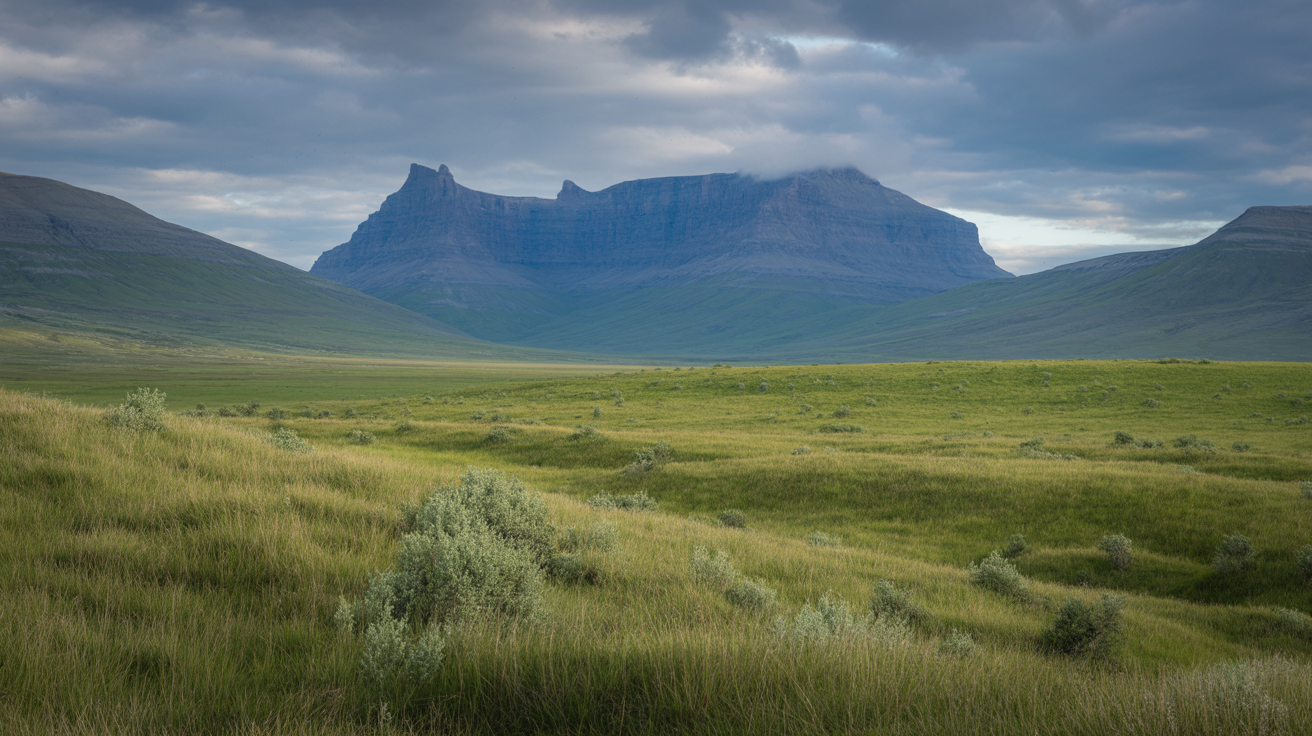
Inland floodplains
Conservation
The Quetzalcoatlus is currently classified as Extinct on the IUCN Red List.
Threats & challenges
As an extinct genus, Quetzalcoatlus faces no modern threats, but during its time, it would have contended with competition from large theropod dinosaurs and other carnivores. Juveniles were likely vulnerable to predation by smaller theropods and crocodilians. Environmental challenges included fluctuating climates and habitat changes during the Late Cretaceous. The end-Cretaceous mass extinction event, likely triggered by an asteroid impact and associated environmental upheaval, led to the extinction of Quetzalcoatlus and all other non-avian pterosaurs. No conservation efforts are applicable, but fossil sites are protected for scientific study.
Taxonomy
Scientific name
Quetzalcoatlus northropi
- Kingdom
- Animalia
- Phylum
- Chordata
- Class
- Reptilia
- Order
- Pterosauria
- Family
- Azhdarchidae
- Genus
- Quetzalcoatlus
- Species
- northropi
Community notes
Share your observations about the Quetzalcoatlus.
No community notes yet. Be the first!
Discover more wildlife
More fascinating animals from the encyclopedia.